Learn how rotary gear pumps function, their role in oil transfer, and effectiveness in handling high-viscosity fluids, offering efficiency and reliability.
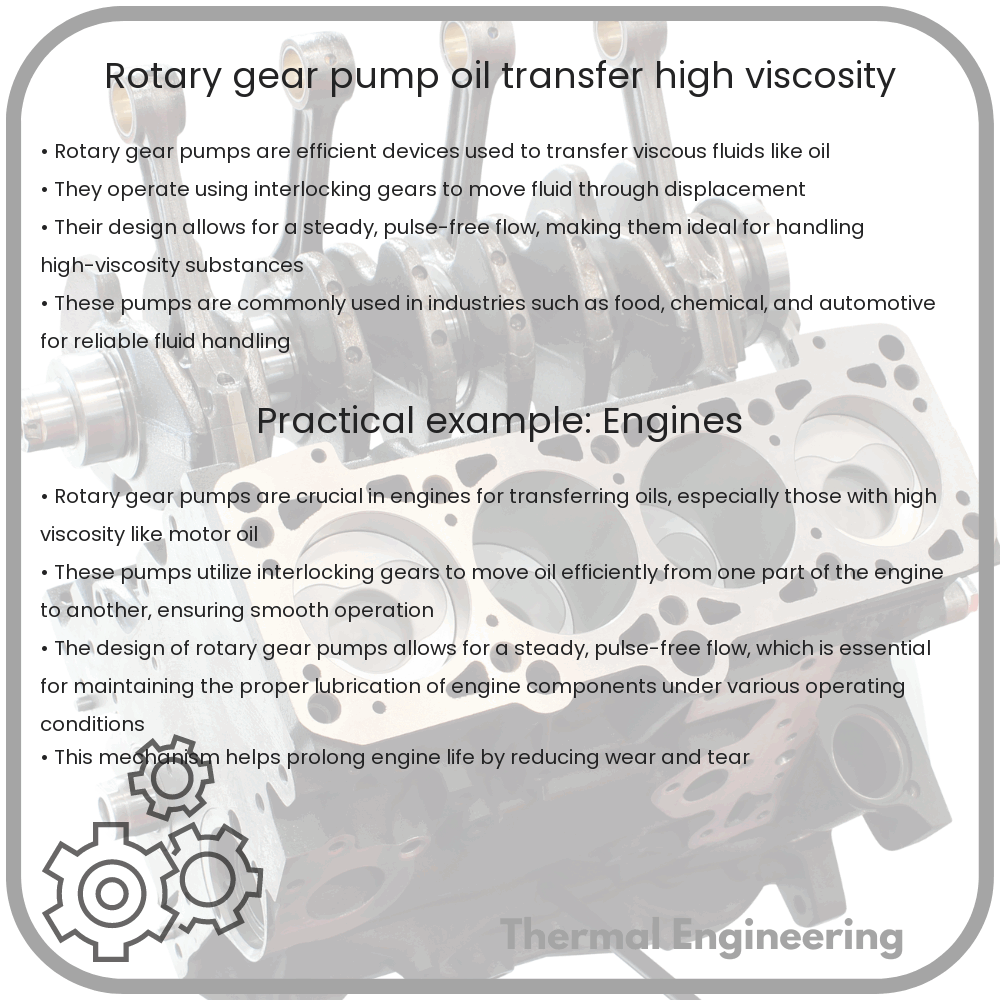
Understanding Rotary Gear Pumps: Their Role in Oil Transfer & Handling High-Viscosity Fluids
Rotary gear pumps are a vital component in many industrial and mechanical systems, particularly when transferring oil and handling high-viscosity fluids. These pumps are valued for their reliability, efficiency, and ability to handle a range of challenging pumping situations. This article explores how rotary gear pumps work, their applications, and why they are particularly suited for oil transfer and high-viscosity substances.
How Rotary Gear Pumps Work
At its core, a rotary gear pump features two gears which rotate inside a closely fitted casing. One gear is driven by a motor, and this gear drives the other. As the gears rotate, fluid on the inlet side is trapped between the teeth of the gears and the casing walls, then carried around the casing to the outlet side. The mechanism is simple but effective, relying on the continual engagement of the gears to prevent backflow, thus maintaining a steady, pulsation-free flow.
Key Components of Rotary Gear Pumps
- Gears: These are typically spur or helical gears. Helical gears provide a smoother operation as they engage more gradually than spur gears.
- Casing: Encloses the gears, maintaining close clearance to improve efficiency by minimizing fluid slip back to the inlet.
- Drive Shaft: Connects to an external power source to drive the primary gear.
Applications in Oil Transfer
Rotary gear pumps are extensively used in the transfer of oil, including crude oil, lubricating oil, and fuel oil. Their efficiency and capability to handle varying viscosities and temperatures without degradation make them ideal for this role. Whether moving oil from storage tanks to processing areas or from ships to shore facilities, rotary gear pumps provide a continuous, controlled flow essential for effective fluid handling.
Handling High-Viscosity Fluids
Rotary gear pumps excel in dealing with high-viscosity fluids. High viscosity presents challenges like increased resistance which requires more power to move the fluid. Gear pumps tackle this by:
- Operating at lower speeds, which reduces the shear rates and thus maintains fluid integrity.
- Having tight clearances between the gears and the casing, effectively sealing the fluid and providing a smooth flow with minimal slippage.
Advantages of Using Rotary Gear Pumps
- Consistent Performance: Provides a steady flow necessary for processes requiring precise volumetric flows.
- Versatility: Capable of handling a wide range of fluids with different characteristics.
- High Efficiency: Tight clearances and continuous engagement of gears minimize fluid slip.
- Durability: Simple design with fewer moving parts reduces wear and prolongs pump life.
Conclusion
Rotary gear pumps are integral to industries requiring the efficient, reliable transfer of oils and high-viscosity fluids. Their design principles cater specifically to these needs, ensuring they remain a preferred choice for many applications. Whether in the oil industry or handling complex industrial fluids, understanding the basic operation and strengths of rotary gear pumps can contribute immensely to selecting the right pump for the job.
For industries and applications where fluid integrity and consistent flow are paramount, the rotary gear pump stands out as an essential tool, seamlessly blending simplicity with sophisticated fluid handling technology.