Learn about split case pumps, centrifugal pumps known for handling large flow rates and easy maintenance.
Understanding Split Case Pumps: Engineering for High Efficiency and Easy Maintenance
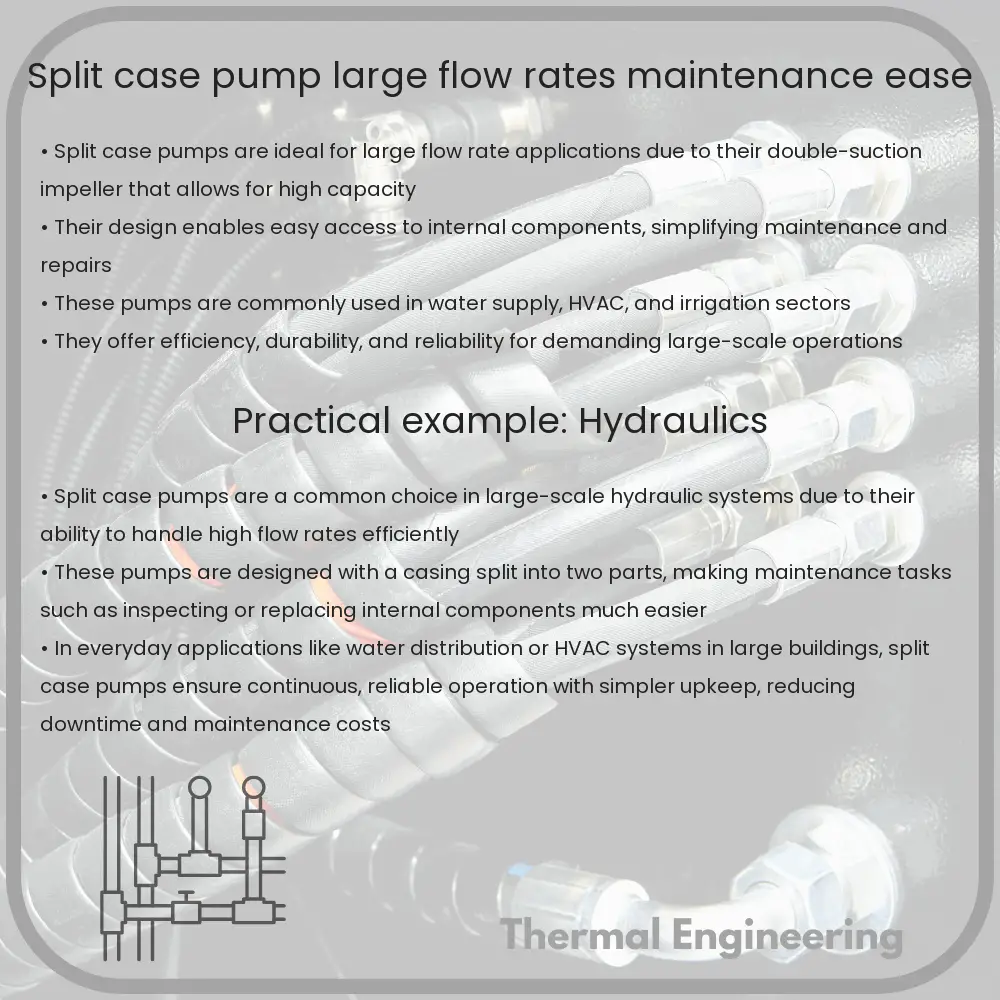
Split case pumps are a type of centrifugal pump, renowned for their ability to handle large flow rates and their inherent design benefits, including ease of maintenance. They are commonly used in applications involving water transfer, heating and cooling systems, and in irrigation and agriculture. In this article, we will delve into the design features, operational advantages, and maintenance benefits of split case pumps.
Design Features of Split Case Pumps
As the name suggests, a split case pump is characterized by a casing that is split into two parts. This design is distinct from end suction and other types of centrifugal pumps. The split can be either vertical or horizontal, depending on the specific application needs, offering flexibility in installation and maintenance. Inside the casing, the impeller rotates to move fluid through the pump. This impeller is typically double suction, meaning it can draw fluid into its center from both sides, balancing the hydraulic thrust which leads to more stability and less wear over time.
- Double-Suction Impeller: This feature allows the pump to have higher flow rates and reduced axial load.
- Horizontal or Vertical Split Casing: Provides easier access to internal components, simplifying maintenance tasks.
- Robust Construction: Typically manufactured from cast iron, stainless steel, or other durable materials to withstand harsh operating conditions.
Operational Advantages
Split case pumps offer substantial benefits not just in terms of design but also in performance:
- Large Flow Rates: The design accommodates large flow rates, often up to thousands of gallons per minute (GPM).
- High Efficiency: The symmetric nature of the double-suction impeller reduces hydraulic imbalances and enhances operational efficiency, minimizing energy consumption.
- Adaptability: Capable of handling varying flow conditions and suitable for multiple applications, from municipal water distribution to industrial processes.
Maintenance Ease
One of the standout features of split case pumps is their ease of maintenance, primarily due to the split casing design:
- Accessibility: The split casing allows easy access to the internal components of the pump, such as bearings, wear rings, and the impeller. This accessibility significantly reduces downtime during maintenance checks and repairs.
- Reduced Wear: The balanced impeller design leads to less vibration and lower wear and tear during operation, which in turn extends the lifespan of the pump and reduces the frequency of maintenance.
- Cost-Effective Repairs: Since the pump does not have to be removed from the pipeline for most maintenance tasks, repair work can be carried out more efficiently and economically.
In conclusion, split case pumps are a preferred choice in many industries due to their capability to handle large volumes of fluid, high efficiency, adaptability to various conditions, and especially their ease of maintenance. These characteristics make them not just a functional but also an economical choice for large-scale fluid handling applications.
Whether you are involved in engineering, maintenance, or operations, understanding the fundamental advantages and applications of split case pumps can significantly impact the efficiency and cost-effectiveness of your fluid handling systems.