Explore how temperature affects hydraulic fracturing efficiency, impacting fluid viscosity, rock brittleness, and chemical reactions.
Understanding the Impact of Temperature on Hydraulic Fracturing
Hydraulic fracturing, often referred to as “fracking,” is an engineering process used to extract oil and gas from rock formations deep underground. This method has significantly increased the accessibility of hydrocarbons trapped in shale formations and contributed to a boom in oil and gas production. A critical aspect that influences the efficiency and success of hydraulic fracturing is temperature. The temperature of the rock formation, the fracturing fluids, and the surface environment all play pivotal roles in how effectively this process can be conducted.
The Role of Temperature in Hydraulic Fracturing
Temperature deeply influences various physical and chemical properties of materials and fluids used in hydraulic fracturing, impacting both the process and the outcome.
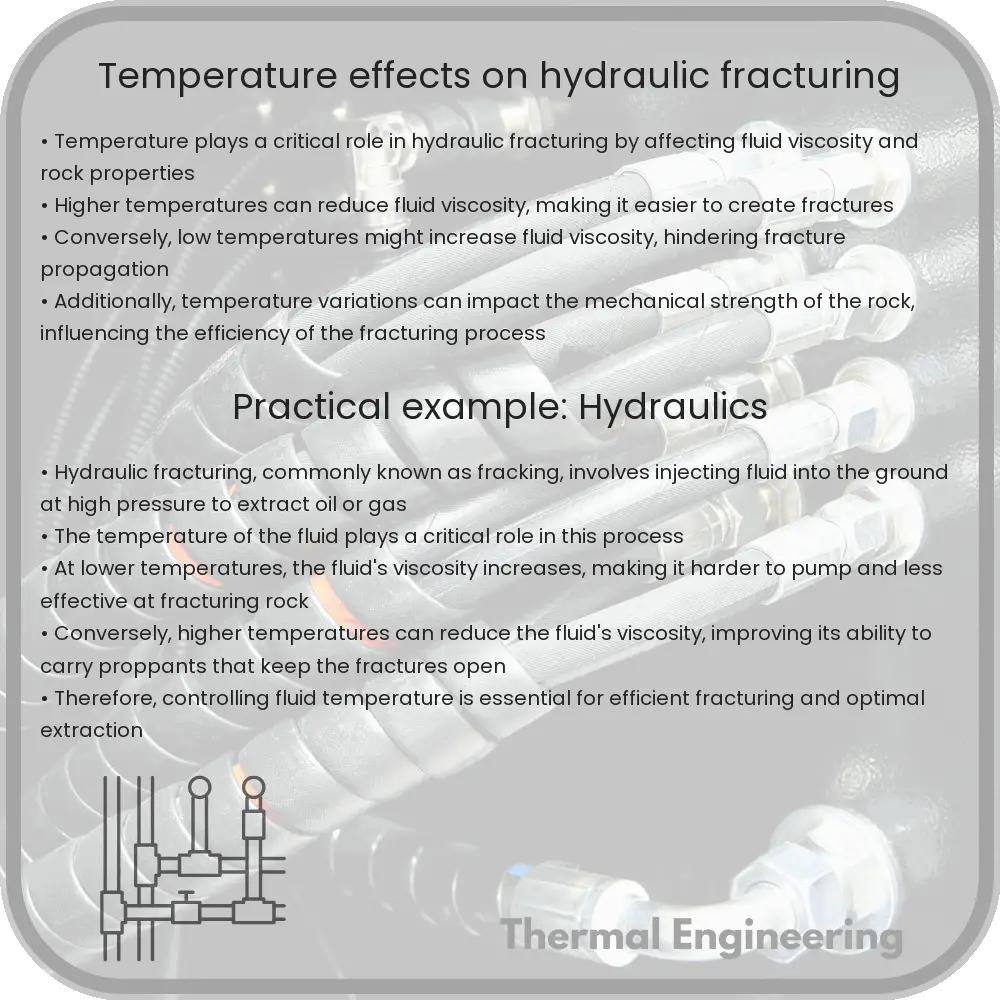
- Viscosity of Fracturing Fluids: The viscosity of the fluids used in fracking, which often include water, sand, and chemicals, is highly sensitive to temperature. Higher temperatures generally decrease the viscosity of these fluids, allowing them to flow more easily through the rock. Conversely, lower temperatures increase fluid viscosity, potentially hindering the fluid flow and thereby affecting the efficiency of the fracture propagation.
- Rock Brittleness: Rock brittleness is a crucial factor for successful fracturing; it determines how easily a rock can fracture. Temperature variation affects the brittleness of the rock. In general, colder temperatures can make rocks more brittle and easier to fracture. However, excessive cold can also lead to undesirable rock behavior.
- Chemical Reactions: The chemical reactions that take place between fracturing fluids and rock formations can be influenced by temperature fluctuations. Some reactions may speed up with an increase in temperature, potentially affecting the integrity of the shale and the performance of the proppants used to keep fractures open.
Temperature Control in Hydraulic Fracturing Operations
Maintaining an optimal temperature during hydraulic fracturing operations is essential for maximizing the efficiency and effectiveness of the extraction process. Operators often use various strategies to manage temperature effects:
- Choice of Fracturing Fluids: Engineers select fluid compositions that are tailored to perform under specific temperature conditions anticipated in the geological formation.
- Heating or Cooling Systems: In environments with extreme temperatures, either heaters or coolers are used to regulate the temperature of the fracturing fluids before injection.
- Real-time Monitoring and Adjustment: Advanced monitoring technologies allow for real-time tracking of temperature and other critical parameters. Adjustments can be made on the fly to adapt to unexpected changes in formation temperature.
Case Studies and Practical Implications
Several case studies have demonstrated the importance of temperature management in hydraulic fracturing. For instance, in colder climates like Canada’s oil sands, special measures are often necessary to ensure that fracturing fluids do not freeze or become too viscous, thus hampering flow and effectiveness. Conversely, in hot climates, such as in some Middle Eastern oil fields, high ambient temperatures can lead to rapid increases in fluid temperatures, which may reduce fluid viscosity too much and affect the transport of sand within the fluid.
Conclusion
Temperature plays a significant and multifaceted role in hydraulic fracturing. Understanding and managing temperature effects are crucial for optimizing this complex engineering process. Through the correct choice of materials, the use of technology for monitoring and controlling temperature, and the application of well-planned operational strategies, the challenges posed by temperature variations can be effectively managed, leading to more efficient and successful hydraulic fracturing operations.