A comprehensive guide to the vital role and methods of temperature monitoring in smart grids, enhancing safety and efficiency.
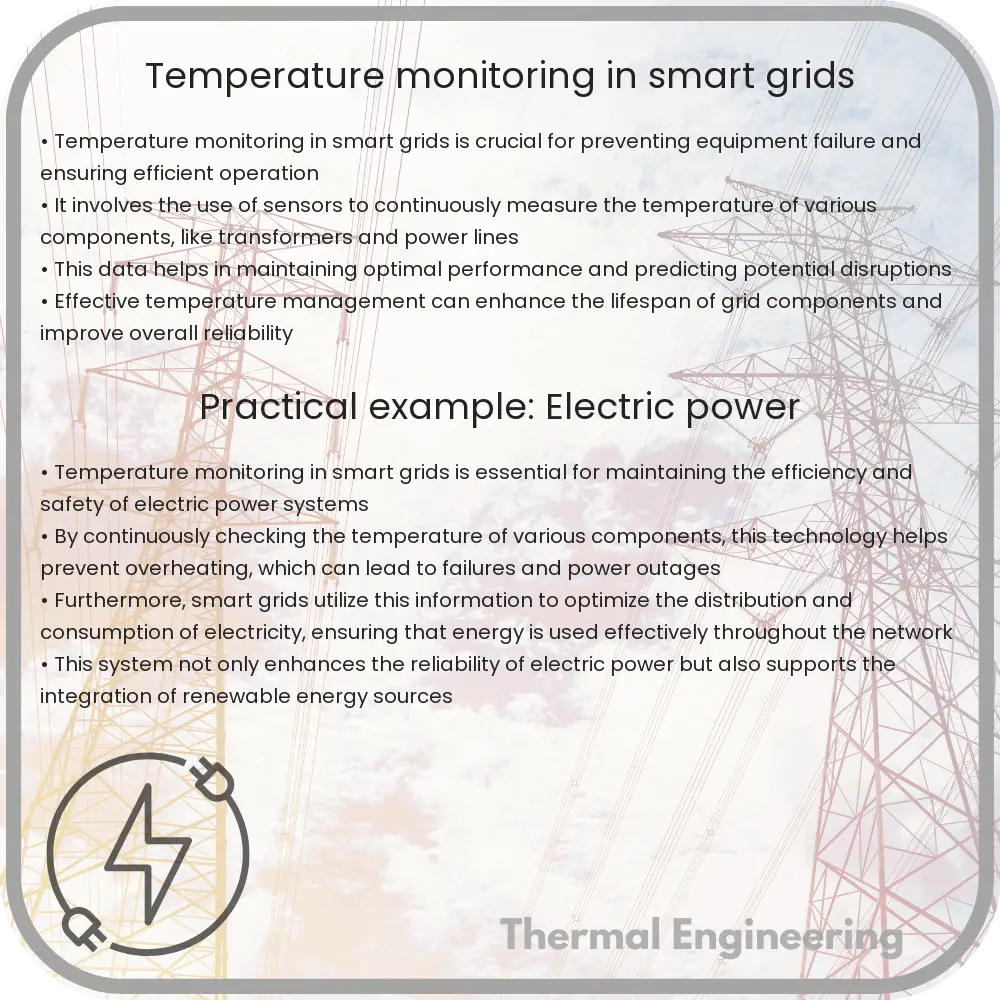
Understanding Temperature Monitoring in Smart Grids
Smart grids represent a significant evolution in the management and distribution of energy. By integrating advanced communication technologies with traditional energy networks, smart grids enhance the efficiency, reliability, and sustainability of electricity services. A critical component of modern smart grids is the extensive use of sensors for various monitoring purposes, among which temperature monitoring plays a pivotal role.
Why Monitor Temperature in Smart Grids?
Temperature is a key factor affecting the efficiency and longevity of electrical components. High temperatures can indicate excessive electrical load, inefficiencies, or potential failures in the system. Here’s why monitoring temperature is crucial:
- Safety: Prevents overheating and reduces the risk of fires and other hazardous situations.
- Efficiency: Helps maintain optimal operating conditions for equipment, thus saving energy.
- Preventive Maintenance: Early detection of abnormal temperature variations can signal the need for maintenance or replacement before more costly breakdowns occur.
- Lifespan: Extends the service life of components by ensuring they operate within safe temperature ranges.
How is Temperature Monitored in Smart Grids?
Temperature monitoring in smart grids utilizes a network of sensors along various points of the grid. These sensors collect data in real-time and transmit it to a central control system for analysis. The key technologies and methods include:
- Fiber Optic Sensors: Utilize light signals within fiber cables to detect temperature changes. Known for their accuracy and the ability to work in harsh environments.
- Thermal Imaging: Uses infrared cameras to visualize and measure temperature variations from a distance, helpful in monitoring substations and other inaccessible areas.
- Wireless Sensor Networks (WSN): Deployed across the grid, these sensors provide flexibility and real-time data reporting, crucial for dynamic grid management.
Challenges in Temperature Monitoring
While temperature monitoring is beneficial, it faces several challenges in the context of smart grids:
- Data Overload: The vast amount of data generated by continuous monitoring can be overwhelming. Adequate data analysis systems are necessary to filter and prioritize information.
- Integration: Seamlessly integrating new sensor technologies with existing grid infrastructures without disrupting service is a significant challenge.
- Cost: Installing and maintaining a comprehensive temperature monitoring system involves initial and ongoing costs that must be justified by the benefits.
Future of Temperature Monitoring in Smart Grids
As smart grid technology evolves, so too do the methods for temperature monitoring. Future developments are likely to include more advanced sensors with higher accuracy and the integration of machine learning algorithms to predict potential failures before they occur. These advancements will improve the responsiveness and adaptability of smart grids, making them even smarter and more reliable.
Temperature monitoring is a vital aspect of smart grid management, ensuring that the grid not only operates efficiently but also safely and sustainably. As technology advances, the scope and effectiveness of these monitoring systems are expected to enhance, leading to smarter management of electricity distribution networks around the world.