Explore the thermal characteristics of biodegradable materials, including conductivity, stability, and heat capacity, crucial for sustainable applications.
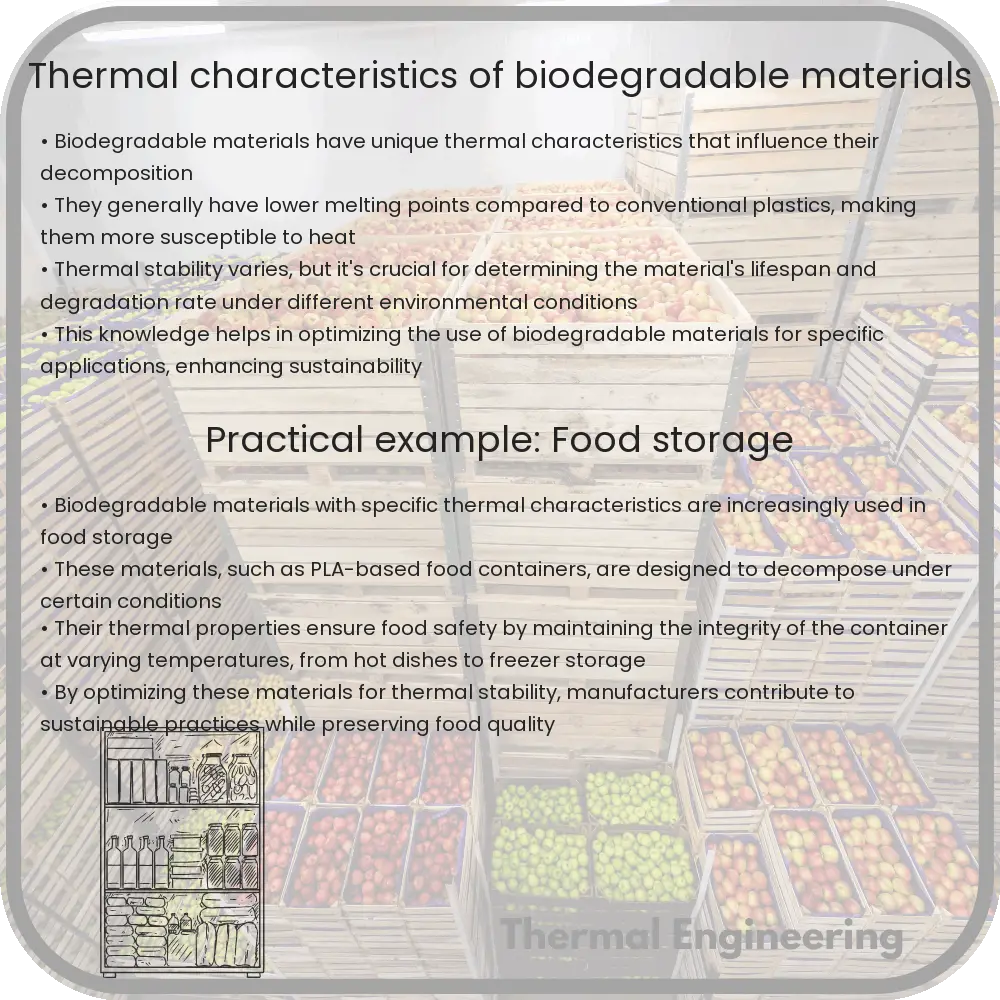
Understanding the Thermal Characteristics of Biodegradable Materials
Biodegradable materials are increasingly touted as sustainable alternatives to conventional non-degradable materials due to their ability to break down naturally and reduce waste. However, their thermal characteristics are crucial in determining their viability and performance in various applications. This article explores how biodegradable materials interact with heat and what this means for their use in products and packaging.
Thermal Conductivity
Thermal conductivity is a measure of a material’s ability to conduct heat. It is crucial in determining how a material behaves in applications where heat transfer is involved. For biodegradable materials, thermal conductivity varies significantly depending on the base biological resources used (such as plant fibers, starch, or proteins). Typically, these materials have lower thermal conductivity compared to synthetic polymers, which can be an advantage in applications requiring insulation.
Thermal Stability
Thermal stability refers to a material’s ability to maintain its structure and properties when exposed to heat. Biodegradable materials often have lower thermal stability than their synthetic counterparts. This characteristic limits their use in high-temperature applications but makes them suitable for products where lower temperature conditions prevail, such as disposable food containers and short-use packaging.
The degradation temperature of common biodegradable materials like polylactic acid (PLA) and starch-based polymers typically ranges from 150°C to 400°C. This property is essential for processing and recycling purposes where controlled thermal decomposition is used to reclaim the constituent biochemicals or for energy recovery.
Specific Heat Capacity
The specific heat capacity is the amount of heat required to change a unit mass of a material’s temperature by one degree Celsius. Generally, biodegradable materials have a comparable specific heat capacity to traditional materials, allowing them to absorb heat energy effectively. This property is particularly important in consumer applications such as biodegradable pots for plants, which can withstand fluctuations in environmental temperatures.
Factors Influencing Thermal Properties
- Composition: The thermal properties of biodegradable materials can be significantly altered by their chemical and physical composition. For example, the inclusion of natural fiber reinforcements in biodegradable plastics can enhance their thermal stability and conductivity.
- Processing Techniques: The methods used to process biodegradable materials, such as extrusion or injection molding, can affect their thermal characteristics. Process optimization is often necessary to enhance the thermal properties and overall performance of the final product.
- Additives: The use of additives is a common approach to modify the thermal characteristics of biodegradable materials. Plasticizers, fillers, and other additives can help improve the thermal stability, conductivity, and resistance to degradation at specific temperatures.
Applications and Future Trends
With growing environmental awareness, the applications of biodegradable materials are expanding. Their unique thermal properties facilitate their use in sectors like packaging, agriculture, and textiles. However, continuous research is needed to improve their thermal characteristics, making them more versatile and suitable for a broader range of applications. Advances in biochemical technologies and composite material design are likely to further enhance the thermal performance and applicability of biodegradable materials in the future.
In conclusion, while the thermal characteristics of biodegradable materials currently pose some limitations, ongoing research and technological advancements are expected to widen their applicability, promoting wider adoption in sustainable manufacturing practices.