Learn about the thermal efficiency of heat pumps, including how it’s measured using COP and EER, and the factors enhancing HVAC system performance.
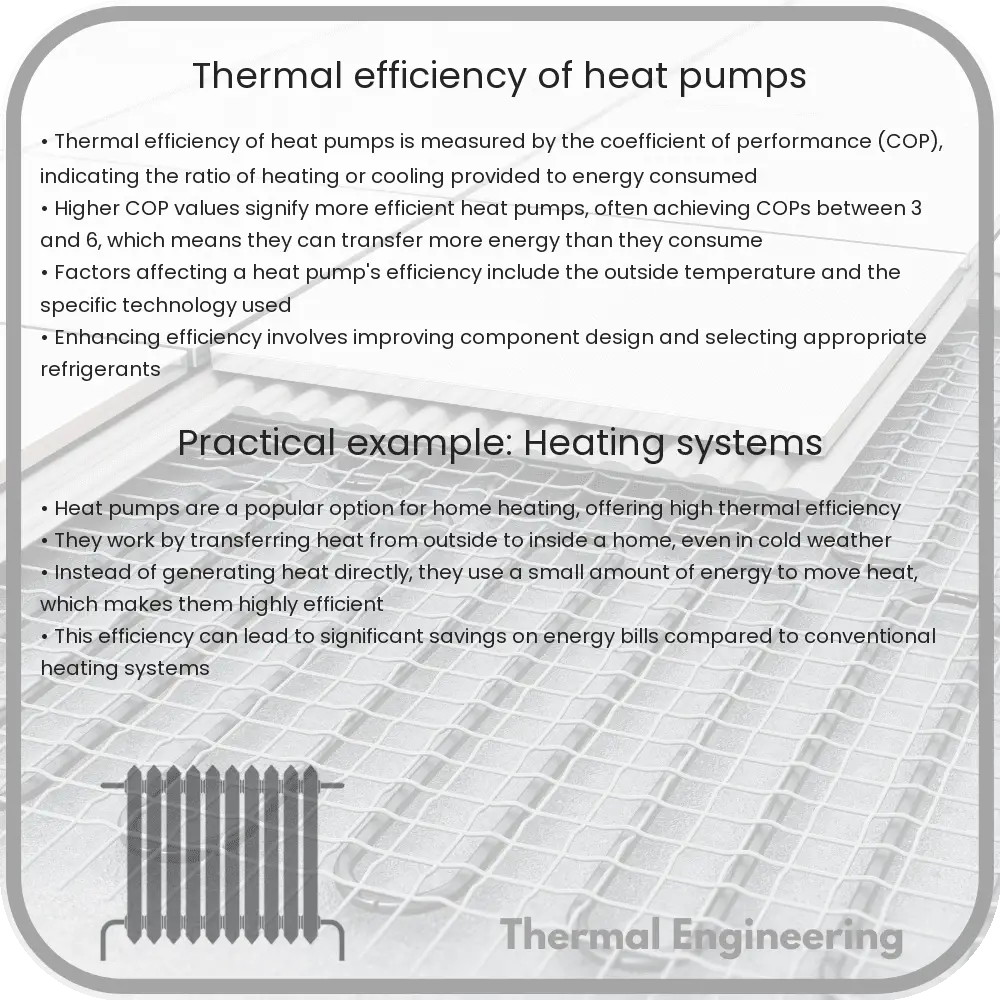
Understanding the Thermal Efficiency of Heat Pumps
Heat pumps are a pivotal technology in the realm of heating, ventilation, and air conditioning (HVAC) systems. Their ability to transfer heat from one environment to another, rather than generating heat directly, makes them an efficient solution for both heating and cooling buildings. The thermal efficiency of heat pumps is a critical metric that determines their energy efficiency and environmental impact. In this article, we will explore what thermal efficiency is, how it is measured, and the factors that affect the efficiency of heat pumps.
What is Thermal Efficiency?
Thermal efficiency, in the context of heat pumps, refers to the effectiveness of the pump in using energy to transfer heat versus the energy consumed in the process. This is typically expressed through the Coefficient of Performance (COP) for heating and the Energy Efficiency Ratio (EER) for cooling. These metrics help quantify the ratio of heat output or cooling provided to the energy input required to run the pump.
- Coefficient of Performance (COP): This is the ratio of the heat output in watts to the electrical energy input in watts. The higher the COP, the more efficient the heat pump.
COP = Heat Output (W) / Electrical Energy Input (W)
- Energy Efficiency Ratio (EER): Used primarily for cooling processes, this ratio measures the cooling output in British Thermal Units (BTU) per hour divided by the power input in watts.
EER = Cooling Output (BTU/hr) / Electrical Energy Input (W)
Factors Influencing the Efficiency of Heat Pumps
Several factors can impact the efficiency of heat pumps:
- Temperature Differential: The difference between the source and supply temperatures significantly affects COP. Smaller differences generally yield higher COP values.
- Type of Heat Pump: There are different types of heat pumps, such as air-source, water-source, and ground-source—each with varying efficiencies. Ground-source pumps, for example, tend to have higher COPs due to the moderate temperatures of the ground.
- Quality of Installation: Improper installation can lead to reduced efficiency. Factors such as the location of the heat pump, ductwork leakage, and inadequate insulation all play critical roles.
- Maintenance: Regular maintenance is essential for keeping a heat pump running efficiently. This includes cleaning filters, checking fluid levels, and ensuring that components are in good working order.
Improving Heat Pump Efficiency
To maximize the efficiency of a heat pump, consider the following strategies:
- Using advanced technologies: Inverter-driven compressors, for instance, can adjust their speed to the demand, significantly improving the COP of a heat pump.
- Optimal sizing and installation: Ensuring that the heat pump is correctly sized and properly installed for the specific building or space is crucial.
- Regular maintenance: As mentioned earlier, routine inspections and maintenance help sustain high efficiency.
Conclusion
The thermal efficiency of heat pumps plays a vital role in determining their energy consumption and effectiveness in heating or cooling environments. By understanding and optimizing factors such as the type of heat pump, temperature differentials, and regular maintenance, users can significantly enhance the performance and energy efficiency of their heat pump systems. With increasing focus on sustainable energy practices, improving the efficiency of such systems is more crucial than ever.
Whether you’re a homeowner, business owner, or a student of engineering, grasping the basic principles that govern the efficiency of heat pumps can help you make informed decisions about heating and cooling solutions that are not only efficient but also environmentally responsible.