Learn about Thermal Energy Storage systems, their types, working, efficiency, and applications in energy management and sustainability.
Understanding Thermal Energy Storage Systems
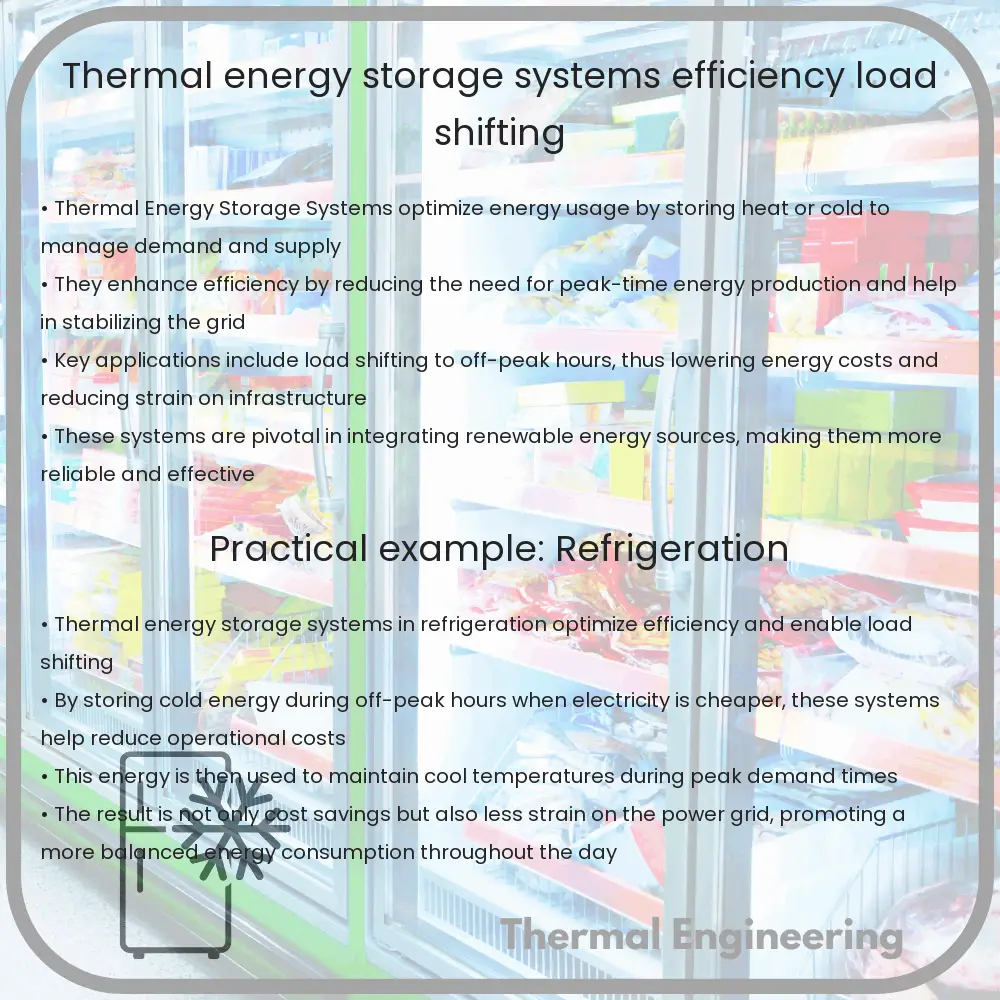
Thermal Energy Storage (TES) systems are pivotal in enhancing energy efficiency and managing energy supply, by storing thermal energy for later use. These systems play a key role in load shifting, reducing energy costs, and mitigating environmental impacts. In this article, we’ll delve into how TES systems work, the types used, and their advantages in terms of efficiency and load shifting.
How Thermal Energy Storage Works
TES systems store thermal energy during periods of low energy demand or when surplus renewable energy is available, and release it during periods of high energy demand. The core principle involves absorbing, storing, and later releasing energy in the form of heat. This process helps in managing the energy output of heating and cooling systems more efficiently.
Types of Thermal Energy Storage Systems
- Sensible Heat Storage: This is the most common type of TES, which involves storing energy by heating or cooling a storage medium like water or sand. The temperature of the medium changes, but its phase does not.
- Latent Heat Storage: Utilizes phase-change materials (PCMs) which absorb and release heat at a constant temperature during the process of melting and solidifying.
- Thermochemical Storage: Involves chemical reactions that store and release heat. Although complex, these systems can potentially store more energy per unit mass than sensible or latent systems.
Efficiency of Thermal Energy Storage
The efficiency of TES systems largely depends on the specific technology and the materials used. Sensible heat systems, for instance, often exhibit efficiencies between 70% to 90%. Latent heat systems, utilizing PCM, can reach efficiencies of up to 80-90%, depending on the materials employed and the encapsulation technologies used. Thermochemical storage, due to its ability to store heat at high densities and for long durations without significant losses, shows promise for even higher efficiencies.
Load Shifting and TES
Load shifting is one of the most beneficial features of TES systems in energy management. By allowing energy to be stored when demand is low and released when demand is high, TES systems help in:
- Reducing the need for peak energy production, hence decreasing the reliance on less efficient, more expensive, and often more polluting energy sources.
- Improving the overall reliability and stability of electrical grids, especially those with significant inputs from renewable energy sources, such as solar and wind, which can be intermittent.
- Decreasing electricity costs by utilizing lower-cost off-peak electricity to meet peak demands.
Real-World Applications of TES Systems
TES systems are widely applied in various sectors, including residential, commercial, and industrial. In commercial buildings, TES systems are often used in conjunction with HVAC (Heating, Ventilation, and Air Conditioning) systems to manage indoor climate cost-effectively. Industrial applications may include process heating and cooling, where TES can help in managing energy use more predictably and sustainably. Furthermore, in power generation, TES is utilized to stabilize grid operation and integrate renewable energy sources efficiently.
Conclusion
Thermal Energy Storage systems present a robust solution for enhancing energy efficiency and managing load in various settings. By understanding the types of TES systems and their applications, industries and utilities can make informed decisions that not only save costs but also foster environmental sustainability. As technology progresses, the efficiency and applications of TES will continue to evolve, playing a crucial role in the transition towards a more sustainable energy future.