Explore the factors affecting the thermal insulation performance of window systems, including materials, design, and advanced technologies.
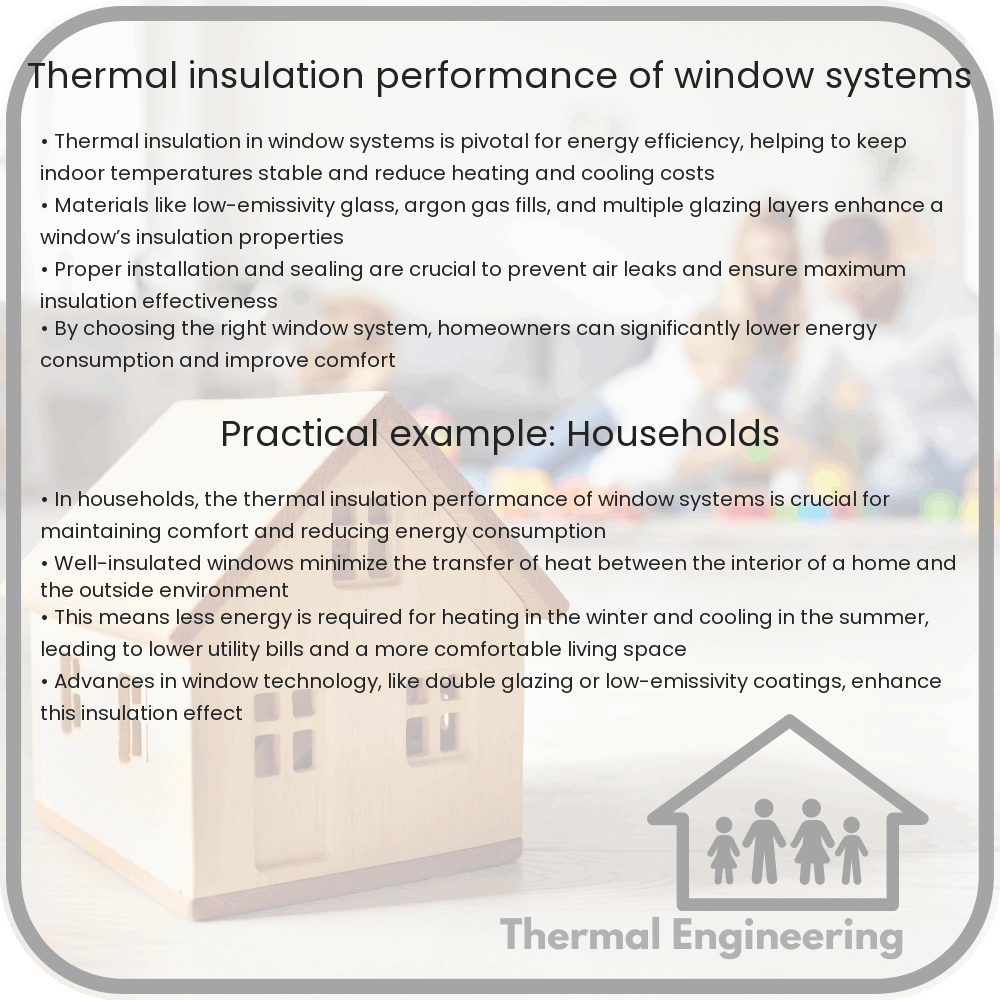
Understanding the Thermal Insulation Performance of Window Systems
Windows are vital components of a building’s envelope, not only letting in light and offering views of the outside, but also playing a significant role in the thermal comfort and energy efficiency of a space. Evaluating the thermal insulation performance of window systems involves understanding how effectively a window can resist the unwanted transfer of heat.
Key Factors Influencing Thermal Performance
Several factors contribute to the thermal performance of windows:
- Window Frame Material: Materials such as vinyl, wood, fiberglass, and aluminum impact the thermal resistance of window frames. Materials like wood and fiberglass offer better insulation compared to metal frames unless they incorporate a thermal break.
- Glass Type: The type of glass, including double or triple pane, low-e coatings, and gas fills between panes (like argon or krypton), significantly affects a window’s ability to insulate.
- Design and Construction: The overall design and how the window is constructed, including the quality of seals and the installation process, also impact performance.
Measuring Thermal Insulation
The effectiveness of window insulation is quantitatively measured using two primary metrics:
- U-Value (Thermal Transmittance): This measures the rate of heat transfer through the window. The lower the U-value, the better the window’s insulation capabilities. U-values are typically expressed in watts per square meter Kelvin (W/m2K).
- R-Value (Thermal Resistance): This is the inverse of the U-value and measures how well a window resists the conductive flow of heat. Higher R-values indicate better insulating properties.
Both U-value and R-value are critical for assessing a window’s performance under the thermal criteria set by building codes and energy efficiency standards.
Role of Window Insulation in Energy Efficiency
Effective thermal insulation in windows reduces the energy required for heating and cooling, leading to significant energy savings and comfort improvements:
- Economic Savings: Reducing heat loss in winter and heat gain in summer can significantly cut down on heating and cooling bills.
- Enhanced Comfort: Improved window insulation helps maintain a consistent indoor temperature, eliminating cold drafts and hot spots.
- Environmental Impact: By lowering the energy demand for climate control, well-insulated windows contribute to reduced greenhouse gas emissions.
Advancements in Technology
Recent advancements in window technology aim to improve thermal insulation:
- Smart Windows: These can change their thermal properties based on external environmental conditions, either automatically or at the touch of a button.
- Improved Low-E Coatings: Technological improvements in low-e coatings enhance their ability to reflect infrared light, thus improving their insulative properties.
- Spacer Technology: The materials and designs of spacers between double-glazed and triple-glazed windows are continuously evolving to reduce heat transfer at the edge of the glass.
By understanding and effectively utilizing the thermal insulation properties of windows, engineers and architects can significantly improve the energy efficiency, comfort, and sustainability of buildings.