Learn about active thermal insulation systems, which enhance building energy efficiency by dynamically regulating heat transfer.
Understanding Active Thermal Insulation Systems
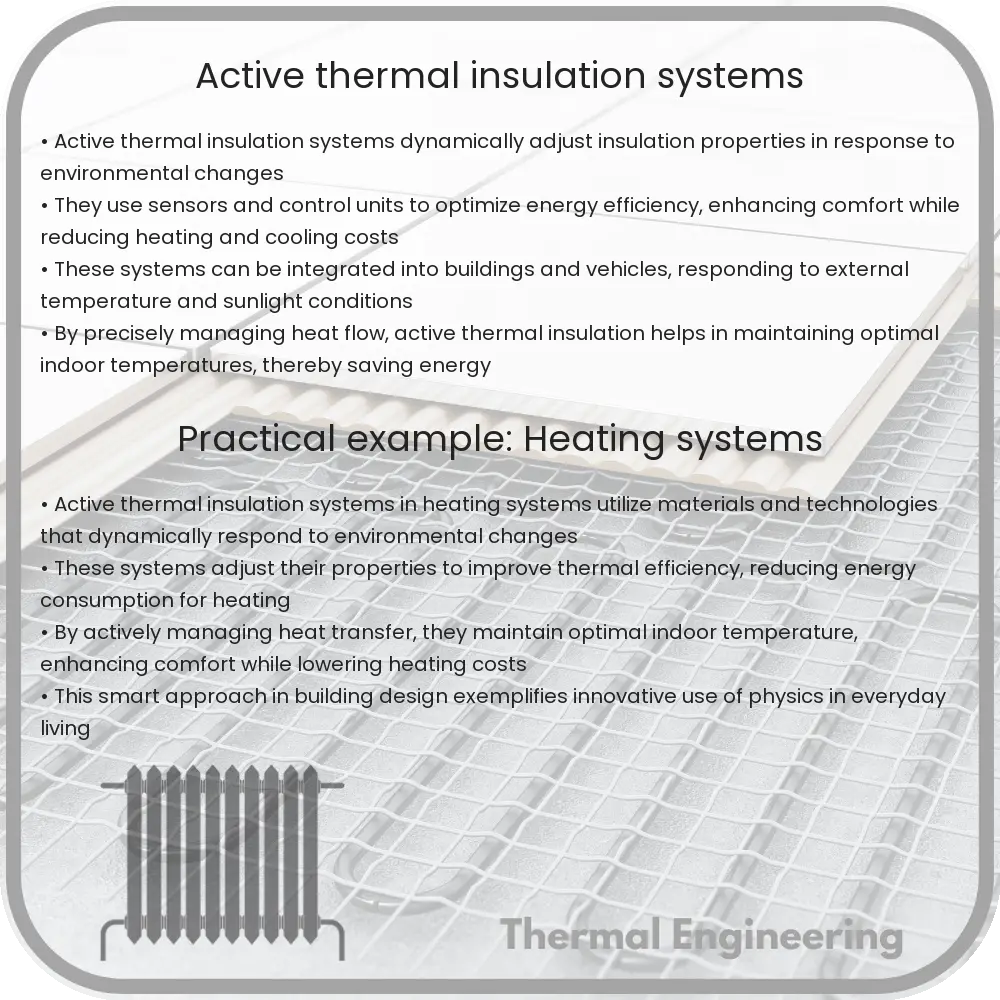
Active thermal insulation systems represent an advanced approach in the engineering of building envelopes, where the aim is not only to insulate but also to dynamically regulate the transfer of heat through walls or other structural components. Unlike traditional passive insulation that only resists heat flow, active thermal insulation systems actively manage heat transfer based on external and internal conditions, enhancing energy efficiency and indoor comfort in buildings.
How Active Thermal Insulation Systems Work
The core functionality of active thermal insulation systems lies in their ability to adjust insulation properties dynamically. This is typically achieved through the integration of materials that change their thermal properties in response to external stimuli such as temperature, humidity, or electrical input.
- Phase Change Materials (PCMs): PCMs are substances that absorb or release heat as they change phases (e.g., from solid to liquid or vice versa). By incorporating PCMs into building materials, walls can absorb excess heat during the day and release it at night, thus stabilizing indoor temperatures.
- Thermochromic Materials: These materials change their color and hence their solar absorption properties based on temperature. A thermochromic coating on a building’s exterior can reduce the need for air conditioning by reflecting more sunlight as it gets hotter.
- Active Insulation Panels: These panels have adjustable insulative properties. For example, panels might incorporate ventilated cavities that can be opened or closed in response to thermal sensors, modulating the insulation level.
Benefits of Active Thermal Insulation Systems
Active thermal insulation systems offer several significant benefits:
- Energy Efficiency: By optimizing heat transfer, these systems reduce the need for mechanical heating and cooling, thus lowering energy consumption and utility costs.
- Enhanced Comfort: The dynamic regulation of temperature ensures a more consistent indoor climate, enhancing comfort for occupants.
- Reduced Environmental Impact: Lower energy consumption translates to reduced carbon emissions, contributing to environmental sustainability.
- Adaptability: These systems can adapt to various climatic conditions and user preferences, making them versatile for different geographic locations and building types.
Challenges and Considerations
Despite their benefits, the implementation of active thermal insulation systems comes with challenges:
- Cost: The initial cost of materials and installation for active systems is generally higher than for traditional insulation.
- Complexity: These systems can be more complex to design, install, and maintain, requiring advanced control systems and sensors.
- Reliability: Greater complexity might impact the long-term reliability of the building envelope. Regular maintenance and monitoring are crucial to ensure system efficiency.
In conclusion, active thermal insulation systems are an innovative step forward in building technology, promising enhanced energy efficiency and occupant comfort. While they present certain challenges, the benefits they offer could make them a key component of future sustainable building practices. As technology advances and costs decrease, these dynamic systems may become more commonplace, reshaping our approach to architectural design and energy management.