Learn how to enhance thermal performance in greenhouses for healthier plants and improved energy efficiency.
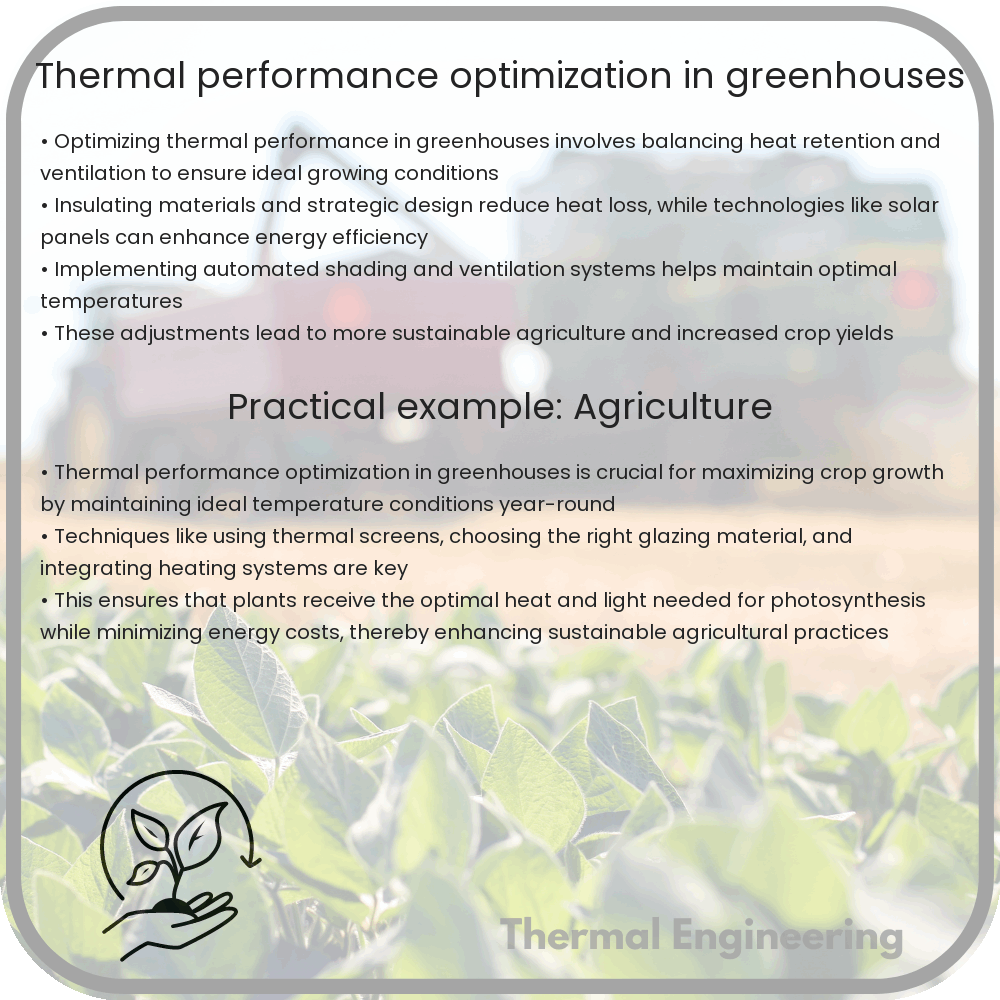
Understanding Thermal Performance Optimization in Greenhouses
Greenhouses are structures designed to optimize plant growth by creating a controlled environment. A key aspect of such control is the regulation of temperature—termed as ‘thermal performance’. Optimizing this thermal environment is crucial not only for plant health and yield but also for energy efficiency. In this article, we delve into several strategies and technologies that enhance thermal performance in greenhouses.
Fundamental Principles of Thermal Control
Thermal performance in a greenhouse is primarily influenced by the balance between heat gain and loss. This balance is affected by factors such as sunlight, external temperatures, and greenhouse construction materials. Effective thermal management seeks to maximize sunlight absorption during colder months while minimizing heat loss, and vice versa during warmer months.
Strategies for Optimizing Thermal Performance
- Insulation: Proper insulation is crucial. Materials like polycarbonate panels or multi-layered polyethylene films are commonly used. They help in minimizing heat loss during cold periods and maintaining cooler temperatures inside during the heat of the day.
- Thermal Mass: Using materials that absorb and store heat during warm periods and release it slowly when cooler can help stabilize temperature fluctuations. Water tanks or concrete foundations serve as effective thermal mass.
- Shading and Cooling Systems: During hot months, the use of shades, reflective coatings, or evaporative cooling systems can reduce the internal temperature significantly.
- Heating Systems: For colder regions, supplemental heating might be necessary. Options include radiant floor heating, hot water heaters, or biofuel systems.
- Ventilation: Adequate ventilation is essential to control and maintain the desired temperature and humidity levels. Roof vents, side vents, or automated climate control systems can be implemented to optimize airflow.
Role of Technology in Thermal Optimization
Advancements in technology have significantly enhanced our ability to control and optimize the climate within greenhouses. These include:
- Automated Climate Control Systems: These systems use sensors and actuators to precisely control temperature, humidity, and CO2 levels based on real-time data.
- Smart Greenhouses: IoT (Internet of Things) technology allows for remote monitoring and management of greenhouse conditions, leading to more precise control over thermal conditions.
- Energy-efficient Design: Modern greenhouse designs incorporate features like double-glazing and low-emissivity (low-e) glass to reduce heat loss.
Optimization Techniques and Performance Measurement
Implementing these strategies requires a thorough understanding of both plant needs and local climate conditions. It’s also essential to measure and analyze the performance to ensure that the implemented strategies are effective. Tools like thermal cameras, heat flux sensors, and energy consumption analytics are commonly used for this purpose.
By integrating these tools and strategies, greenhouse operators can significantly improve the thermal performance of their facilities, leading to better plant health and reduced energy expenditures. Continuous monitoring and adjustment based on performance data are key to maintaining optimal conditions in the dynamic environment of a greenhouse.
Ultimately, whether for small-scale gardeners or large agricultural producers, understanding and optimizing thermal performance in greenhouses can lead to more sustainable and profitable cultivation practices.