Ultralow freezers are essential biomedical devices for preserving biological samples at extremely low temperatures for research and medical therapies.
Understanding Ultralow Freezers in Biomedical Applications
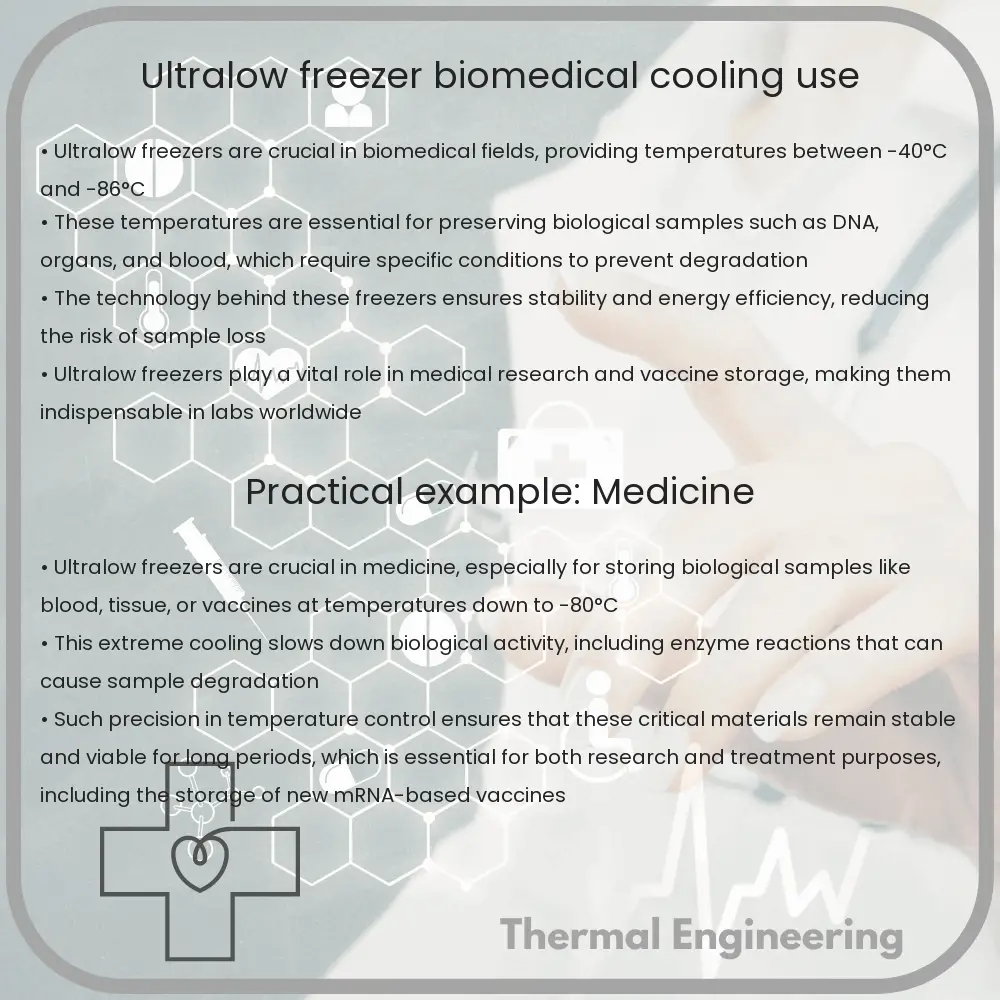
Ultralow freezers (ULFs) are crucial devices in the biomedical field, designed to store biological samples such as DNA, RNA, proteins, and cellular structures at extremely low temperatures. Typically, these freezers maintain temperatures from -40°C to -86°C. This ability to keep samples at stable, ultralow temperatures is vital for preserving the integrity and longevity of biological materials, which can be critical for research and medical therapy.
Design and Functionality of Ultralow Freezers
The design of ultralow freezers maximizes temperature uniformity, minimizes temperature recovery time after door openings, and ensures long-term reliability under various operational conditions. They are generally divided into two main types based on their cooling technology:
- Cascade Freezers: These use two compressors in series to achieve lower temperatures. The first compressor cools the condenser for the second, allowing for a more significant temperature drop.
- Auto-cascade Freezers: These feature a single compressor system designed with a complex arrangement of capillary tubing and multiple refrigerants optimized for varying stages of cooling.
Key Components
Several critical components ensure the functionality of ultralow freezers:
- Compressor: The heart of the freezer, responsible for the refrigeration cycle.
- Heat Exchanger: Facilitates heat removal from inside the freezer.
- Insulation: Typically made from vacuum insulated panels to reduce heat gain and improve temperature stability.
- Controller: Monitors internal conditions and maintains set temperature levels.
Applications of Ultralow Freezers in Biomedicine
Ultralow freezers are integral in various biomedical applications:
- Pharmaceuticals: Storage of drugs, especially those that require stability at very low temperatures.
- Biobanking: Preserve and store biological specimens like blood, saliva, plasma, and purified DNA.
- Medical Research: Facilitate studies on enzymes, microbes, and other cell types under controlled conditions.
- Vaccine Storage: Critical for the long-term storage of vaccines that need to be maintained at specific temperatures to remain effective.
Challenges and Future Directions
While ultralow freezers are essential in biomedicine, they pose certain challenges:
- Energy Consumption: ULFs are energy-intensive, leading to high operational costs and environmental concerns.
- Maintenance: They require regular maintenance to ensure efficiency and reliability, involving periodic validation and calibration.
Advancements are continually being made to address these challenges. Innovations include the development of freezers with natural refrigerants that minimize environmental impact, as well as enhancements in insulation materials and compressor efficiency to reduce energy use. Moreover, smart features like automated inventory management and fault diagnosis via AI are being integrated to improve usability and functionality.
Ultimately, ultralow freezers continue to play a pivotal role in the advancement of biomedical research and healthcare by preserving critical biological samples for extended periods, enabling their use in groundbreaking research and therapies.