Learn about convection heat transfer techniques, including natural and forced convection, and internal and external flow applications.
Understanding Convection Heat Transfer: 4 Key Techniques
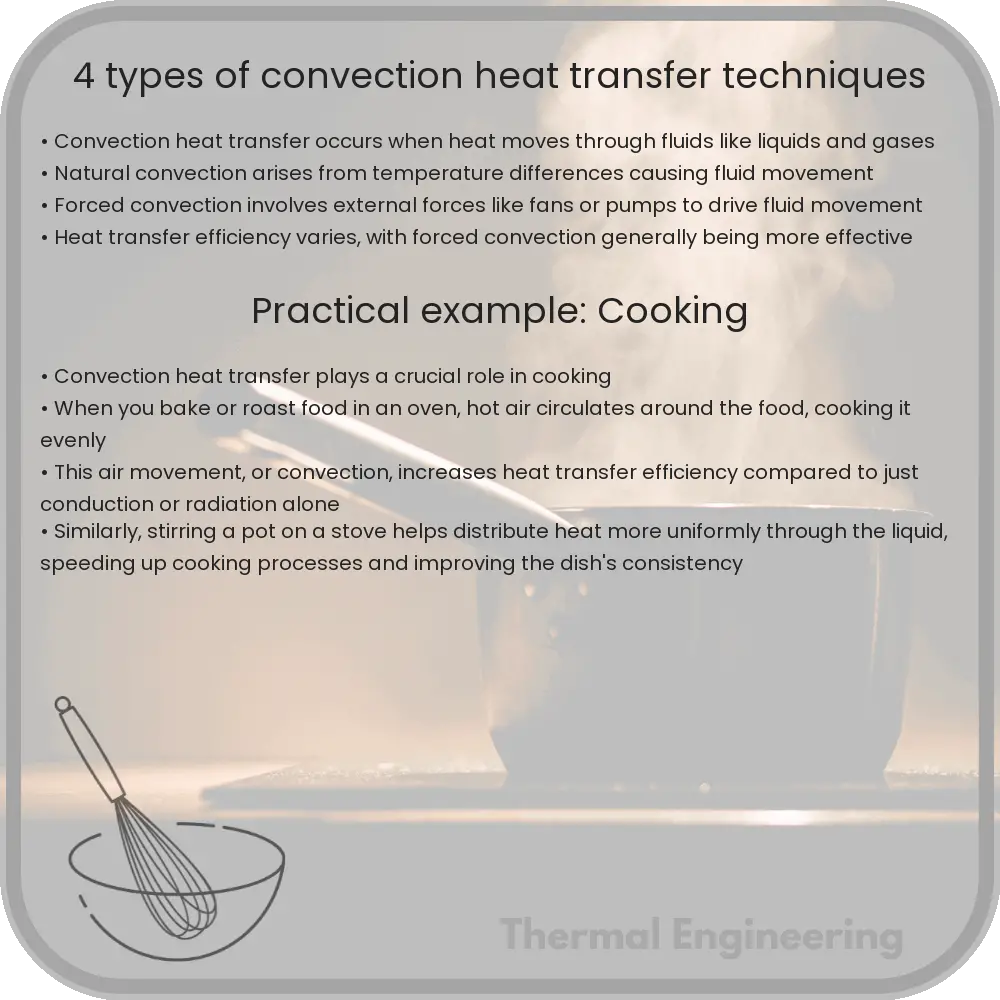
Convection heat transfer is a fundamental concept in both engineering and physics, playing a critical role in a wide range of applications from industrial processes to everyday appliances like heating systems and air conditioners. Convection involves the transfer of heat by the physical movement of a fluid (which can be a liquid or a gas) over a surface. The efficiency of convection can be significantly enhanced or controlled using different techniques. Here, we explore four main types of convection heat transfer techniques: natural convection, forced convection, internal flow, and external flow.
Natural Convection
Natural convection occurs when the flow of the fluid is caused by density differences that arise from temperature variations within the fluid. No external force (like a pump or a fan) is needed. This type of convection is commonly seen around radiators, hot beverages cooling at room temperature, or in the heating of a room by a single heat source.
- Buoyancy: The driving force behind natural convection is buoyancy, where warmer, less dense fluid rises and cooler, denser fluid descends.
- Application: Natural convection is used in designing passive cooling systems, for example, in buildings and solar panels.
Forced Convection
Forced convection involves moving a fluid by external means such as a fan, pump, or suction device over a surface. The increased control over fluid movement generally enhances the heat transfer rate compared to natural convection.
- Implementation: Common applications include automotive cooling systems where fans propel air over radiator surfaces, and HVAC systems in buildings.
- Control: With forced convection, engineers can specifically tailor flow systems to maximize efficiency, such as adjusting the speed of fans or pumps.
Internal Flow
In internal flow convection, fluid moves through a confined space such as pipes or ducts. The heat transfer occurs between the fluid and the surface of these boundaries.
- Characteristics: A significant aspect is the development of a boundary layer where the fluid velocity changes from zero at the wall (due to the no-slip condition) to a maximum value away from the wall.
- Examples: Heating systems in buildings often use hot water flowing through pipes, and numerous industrial processes rely on heat transfer in tubes for fluids and gases.
External Flow
External flow pertains to the convection where fluids flow over objects as opposed to within them. Here, the object being cooled or heated is directly exposed to the fluid.
- Dynamics: The flow of the fluid creates different layers and patterns around the surfaces it encounters, which can be critical in optimizing heat transfer.
- Utilizations: Applications are varied, including the cooling of electronic devices through air flow or the heating of vehicle surfaces to de-ice in colder climates.
In conclusion, heat convection is a versatile mechanism used in numerous engineering and technical applications. Understanding the distinctions between natural and forced convection, and internal and external flows, allows engineers to design more efficient and effective heating and cooling systems. Each technique offers unique advantages and is chosen based on the specific requirements of the application, allowing for significant improvements in thermal management and energy conservation.