Learn about the various types of industrial ovens used in heat treatment processes, from batch to infrared ovens.
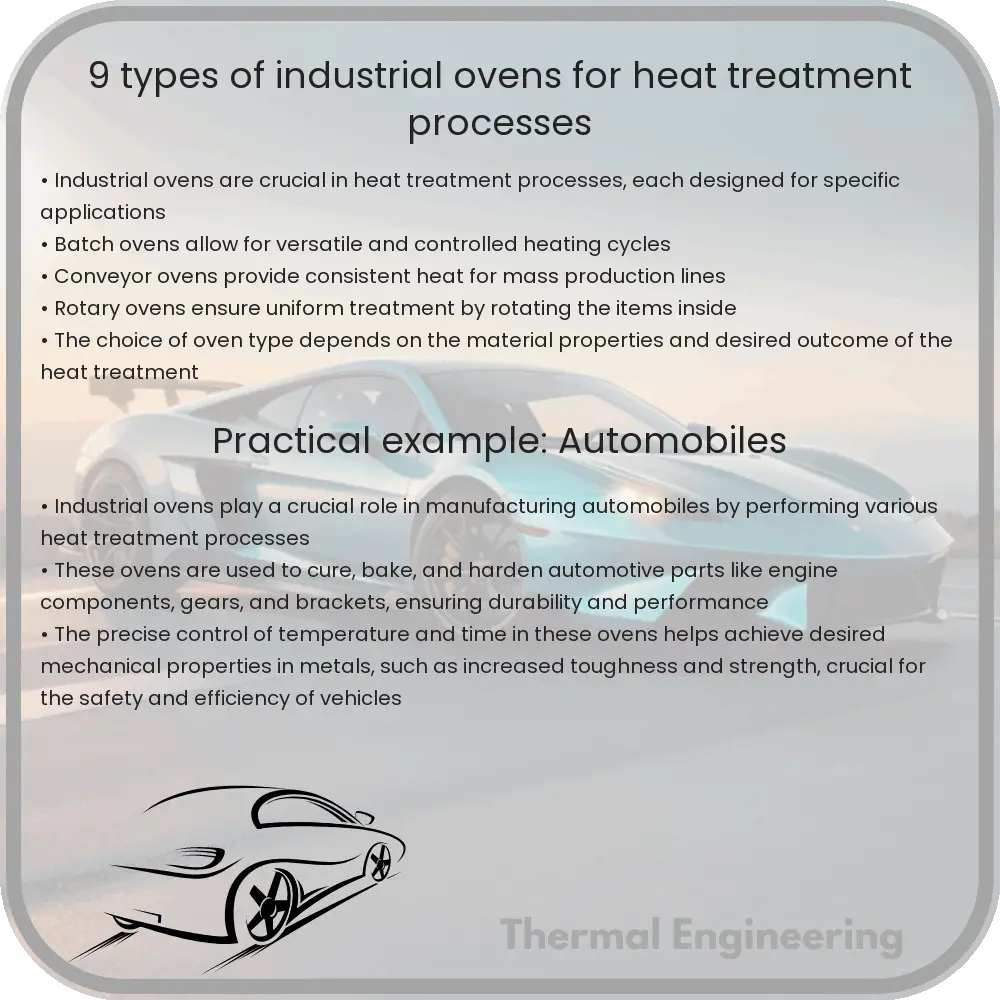
Understanding 9 Types of Industrial Ovens for Heat Treatment Processes
Industrial ovens are essential tools in many manufacturing processes where heat treatment is required. These ovens are used to alter the physical, and sometimes chemical, properties of a material. Here, we explore nine common types of industrial ovens used for heat treatment, each suited to specific tasks and materials.
1. Batch Ovens
Batch ovens are versatile and commonly used in industrial settings where different heat treatment processes are carried out intermittently. Materials or products are loaded into the oven, processed, and then removed before a new batch is introduced. This type of oven is ideal for curing, drying, aging, and other heat treatments at various temperatures.
2. Conveyor Ovens
Conveyor ovens allow for continuous processing, making them suitable for mass production. Products move through the oven on a conveyor belt, ensuring consistent treatment across large volumes of products. They are often used in the food industry, as well as for drying, curing, or heat-treating metals and plastics.
3. Drying Ovens
Drying ovens precisely remove moisture from the materials inside. They are widely used in the paint industry to remove solvents from coatings and in the electronics industry to remove moisture from components before further processing.
4. Curing Ovens
Curing ovens are designed to cause a chemical reaction in a material once a specific temperature is reached. They are commonly used for curing painted or coated surfaces, adhesives, and composites, ensuring that the finished products are hard and durable.
5. Annealing Ovens
Annealing ovens are used to heat materials, typically metals or glass, and then allow them to cool slowly to remove internal stresses and improve ductility. This heat treatment process is crucial for materials that need to be soft enough to undergo further machining or shaping.
6. Tempering Ovens
Following processes like hardening, tempering ovens are used to decrease the brittleness of metals. Materials are heated to a temperature below their critical point, held at this temperature, and then cooled. This procedure improves the toughness of the product.
7. Vacuum Ovens
Vacuum ovens operate in a vacuum environment where air and other gases are removed from the processing chamber. This type of oven is used in delicate processes where oxidation needs to be avoided, such as in electronics and aerospace applications.
8. Clean Room Ovens
Used in environments where contamination must be minimized, clean room ovens support processes such as baking, drying, and curing in semiconductor manufacturing, biotechnology, and pharmaceutical industries.
9. Infrared Ovens
Infrared ovens use infrared radiation to heat objects directly without heating the surrounding air. This efficient method is quick and can be precisely controlled. It is ideal for processes like drying paint quickly or heating plastics.
Conclusion
Understanding the different types of industrial ovens helps in selecting the right oven for a specific heat treatment process. Each type offers distinct advantages, depending on the material properties and the desired outcome of the heat treatment process. Proper selection ensures not only efficiency but also product quality and process reliability.