Learn about aramid fibers, synthetic materials known for durability and resistance to extreme heat, used widely in protective clothing.
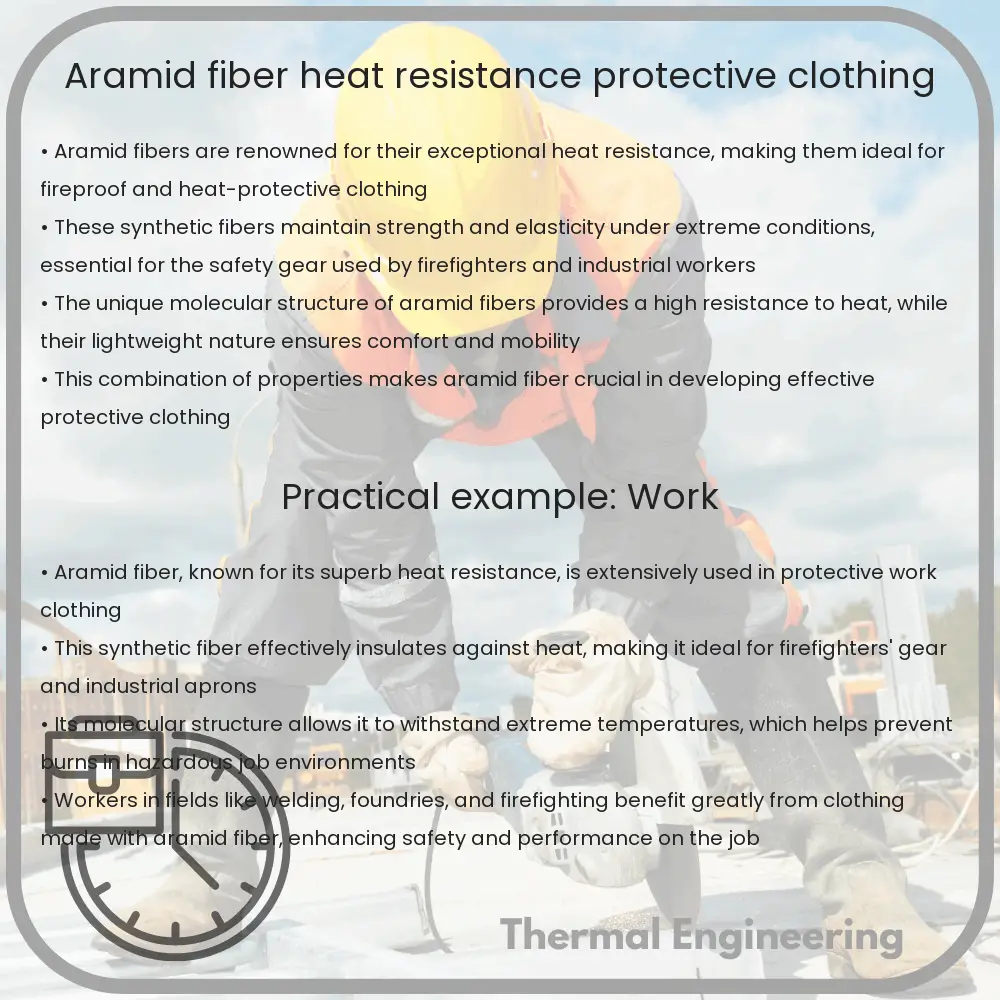
Aramid Fiber: A Marvel in Engineering for Heat Resistance and Protective Clothing
Aramid fibers are high-performance synthetic fibers renowned for their exceptional heat resistance and strength. These fibers, first commercially developed in the early 1960s, have since become pivotal in various applications requiring durability, resistance to heat, and lightweight properties. Aramid fibers are particularly notable for their use in protective clothing, where they provide essential protection against extreme thermal exposures, mechanical impacts, and other hazardous conditions.
Understanding Aramid Fiber
Aramid fibers are primarily made of long molecular chains of aromatic polyamide. They are created through a process called ‘spinning’, where the liquid crystalline solution of polyamide is extruded through a spinneret to form fibers. Once solidified, these fibers exhibit a highly oriented structure, granting them exceptional strength and thermal stability. The term “aramid” is a portmanteau derived from ‘aromatic polyamide’.
Heat Resistance Properties
The molecular structure of aramid fibers gives them remarkable thermal stability. These fibers can maintain their integrity and mechanical properties at temperatures up to 500 degrees Celsius. The unique aspect of aramid fibers in terms of heat resistance can be attributed to their strong covalent bonds and aromatic rings within the molecular chain, which provide a high melting point and limit heat transfer along the fiber.
Applications in Protective Clothing
Aramid fibers are extensively used in protective clothing, catering to industries like firefighting, military, aerospace, and automotive sectors. In these applications, protective gear made from aramid fibers can significantly reduce the risk of burns and injuries from heat and flames. The fibers are not only resistant to heat but also to many chemicals, ensuring additional safety in hazardous environments. Here are some critical applications:
- Firefighter suits: Provide thermal protection while remaining lightweight.
- Military uniforms: Offer bulletproof and fire-resistant properties.
- Heat-resistant gloves and aprons: Used in industrial settings where heat and flame are risks.
- Aerospace clothing: Protects from potential aircraft fires and extreme conditions.
Advantages of Using Aramid Fiber in Protective Clothing
The deployment of aramid fibers in protective wear offers multiple advantages:
- Thermal Stability: Aramid fibers do not melt or ignite in air, providing reliable protection against high temperatures.
- Durability: The fibers are incredibly durable, resistant to abrasion, and possess a high breaking strength, ensuring long-lasting wear.
- Flexibility: Despite their strength, aramid fibers are surprisingly flexible, which is crucial for the mobility needed in many protective clothing applications.
- Chemical Resistance: Being resistant to many chemicals, aramid fibers provide an added layer of protection in environments exposed to hazardous substances.
Challenges and Considerations
While aramid fibers offer significant advantages, they are not without challenges. The cost of production can be relatively high due to complex manufacturing processes, limiting their accessibility and increasing the end cost of protective clothing. Furthermore, while excellent in thermal and mechanical resistance, aramid fibers can degrade under ultraviolet light and may have limited compressive strength, which are important considerations for specific applications.
In conclusion, aramid fibers stand as a testament to the advances in chemical and textile engineering, providing essential safety features in many high-risk professions. Through ongoing research and development, the functionality and efficiency of aramid-based protective clothing continue to improve, broadening their applications and enhancing safety standards in numerous industries.