Learn how thermal plumes, hot gas emissions from volcanoes, help predict volcanic activity through temperature, gas composition, and plume density analysis.
Understanding the Role of Thermal Plumes in Predicting Volcanic Activity
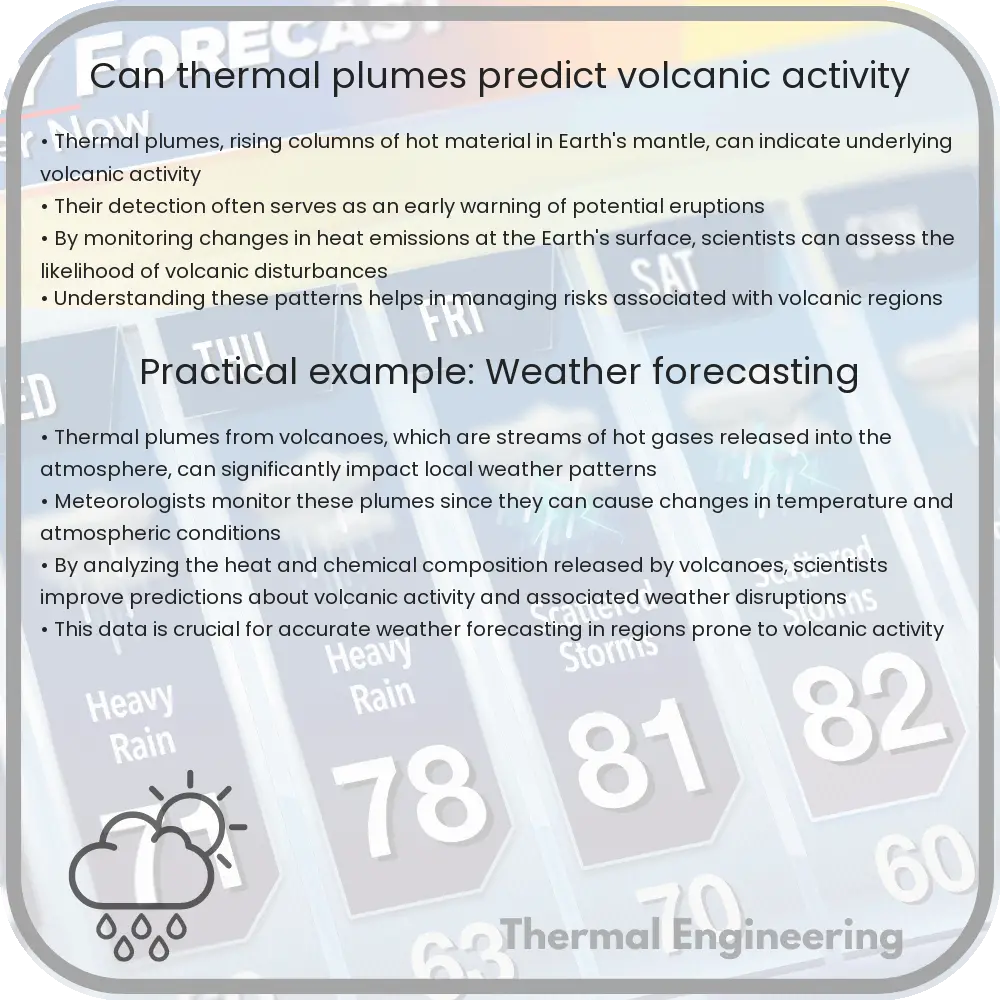
Volcanic monitoring and prediction remain crucial for safeguarding lives and property in regions prone to volcanic eruptions. Among the various indicators of volcanic activity, thermal plumes offer significant insights. These naturally occurring, hot gas emissions from a volcano’s crater are not just spectacular geological phenomena but also potential predictors of volcanic activity.
What are Thermal Plumes?
Thermal plumes are columns of hot gases that rise above areas of geothermal activity, such as volcanoes or geothermal vents. These plumes are formed when heat from the Earth’s interior warms up surrounding air or gases, causing them to expand and rise due to their lower density compared to the cooler air outside the plume.
How Do Thermal Plumes Signal Volcanic Activity?
Thermal plumes can help predict volcanic activity through the analysis of several of their characteristics:
- Temperature Changes: A significant increase in the temperature of a thermal plume can indicate rising magma levels, which may imply that an eruption is likely.
- Gas Composition: Changes in the composition of the gases within the plume, particularly an increase in sulfur dioxide or carbon dioxide, can signal that magma is degassing as it rises through the Earth’s crust.
- Plume Density and Height: Variations in the density and height of the plume can reflect changes in the volcanic activity’s intensity.
Monitoring Techniques
To monitor thermal plumes effectively, several techniques are employed:
- Infrared Cameras: These devices can detect heat changes from a distance, allowing for continuous observation of a volcano’s thermal output.
- Satellite Imaging: Satellites equipped with thermal sensors monitor the Earth’s surface and atmosphere, providing data on the temperature and extent of thermal plumes.
- Gas Sampling: Specialists often collect and analyze gas samples directly from plumes to measure and track changes in their composition over time.
Challenges and Limitations
While thermal plumes are valuable in predicting volcanic activity, there are several challenges and limitations to their use:
- Weather Dependence: Weather conditions can significantly affect the ability to detect or accurately measure thermal plumes. For instance, cloud cover can obscure satellite and camera views.
- Plume Accessibility: It can be dangerous or impossible to approach certain volcanoes closely enough to gather gas samples or conduct other direct measurements.
- Interpretation of Data: The data obtained from monitoring thermal plumes can sometimes be ambiguous and must be carefully analyzed in the context of other geological indicators and historical data.
Conclusion
While not infallible, monitoring thermal plumes is a vital part of the array of tools used by volcanologists to predict and understand volcanic activity. By keeping a vigilant eye on the signs revealed by these plumes, scientists can often forecast potentially dangerous eruptions before they occur, thereby saving lives and minimizing damage. As technology advances, the precision of these predictions will continue to improve, further enhancing our ability to harness the predictive power of thermal plumes.