Understanding the impact of thermal treatments on seed germination rates, including methods like stratification, scarification, and thermotherapy.
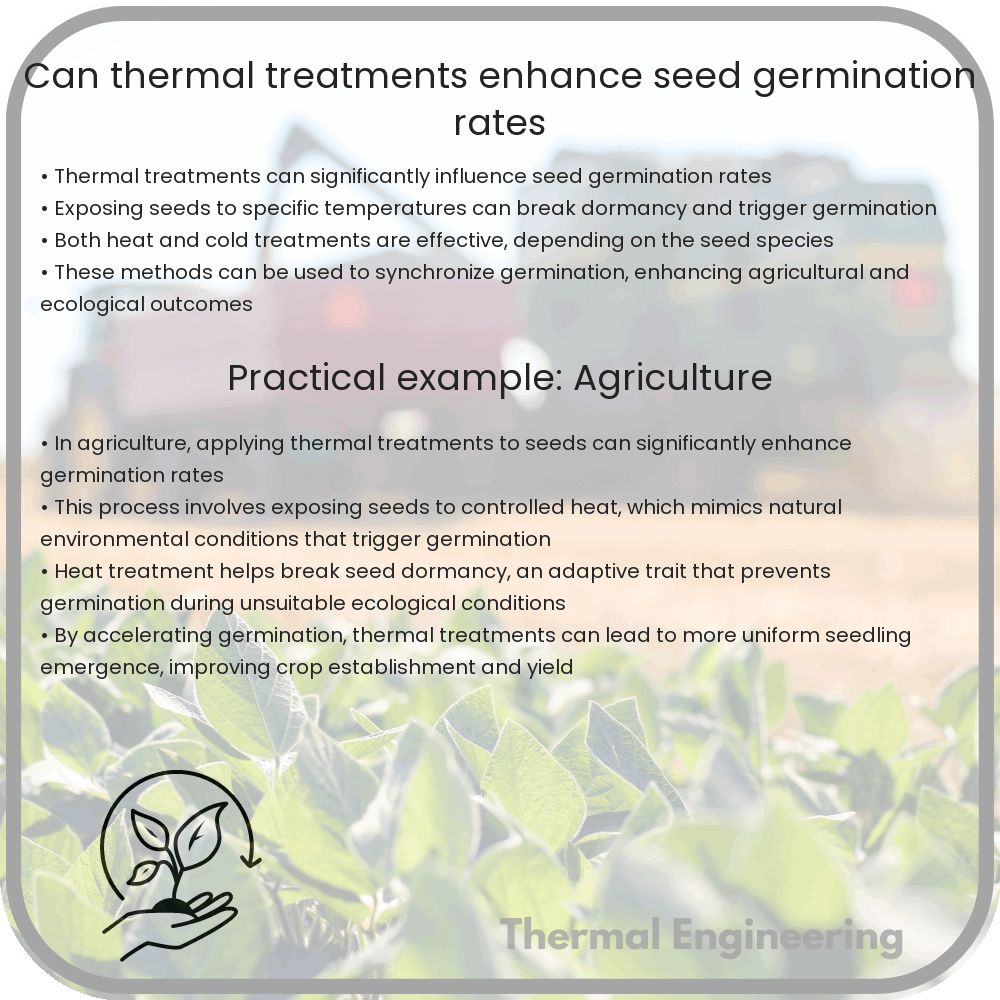
Exploring the Effects of Thermal Treatments on Seed Germination Rates
Seeds are the primary basis for plant reproduction, critical for agricultural productivity and ecological stability. The process of germination is vital, as it determines a seed’s ability to sprout and grow into a healthy plant. Among various factors influencing germination, temperature plays a pivotal role. This article discusses how thermal treatments, which involve exposing seeds to specific temperature regimes, can enhance germination rates and improve seed vigor and health.
What is Seed Germination?
Seed germination is the process by which a seed emerges from its dormancy state and begins to grow into a new plant. This process can be divided into three main phases: water absorption (imbibition), increased metabolic activity leading to the initiation of growth, and emergence of the radicle (the first root) from the seed coat.
Thermal Treatments for Seeds
Thermal treatment of seeds refers to controlled exposure of seeds to temperatures that can affect their biochemical and physiological processes. These treatments are categorized mainly into three types:
- Stratification: Involves treating seeds to simulate natural winter conditions by exposing them to cold temperatures (about 1-5°C) for several weeks. This method is primarily effective for seeds of temperate plants that require cold exposure to break dormancy.
- Scarification: Involves exposing seeds to higher temperatures to weaken or break the seed coat, making it easier for the embryo to sprout. Temperatures and duration can vary, often incorporating hot water or direct heat exposure.
- Thermotherapy: This treatment uses even higher temperatures, sometimes up to 70°C, for shorter periods, primarily as a method to disinfect seeds from pathogens without damaging the seeds’ viability.
How Thermal Treatments Enhance Germination
Thermal treatments can enhance seed germination through several mechanisms:
- Breaking Dormancy: Many seeds remain dormant to avoid germinating under unsuitable environmental conditions. Temperature treatments can alter hormonal balances and enzymatic activity, breaking dormancy and triggering germination.
- Increasing Metabolic Rates: Warm temperatures generally increase metabolic rates, speeding up the biochemical processes necessary for germination.
- Improving Water Uptake: Heat can weaken the seed coat, enhancing water absorption which is crucial for initiating metabolic processes needed for germination.
Studies show that seeds of some species germinate best after being exposed to specific temperature cycles, which mimics natural temperature variations from day to night in their native environments.
Practical Applications
In agriculture, thermal seed treatment is used to synchronize germination, leading to more uniform crop growth. This is particularly beneficial for crops that are sensitive to environmental conditions. Additionally, healthier and faster germination generally contributes to better crop yields and more efficient land use.
However, the specific conditions under which thermal treatment is applied—such as temperature and duration—depend heavily on the plant species and its natural habitat. There is no one-size-fits-all approach, and careful calibration of the process is essential for achieving the desired results.
Conclusion
Thermal treatments can significantly enhance seed germination rates by breaking dormancy, facilitating water uptake, and increasing metabolic activities. While this method holds great potential for improving agricultural practices, precise control and understanding of each seed’s requirements are crucial for its success. Embracing such techniques can lead to advancements in agricultural productivity and contribute to sustaining global food demands.
For growers, researchers, and enthusiasts, exploring the relationship between temperature and seed germination provides an exciting opportunity to improve germination outcomes through scientifically informed practices.