Learn about thermal wells and their role in optimizing geothermal energy systems for efficient heat and electricity production.
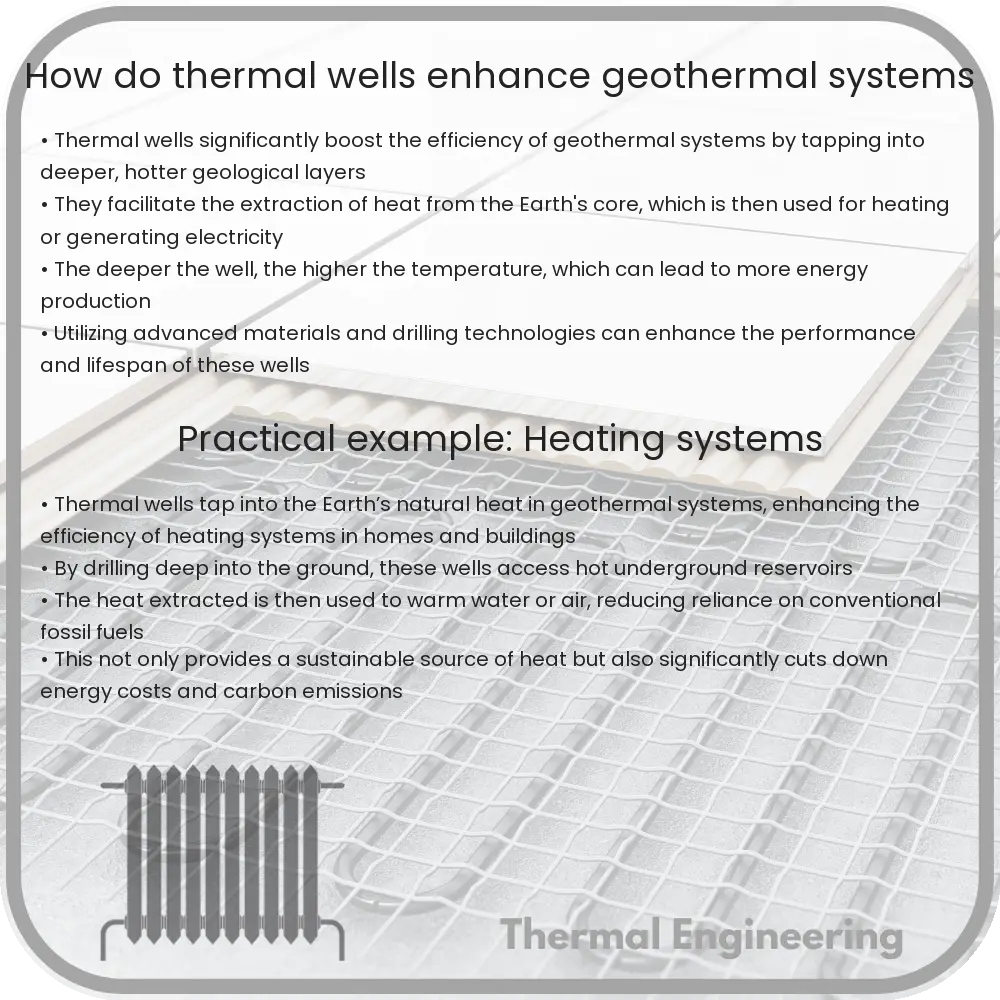
Understanding Thermal Wells in Enhancing Geothermal Systems
Geothermal energy is a sustainable source of heat and electricity that harnesses the Earth’s internal heat. Key to tapping this energy efficiently are thermal wells, which play a crucial role in enhancing the performance of geothermal systems. This article discusses how thermal wells work and their importance in geothermal energy extraction.
What are Thermal Wells?
A thermal well is a type of borehole drilled into the Earth’s crust. Its primary purpose is to access subterranean heat for use in geothermal heating and power generation. Depending on their construction and the technology used, these wells are critical components in both deep and shallow geothermal systems.
Role of Thermal Wells in Geothermal Systems
Thermal wells are integral to the operation of geothermal systems. They serve several key functions:
- Heat Extraction: These wells allow for the extraction of hot water and steam from heat reservoirs buried deep within the Earth. The extracted fluid is then used to generate electricity or provide direct heating.
- Fluid Reinjection: After the heat energy is utilized, the cooled fluid (water or steam) is often reinjected into the reservoir through the well, helping maintain pressure and sustain the reservoir’s longevity.
- Enhanced Geothermal Systems (EGS): In engineered or enhanced geothermal systems, thermal wells are used to inject water into dry hot rock formations, fracturing the rock and enhancing its permeability for improved heat exchange.
Enhancement Techniques Involving Thermal Wells
Several techniques involving thermal wells are employed to increase the efficiency and output of geothermal systems:
- Hydraulic Fracturing: This method increases the permeability of rock formations, allowing more fluid to circulate through the system, thus enhancing heat extraction.
- Reservoir Stimulation: By utilizing chemical, thermal, or mechanical means, the rock’s permeability around a thermal well can be enhanced, improving the system’s overall heat output.
- Horizontal and Multilateral Drilling: Advanced drilling techniques that increase the contact area with the geothermal reservoir, thereby accessing more heat from the Earth.
Impact of Thermal Wells on Geothermal Efficiency
Thermal wells significantly impact the efficiency of geothermal systems. Their design, depth, and the technologies applied directly influence the amount of heat that can be extracted. Properly designed and positioned thermal wells can drastically improve the feasibility and sustainability of geothermal projects. By enhancing the natural geothermal resources, these wells make it possible to exploit geothermal energy in locations that were previously considered unviable.
Conclusion
Thermal wells are foundational to the success of geothermal energy projects. By effectively enhancing the natural heat exchange processes within the Earth’s crust, these wells enable the practical and efficient use of geothermal energy, contributing to the diverse mix of renewable energy sources needed to meet global energy demands sustainably. The continuous improvement of thermal well technologies and techniques is likely to play a pivotal role in the future expansion of geothermal energy utilization worldwide.
Understanding the workings and benefits of thermal wells not only provides insight into geothermal energy production but also underscores the importance of innovation and engineering in advancing sustainable energy solutions.