Learn about elastomeric coatings, protective finishes that offer elasticity, durability, and waterproofing for various structures.
Understanding Elastomeric Coatings
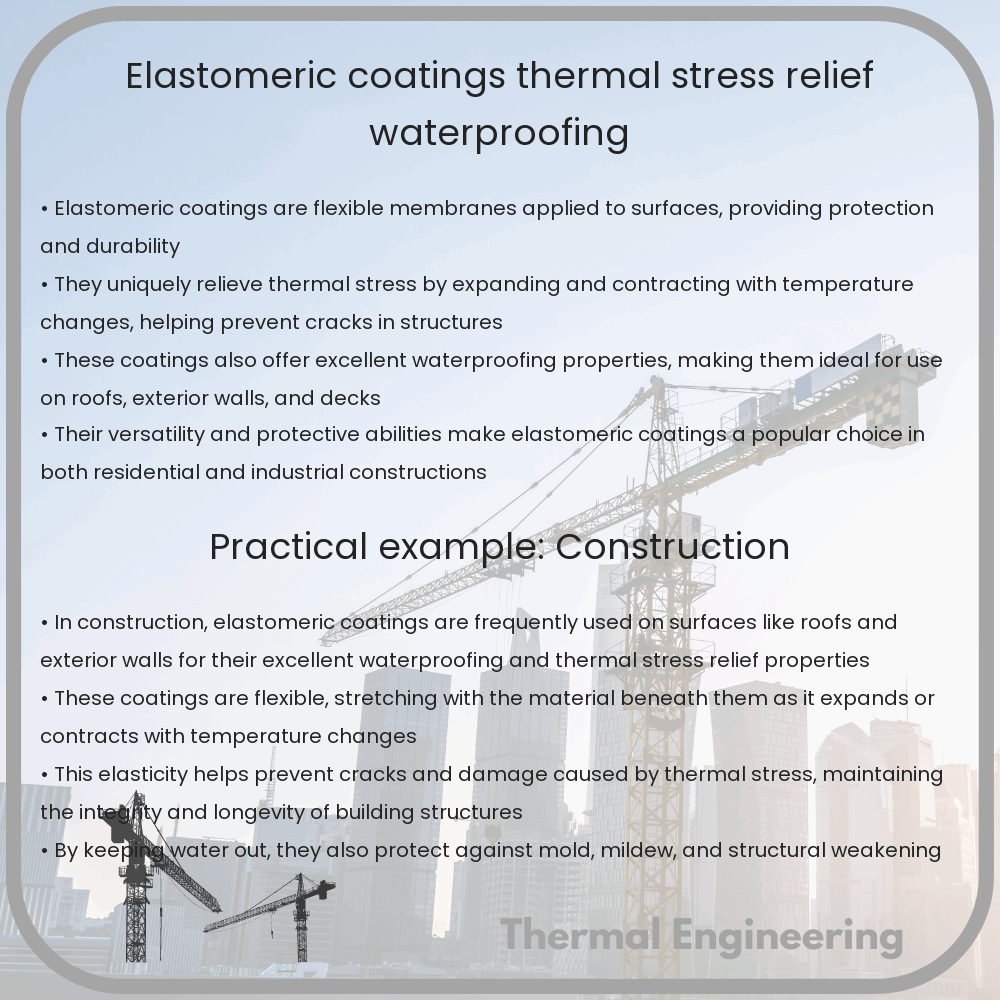
Elastomeric coatings are a type of protective finish commonly applied to exterior surfaces on buildings. They are primarily used for waterproofing, protecting structures from water damage, and providing thermal stress relief. Made from elastomeric materials, which can stretch and recover with ease, these coatings are distinguished by their exceptional elasticity and durability.
Key Properties of Elastomeric Coatings
Elastomeric coatings are known for several key properties:
- Elasticity: They can stretch to many times their original length and return to their initial shape. This high elasticity helps accommodate movement or structural shifts within a building, preventing cracks and other damage.
- Durability: These coatings are highly resistant to weathering due to sunlight, rain, and temperature changes. They also provide excellent protection against UV radiation, which can degrade many materials over time.
- Waterproofing: As a barrier to moisture, elastomeric coatings prevent water intrusion, significantly reducing the risk of water damage such as rot, mold, and mildew.
- Energy Efficiency: By reflecting sunlight and reducing building heating due to solar gain, some elastomeric coatings contribute to lower energy costs in buildings.
Composition and Types
Elastomeric coatings are primarily composed of polymeric materials such as acrylics, polyurethanes, or silicone. Each type has distinct characteristics that suit different needs:
- Acrylic: Known for excellent weatherability and color retention, suitable for varying climates and widely used due to its cost-effectiveness.
- Polyurethane: Offers enhanced abrasion resistance and toughness, making it ideal for areas subject to heavy wear.
- Silicone: Provides superior flexibility and temperature resistance, perfect for extreme weather conditions.
Thermal Stress Relief
Thermal stress occurs when materials expand or contract due to temperature changes. In buildings, this can lead to cracks and other structural damage. Elastomeric coatings help alleviate such stresses by adapting to the expansion and contraction of the substrate material. Their inherent flexibility allows them to maintain integrity and cohesion, providing a continuous protective layer over the surface.
Application Fields and Benefits
Elastomeric coatings are particularly beneficial in the following applications:
- Roofs: Applied on rooftops to prevent leaks and extend the life of the roofing material.
- Exterior Walls: Used on outer walls to prevent crack formation and exterior damage, helping maintain a building’s aesthetic appearance.
- Decks and Balconies: Protects from water penetration, weather effects, and mechanical damage.
- Concrete Structures: Helps to protect concrete from moisture ingress, freeze-thaw cycles, and corrosive chemicals.
The benefits of using elastomeric coatings extend beyond simple protection. They can significantly enhance the longevity and durability of structures, reduce maintenance costs, and improve the overall aesthetic appeal through various textures and colors.
Conclusion
Elastomeric coatings represent a versatile and efficient solution for protecting a wide range of structures from environmental factors and thermal stress. With their remarkable elasticity, durability, and waterproofing capabilities, these coatings provide an essential safeguard, contributing to the sustainability and resilience of built environments.