Learn about fuel transfer pumps, essential for safe and efficient fuel handling in automotive, agriculture, and more.
Understanding Fuel Transfer Pumps
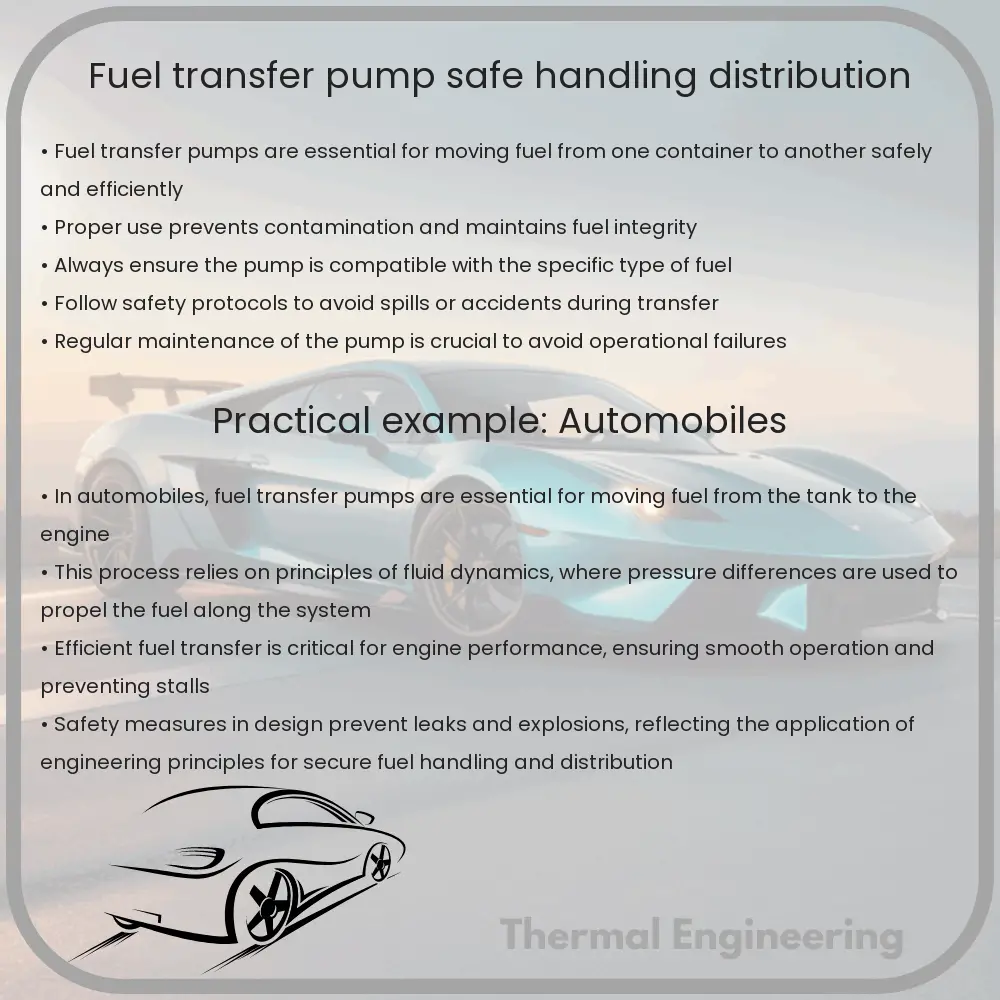
Fuel transfer pumps are essential devices used in the handling and distribution of fuel among various sectors such as automotive, agriculture, construction, and manufacturing industries. These pumps enable the safe and efficient transfer of different types of fuels, including gasoline, diesel, kerosene, and others from one container to another, or from a container to a vehicle.
Types of Fuel Transfer Pumps
There are mainly two types of fuel transfer pumps: manual and electric.
- Manual pumps are operated by hand or foot, often used in scenarios where power sources are not available. These are economical and simple but can be labor-intensive.
- Electric pumps use a motor powered by either AC (Alternating Current) or DC (Direct Current) sources, making them suitable for more heavy-duty applications. They offer ease of use and can handle larger volumes of fuel efficiently.
Safety Practices for Handling Fuel
When using fuel transfer pumps, it is crucial to follow specific safety guidelines to prevent accidents and ensure efficient operation:
- Proper Installation: Always ensure that the pump is correctly installed according to the manufacturer’s instructions. Incorrect installation can lead to leaks or mechanical failures.
- Use Proper Equipment: Always use equipment that is compatible with the type of fuel you are handling to avoid chemical reactions or equipment degradation.
- Regular Maintenance: Regular maintenance checks are essential to ensure that the pump functions correctly and safely. This includes checking for leaks, ensuring electrical connections are secure, and replacing worn parts.
- Grounding Practices: Since fuel is highly flammable, proper grounding and bonding are essential to prevent static electricity buildup, which can lead to sparks and potentially ignite the fuel.
- Personal Protective Equipment (PPE): Always wear appropriate protective gear such as gloves, goggles, and fire-resistant clothing when operating the pump.
Efficient Distribution Using Fuel Transfer Pumps
The efficiency of fuel distribution using transfer pumps relies heavily on understanding the flow rate and power requirements of the pump. The flow rate, generally measured in gallons per minute (GPM), should match the demands of the application to prevent overfilling or underdelivering. Moreover, using pumps equipped with automatic shut-off functions can prevent spills, which are both a safety hazard and a waste of resources.
Environmental Considerations
Handling and transferring fuels can pose risks to the environment, primarily through spills and leaks. To mitigate these risks, it’s advisable to:
- Install Spill Containment Systems: Use containment sumps or berms around the area where fuel transfer is taking place to catch any accidental spills.
- Regular Inspections: Frequently inspect transfer equipment and storage tanks for integrity issues to prevent any breach that might lead to environmental contamination.
- Adhere to Regulations: Always adhere to local, national, and international regulations regarding fuel handling and storage, ensuring compliance with environmental protection standards.
In conclusion, fuel transfer pumps are critical components in the distribution and usage of fuel across various sectors. Their effectiveness depends significantly on selecting the right type of pump, adhering to safety protocols, and considering environmental impacts. By implementing these practices, users can ensure safe, efficient, and environmentally friendly operation.