Learn about fire extinguishing systems, their types, components, and how they operate to suppress fires effectively and ensure safety.
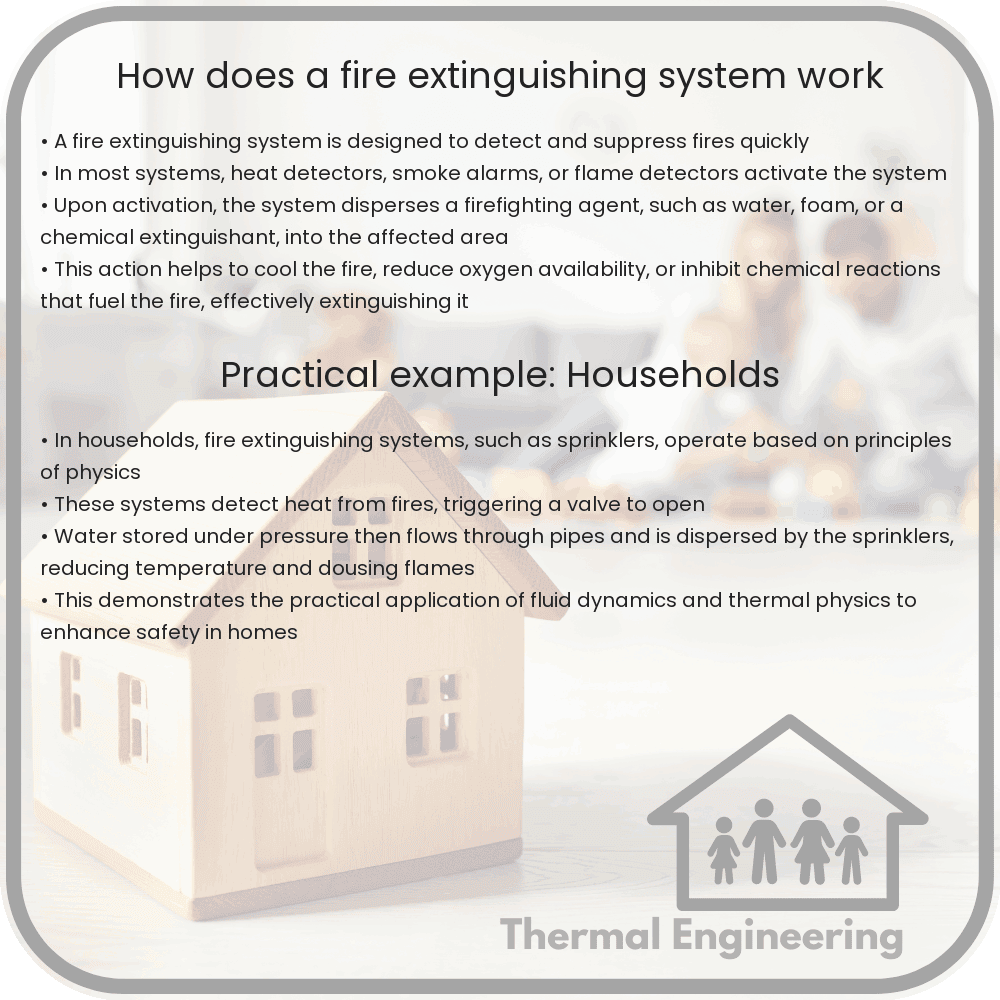
Understanding Fire Extinguishing Systems
Fire extinguishing systems are critical components of building safety, designed to detect fires, suppress flames, and limit the spread of fire and smoke. These systems range from basic handheld extinguishers to sophisticated automatic setups. Learning how these systems work helps in understanding the various methods through which they help in combating fires.
Types of Fire Extinguishing Systems
There are several types of fire extinguishing systems, each suitable for different situations and types of fires, classified as Class A, B, C, D, and K. Here’s a brief look at the most common systems:
- Water-based Systems: These include sprinklers which are generally used for Class A fires. They work by spraying water to cool the fire and reduce its oxygen supply.
- Foam Systems: Effective for Class B fires (flammable liquids), foam extinguishing systems smother the fire by forming a barrier between the fuel and the air.
- Dry Chemical Systems: Often used for Class B and C fires (flammable gases and electrical), these systems use compounds such as sodium bicarbonate to interrupt the chemical reaction that sustains a fire.
- Carbon Dioxide Systems: Suitable for Class C fires, these systems displace oxygen and cool the fuel, effectively suffocating the fire.
- Clean Agent Systems: These use halocarbon compounds or inert gases to suppress a fire without damaging sensitive equipment, making them ideal for data centers or areas with electronic devices.
Components of Fire Extinguishing Systems
A typical automated fire extinguishing system consists of the following components:
- Detection Devices: Smoke, heat, and flame detectors that sense fire signs and trigger the system.
- Alarm Systems: To alert occupants and possibly connected to remote monitoring stations.
- Control Panel: The brain of the system, deciding when to activate the suppression system.
- Suppression Means: The actual agents used (water, foam, dry chemical, etc.) to extinguish the fire.
- Delivery System: Comprising pipes, nozzles or hoses, which guide the suppressing agent to the fire.
How It Works
When a fire ignites, the first step in a modern fire extinguishing system is the detection of fire via smoke, heat, or flame detectors. Once a fire has been detected, the control panel evaluates the sensor information and activates the appropriate alarms. Then it initiates the discharge of the extinguishing agent. Depending on the system, water, foam, or specialized chemicals are released through sprinklers or nozzles, effectively targeting the combustion’s fuel, oxygen, or chemical reactions to suppress the fire.
For example, in an automatic sprinkler system, the sprinklers are connected via pipes to a water source. Each sprinkler head is closed off by a heat-sensitive element, typically a glass bulb filled with glycerin. When the temperature rises due to a fire, the glycerin expands and breaks the glass bulb, opening the valve and allowing water to flow from the exposed sprinkler head.
The Importance of Proper Maintenance and Use
Regular maintenance is crucial to ensure the effectiveness of any fire extinguishing system. This includes inspections, testing, and replacement of components like sensors and extinguishing agents. Properly maintained systems are vital in providing timely and effective suppression of fires, minimizing damage and protecting lives.
Understanding how fire extinguishing systems operate is key to appreciating their role in daily safety and the measures necessary to maintain such systems. Their proper use and regular maintenance can decidedly make the difference in emergency situations, potentially saving lives and properties.