Learn about the vital role of a thermal cycler in PCR, a device essential for DNA amplification used in genetic and medical research.
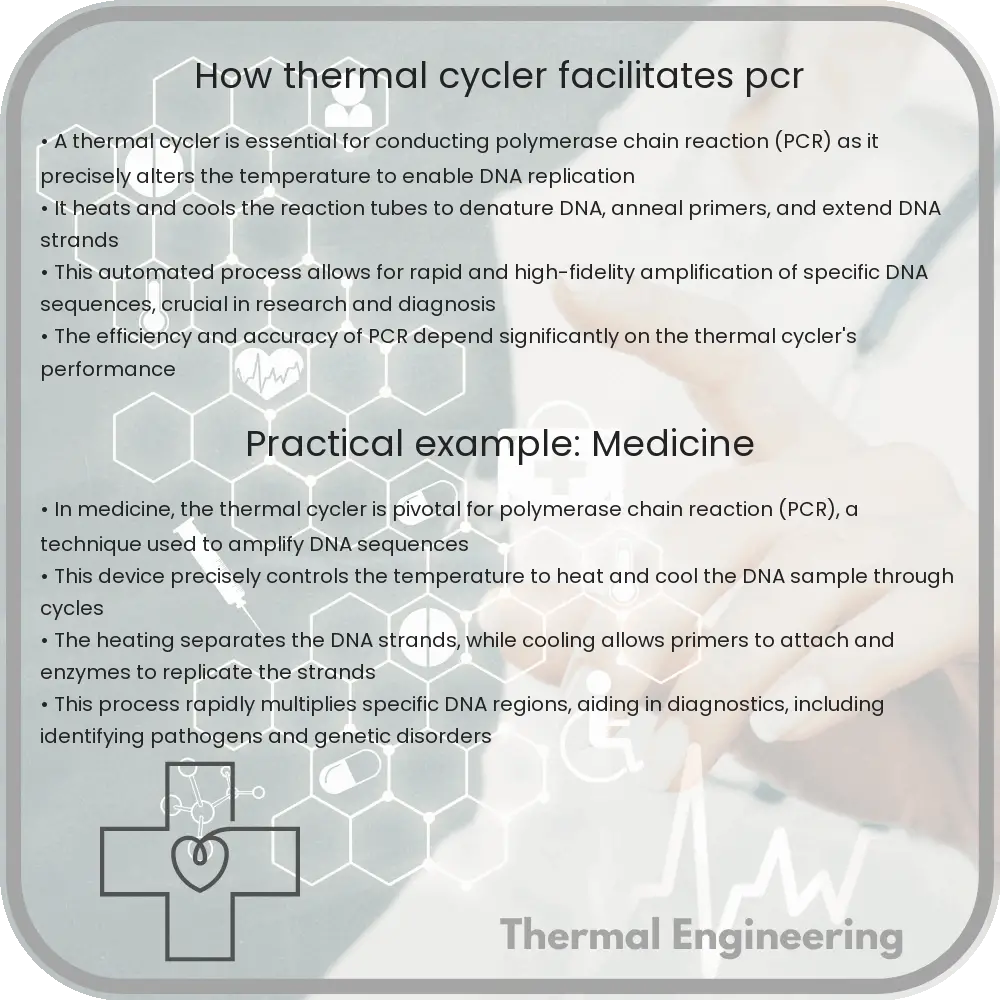
Understanding the Role of a Thermal Cycler in PCR
Polymerase Chain Reaction (PCR) is a revolutionary scientific technique used to amplify specific DNA sequences, making it easier to study genetic material in detail. A crucial instrument in this process is the thermal cycler, also known as a PCR machine. This device plays a pivotal role in the manipulation and amplification of DNA segments, greatly enhancing the efficiency and effectiveness of genetic analysis.
What is a Thermal Cycler?
A thermal cycler is a laboratory apparatus used for amplifying DNA and RNA samples by running repeated cycles of temperature changes. These changes are essential for the different stages of the PCR process which include denaturation, annealing, and extension. Each stage requires a specific temperature range to enable the precise replication of the DNA segment being targeted.
How the Thermal Cycler Works
The thermal cycler carries out its function through several key stages:
- Denaturation: At around 94°C to 98°C, the thermal cycler heats the DNA sample to cause the double-stranded DNA to denature, separating into two single strands by breaking the hydrogen bonds between complementary bases.
- Annealing: The temperature is lowered to between 50°C and 65°C depending on the primers used. During this stage, primers bind to their complementary DNA sequence on the single-stranded DNA.
- Extension: The temperature is raised to about 72°C. At this temperature, the DNA polymerase enzyme is activated to add nucleotides to the primer, thus synthesizing new strands of DNA.
The thermal cycler automates this entire process, running the necessary cycles, which can range from 20 to 40 cycles, depending on the quantity of DNA copies needed. Each cycle doubles the number of DNA molecules, exponentially increasing the quantity of DNA segments being amplified.
Features of Modern Thermal Cyclers
- Block Temperature Control: Ensures that the unit can rapidly reach and maintain the precise temperature required for each step of the PCR cycle.
- Gradient Function: Allows the user to test different temperatures in one PCR run to optimize the annealing temperature for new primers.
- Programmable Profiles: Enables storage and retrieval of specific PCR protocols, thereby increasing reproducibility and efficiency.
- Heated Lid: Prevents condensation of the sample in the cover of the tube, which could alter the reaction volume and affect the PCR results.
Importance of the Thermal Cycler in Research and Medicine
The development and refinement of the thermal cycler have greatly impacted both basic biological research and practical applications in medicine. It is fundamental in gene cloning, sequencing, and analysis, facilitating advancements in areas such as genetic disease research, forensic science, and the development of pharmaceuticals. In medicine, PCR and thermal cyclers are used extensively for diagnosing diseases, identifying bacteria and viruses, and even in genetic fingerprinting and paternity testing.
In conclusion, the thermal cycler is an indispensable tool in the landscape of modern genetics and molecular biology. By automating the PCR process, thermal cyclers not only save time and reduce the potential for error, but they also enable precise control over the conditions necessary for DNA manipulation. As science advances, the capabilities of these machines continue to expand, further enhancing their utility in scientific research and medical diagnostics.