Learn about thermal fuses, their crucial role in preventing appliance overheating, how they function, and their importance in electrical safety.
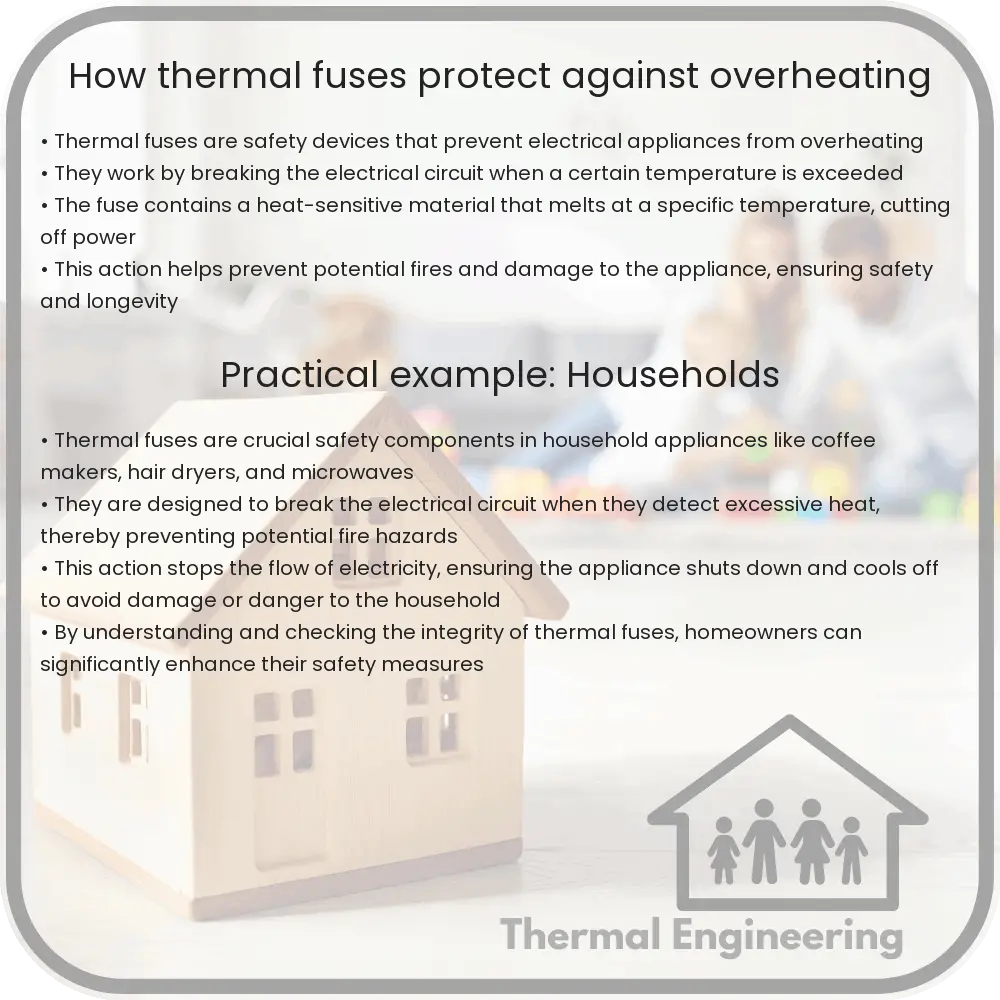
How Thermal Fuses Protect Against Overheating
Thermal fuses are a critical component in the safety mechanisms of many electrical appliances. Acting as a fail-safe, these devices are designed to prevent fires and other types of damage caused by excessive heat. Understanding how thermal fuses work and their role in maintaining safe operation of electrical devices is essential for both engineers and consumers alike.
What is a Thermal Fuse?
A thermal fuse is a single-use, safety device used in electrical appliances to prevent overheating. It is designed to interrupt electrical power when excessive temperatures are detected, effectively stopping the current to prevent further heat generation. Unlike regular fuses which respond to a surge in electrical current, thermal fuses are triggered solely by high temperature.
Design and Functionality
Thermal fuses consist of a metal alloy strip that melts at a specific temperature, which is often encased in a non-conductive, heat-resistant housing. The melt alloy strip is connected to an electrical circuit. When the surrounding temperature reaches the alloy’s melting point, the metal melts, breaking the circuit and stopping the flow of current.
The key to the functionality of thermal fuses lies in the selection of the alloy. Different alloys melt at different temperatures, so manufacturers select an alloy based on the maximum safe operating temperature of the device. For example, a coffee maker might use a thermal fuse designed to melt at 240 degrees Fahrenheit, providing a safety cutoff before temperatures reach a point where the appliance might start a fire or get damaged.
Applications of Thermal Fuses
Thermal fuses are used in a wide range of applications, reflecting their importance in both large-scale industrial settings and everyday household appliances. Some common examples include:
- Hair Dryers: To prevent overheating that could lead to fires.
- Coffee Makers: To avoid overheating which can damage the heating elements or the plastic components.
- Air Conditioners: To stop operation if the motor or compressor overheats.
- Dishwashers: To prevent heating elements from causing internal or external damage due to excessive temperature.
Advantages of Thermal Fuses
Thermal fuses offer several advantages that make them ideal for temperature control and safety:
- Cost-effective: They are relatively inexpensive to manufacture and easy to implement within electrical circuit designs.
- Reliable: Provides a fail-safe mechanism that operates consistently under predetermined conditions.
- Simple operation: No moving parts involved, which minimizes the risk of malfunction due to mechanical failure.
Considerations for Engineers
When designing products that incorporate thermal fuses, engineers must consider several factors:
- Selection of temperature rating: The melting point of the thermal fuse’s alloy should be slightly above the maximum operating temperature of the device but below the temperature that could cause damage or fire.
- Placement: Proper placement is crucial to ensure that the thermal fuse can accurately detect the temperature where potential overheating might occur.
- Replacement: Since thermal fuses are designed to work once, replacement after triggering is necessary to ensure continued protection.
In conclusion, thermal fuses are a vital safety feature in many electrical devices, protecting them from potential damage or fires caused by overheating. By understanding how these components work and considering their applications and limitations, engineers can better design safer and more reliable products.