Learn how krypton gas improves window insulation and thermal efficiency, enhancing energy conservation and comfort in buildings.
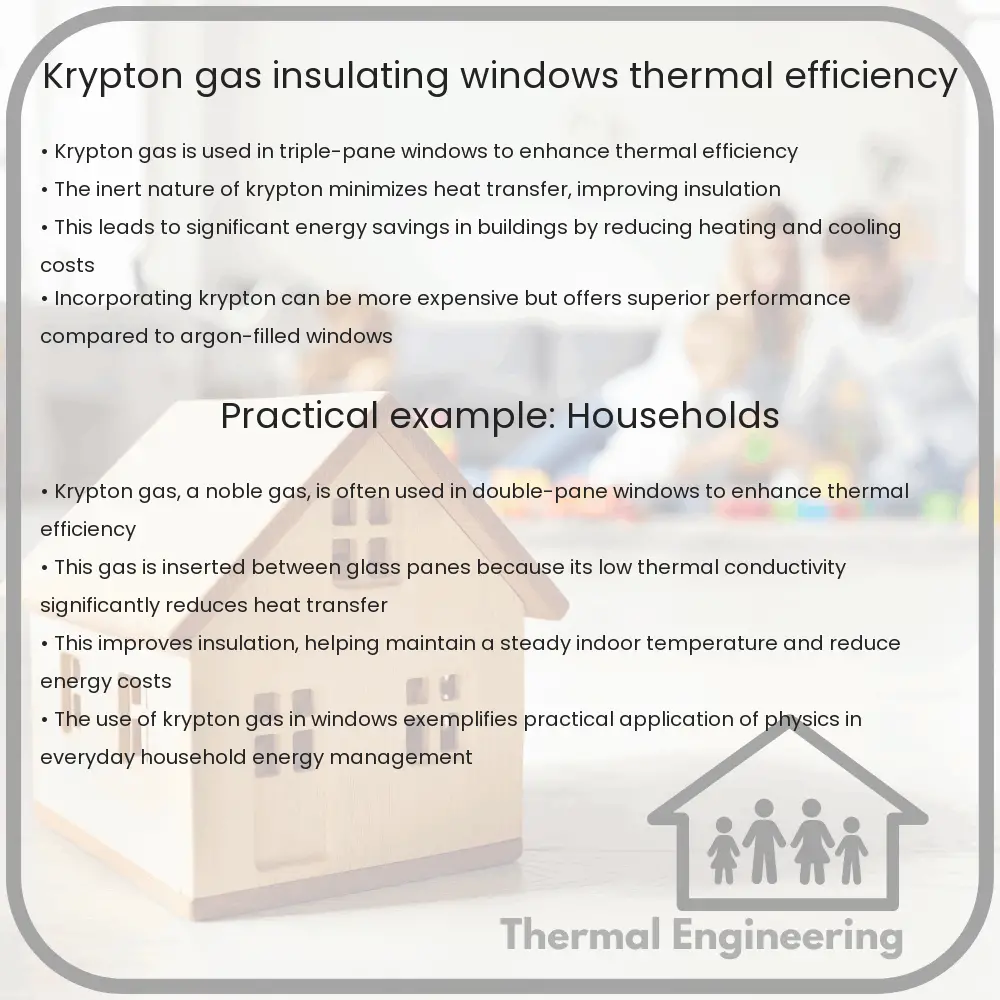
Understanding the Role of Krypton Gas in Enhancing Window Insulation and Thermal Efficiency
Enhancing thermal efficiency in buildings is a key concern in modern engineering, aiming to reduce energy consumption and increase comfort. One innovative solution that has emerged is the use of krypton gas in insulating windows. Krypton, a noble gas, is becoming increasingly popular in energy-efficient window designs due to its exceptional insulating properties.
What is Krypton Gas?
Krypton is a colorless, odorless, inert gas that resides in the Earth’s atmosphere at trace amounts. Despite its rarity, krypton is highly effective in insulation applications, particularly in the space between glass panes in double and triple-glazed window units.
How Krypton Gas Enhances Window Insulation
The primary function of krypton gas in windows is to reduce heat transfer through the air space between the glass panes. This is crucial in both warm and cold climates to maintain a comfortable indoor environment and reduce heating and cooling costs. Here’s how krypton achieves this:
- Low Conductivity: Krypton gas has lower thermal conductivity compared to air, making it a better insulator. Thermal conductivity of krypton is approximately 0.0095 W/m*K, less than half that of air, which significantly reduces the rate at which heat passes through the window.
- Increased Energy Efficiency: Windows filled with krypton gas can provide better thermal performance, thereby contributing to the overall energy efficiency of buildings. This can lead to lower energy bills and an improved carbon footprint.
- Optimal Thickness: The effectiveness of krypton as an insulator increases with the optimal spacing between the glass panes. Typically, a spacing of about 3/8 to 1/2 inches (approximately 9.5 to 12.7 mm) is considered ideal for krypton gas filled windows.
Advantages of Using Krypton in Insulating Windows
- Enhanced Thermal Performance: Krypton-filled windows have a higher insulating value compared to those filled with air or even argon, another popular gas used for insulation.
- Reduction in Heat Loss: By minimizing the heat transfer, krypton gas significantly reduces the heat loss in winter and heat gain in summer, maintaining a more consistent indoor temperature.
- Sound Insulation: Besides thermal efficiency, krypton also offers superior sound insulation properties, making it ideal for use in noisy environments.
- Environmental Impact: While krypton is more expensive than argon, its superior insulating properties mean that less gas is needed per window, which compensates for the cost and provides environmental benefits through reduced energy consumption.
Conclusion
While the initial cost of krypton gas filled windows may be higher than those filled with air or argon, the long-term savings in energy costs and the benefits of increased comfort and reduced environmental impact make it a valuable investment. As building standards evolve towards more energy-efficient solutions, the role of advanced materials like krypton gas in construction is likely to grow, reinforcing the importance of innovative engineering solutions in our ongoing pursuit of sustainability.
Whether for residential, commercial, or industrial applications, optimizing the use of advanced insulating technologies such as krypton-filled windows represents a forward-thinking approach to modern challenges in building design and energy conservation.