Learn about radiative cooling paint, a technology that promotes sustainable cooling by reflecting sunlight and emitting infrared heat passively.
Understanding Radiative Cooling Paint and Its Passive Applications
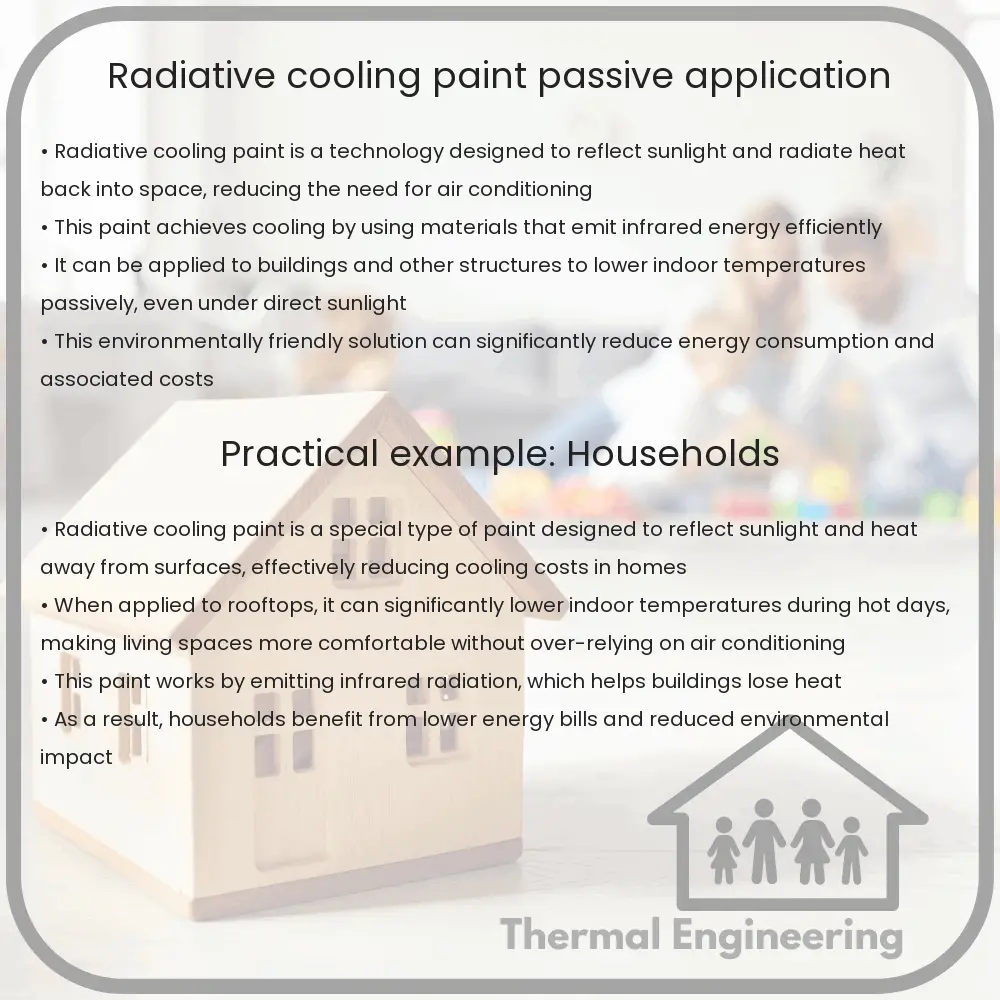
Radiative cooling paint represents a groundbreaking technological advancement in the field of thermal engineering. This innovative material is designed to reflect sunlight and efficiently emit infrared heat, providing a passive cooling solution without the need for energy consumption. The application of this paint can significantly reduce the need for air conditioning, contributing to energy conservation and sustainability efforts.
How Does Radiative Cooling Paint Work?
The functionality of radiative cooling paint is based on its unique ability to reflect solar radiation and simultaneously emit infrared radiation. This dual action is achieved through the use of engineered materials that have specific radiative properties. Typically, the paint consists of a polymer or acrylic base mixed with pigments or additives that are highly reflective in the visible and near-infrared spectrum. The key is in its ability to emit heat in the form of infrared radiation at a wavelength where the atmosphere has a “window” that allows radiation to pass through and dissipate into space.
Components of Radiative Cooling Paint
- Polymer Base: Serves as the primary binder and forms the bulk of the paint mixture.
- Reflective Pigments: Commonly titanium dioxide or similar compounds that reflect sunlight effectively.
- IR Emissive Additives: These additives are crucial for enhancing the paint’s ability to emit infrared radiation. Examples include particles of barium sulfate or others that have been micro-structured to radiate at optimal wavelengths.
Passive Applications of Radiative Cooling Paint
Radiative cooling paint can be passively applied to a variety of surfaces where reducing heat intake or dissipating heat is beneficial. Here are some key applications:
- Building Roofs and Walls: Applying radiative cooling paint on the roofs and exterior walls of buildings can significantly lower indoor temperatures, reducing the energy required for air conditioning.
- Vehicles: Use on the roofs and bodies of vehicles to keep interiors cooler under sun exposure, potentially enhancing fuel efficiency due to reduced air conditioning use.
- Storage Tanks: Coating large storage tanks to maintain the temperature of the stored liquids, especially important for chemicals sensitive to temperature fluctuations.
- Telecommunications Equipment: Applying it to housings of telecommunications equipment to prevent overheating and maintain performance reliability.
Benefits of Radiative Cooling Paint
The implementation of radiative cooling paint offers several significant advantages:
- Energy Savings: By reducing the reliance on air conditioning, significant energy savings can be achieved, particularly in hot climates.
- Environmental Impact: Lower energy consumption translates to reduced greenhouse gas emissions, supporting sustainability goals.
- Cost-Effective: As a passive cooling method, once applied, the paint requires no additional energy or maintenance, making it a cost-effective alternative to traditional cooling methods.
- Ease of Application: Similar to conventional paint, it can be easily applied to a variety of surfaces, making it accessible for widespread use.
In conclusion, radiative cooling paint is an innovative and environmentally friendly technology that offers a practical solution to heat management challenges in various applications. By harnessing the principles of radiative cooling, this paint can play a crucial role in reducing energy consumption and promoting sustainable practices across numerous industries.