Explore how temperature influences the curing, performance, and durability of structural adhesives in various engineering applications.
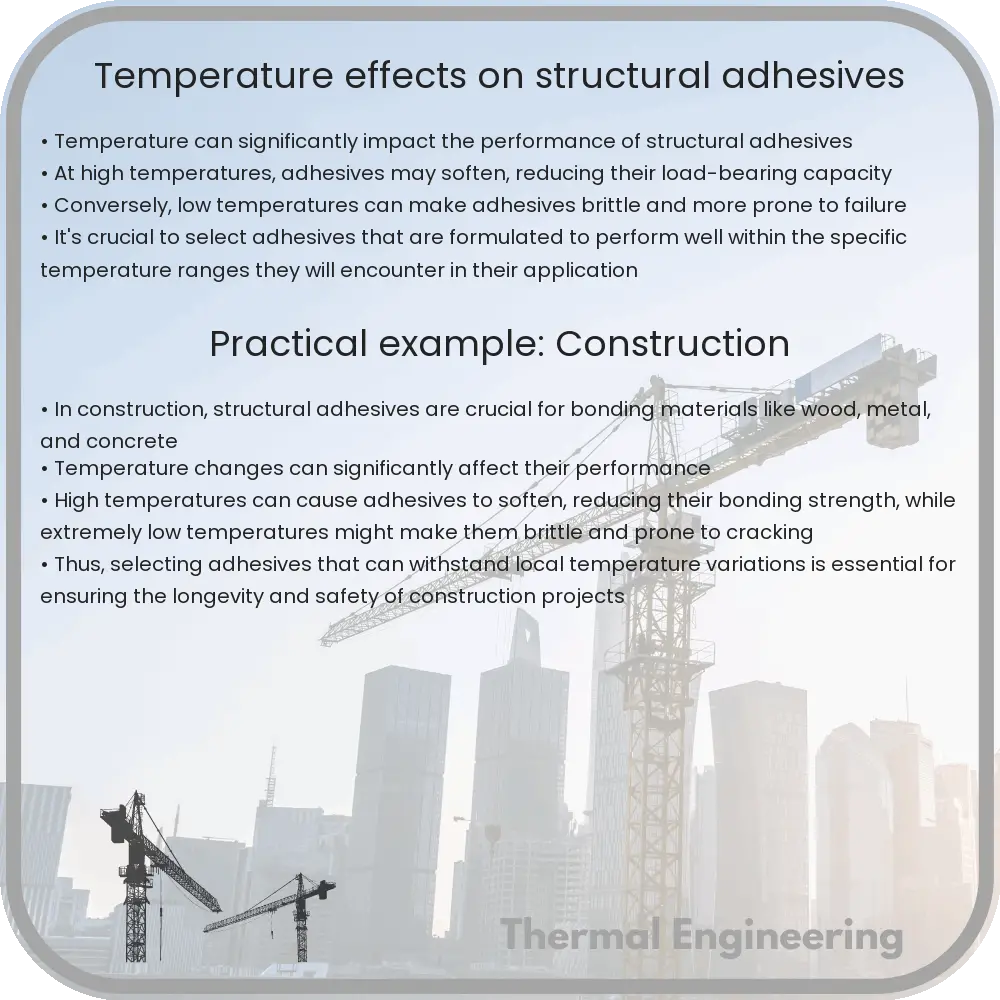
Understanding the Impact of Temperature on Structural Adhesives
Structural adhesives are critical components used in a variety of engineering applications, from building construction to automotive assembly. These adhesives are designed to bond materials and bear loads, thus playing a crucial role in the integrity and performance of structures. One of the key factors influencing the effectiveness and durability of these adhesives is temperature. In this article, we will explore how temperature affects the properties and performance of structural adhesives.
Temperature Effects on Curing Process
The curing process of adhesives is inherently sensitive to temperature. Generally, structural adhesives require a specific range of temperatures to cure properly. This process involves the transformation of the adhesive from a liquid or pliable state into a solid state, achieving the desired mechanical properties such as strength and elasticity.
- Low Temperatures: At low temperatures, the curing process can be significantly slowed down or even halted. This is because the chemical reactions that facilitate curing are less active at lower temperatures.
- High Temperatures: Conversely, high temperatures can accelerate the curing process. However, excessively high temperatures can cause premature curing and reduce the working time, potentially leading to weaker bonds or defects in the bonded joint.
Thermal Expansion and Contraction
Materials typically expand when heated and contract when cooled, a behavior known as thermal expansion and contraction. This phenomenon can pose challenges for structural adhesives, particularly when bonding materials with different coefficients of thermal expansion (CTE).
- Mismatched CTEs: When two materials with different CTEs are bonded together, temperature changes can induce stress at the adhesive joint due to differential expansion and contraction. This stress can weaken the bond or even cause debonding.
- Adhesive Selection: To mitigate these effects, selecting an adhesive with an appropriate elongation and flexibility that can accommodate the CTE mismatches is crucial.
Long-Term Durability and Aging
Temperature not only affects the curing and immediate performance of adhesives but also influences their long-term durability. Continual exposure to varying or extreme temperatures can accelerate the aging process of structural adhesives, leading to degradation of mechanical properties over time.
- Thermal Aging: This refers to the deterioration in properties of adhesives caused by long-term exposure to high temperatures. It can result in reduced toughness, brittleness, and loss of adhesive strength.
- Low-Temperature Brittleness: At very low temperatures, some adhesives can become brittle, making them more susceptible to cracking under mechanical stress.
Practical Considerations and Selection Criteria
Considering the effects of temperature is essential when selecting a structural adhesive for any engineering application. Engineers must evaluate the thermal environment to which the adhesive will be exposed throughout its operational life. This includes not only ambient temperatures but also any potential heat sources or cooling factors present in the specific application.
- Temperature Range: Determine the minimum and maximum temperatures that the adhesive needs to withstand.
- Cure Schedule: Consider the practical curing conditions and ensure the selected adhesive can cure adequately within the available timeline and environment.
- Material Compatibility: Check the adhesive’s compatibility with other material properties, including CTEs, to ensure a robust and reliable bond.
In conclusion, understanding and accounting for the temperature effects on structural adhesives is pivotal in ensuring the longevity and reliability of engineered structures. Through careful selection and application, engineers can effectively use adhesives to create bonds that meet both the mechanical and thermal demands of their projects.