Learn about thermal conductivity meters, devices used to measure a material’s ability to conduct heat, critical in industries like electronics and construction.
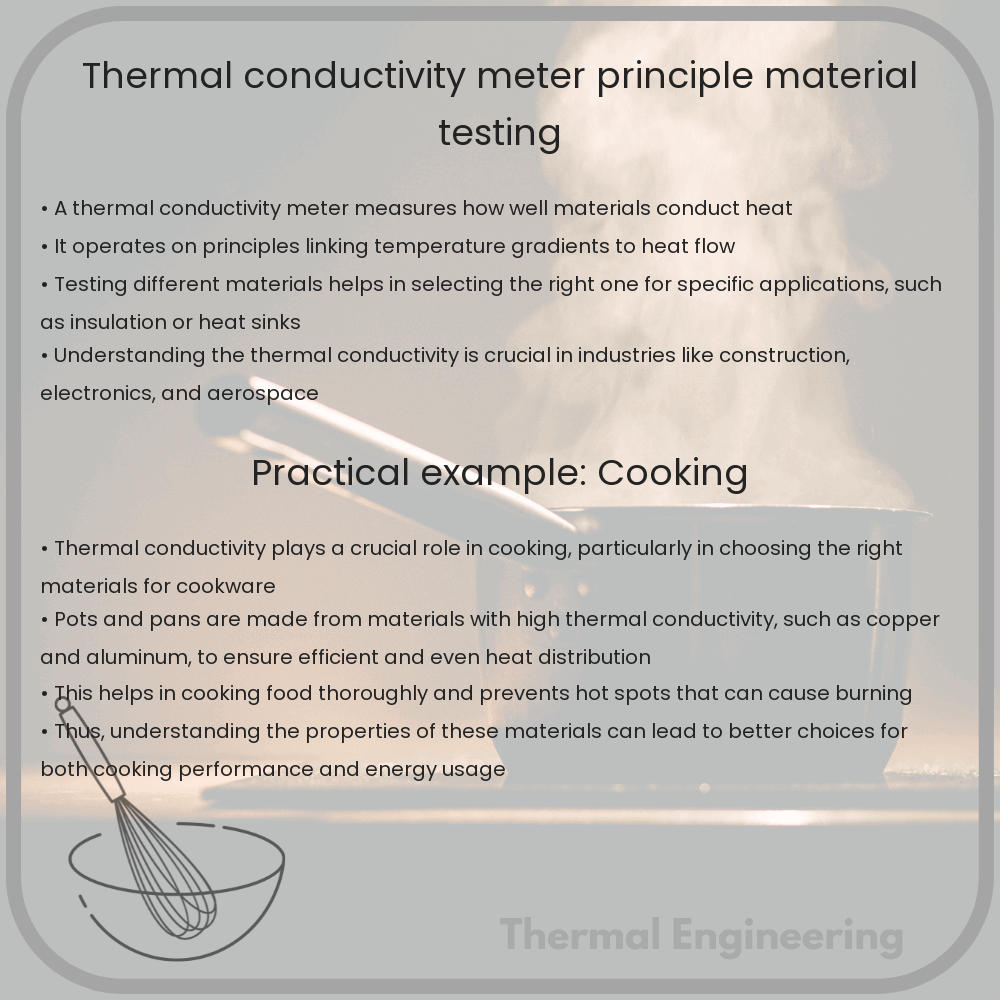
Understanding Thermal Conductivity Meters
Thermal conductivity meters are essential instruments used in material science to measure the ability of a material to conduct heat. This property, known as thermal conductivity, is critical in fields ranging from construction to electronics, where materials need to manage heat effectively to ensure stability and efficiency.
Principle of Operation
The basic principle behind thermal conductivity meters is relatively straightforward. They operate by applying heat to one side of a material sample and measuring the temperature response at another point. By analyzing the rate at which heat travels through the material, the thermal conductivity can be determined. There are several methods used to perform these measurements, including steady-state, transient, and comparative techniques.
- Steady-State Techniques: These methods involve applying a constant heat source to the material until a steady temperature is reached across the sample. Instruments like guarded hot plates or heat flow meters are common in this category.
- Transient Techniques: In these methods, heat is applied in a short burst, and the response of the material is tracked over time. Tools like the laser flash apparatus and the hot disk thermal constants analyzer are typical transient devices.
- Comparative Techniques: These involve comparing the unknown material’s heat transfer rate to that of a reference material with known thermal properties. Cylindrical and flat-plate comparative apparatuses are typical examples.
Key Materials Tested and Their Importance
- Metals: Metals are commonly tested for thermal conductivity due to their widespread use in thermal management and electronic applications. High conductivity metals, like copper and aluminum, are essential for dissipating heat in electronic components.
- Insulators: Materials like fiberglass, rubber, and polystyrene are tested to ensure their effectiveness in preventing heat flow, crucial in construction for energy conservation.
- Building Materials: Concrete, brick, and wood testing help in evaluating their thermal insulation properties, affecting building energy efficiencies.
- Polymers and Composites: These materials are tested to assess their thermal characteristics for applications in automotive, aerospace, and electronics industries.
Common Equations Used in Thermal Conductivity Measurements
The general thermal conductivity equation used is:
\[ \lambda = \frac{Q}{A \Delta T / d} \]
where:
- \(\lambda\) (lambda) represents the thermal conductivity of the material (W/m*K),
- \(Q\) is the heat transfer rate (Watts or W),
- \(A\) is the cross-sectional area through which heat is transferred (sq. meters or m2),
- \(\Delta T\) is the temperature difference across the material (Kelvin or K),
- \(d\) is the thickness of the material (meters or m).
This equation is crucial for understanding how effectively a material can transfer heat. It helps in designing materials for specific industrial applications where thermal properties are a significant concern.
The Impact of Thermal Conductivity Meters
By measuring thermal conductivity, engineers and scientists can optimize materials for various applications, enhancing energy efficiency and performance across different fields, including aerospace, automotive, electronics, and construction. Thermal conductivity meters thus play a pivotal role in material development and application, making them invaluable tools in both research and industry.
Overall, thermal conductivity meters help bridge the gap between theoretical material science and practical application, ensuring materials perform as expected in real-world scenarios.