Learn about the importance of thermal management in LED lighting, focusing on heat dissipation methods and design solutions for efficiency.
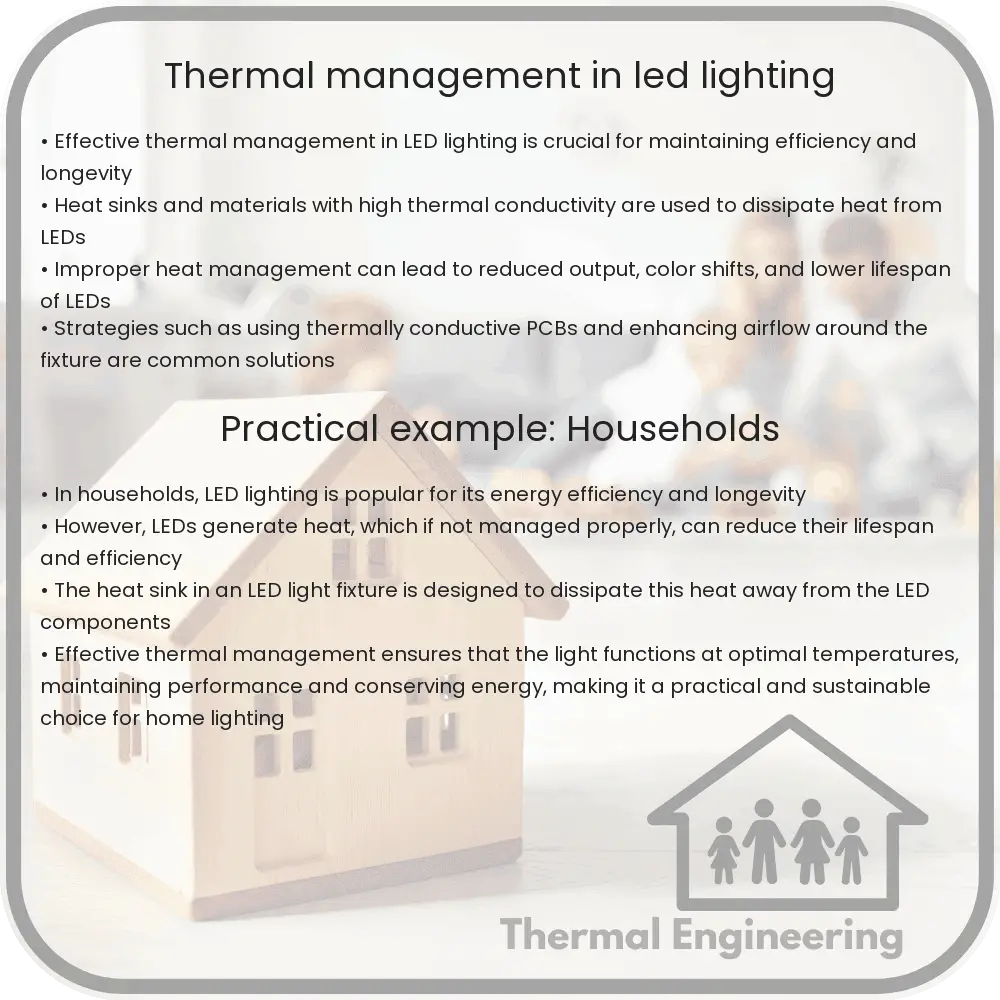
Understanding Thermal Management in LED Lighting
LED lighting has transformed the way we illuminate our environments. Not only are LEDs more efficient than traditional light bulbs, but they also offer longer operational lifetimes and better environmental performance. However, one of the critical challenges in LED technology is thermal management. Effective heat management is crucial because it significantly impacts the efficiency, performance, and longevity of LED lights.
Why is Thermal Management Important in LEDs?
LEDs convert electricity into light, but not all the electrical energy is converted into visible light; a significant portion is converted into heat. If this heat is not managed properly, it can lead to overheating, which affects the LED’s performance and durability. Specifically, excessive heat can result in:
- Color shift: Changes in color output of the LED as temperature changes.
- Reduced life span: Premature aging and failure of LEDs.
- Decreased efficiency: Lower light output per watt of electricity consumed.
Methods of Heat Dissipation in LED Systems
To combat the negative effects of heat, several methods are employed to dissipate heat effectively from LED systems:
- Heat Sinks: Perhaps the most common solution, heat sinks are materials attached to the LED device to absorb and disperse heat. Materials with high thermal conductivity like aluminum are typically used.
- Thermal Interface Materials (TIMs): These materials enhance the thermal coupling between heat sources and heat sinks. They include thermal pastes, adhesive tapes, and phase change materials, which fill air gaps and thus reduce thermal resistance.
- Fans: In some high-power LED applications, active cooling methods such as fans are used to force air circulation around the LED to enhance heat dissipation.
- Heat Pipes: Utilized in high-performance LED lighting systems, heat pipes transfer heat from the LED chip to an external heat exchanger efficiently.
Thermal Management Solutions in Design
Engineering design plays a crucial role in integrating thermal management into LED devices. Here are some strategies used:
- PCB Design: Designing the printed circuit board (PCB) to spread heat evenly and rapidly away from the LED chip.
- Component Placement: Strategic placement of thermally-sensitive components away from heat sources to minimize thermal stress.
- Housing Materials: Using materials for the LED housing that aid in heat dissipation. Metals are commonly employed for their excellent thermal conduction properties.
In conclusively ensuring that an LED system has a robust thermal management solution involves understanding both the material science and the engineering design principles critical to heat dissipation. With advancements in technology and materials, managing heat in LED lighting systems will continue to evolve, leading to even more efficient and longer-lasting LEDs.