Learn about the importance of thermal management in LED systems, including heat generation, dissipation techniques, and strategies for improving system efficiency.
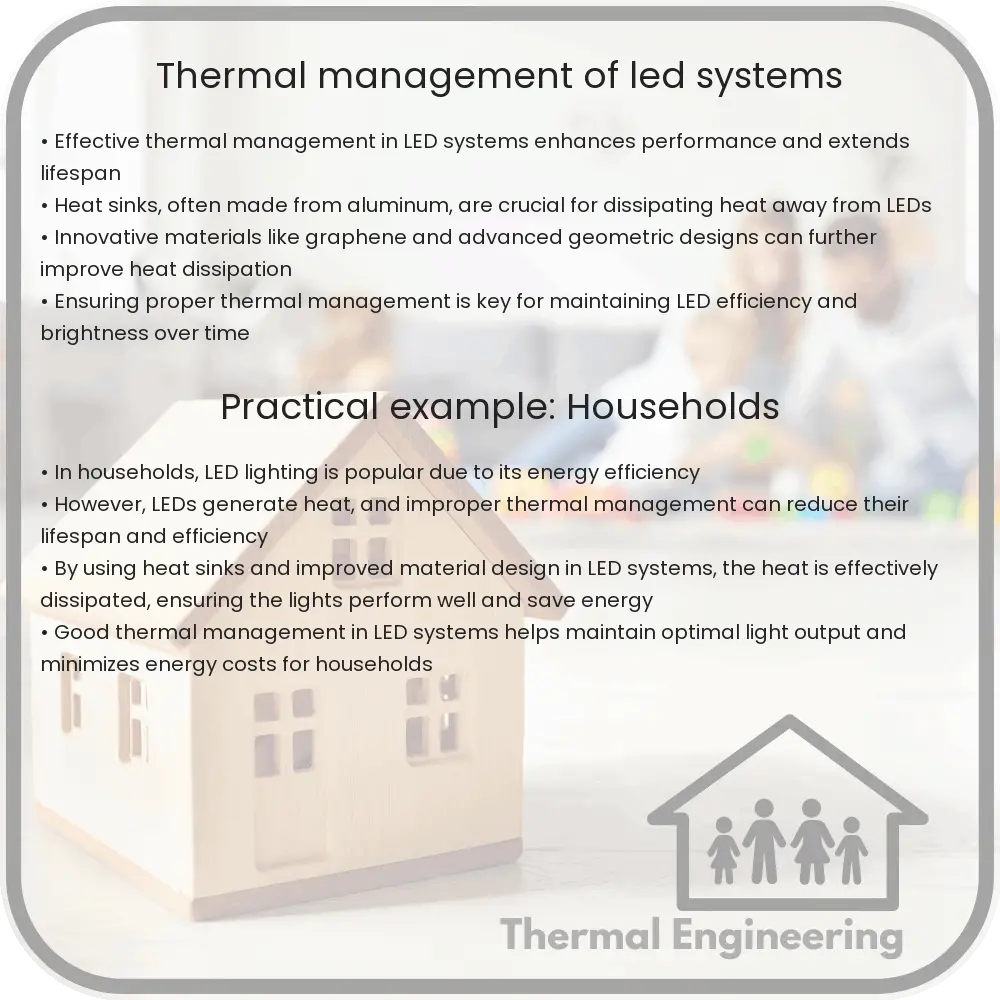
Understanding Thermal Management in LED Systems
Light Emitting Diodes (LEDs) are widely used in various applications due to their efficiency and longevity. However, these advantages can be compromised by inadequate thermal management. The operating temperature of an LED significantly affects its performance, lifespan, and color stability. This article explores the fundamental concepts of thermal management in LED systems and why it is crucial.
The Basics of Heat Generation in LEDs
Despite their high efficiency, LEDs still generate heat. The efficiency of an LED is not 100%, meaning not all electrical energy is converted into light; a significant part is converted into heat. Heat generation in LEDs primarily occurs at the p-n junction—the core component within the semiconductor where light is generated. The thermal energy needs to be managed effectively to maintain the LED’s performance and extend its life.
Key Challenges in LED Thermal Management
- Junction Temperature: The temperature at the p-n junction, also known as junction temperature, is crucial. High junction temperatures can lead to reduced light output and shifts in color spectrum.
- Thermal Resistance: Thermal resistance is a measure of the LED’s ability to dissipate heat from the junction to the ambient environment. A lower thermal resistance signifies a more efficient heat dissipation path.
- Ambient Temperature: The surrounding temperature can also impact LED performance. In high ambient temperatures, dissipating heat becomes more challenging, further stressing the importance of effective thermal management solutions.
Methods of Heat Dissipation in LED Systems
The main methods for dissipating heat in LED systems involve conduction, convection, and radiation, with conduction being the most significant.
- Heat Sinks: These are perhaps the most common thermal management components used in LED systems. Heat sinks absorb heat and then dissipate it into the surrounding environment through convection. Materials like aluminum are typically used due to their high thermal conductivity.
- Thermal Pads: These are used to interface between the LED and heat sink, enhancing the thermal conductivity at the junction. They alleviate any gaps that may contain air, which is a poor conductor of heat.
- PCB Design: The design of the Printed Circuit Board (PCB) can also affect thermal management. Using materials with high thermal conductivity for the PCB, such as metal-core PCBs, can help in spreading heat away from the LED.
Enhancing the Efficiency of Thermal Management Systems
Simulation and Modelling: Advanced simulation and modelling can predict thermal behavior and help in designing more effective cooling systems before physical prototypes are built. This approach saves time and costs in the design phase.
Material Advances: The development of new materials with higher thermal conductivities and improved thermal interface materials continues to enhance LED thermal management. Innovations such as phase change materials and nano-enhanced compounds are promising.
Active Cooling Solutions: While passive cooling solutions like heat sinks are common, active cooling solutions such as fans or liquid cooling might be required for high-power LED applications. These systems can effectively manage larger amounts of heat but at the cost of increased system complexity and power consumption.
Conclusion
The effectiveness of an LED’s thermal management system plays a critical role in determining the overall performance and lifespan of the system. As technology advances, continuous improvements in thermal management methods are essential to leverage the full benefits of LED lighting. Understanding these basic principles and challenges helps in designing more robust and reliable LED systems suitable for a variety of applications.
Whether you’re a designer, engineer, or enthusiast, appreciating the nuances of thermal management in LED systems is fundamental to enhancing the technology’s application and effectiveness in the real world.