Learn about thermal overload relays, critical devices that protect electric motors from overheating and ensure operational safety and efficiency.
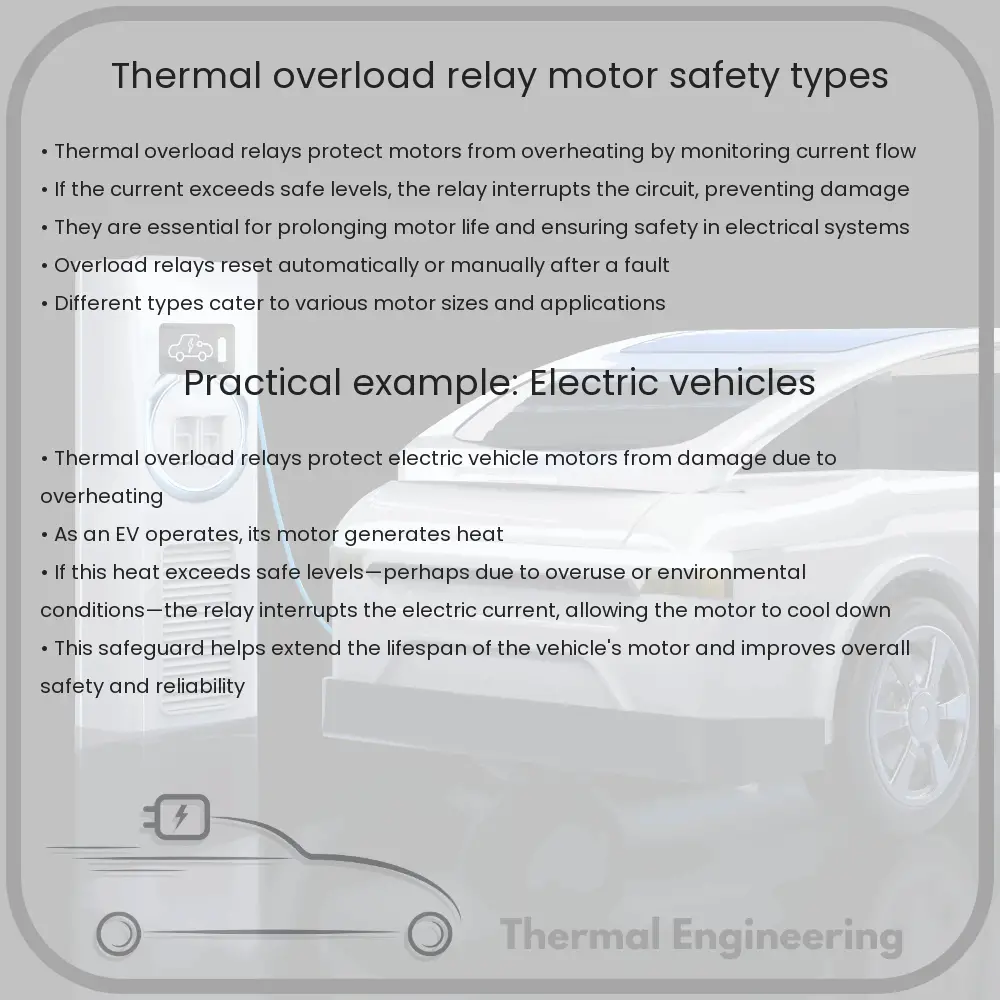
Understanding Thermal Overload Relays and Motor Safety
In the world of engineering, ensuring the longevity and safety of electric motors is critical. One of the key components used for motor protection is the thermal overload relay. This device is designed to protect motors from overheating, which can lead to failure and dangerous operating conditions. In this article, we will explore what thermal overload relays are, how they work, and the different types of motor safety mechanisms available.
What is a Thermal Overload Relay?
A thermal overload relay is an electrical device that protects motors from overheating by sensing abnormal temperature rises and interrupting the current flow. These relays are essential in preventing damage to the motor windings and associated equipment. Overheating can be caused by several issues, including excessive load, insufficient cooling, high ambient temperature, or a failure in the driven machinery.
How Does a Thermal Overload Relay Work?
Thermal overload relays operate on the principle of heat expansion. The device typically consists of a bimetallic strip made from two different types of metal, each with a different rate of expansion when heated. This strip is connected to the motor’s current. When the current exceeds a safe level, the heat generated causes one metal to expand more than the other, bending the strip. This bending movement activates a mechanism that breaks the circuit and cuts the electrical power to the motor, thus preventing further heat increase.
Some advanced thermal relays use thermistors or resistance temperature detectors (RTDs) for more accurate temperature measurements. These sensors offer a faster and more reliable response to temperature changes, improving the protection of the motor.
Types of Motor Safety Mechanisms
- Thermal Overload Relays: As discussed, these protect motors from overheating. They are suitable for applications where motor overload protection is crucial for safety and operational efficiency.
- Magnetic Overload Relays: These relays use electromagnetic forces to detect overcurrent conditions. They react faster than thermal relays but are generally used where precise current measurement is more critical than temperature-based detection.
- Ground Fault Circuit Interrupters (GFCIs): GFCIs are used to protect against electrical shock by breaking the circuit when a ground fault is detected. This is particularly important in wet or damp environments.
- Motor Circuit Protectors (MCPs): These devices provide a comprehensive solution by combining a disconnect switch, overload relay, and circuit breaker. They are typically used in industrial applications where motors require robust protection.
Choosing the Right Protection
The selection of a motor protection mechanism depends on several factors including the type of motor, its application, environmental conditions, and specific operational requirements. While thermal overload relays are adequate for general use, more demanding environments or precise applications might necessitate the use of magnetic relays or MCPs. Consulting with an electrical engineer can help in making the appropriate choice, ensuring both safety and efficiency in motor operation.
Conclusion
Thermal overload relays play a crucial role in motor safety, protecting valuable machinery from damage due to overheating. Understanding how these devices function and selecting the correct type of motor protection mechanism is essential for maintaining operational integrity and safety in various industrial and commercial settings. With the right protection in place, the longevity and reliability of electric motors can be significantly enhanced.
Exploring different types of safety mechanisms and staying informed about motor protection technologies is beneficial not only for engineers but also for anyone involved in the maintenance and operation of motor-driven systems.