Explore the critical role of thermal sensors in smart homes, focusing on climate control, appliance efficiency, safety, and health monitoring.
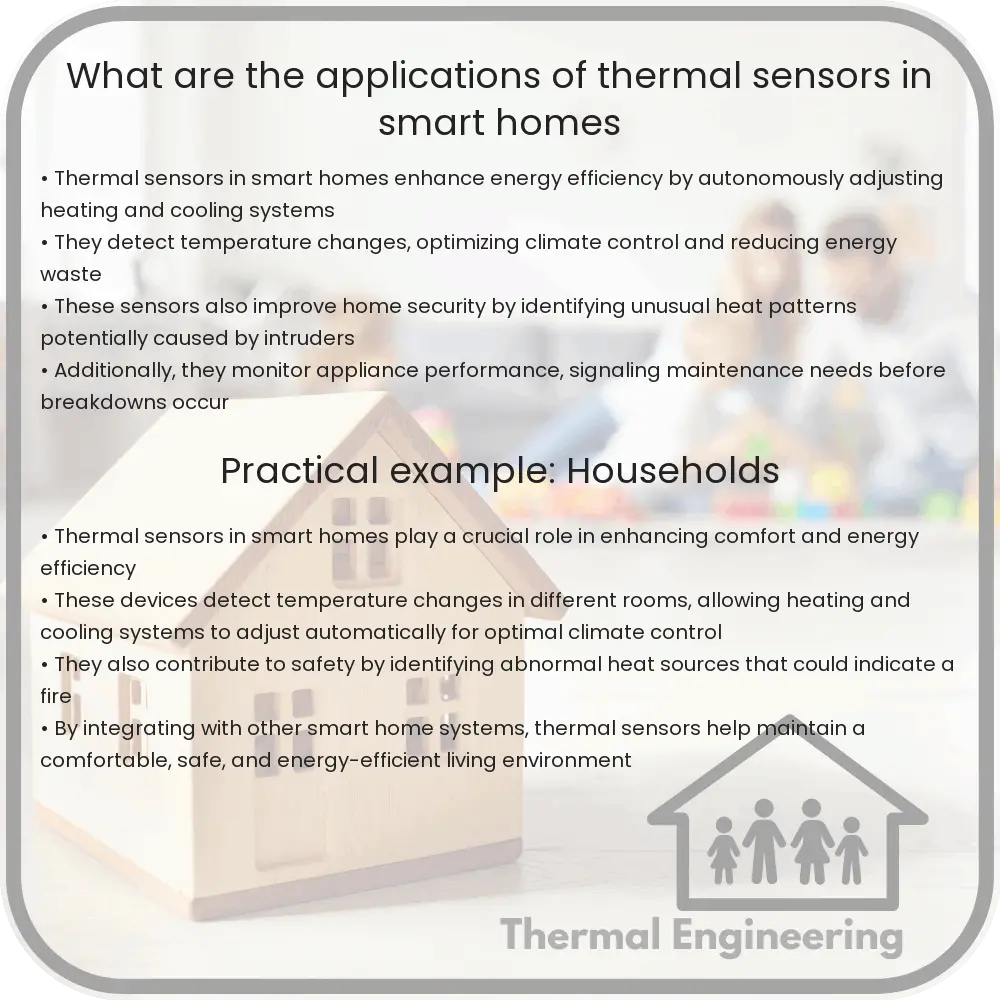
Applications of Thermal Sensors in Smart Homes
Thermal sensors, integral components in the domain of smart home technology, have increasingly significant roles due to their ability to monitor and manage heat environments effectively. These sensors enable smart home systems to maintain comfort, enhance energy efficiency, and ensure safety. Below are key applications of thermal sensors in smart homes.
1. Climate Control and Energy Efficiency
One of the primary applications of thermal sensors is in the area of climate control. These sensors can detect the temperature in different parts of a house and automatically adjust heating, ventilation, and air conditioning (HVAC) systems to maintain a desired comfort level. For instance, a thermal sensor can signal the smart home system to lower the heat when the room reaches the set temperature, thereby conserving energy and reducing utility bills.
- Optimizing HVAC operations based on the specific heating and cooling needs of each room.
- Scheduling HVAC activities during off-peak hours to save on energy costs.
2. Improved Appliance Functionality
Thermal sensors also find applications in managing the functionality of household appliances. For example, in smart refrigerators, these sensors help in monitoring and adjusting internal temperatures to keep food fresh. Similarly, in water heaters, thermal sensors ensure the water is heated to the right temperature for use, optimizing energy consumption.
- Regulation of refrigeration systems to extend the freshness of food and reduce spoilage.
- Automatic adjustment of water heating based on usage patterns and external temperatures.
3. Enhanced Safety and Security
In the domain of safety and security, thermal sensors play a crucial role by detecting abnormal temperature changes that could indicate potential fire hazards. Integrated within fire detection systems, they can provide early warnings about overheating equipment or electrical fires, thus providing homeowners with timely alerts to avert disasters.
- Integration with smoke detectors to improve the sensitivity and reliability of fire detection.
- Monitoring areas typically prone to overheating, such as kitchens and garages.
4. Health Monitoring
Thermal sensors are instrumental in health monitoring systems within smart homes, especially for elderly care. These sensors can detect sudden drops in room temperature that may be harmful to health or indicate a malfunctioning HVAC system. Moreover, advanced thermal sensors can also monitor body temperature to provide insights into a resident’s health state, which can be particularly useful in detecting fever or preventing hypothermia.
- Continuous monitoring of room and body temperatures to provide a comfortable and safe environment for vulnerable populations like the elderly or ill.
- Alert generation for caregivers in case of detected health risks associated with abnormal temperatures.
Conclusion
Thermal sensors serve as the cornerstone of many smart home functionalities, contributing significantly to climate control, appliance efficiency, safety, and health monitoring. As technology evolves, the role of these sensors in enhancing home automation and intelligent systems is set to become even more pivotal, offering greater comfort, safety, and efficiency in our living environments.