Explore how thermal labels can help reduce packaging waste and increase environmental sustainability in supply chains.
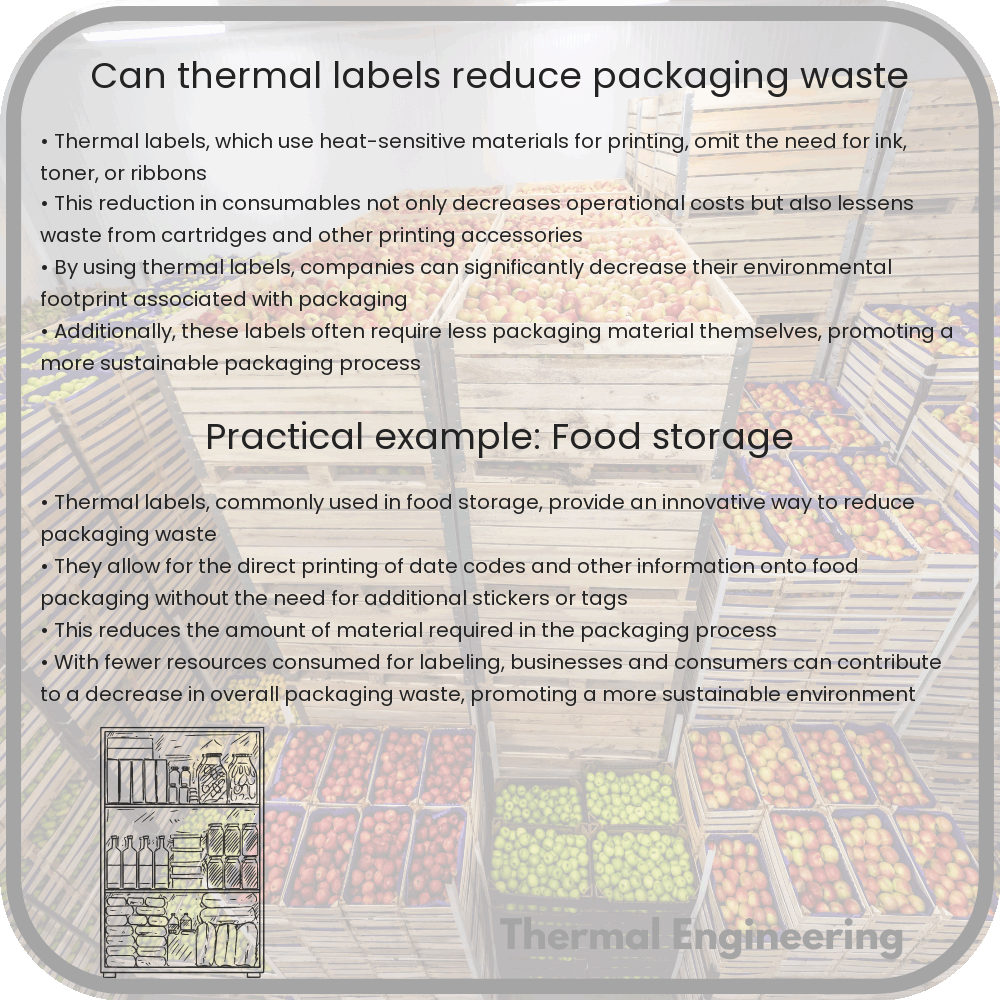
Can Thermal Labels Reduce Packaging Waste?
In our increasingly eco-conscious world, businesses and consumers are constantly looking for ways to reduce their environmental impact. One area of focus is packaging waste, which contributes significantly to landfill and environmental degradation. A lesser-known but impactful way to address this issue is through the adoption of thermal labels in packaging.
Understanding Thermal Labels
Thermal labels are an innovative labeling technology that utilizes heat-sensitive materials for printing. These labels require a thermal printer that generates heat to create images or text on the label. There are two main types of thermal labels:
- Direct Thermal Labels: These labels require no ink, toner, or ribbon. They have a heat-sensitive coating that turns black when exposed to the thermal print head. They are often used for short-term applications like receipts or shipping labels.
- Thermal Transfer Labels: For these labels, a ribbon is used between the print head and the label material. The heat from the print head melts the ribbon’s wax or resin-based ink, which is then transferred to the label surface. This method is more durable and is used for labels needing to withstand longer periods or harsh environments.
Impact on Packaging Waste
The potential for thermal labels to reduce packaging waste lies in several key areas:
- Reduction of Ancillary Packaging Material: Traditional labeling often involves adhesives and additional layers of material which can complicate recycling processes. Thermal labels, especially direct thermal labels, often peel off easily or degrade, simplifying recycling or reuse of the packaging.
- Durability and Legibility: Thermal labels tend to be more durable against environmental factors such as water, oil, and UV light. This ensures the integrity of the information on the label (like barcode or ingredients), reducing the likelihood of mismanaged resources due to unreadable labels.
- Reduced Need for Ink and Toner: Since direct thermal labels do not require ink, toner, or ribbons, they eliminate the need for these consumables, which themselves generate waste through cartridges and containers. Additionally, thermal transfer labels use precisely the amount of ribbon needed per label, minimizing waste.
Broader Environmental Benefits
Beyond direct reductions in packaging waste, thermal labels also offer broader environmental benefits:
- Energy Efficiency: Thermal printers are generally more energy-efficient compared to traditional inkjet or laser printers, partly because they do not require the time or energy to heat up large print heads or fusers.
- Supply Chain Simplification: The durability and long shelf-life of thermal labels can improve the overall efficiency of supply chains, reducing waste and energy usage associated with re-labelling or package damage.
Conclusion
While they are not a panacea, thermal labels represent a valuable tool in the battle against packaging waste. By simplifying components, enhancing durability, and eliminating the need for consumables, thermal labels can help to significantly reduce the environmental impact of modern packaging. Adopting such technologies, in conjunction with broader waste reduction strategies, can lead to substantial ecological benefits and contribute to a more sustainable future.