Facebook Instagram Youtube Twitter

Chopper Pump | Solid Waste Handling & Wastewater

Explore the functionality, benefits, and diverse applications of chopper pumps in effective solid waste and wastewater management.

Chopper Pump | Solid Waste Handling & Wastewater

Understanding Chopper Pumps in Solid Waste Handling and Wastewater Management

Chopper pumps represent a vital class of centrifugal pumps featuring chopping systems designed to handle solid wastes in suspension. These pumps are specifically engineered to prevent clogging, making them indispensable in waste management processes such as municipal wastewater treatment and agricultural effluent control. This article delves into the mechanics, benefits, and applications of chopper pumps in handling solid waste and wastewater efficiently.

Key Components and Mechanism

Chopper pumps are equipped with integrated cutting mechanisms that slice solid and fibrous materials into smaller, manageable pieces. This capability is central to their functionality and distinguishes them from standard centrifugal pumps. The core components of a chopper pump include:

  • Impeller: Moves the fluid and can be designed with cutting surfaces.
  • Cutting Mechanism: Located either on the impeller or the suction plate of the pump, this system slices incoming solids before they enter the impeller.
  • Pump Casing: Designed to facilitate efficient pumping and cutting action while minimizing clogs.

The operation of a chopper pump involves drawing fluid containing solids into the first stage of the cutting mechanism, where solids are reduced in size. The fluid then moves to the impeller where it is propelled further by centrifugal force, all while undergoing additional chopping if necessary.

Benefits in Wastewater Management

Chopper pumps offer numerous advantages in the context of wastewater management:

  • Clog Reduction: Their ability to break down solids prevents clogging and equipment downtime, ensuring continuous operation.
  • Increased Efficiency: By reducing particle size, these pumps facilitate smoother flow and more efficient processing in treatment facilities.
  • Versatility: Chopper pumps can handle various types of waste materials, making them suitable for diverse wastewater contexts.
  • Durability: Built to withstand abrasive materials, chopper pumps typically have a longer service life in harsh environments.

Applications of Chopper Pumps

Chopper pumps are used in a variety of settings that involve waste processing and management:

  • Municipal Wastewater Treatment: They are used to process sewage and sludge, breaking down solid waste and fibrous materials.
  • Agricultural Wastes: Useful in the management of livestock waste, processing high-fiber materials like straw and animal excreta.
  • Industrial Applications: Chopper pumps are beneficial in paper mills and food processing plants where large amounts of waste and solids are present.

Conclusion

Chopper pumps are powerful tools in the management of wastewater and solid wastes, offering efficient, clog-free operation across various industrial, municipal, and agricultural settings. By integrating cutting mechanisms with centrifugal force, these pumps address one of the most pressing issues in waste management – the handling of solid materials. Their role in enhancing the efficiency and reliability of waste processing systems proves invaluable, promoting sustainability and environmental protection. Understanding and adopting such technologies is critical for advancing waste management practices and catering to the increasing demands of modern industries and urban infrastructures.

Cooling techniques for satellite systems

Learn about essential cooling techniques for satellite systems to manage heat in space, focusing on radiative cooling, heat pipes, and active systems.

Cooling techniques for satellite systems

Introduction to Cooling Techniques for Satellite Systems

Satellites operate in the harsh environment of space, where extreme temperatures prevail. Managing the heat generated by onboard electronic systems and external thermal conditions is critical to the satellite’s functionality and lifespan. This article explores the fundamental cooling techniques used in satellite systems to maintain optimal operational temperatures.

Radiative Cooling

Since conduction and convection are not viable in the vacuum of space, radiative cooling becomes the primary method for heat management in satellites. This technique revolves around the principle that every body loses heat by emitting radiation. The efficiency of radiative cooling primarily depends on the emissivity of the surface, which is engineered to maximize heat emission.

  • Surface Coatings: Special thermal coatings with high emissivity and low solar absorptance, such as white paints or optical solar reflectors (OSR), are applied to the exterior of satellites to enhance radiative cooling.
  • Heat Radiators: Dedicated radiator panels are designed to increase the surface area available for heat emission, thus effectively cooling satellite components.

Heat Pipes

Heat pipes are a critical component in passive thermal control systems. They utilize phase change and capillary action to transfer heat from hotter portions of a satellite to cooler areas, where it can be radiated away.

  • Construction: A typical heat pipe contains a working fluid inside a sealed tube with a wick structure. Heat absorbed by the fluid at the hot interface causes it to vaporize and flow towards the cooler interface, where it condenses, releasing latent heat.
  • Efficiency: Heat pipes can transport heat over considerable distances with minimal temperature differences and are highly effective in temperature homogenization.

Loop Heat Pipes and Capillary Pumped Loops

Advanced versions of heat pipes, like Loop Heat Pipes (LHPs) and Capillary Pumped Loops (CPLs), are used in modern satellite systems. These devices offer greater flexibility and control over heat transport.

  • Loop Heat Pipes: LHPs are similar to heat pipes but feature a looped design that can transport heat over longer distances and against gravity. They are particularly useful for satellites with large or irregular shapes.
  • Capillary Pumped Loops: CPLs are more complex systems that use capillary action to pump the working fluid through a loop, effective for managing spatially separated high heat loads.

Active Thermal Control Systems

While passive cooling methods are essential, active thermal control systems (ATCS) are also employed to maintain precise temperature conditions.

  • Thermal Pumps: Mechanical pumps move heat transfer fluids through closed-loop systems, capable of actively controlling the temperature of specific components or regions within the satellite.
  • Electrical Heaters: Used during the cold phases of orbits or in shadowed parts of the spacecraft, electrical heaters supplement passive systems to prevent temperatures from dropping too low.
  • Thermoelectric Coolers: These devices use the Peltier effect to create a thermal difference based on electrical currents, which can be precisely controlled for delicate instruments or sensors.

Conclusion

Cooling is a critical aspect of satellite engineering, ensuring that sensitive electronic systems operate effectively in the extreme conditions of space. Through a combination of radiative mechanisms, heat transfer technologies like heat pipes, and active thermal management systems, engineers are able to maintain temperatures within safe operational limits. The ongoing development in materials science and thermal management technologies continues to improve the efficiency and reliability of satellites in their crucial roles in communication, observation, and exploration.

Cryogenic Pump | Low Temperature Fluids & Applications

Learn about cryogenic pumps, specialized devices crucial for handling extremely cold liquids and gases in various industries.

Cryogenic Pump | Low Temperature Fluids & Applications

Understanding Cryogenic Pumps

Cryogenic pumps are specialized mechanical devices designed to handle and move extremely cold liquids and gases. They are crucial in industries where processes involve temperatures typically below -150 degrees Celsius (-238 degrees Fahrenheit). These temperatures require highly engineered equipment to safely and efficiently process materials without compromising their low-temperature properties.

Principles of Operation

The fundamental operation of cryogenic pumps revolves around their ability to handle fluids in a liquefied state at very low temperatures. They are often designed to minimize heat transfer to the fluid to maintain its cryogenic state. This is achieved through vacuum insulation, the use of cold-resistant materials, and specialized flow paths that reduce the thermal energy absorbed by the fluid.

Types of Cryogenic Pumps

There are two primary types of cryogenic pumps commonly used:

  • Centrifugal Pumps: These pumps use a rotating impeller to impart kinetic energy to the fluid, converting it into pressure energy. They are typically used for large volume transfers and can handle a variety of cryogenic fluids like liquid nitrogen, oxygen, and argon.
  • Positive Displacement Pumps: These operate by trapping a fixed amount of fluid and then forcing (displacing) that trapped volume into the discharge pipe. This type is preferred for high-pressure applications and precise volume control, essential for handling liquefied natural gas (LNG) and other cryogenic substances.

Applications of Cryogenic Pumps

Cryogenic pumps are essential in various high-tech and industrial applications:

  • Space Industry: Used for fueling rockets with cryogenic propellants such as liquid hydrogen or liquid oxygen.
  • Medical Field: Crucial in the storage and handling of cryopreserved biological materials, including blood, embryos, and other tissues.
  • Food Industry: Employed in freeze-drying processes and in the preservation of food by maintaining extremely low temperatures.
  • Energy Sector: Integral to the LNG industry, where natural gas is liquefied at cryogenic temperatures for transport and storage.

Challenges in Cryogenic Pump Design

Designing cryogenic pumps presents several challenges:

  • Material Selection: Materials must be selected that remain ductile and strong even at cryogenic temperatures. Common choices include stainless steel and aluminum alloys.
  • Sealing Systems: Sealing mechanisms must prevent leaks while maintaining flexibility and integrity at low temperatures.
  • Thermal Insulation: Effective insulation is crucial to reduce heat ingress and maintain the efficiency of the pump and integrity of the fluid.

Conclusion

Cryogenic pumps are pivotal in modern engineering and technology, facilitating the safe movement and handling of substances at ultra-low temperatures. Their role spans various industries, underscoring their importance in advancing applications involving cryogenic fluids. While challenging to design and operate, advances in materials science and mechanical engineering continue to enhance their performance and reliability.

Booster Pump | Increased Water Pressure & Circulation

Learn about booster pumps, essential for increasing water pressure and improving circulation in plumbing systems.

Booster Pump | Increased Water Pressure & Circulation

Understanding Booster Pumps: Enhancing Water Pressure and Circulation

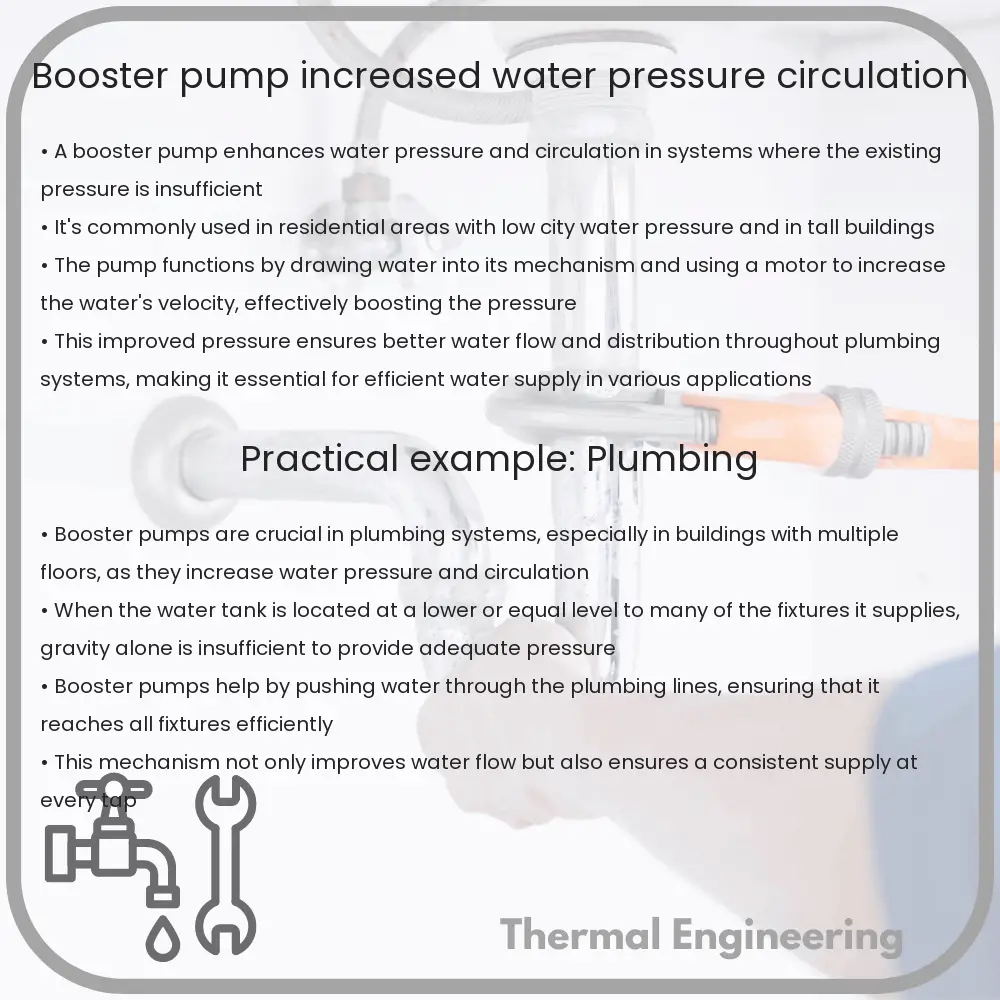
Booster pumps are essential components in both residential and industrial plumbing systems, designed to increase water pressure and enhance circulation. Their primary function is to resolve issues related to low water pressure and inadequate flow rates in various applications, from sprinkler systems to high-rise buildings.

How Do Booster Pumps Work?

At its core, a booster pump adds pressure and velocity to water flowing through a piping system. The basic components of a booster pump include an electric motor, impeller, inlet, and outlet. The motor powers the impeller, which is a rotor designed to increase fluid speed and pressure. As water enters the pump, the rotating impeller forcibly pushes water through the outlet, thus boosting its pressure.

Types of Booster Pumps

  • Single-stage: This type of pump has one impeller and is typically used for low to moderate pressure increase applications.
  • Multi-stage: Equipped with two or more impellers, multi-stage booster pumps are used for higher pressure applications. Each stage incrementally increases the pressure of the fluid.

Applications and Benefits

Booster pumps are crucial in situations where the existing water supply does not have sufficient pressure to meet operational requirements. Common applications include:

  • Residential buildings: Increasing water pressure for showers, faucets, and garden hoses in homes, especially in areas with low municipal water pressure or buildings with multiple floors.
  • Commercial facilities: Supporting HVAC systems, firefighting systems, and irrigation systems in large scale operations such as hospitals, hotels, and schools.
  • Industrial settings: Ensuring consistent, high-pressure water supply for processes that require substantial water flow and pressure.
  • Agricultural irrigation: Enhancing the delivery of water in vast farming fields, maximizing crop irrigation efficiency.

In addition to increased water pressure and circulation, booster pumps contribute to a more reliable and efficient water supply system. They can help reduce energy consumption by operating only when necessary and can be integrated into existing plumbing systems with relatively simple modifications.

Selection Considerations

Choosing the right booster pump involves several factors to ensure optimal performance and cost-efficiency:

  • Flow rate: This is the volume of water that needs to be pumped, typically measured in gallons per minute (GPM) or liters per minute (LPM). The required flow rate will depend on the number of outlets and the overall demand of the system.
  • Pressure requirements: The necessary pressure increase, usually measured in pounds per square inch (psi) or bars, should be determined based on the application needs.
  • Power source: Most booster pumps are electrically powered, but the voltage and phase compatibility must be considered when integrating into existing systems.
  • Material compatibility: The construction materials of the pump should be compatible with the type of fluid being pumped to prevent corrosion or degradation.

By understanding the mechanics, types, and applications of booster pumps, consumers and industries can make informed decisions to better address their water pressure and circulation needs. These devices play a crucial role in ensuring efficient, high-performance water delivery systems across numerous applications.

Conclusion

Booster pumps are valuable tools in overcoming challenges associated with low water pressure and inadequate flow rates in diverse plumbing systems. Their ability to increase water pressure and improve circulation not only enhances performance but also contributes to system longevity and efficiency. Whether for residential comforts, commercial necessities, or industrial processes, understanding and selecting the right booster pump is key to maintaining robust and reliable water infrastructure.

Sump Pump | Water Removal, Basements & Industrial

Learn about sump pumps, their function, types, and importance in preventing water damage and flooding in residential and commercial settings.

Sump Pump | Water Removal, Basements & Industrial

Understanding Sump Pumps: Function, Importance, and Application

Sump pumps are critical devices used in both residential and industrial settings to handle unwanted water accumulation. They are most commonly installed in the lowest part of a basement or crawlspace to prevent flooding and mitigate the serious damage that water can cause to a building’s foundation. This article explores the fundamentals of sump pumps, including their operation, types, and applications.

What is a Sump Pump?

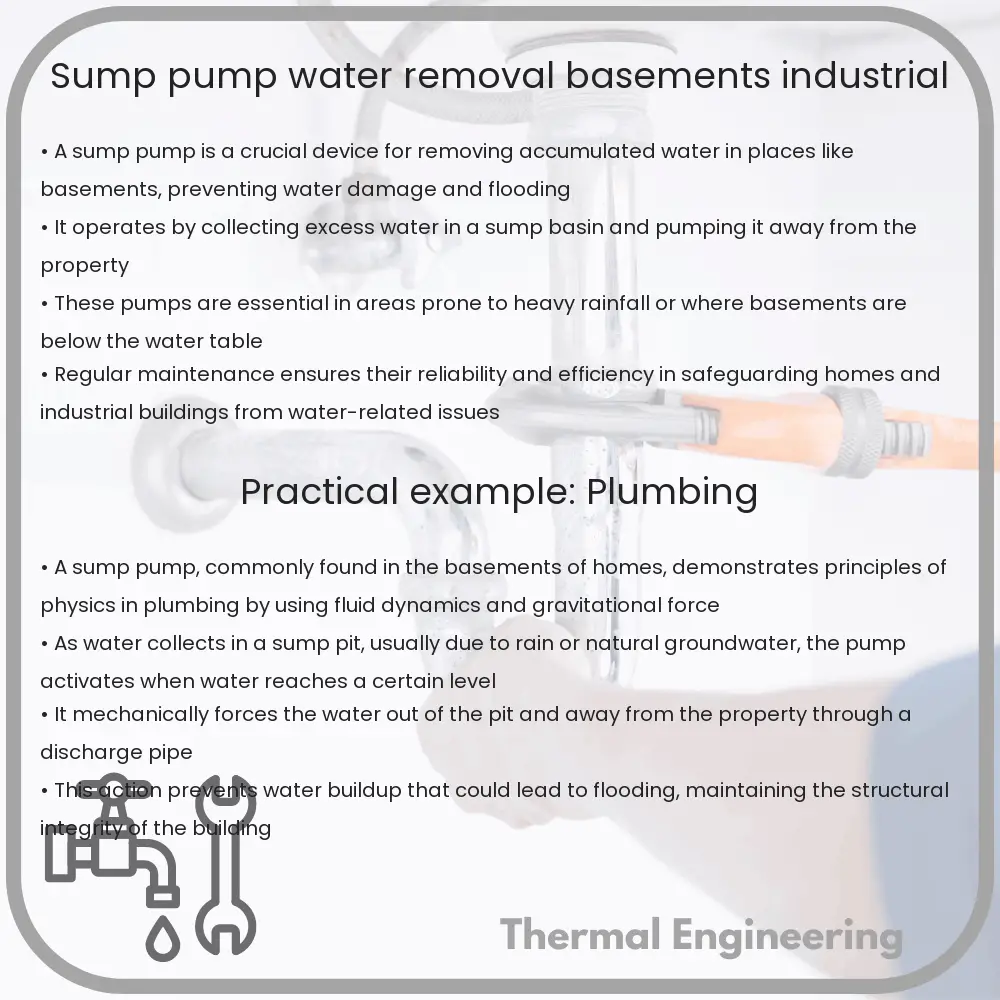
A sump pump is an automatic water removal system installed in the sump pit of a home or commercial building. A sump pit, typically located at the lowest part of the basement or crawlspace, serves as a collection point for excess water, which may enter via natural ground water or rain run-offs. The function of the sump pump is straightforward: to pump this accumulated water out of the pit and away from the building, thus keeping the area dry and preventing water damage.

Types of Sump Pumps

  • Submersible Sump Pumps: As the name suggests, these pumps are designed to be submerged in water. They are installed inside the sump pit and are generally quieter and less obtrusive than their counterparts. Submersible pumps are sealed to prevent electrical short circuits.
  • Pedestal Sump Pumps: These pumps are not submersible. Instead, they feature a motor mounted above the sump, keeping it dry and accessible for maintenance. The pump is connected to a pipe that dips into the water in the sump pit.
  • Battery-Operated Backup Sump Pumps: These are backup units often installed alongside one of the primary pumps. They are designed to operate in the event of a power outage, using battery power to operate the pump when the main grid power is unavailable.
  • Water-Powered Backup Sump Pumps: Another backup option, these do not require electricity or batteries. Instead, they use the pressure of a municipal water supply to create suction, drawing the collected water out of the sump pit.

How does a Sump Pump Work?

Sump pumps are equipped with valves that sense escalating water levels or pressure. When the water level in the sump pit reaches a critical point, the pump is automatically switched on. The pump then moves the water through pipes that run away from the foundation of the house, usually expelling the water to a municipal storm drain or a dry well. The pipes typically include a one-way check valve to prevent the pumped water from flowing back into the sump pit.

Applications of Sump Pumps

  • Residential: In homes, sump pumps are essential for keeping basements and crawlspaces dry, protecting against mold and water damage, and improving indoor air quality. They are especially important in areas prone to heavy rainfall or in homes with high natural ground water levels.
  • Industrial: In industrial settings, sump pumps are used to handle large-scale water discharge issues, such as those found in industrial basements, warehouses, or manufacturing plants where rapid water removal is critical to protect equipment and maintain operations.
  • Commercial: Similar to industrial applications, commercial buildings such as malls, hospitals, and office complexes use sump pumps to ensure that facilities stay dry and safe for occupants.

Importance of Maintenance

Regular maintenance is critical for the efficient operation of sump pumps. Routine checks should include cleaning the sump pit, testing the pump and the float mechanism, checking the discharge line for blockages, and ensuring the backup systems are operational. Proper care prevents motor burnout, clogging, and ensures long-term protection against basement flooding.

Sump pumps are an integral part of a building’s maintenance system, offering a proactive measure against potential water-induced damages. They play an essential role in ensuring that structures remain dry and safe over time, significantly reducing the likelihood and severity of moisture-related issues.

Self-Priming Pump | Easy Operation & Diverse Applications

Learn about self-priming pumps, their unique air-evacuating feature, operation ease, and extensive industrial applications.

Self-Priming Pump | Easy Operation & Diverse Applications

Understanding Self-Priming Pumps: Easy Operation and Diverse Applications

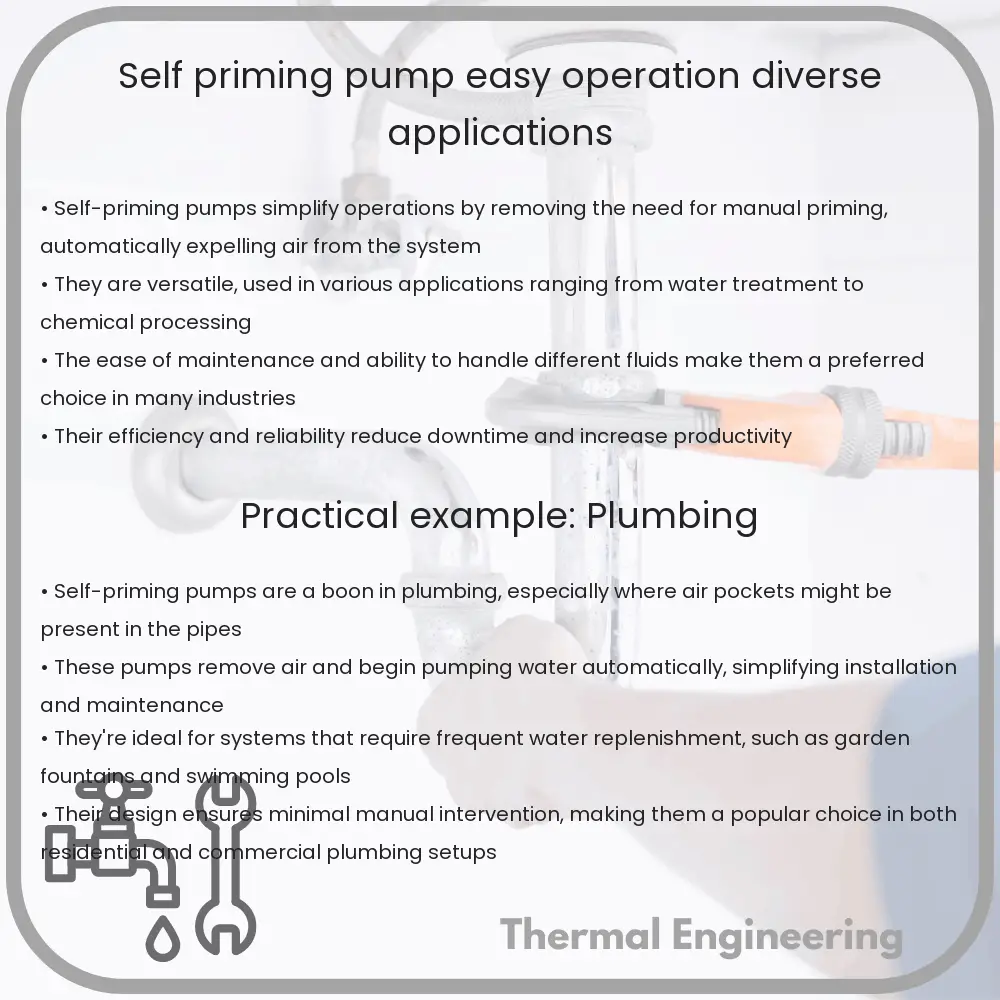
Self-priming pumps are a type of pump that can evacuate air from its casing and suction line without external intervention, allowing for a seamless start-up. This unique feature not only simplifies the setup and operation but also broadens their application in various industries. This article will explore the working principle, advantages, and common applications of self-priming pumps.

How Self-Priming Pumps Work

The main characteristic that distinguishes self-priming pumps from other pump types is their ability to prime themselves during their initial use and after if they run dry or are initially filled with air. The priming process involves several stages:

  1. Evacuation: The pump begins by evacuating air from the pump casing and suction piping through an integral air-water separator or priming chamber.
  2. Air Discharge: As the pump operates, it moves the air-water mixture toward the discharge, leaving a lower pressure area at the intake.
  3. Fluid Intake: As air is expelled, the atmospheric pressure and fluid weight push water up the suction pipe, filling the vacuum left by expelled air, and primes the pump automatically.

This process enables the pump to create enough vacuum to start lifting the liquid, typically water, without needing an initial manual prime.

Advantages of Self-Priming Pumps

  • Ease of use: Due to their ability to self-prime, these pumps reduce the need for manual priming, making them easy to start and operate.
  • Flexibility: Their design allows them to handle a variety of fluids, including those with dissolved gases or air pockets.
  • Adaptability: Self-priming pumps are proficient in varying water levels, which is particularly advantageous for fluctuating water sources such as ponds or streams.
  • Reduced Infrastructure: They generally do not require additional components like foot valves and can manage with less perfect suction conditions, thus lowering setup costs and complexities.

Applications of Self-Priming Pumps

Self-priming pumps have diverse applications across various sectors due to their versatile design and robust functionality. Some typical uses include:

  • Water and Wastewater: These pumps are widely used in municipal water services, sewage treatment plants, and flood control management due to their ability to handle solids and semi-solids efficiently.
  • Marine and Shipping: In marine environments, self-priming pumps facilitate efficient bilge, ballast, and waste water handling, critical for the operation of commercial and recreational vessels.
  • Industrial: Many industries, including mining, petrochemical, and food processing, use these pumps for tasks like tank emptying, pumping abrasive slurry, and handling volatile liquids.
  • Agriculture: For irrigation purposes, self-priming pumps are used to pump water from sources like ponds or rivers to fields, adapting easily to varying water levels and source locations.

In conclusion, self-priming pumps offer significant advantages in terms of ease of operation and flexibility, positioning them as an excellent choice for a wide range of applications where varying fluid conditions and the ability for rapid startup are critical. Their innovative design simplifies operation and maintenance, making them a favored choice in both industrial and environmental applications.

Inline Centrifugal Pump | Compact Design & HVAC Use

Learn about the structure, function, and advantages of inline centrifugal pumps in HVAC systems, focusing on their efficient, compact design.

Inline Centrifugal Pump | Compact Design & HVAC Use

Understanding Inline Centrifugal Pumps: Compact Design and HVAC Applications

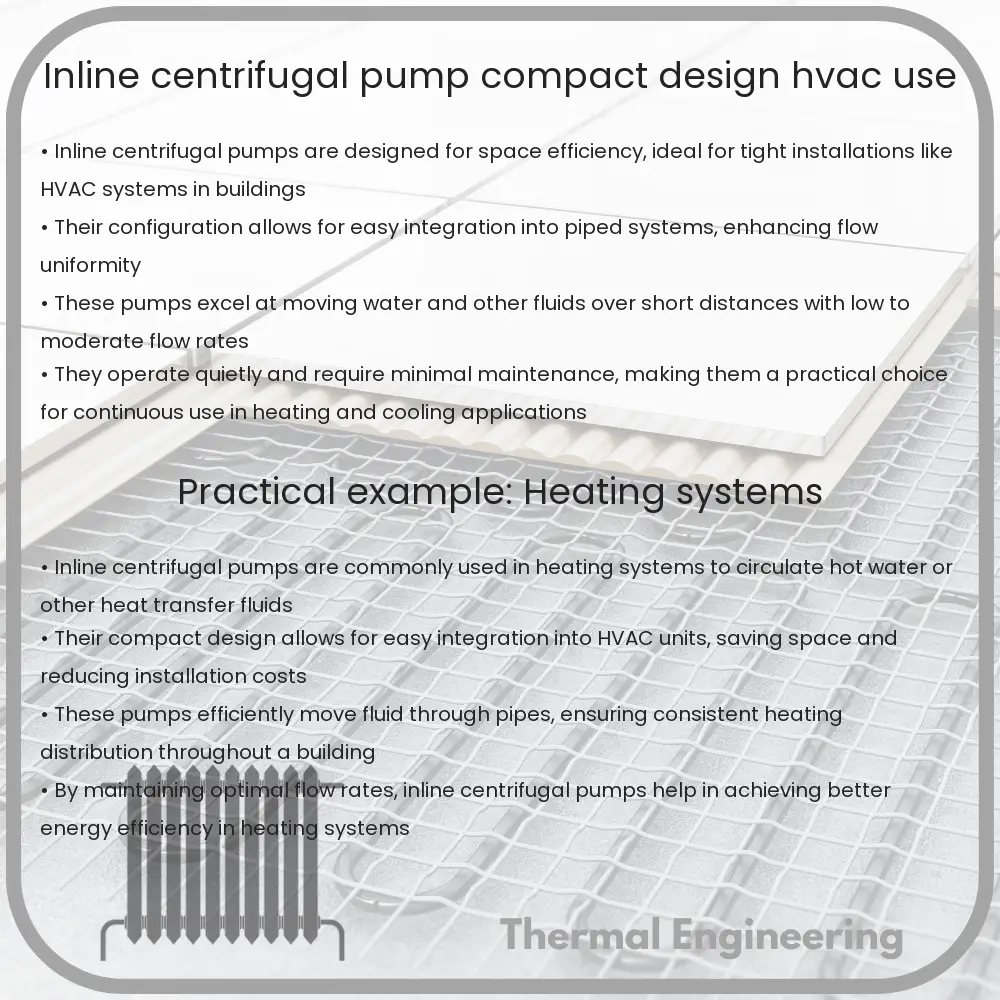
Inline centrifugal pumps are a pivotal component in heating, ventilation, and air conditioning (HVAC) systems, known for their efficiency and compact design. These pumps are designed to move fluids by converting rotational kinetic energy into hydrodynamic energy. This article explains the basic structure, operation, and benefits of inline centrifugal pumps, particularly in HVAC applications.

Basic Structure of Inline Centrifugal Pumps

Unlike traditional centrifugal pumps where the inlet and outlet are diagonally placed, in an inline centrifugal pump, the inlet and outlet are aligned on the same axis. This structural arrangement leads to a compact design, making inline centrifugal pumps suitable for spaces with limited room. Components typically include:

  • A motor: Typically an electric motor that powers the pump.
  • Impeller: A rotating component that transfers energy from the motor by pushing the fluid outward using centrifugal force.
  • Pump casing: A tight casing that encloses the impeller and directs the flow of fluid in a specific direction.
  • Bearings and shaft: Connecting components that support mechanical operation and rotational motion.

Operation Principle

The operation of an inline centrifugal pump starts with the electric motor, which turns the impeller. As the impeller rotates, it imparts velocity to the fluid turning around it due to centrifugal force. This action increases the fluid’s velocity and, subsequently, its pressure. As the fluid exits the impeller, the pump casing helps convert velocity into higher pressure by confining and directing the flow. The aligned inlet and outlet design facilitates a smoother flow path, thus improving efficiency.

Benefits in HVAC Applications

Inline centrifugal pumps are ideal for HVAC systems due to several advantageous features:

  • Space Efficiency: The compact, axial design saves substantial space, which is critical in congested areas like building mechanical rooms.
  • Easy Maintenance: The design allows easy access to internal components without removing the entire unit from the pipeline.
  • Energy Efficiency: The smooth flow path reduces hydraulic losses, enhancing overall energy efficiency and reducing operational costs.
  • Versatility: These pumps can handle a variety of fluids and operate across a range of temperature and pressure conditions, making them suitable for diverse HVAC tasks.

Selection Criteria for HVAC Systems

When choosing an inline centrifugal pump for HVAC applications, consider the following factors to ensure optimal performance:

  • Flow rate: The volume of fluid that needs to be moved per unit of time, typically measured in gallons per minute (GPM).
  • Pressure requirements: The required pressure increase, considering both static and dynamic factors in the system design.
  • Power consumption: Efficiency of the motor and impeller design in converting electrical energy into hydraulic energy.
  • Material compatibility: Compatibility of the pump materials with the type of fluids in the HVAC system to avoid corrosion or degradation.

Conclusion

Inline centrifugal pumps embody a blend of simplicity, efficiency, and functionality, making them a staple in modern HVAC systems. Thanks to their compact structure, these pumps not only save space but also bring operational efficiency and reliability. For anyone involved in the design or maintenance of HVAC systems, understanding the operational dynamics and benefits of inline centrifugal pumps is crucial for optimizing system performance and durability.

Whether you are a beginner in engineering or looking to deepen your understanding of HVAC components, inline centrifugal pumps represent a fundamental topic worth exploring. Their impact on system efficiency and space management can significantly drive the performance standards of modern engineering solutions in the HVAC industry.

Submersible Pump | Underwater Operation & Reliability

Learn about submersible pumps, their design, operating principles, advantages, maintenance, and diverse applications in engineering and industry.

Submersible Pump | Underwater Operation & Reliability

Introduction to Submersible Pumps

Submersible pumps, as their name implies, are designed to operate completely submerged in liquid. This distinctive feature sets them apart from more traditional pump models that require external components to be above the liquid. Submersible pumps are commonly used in applications ranging from household water supply systems to industrial pumping. They are particularly effective for deep water pumping such as in wells, oil rigs, or underwater operations.

Operating Principles

Submersible pumps function based on the principle of pushing water to the surface rather than pulling it up, which is more energy-efficient, especially for deep water sources. The main components of a submersible pump include an electric motor, impeller, and a pump casing. The electric motor is hermetically sealed in a casing that is pressure-proof to prevent water ingress and electrical failures. When the pump is powered on, the motor drives the impeller, which rotates and pushes water through the diffuser and up the piping.

Advantages of Using Submersible Pumps

  • High Efficiency: Since the pumps push rather than pull water, they operate more effectively at great depths.
  • Reliability: Their sealed, watertight construction makes submersible pumps highly reliable and reduces the risk of leaks and other mechanical failures.
  • Low Noise Level: Being submerged, these pumps operate more quietly than non-submersible units.
  • Minimal Space Requirement: Submersible pumps require less installation space compared to other types of pumps, which is advantageous in crowded or compact areas.

Key Considerations for Reliability and Maintenance

Maintaining the reliability of submersible pumps involves regular check-ups and addressing several key considerations:

  1. Water Quality: Sediment, debris, and other particulates can cause wear and tear or clog the pump. Using filters and performing routine cleaning is critical.
  2. Seal Integrity: Ensuring that the seals remain intact prevents water from entering the motor casing and causing electrical failures.
  3. Motor Overheating: Overheating can occur if the pump runs dry. Adequate water flow around the pump is necessary to dissipate heat and cool the motor.
  4. Corrosion: Using corrosion-resistant materials is important, especially in saltwater applications, to extend the lifespan of the pump.

Applications in Engineering and Industry

Submersible pumps find extensive use across various sectors:

  • Water Management: For drainage, sewage pumping, slurry pumping, and general water supply in residential, commercial, and industrial settings.
  • Oil Industry: These pumps are crucial for offshore drilling rigs where they pump drilling mud used in the extraction of oil.
  • Mining: In mining operations, submersible pumps help manage water and remove slurry, assisting in the processing of minerals.
  • Construction: They are used to remove water from construction sites or to lower groundwater levels to make areas suitable for building.

Conclusion

Submersible pumps are a cornerstone in modern pumping technology, offering a blend of efficiency, reliability, and versatility. Proper maintenance and understanding their operational principles are crucial for ensuring their long-term functionality. With a broad range of applications, from household uses to major industrial operations, submersible pumps play an integral role in managing water resources and facilitating various engineering projects.

Thermal conductivity optimization in insulating materials

Learn how optimizing thermal conductivity in insulating materials enhances energy efficiency and temperature control in various applications.

Thermal conductivity optimization in insulating materials

Understanding Thermal Conductivity Optimization in Insulating Materials

Thermal conductivity is a material property that measures the ability of a substance to conduct heat. In the realm of building and construction, as well as in many engineering applications, optimizing the thermal conductivity of insulating materials is crucial for enhancing energy efficiency and maintaining temperature control. This article delves into the basics of thermal conductivity, discusses its significance in insulating materials, and explores methods to optimize it for better performance.

The Basics of Thermal Conductivity

Thermal conductivity, denoted as “k,” is an intrinsic material property that indicates how efficiently heat is transferred through a material by conduction. The higher the thermal conductivity of a material, the more easily heat can pass through it. Conversely, materials with low thermal conductivity are better insulators because they resist heat flow. The unit of thermal conductivity in the International System of Units (SI) is the watt per meter per Kelvin (W/(m*K)).

Why Optimize Thermal Conductivity?

In insulating materials, the primary goal is to minimize the rate of heat transfer to save on heating and cooling costs and improve comfort levels. Effective insulation helps in maintaining the desired temperature within a space, regardless of the external environmental conditions. Optimizing the thermal conductivity of these materials involves lowering it to a point where the heat transfer is greatly reduced.

Materials and Techniques for Optimization

  • Fibrous Materials: Materials such as fiberglass, mineral wool, and ceramic fibers are commonly used for insulation due to their low thermal conductivity. The small air gaps within the fibers significantly reduce the heat transfer, as air has a very low thermal conductivity.
  • Foam Insulation: Polyurethane foam and polystyrene foam are examples of synthetic insulation materials known for their very low thermal conductivity. Their cellular structure contains small air pockets that trap air, minimizing heat transfer.
  • Aerogels: One of the most effective insulating materials available today are aerogels. They possess an extremely low thermal conductivity due to their porous structure and are used in high-tech applications such as aerospace and scientific instrumentation.

Recent Advances in Thermal Conductivity Optimization

Researchers and engineers are continually striving to develop materials with lower thermal conductivities. Recent advancements include the development of vacuum insulation panels and gas-filled panels, which use the principle of minimizing gas conduction by reducing the pressure inside the panel or filling it with gases that have lower thermal conductivities. Another innovative approach involves the use of phase change materials (PCMs) that absorb or release heat during phase transitions to provide additional thermal resistance.

Challenges and Future Directions

Despite advancements, there are challenges in thermal conductivity optimization, particularly in terms of balancing cost, environmental impact, durability, and fire safety. Future research is likely to focus on sustainable materials, enhancement of existing materials, and innovative designs that incrementally improve thermal insulation properties. Technologies that adjust thermal conductivity dynamically in response to environmental conditions are also a promising field of study.

The optimization of thermal conductivity in insulation materials plays a crucial role in energy conservation and environmental management. By continuing to advance in this field, we enable more efficient thermal management solutions in buildings, transport, and other critical sectors, contributing to global sustainability efforts.

API Pump | Oil & Gas Industry Specifications & Uses

Learn about API pumps’ crucial role, standards, and applications in the oil and gas industry, ensuring operational safety and efficiency.

API Pump | Oil & Gas Industry Specifications & Uses

Understanding API Pumps in the Oil & Gas Industry

API pumps, specifically designed to meet the stringent requirements of the oil and gas industry, play a crucial role in various applications. Governed by the American Petroleum Institute (API), these pumps are essential for ensuring safe and efficient operations in challenging industrial environments. This article explores the specifications, classifications, and uses of API pumps in the oil and gas sector.

API Standards for Pumps

The American Petroleum Institute specifies standards to design, manufacture, and test various types of pumps used in the petroleum industry. These standards, particularly API 610 for centrifugal pumps, serve as benchmarks for reliability and durability. API 610 categorizes pumps into different types based on their construction and design features to match the specific operational demands of petroleum, chemical, and gas industry services.

  • API 610 – Covers centrifugal pumps, including design criteria such as minimum thickness and maximum allowable working pressure.
  • API 674 – Pertains to reciprocating piston/plunger pumps, detailing minimum requirements for adequate performance.
  • API 675 – Governs controlled volume pumps, or diaphragm pumps, which precisely control the flow rate regardless of the system pressure.
  • API 676 – Relates to rotary positive displacement pumps, including screw pumps and gear pumps used for higher viscosity fluids.

These standards ensure that API pumps meet the necessary safety, reliability, and efficiency criteria required in high-risk environments.

Classification and Types of API Pumps

API pumps are classified into various types based on their operational mechanism and construction. The most common types include:

  1. Centrifugal Pumps: These are the most prevalent in the industry, known for their capability to handle high flow rates and operational flexibility. They operate using a rotating impeller to increase the velocity of the fluids.
  2. Positive Displacement Pumps: These pumps move a fixed amount of fluid with each cycle, making them ideal for applications requiring precise flow management. Types include reciprocating and rotary pumps.
  3. Multi-stage Pumps: Used in applications requiring high pressures, these pumps contain multiple impellers mounted on a single shaft within a shared pressure casing.

Uses of API Pumps in the Oil & Gas Industry

API pumps are utilized in a wide range of applications within the oil and gas industry:

  • Upstream Operations: Used for crude oil and water injection as well as for offloading from production sites to storage areas.
  • Refining Processes: Crucial in the transportation of crude oil through different refinery stages and the circulation of intermediate and final products.
  • Petrochemical Processing: Employed in the handling of various chemical intermediates and finished products within petrochemical plants.
  • Pipeline Transport: Integral to the long-distance transport of oil and gas, ensuring continuous and reliable movement from extraction points to refineries or distribution centers.

Understanding the specifications, classifications, and uses of API pumps highlights their indispensable role in maintaining efficient and safe operations in the oil and gas industry. With standardized guidelines and rigorous testing requirements set by API, these pumps are tailored to meet the harsh demands of energy sector applications, ensuring dependable service and operational excellence.