Facebook Instagram Youtube Twitter

Antifreeze | Freezing Point Depression & Engine Safety

Learn how antifreeze, also known as coolant, prevents engine freezing and boiling, ensuring optimal vehicle performance and safety.
Antifreeze | Freezing Point Depression & Engine Safety

Antifreeze: Understanding Freezing Point Depression and Engine Safety

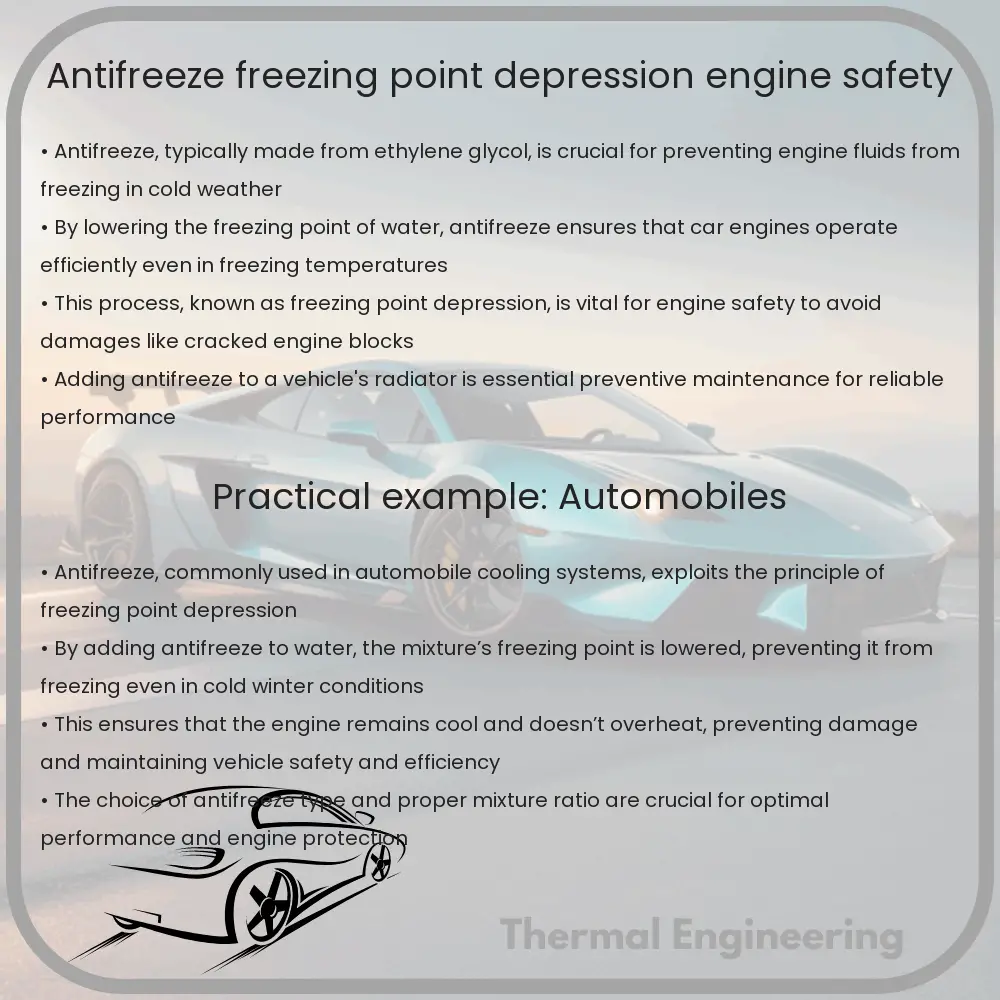
Antifreeze is a critical component in maintaining engine performance and longevity, especially in cold environments. It helps prevent the engine’s cooling system from freezing in extreme cold conditions, thus averting potentially severe engine damage.

What is Antifreeze?

Antifreeze, also known as coolant, is a liquid additive that lowers the freezing point and raises the boiling point of the liquid in an engine’s cooling system. Primarily composed of ethylene glycol or propylene glycol, antifreeze not only prevents freezing and boiling of the coolant but also protects against corrosion, aids heat transfer, and prevents scale buildup.

How Does Antifreeze Work?

Antifreeze operates based on the principle of freezing point depression. When mixed with water, antifreeze lowers the freezing point of the mixture, which allows it to remain liquid in conditions that would otherwise cause pure water to freeze. Similarly, antifreeze raises the boiling point of the mixture, helping it operate effectively in high-temperature conditions.

Freezing Point Depression Explained

The effect of freezing point depression occurs due to the addition of antifreeze to water, which disrupts the formation of ice crystals. This process can be understood through colligative properties, which are properties dependent solely on the ratio of solute particles to solvent (water) molecules in a solution. The presence of antifreeze molecules in water reduces the rate at which water molecules can organize into a solid structure (ice).

The freezing point depression, ΔTf, can be calculated by the formula:

ΔTf = Kf * m

where Kf is the cryoscopic constant (freezing point depression constant) of the solvent (water in this case), and m is the molality of the antifreeze solution (number of moles of antifreeze per kilogram of water).

Boiling Point Elevation

Just as it affects the freezing point, antifreeze also impacts the boiling point. The addition of a solute such as antifreeze increases the solution’s boiling point through the phenomenon known as boiling point elevation.

The boiling point elevation is calculated similarly to the freezing point depression:

ΔTb = Kb * m

where Kb represents the ebullioscopic constant of the solvent, and m is defined as before.

Engine Safety and Maintenance

Using the appropriate mixture of antifreeze and water is crucial for the optimal performance and safety of an engine. Typically, a 50/50 mix of antifreeze and water is recommended, which usually provides freeze protection down to -37°C (-34°F) and boil-over protection up to 129°C (265°F). It is essential to check the engine’s coolant level regularly and replace or adjust the mixture according to the manufacturer’s guidelines.

It’s also important to use the type of antifreeze recommended by your vehicle’s manufacturer, as different formulations contain different additives necessary for different types of engines.

Conclusion

Antifreeze is an essential part of engine maintenance that protects engines from extreme temperatures and chemical damage. By understanding and properly managing the antifreeze concentration in your vehicle’s cooling system, you can significantly enhance engine performance and longevity while preventing costly repairs caused by temperature-related failures.

Engine Oil | Wear Protection, Types & Changing

Learn about engine oil’s role in wear protection, the various types available, and the optimal times for oil changes to enhance engine performance and longevity.

Engine Oil | Wear Protection, Types & Changing

Understanding Engine Oil: Wear Protection, Types, and When to Change It

Engine oil is a vital component in maintaining the health and efficiency of every internal combustion engine. It serves multiple functions: lubricating engine parts, minimizing wear, removing heat from the engine, and preventing corrosion. Understanding the different types, the importance of wear protection, and knowing when to change engine oil can significantly enhance engine performance and longevity.

The Role of Engine Oil in Wear Protection

Engine oil creates a protective film between moving parts, reducing direct metal-to-metal contact, and thus minimizing wear and tear. As the engine operates, oil undergoes thermal and mechanical stresses. Over time, it loses its viscosity and the ability to form this protective film, which can lead to increased friction and accelerated wear. Additives in engine oil also help to clean the engine by removing impurities and inhibiting the formation of rust and corrosion.

Types of Engine Oil

  • Conventional Oil: This is the standard oil derived directly from crude oil with various additives. It’s suitable for older vehicle models with simple engine designs and regular driving styles.
  • Synthetic Oil: Created from chemical compounds, synthetic oil generally provides better performance at extreme temperatures and has a lower viscosity that works well for modern engines and in extreme driving conditions.
  • Synthetic Blend Oil: This oil is a mix of conventional and synthetic oils, offering a balance between performance and cost-efficiency.
  • High Mileage Oil: Specifically designed for cars with over 75,000 miles, high mileage oil contains additives tailored to aging engines to help reduce oil consumption, minimize leaks, and reduce emissions.

When to Change Engine Oil

The frequency with which you should change engine oil depends on the type of oil, the vehicle make and model, the driving environment, and your driving habits. Modern vehicles equipped with electronic oil-life monitoring systems can help determine the best time for a change, but there are general guidelines you can follow:

  • Conventional Oil: Every 3,000 to 5,000 miles, or as recommended by the manufacturer.
  • Synthetic Oil: Every 7,500 to 15,000 miles depending on the oil type and manufacturer recommendations.
  • Synthetic Blend: Typically, somewhere between the intervals for conventional and full synthetic, around 5,000 to 7,500 miles.
  • High Mileage Oil: Every 5,000 to 6,000 miles, taking special attention to any deterioration signs due to the older age of the engine.

In conclusion, engine oil is crucial for the efficient and long-lasting performance of engines. Choosing the right type of oil and adhering to suggested change intervals can prevent excessive wear and tear, save you on maintenance costs, and ensure that your vehicle runs smoothly. Always consult your vehicle’s owner manual or a professional mechanic for tailored advice regarding your specific vehicle and circumstances.

Water-Glycol Fluid | Fire Resistance & Hydraulic Systems

Learn about water-glycol fluids, their composition, benefits, and use in fire-resistant hydraulic systems.

Water-Glycol Fluid | Fire Resistance & Hydraulic Systems

Understanding Water-Glycol Fluids in Hydraulic Systems

Water-glycol fluids are a type of fire-resistant hydraulic fluid that play a critical role in various industrial applications. They are specially formulated to reduce the risk of fire in hydraulic systems that are exposed to high temperatures or near ignition sources. Understanding the properties and functions of these fluids is essential for ensuring safe and efficient operation of hydraulic machinery.

Composition and Types

Typically, water-glycol fluids consist of a mixture of water and glycols (such as ethylene glycol or propylene glycol), along with various additives to enhance their performance. The standard mixture usually contains 35% to 60% water, which provides the primary fire-resistant property, and the glycol component, which serves to lower the freezing point and raise the boiling point of the mixture. Additives may include corrosion inhibitors, anti-wear agents, and viscosity stabilizers.

Fire Resistance

The primary advantage of using water-glycol fluids in hydraulic systems is their inherent fire-resistance. The high water content effectively reduces the likelihood of ignition and flame propagation. This makes water-glycol fluids an ideal choice for industries such as steel, aluminum, die casting, and glass manufacturing, where hot work environments are common and potential fire hazards are a serious concern.

Performance in Hydraulic Systems

Water-glycol fluids are used in hydraulic systems to transmit power, lubricate, and cool system components. Their performance is influenced by several key factors:

  • Lubricity: While water-glycol fluids are not as lubricative as mineral oils, the addition of anti-wear additives helps to protect moving parts from excessive wear.
  • Viscosity: The viscosity of water-glycol fluids is generally higher than that of mineral oils, which can affect system efficiency. Engineers must account for this when designing systems that utilize these fluids.
  • Corrosion Resistance: The fluid’s corrosion inhibitors help protect metal surfaces within the hydraulic system, but careful monitoring is required to ensure that these inhibitors remain effective over time.

Limitations and Maintenance

Despite their benefits, water-glycol fluids also come with certain limitations that need careful management:

  • Sensitivity to Contamination: Water-glycol fluids are more sensitive to contamination than mineral oils. Ingress of foreign materials such as dirt or debris can degrade the fluid’s fire-resistant properties and reduce system performance.
  • Regular Monitoring: It is vital to regularly check the water content and the condition of additives in water-glycol fluids. Too low a water content can lead to a loss of fire resistance, while too high a water content can cause issues such as reduced lubricity and hydraulic efficiency.
  • Temperature Sensitivity: High temperatures can accelerate the degradation of both the glycol and the additives, necessitating more frequent replacement compared to other hydraulic fluids.

Conclusion

Water-glycol fluids are a crucial component in hydraulic systems that operate in fire-prone environments. Their ability to resist fire and minimize fire hazards while maintaining system performance is vital. However, their successful use depends on regular maintenance and monitoring to manage their inherent limitations. With proper care, water-glycol hydraulic fluids can significantly enhance safety and reliability in industrial operations.

Edible Oil | Types, Health Benefits & Culinary Uses

Learn about the types, health benefits, and culinary uses of edible oils, essential for a balanced diet and tasty cooking.

Edible Oil | Types, Health Benefits & Culinary Uses

Introduction to Edible Oils

Edible oils are fats that are extracted from various fruits, seeds, and nuts, and are commonly used in cooking and food preparation. They play a critical role both in culinary applications and in nutrition, providing essential fatty acids that the body needs to function properly.

Types of Edible Oils

There are numerous types of edible oils, each with its unique flavor, aroma, and nutritional value. The most commonly used oils include:

  • Olive oil: Extracted from olives, renowned for its rich flavor and health benefits.
  • Coconut oil: Made from the kernel or meat of mature coconuts; it has a distinct taste and high saturated fat content.
  • Sunflower oil: Derived from sunflower seeds, this oil is appreciated for its light taste and high smoke point.
  • Canola oil: Obtained from rapeseed, known for its neutral flavor and low levels of saturated fat.
  • Soybean oil: Extracted from the seeds of the soybean plant, widely used due to its versatility and mild taste.

Health Benefits of Edible Oils

Edible oils consist of a mixture of different types of fats, and the health benefits often depend on the fatty acid composition. Here are some key benefits:

  • Heart Health: Oils rich in unsaturated fats, like olive oil, can help reduce bad cholesterol levels and lower the risk of heart disease.
  • Omega Fatty Acids: Oils such as flaxseed and walnut oil are high in omega-3 fatty acids, which are crucial for brain health and inflammation reduction.
  • Antioxidant Properties: Many oils have antioxidants, which protect the body from oxidative damage. Olive oil, for example, contains polyphenols which are known to have antioxidant benefits.
  • Metabolic Health: Coconut oil contains medium-chain triglycerides (MCTs) which are known to enhance metabolism and are used by the body for energy rather than being stored as fat.

Culinary Uses of Edible Oils

Edible oils are not only chosen for their health benefits but also for their culinary attributes:

  • Cooking: Oils with higher smoke points, like avocado oil or canola oil, are ideal for high-temperature cooking, including frying and sautéing.
  • Flavoring: Oils such as sesame oil or extra virgin olive oil are often used to enhance the flavor of dishes due to their distinct and strong flavors.
  • Baking: Neutral oils like canola or vegetable oil are often used in baking to provide moisture without affecting the taste of the final product.
  • Dressing and Marinades: Oils form the base of many dressings and marinades, with olive oil being a particularly popular choice due to its flavor profile and health benefits.

Conclusion

In conclusion, edible oils are a dietary staple worldwide, beloved not only for their ability to enhance the flavor of food but also for their numerous health benefits. From lowering cholesterol levels to providing essential fatty acids, the right choice of oil can contribute significantly to a balanced diet. Understanding the smoke points and flavor profiles can help optimize their use in cooking, making meals both delicious and nutritious.

Fire Resistant Fluid | Safety, Types & Applications

Learn about fire resistant fluids, essential in industries like aviation and mining to enhance safety by reducing fire risks.

Fire Resistant Fluid | Safety, Types & Applications

Understanding Fire Resistant Fluids: Safety, Types, and Applications

Fire resistant fluids are key components in various engineering systems where the risk of fire is significant. These fluids are specifically designed to resist ignition and minimize fire hazards when used in hydraulic, lubrication, or other systems operating under high temperatures or near sources of ignition. Their development and deployment are critical in promoting safety and efficiency in industries such as aviation, manufacturing, mining, and marine engineering.

Characteristics and Safety Benefits of Fire Resistant Fluids

Unlike conventional hydraulic fluids, which are primarily based on mineral oils and can easily ignite under certain conditions, fire resistant fluids are formulated to have a higher flash point and a lower propensity for igniting. The key characteristics that enhance the safety of these fluids include:

  • High Flash Point: A higher flash point means the fluid is less likely to vaporize at lower temperatures, reducing the risk of ignition.
  • Lower Volatility: These fluids generate fewer vapors, which decreases the likelihood of a fire hazard in high-temperature environments.
  • Self-extinguishing Properties: Some fire resistant fluids are designed to extinguish themselves if exposed to a flame or spark, further enhancing safety.

Types of Fire Resistant Fluids

Fire resistant fluids are categorized based on their composition and the mechanisms through which they resist ignition. Some of the main types include:

  1. Water-Glycol Fluids (HFC): These are water-based solutions containing a concentration of glycol. They mix water and glycol in proportions that significantly reduce flammability. This type is commonly used in industries where fire risk is high, such as in underground mining.
  2. Phosphate Esters (HFD-R): Phosphate ester fluids offer excellent fire resistance and are commonly used in applications where thermal stability is critical, such as in aircraft hydraulic systems. However, they can be more expensive and require careful handling due to their corrosive nature.
  3. Water-Free Fluids (HFD-U): These include synthetic fluids such as polyol esters, silicone oils, and polyalphaolefins. While providing good fire resistance, they can vary in terms of biodegradability and environmental impact.
  4. Invert Emulsions (HFB): These are oil-in-water emulsions where a small amount of water is dispersed in finely divided form within an oil base. This type combines the lubrication properties of oil with the fire resistance of water.

Applications of Fire Resistant Fluids

Due to their enhanced safety features, fire resistant fluids are favored in various high-risk industries. Notable applications include:

  • Aviation: Used in aircraft hydraulic systems to prevent fire risks from hydraulic leaks under high-pressure conditions close to hot engines or exhaust systems.
  • Manufacturing: Employed in hydraulic presses, foundries, and die-casting machines where high temperatures and potential ignition sources are present.
  • Mining: Applied in underground mining equipment to reduce the risk of fire in environments where there are high concentrations of flammable gases and dust.
  • Marine Engineering: Used in ships’ steering systems and control mechanisms to enhance safety by reducing the fire hazard in confined engine rooms.

In conclusion, fire resistant fluids play a vital role in improving safety across numerous high-risk industries. By choosing the appropriate type based on specific operational needs and environmental conditions, businesses can effectively manage fire hazards and protect both equipment and personnel.

Cooling Tower Water | Treatment, Management & Efficiency

Learn about cooling tower water treatment techniques, management strategies, and efficiency improvements to optimize industrial cooling systems.

Cooling Tower Water | Treatment, Management & Efficiency

Introduction to Cooling Tower Water Treatment, Management, and Efficiency

Cooling towers are a critical component in industrial processes, particularly in power generation, manufacturing, and HVAC (heating, ventilating, and air conditioning) systems. Their primary function is to dissipate heat from these systems into the atmosphere. Key to their operation is the management of cooling tower water that facilitates this process. Proper treatment and management of this water are essential not only for efficient system operation but also for extending the lifespan of the equipment and ensuring environmental compliance.

Understanding Cooling Tower Operation

At its core, a cooling tower cools water by facilitating heat exchange between water and air. This process can either be done through an evaporative method where water is exposed to the air, allowing it to cool as it evaporates, or a closed-circuit system that relies on a heat exchanger. The efficiency of a cooling tower depends largely on maintaining optimal water quality and minimizing energy consumption during operation.

Water Treatment in Cooling Towers

One of the most critical aspects of cooling tower operations is water treatment. Here are the key reasons why water treatment is essential:

  • Scale Prevention: Water contains minerals like calcium and magnesium. During evaporation, these minerals can precipitate and form scale on the cooling tower’s machinery. Scale significantly reduces efficiency by acting as an insulator, preventing effective heat transfer.
  • Corrosion Control: Water, especially when combined with oxygen, can cause corrosion in metal parts of the cooling tower. Treatment additives inhibit corrosion to extend the life of the cooling system.
  • Microbial Control: Warm water and nutrients in cooling towers can breed microorganisms, including harmful bacteria such as Legionella. Proper chemical treatment controls microbial growth, ensuring the safe operation of cooling towers.

Strategies for Water Management

Efficient water management in cooling towers involves several strategies aimed at reducing water use and ensuring environmental sustainability:

  1. Water Conservation: This involves optimizing the flow of water to use only what is needed, reducing the water footprint.
  2. Blowdown Management: Blowdown refers to the process of removing a portion of water from the tower to reduce the concentration of impurities. Managing the blowdown effectively reduces wastage of water and chemicals.
  3. Use of Recycled Water: Utilizing alternative sources of water, such as recycled or reclaimed water, for cooling tower operations helps conserve fresh water resources.

Enhancing Cooling Tower Efficiency

Enhancing the efficiency of cooling towers can be achieved through various means:

  • Automation and Control: Advanced control systems can dynamically adjust cooling tower operations based on real-time data, leading to more efficient use of resources.
  • Regular Maintenance: Scheduled cleaning and maintenance prevent the buildup of scale and biofilm, and ensure components are functioning optimally.
  • Upgrades and Retrofitting: Installing updated components or retrofitting existing systems with more efficient parts can significantly increase cooling tower efficiency.

Conclusion

Cooling towers play a pivotal role in industrial applications, and the management of cooling tower water through proper treatment, efficient management strategies, and operational enhancements can vastly improve their performance and sustainability. As industries continue to focus on optimization and environmental sustainability, the importance of effective cooling tower water management rises, presenting ongoing challenges and opportunities for engineers and operators alike.

Refrigeration Oil | Compressor Protection & Types

Learn about refrigeration oil, its crucial role in compressor protection, and the various types suited to different systems.

Refrigeration Oil | Compressor Protection & Types

Understanding Refrigeration Oil: Compressor Protection and Types

Refrigeration oil plays a pivotal role in the maintenance and performance of refrigeration and air conditioning systems, particularly in the compressor component. The primary function of refrigeration oil is to lubricate the moving parts of the compressor, reducing wear and tear, thus extending the life of the system. In this article, we will explore the importance of refrigeration oil, how it protects compressors, and the different types of oils used in various refrigeration systems.

The Role of Refrigeration Oil in Compressor Protection

Compressors are the heart of refrigeration and air conditioning systems, and they require proper lubrication to operate efficiently. Refrigeration oil serves several critical functions within the compressor:

  • Lubrication: It reduces friction between moving metallic parts, minimizing wear and the risk of overheating.
  • Cooling: By absorbing some of the heat generated by the compressor, refrigeration oil helps to maintain a stable operating temperature.
  • Sealing: Oil creates a seal in the clearance spaces between the sliding parts, enhancing the efficiency of the compressor by preventing leakage of refrigerant.
  • Corrosion Protection: It helps to protect metal surfaces inside the compressor from corrosion caused by moisture and other contaminants.

Failure to use the appropriate refrigeration oil, or inadequate maintenance, including low oil levels, can lead to compressor failure, which often results in costly repairs or replacements.

Types of Refrigeration Oils

Different types of compressors and refrigerants require specific types of refrigeration oils. The compatibility of oil with the refrigerant in the system is crucial for the efficiency and longevity of the compressor. The main types of refrigeration oils include:

  • Mineral Oils: These are derived from petroleum and are commonly used in older systems with traditional refrigerants like R-22. Mineral oils are known for their good lubricity but do not mix well with newer, hydrofluorocarbon (HFC) refrigerants.
  • Alkyl Benzene Oils: Slightly more expensive than mineral oils, alkyl benzene oils are compatible with both old and newer refrigerants, making them a versatile choice for systems undergoing retrofitting.
  • Polyalphaolefin (PAO) Oils: These synthetic oils are designed for use with most HFC refrigerants, offering enhanced thermal stability and better miscibility (ability to mix) with refrigerants compared to mineral oils.
  • Polyol Ester (POE) Oils: POE oils are fully synthetic and are required for use with most modern refrigeration systems that utilize HFC and hydrofluoroolefin (HFO) refrigerants. They provide excellent lubrication and are biodegradable, but are hygroscopic (tend to absorb moisture), which necessitates careful handling.

Choosing the Right Oil

Selecting the correct refrigeration oil is essential for the optimal performance and efficiency of the compressor. When choosing oil, consider factors like the type of refrigerant, the temperature range of operation, compatibility with the system’s components, and the manufacturer’s recommendations. Regular checks and maintenance should include monitoring oil levels, checking for contamination, and replacing oil as per the service intervals recommended by the manufacturer.

Ultimately, understanding the different types of refrigeration oils and their roles in compressor protection is crucial for anyone involved in the maintenance, operation, or design of refrigeration and air conditioning systems. By selecting the appropriate oil and adhering to regular maintenance schedules, the longevity and efficiency of these systems can be substantially enhanced.

Battery Electrolyte | Composition, Function & Safety

Learn about battery electrolytes, their types, functions, and safety considerations in modern energy storage systems.

Battery Electrolyte | Composition, Function & Safety

Understanding Battery Electrolytes: Composition, Function, and Safety

Batteries are a crucial component of many modern devices, powering everything from smartphones to electric vehicles. At the heart of every battery is the electrolyte, a key ingredient that plays multiple critical roles in the battery’s operation. This article explores the composition of battery electrolytes, their functions, and the safety considerations associated with them.

Composition of Battery Electrolytes

Battery electrolytes exist in several forms: liquid, gel, and solid. However, they all serve the same fundamental purpose. Here’s a closer look at each type:

  • Liquid Electrolytes: These are typically a mixture of solvents and salts. The solvents usually consist of organic chemicals like ethylene carbonate or diethyl carbonate, and the most common salt is lithium hexafluorophosphate (LiPF6).
  • Gel Electrolytes: These include a gelling agent that thickens the liquid components. This helps in reducing leakage and spillage risks.
  • Solid Electrolytes: They use a solid ion-conducting material such as lithium phosphorus oxynitride or ceramic compounds. Solid electrolytes are gaining interest for their safety and stability.

Function of Battery Electrolytes

The primary function of the electrolyte in a battery is to conduct ions between the cathode and anode. When a battery is charging or discharging, ions need to flow freely through the electrolyte to enable the chemical reactions necessary for storing or releasing energy. Here’s how it works:

  • Ion Conduction: Upon device operation, positively charged ions move through the electrolyte from the anode to the cathode during discharge, and vice versa during charging.
  • Electrical Insulation: While it allows for ion flow, the electrolyte does not conduct electrons; thus, it also acts as an electrical insulator between the battery’s two electrodes.
  • Maintenance of Electrode Structure: By allowing the movement of ions and not electrons, electrolytes help in maintaining the integrity of the electrodes.

Safety Considerations with Battery Electrolytes

Though battery electrolytes are vital for the operation of batteries, they also bring several safety challenges:

  • Chemical Stability: Electrolytes must be chemically stable. Reactive or unstable electrolytes can decompose and potentially cause fires or explosions in the battery.
  • Toxicity: Many electrolytes, particularly those containing lithium hexafluorophosphate, are toxic and hazardous. Safe handling and disposal are crucial to avoid health risks.
  • Leakage Issues: Liquid and gel electrolytes can leak if the battery casing is damaged. This not only poses a safety risk but also compromises the battery’s function.
  • Thermal Management: Overheating of the battery can lead to electrolyte failure and potentially dangerous thermal runaway, where escaping gases and chemicals might ignite.

In summary, battery electrolytes play a crucial role in the functionality and efficiency of batteries. There is continuous research aimed at finding safer, more efficient, and less toxic electrolytes, especially within the realm of solid-state and polymer electrolytes. Ensuring the safety and effectiveness of battery technology continues to be a top priority as our reliance on energy storage evolves.

Conductive Fluid | Electrical Conductivity & Uses

Learn about conductive fluids, their properties, measurement, and applications in various industries, emphasizing their role in electrical conductivity.

Conductive Fluid | Electrical Conductivity & Uses

Understanding Conductive Fluids: Electrical Conductivity and Their Applications

Conductive fluids are materials that can conduct electricity due to the presence of ions or charged particles. Electrical conductivity in these fluids is a measure of their ability to allow the flow of electric current. In this article, we will explore the basics of electrical conductivity in fluids, key factors influencing it, and some common applications of conductive fluids in various industries.

What Makes a Fluid Conductive?

Electrical conductivity in fluids is primarily facilitated by ions—charged atoms or molecules formed when the fluid dissociates into positive (cations) and negative (anions) components. The presence of these ions enables the fluid to carry an electric charge. Common examples of conductive fluids include saltwater, blood, and many industrial chemicals.

Factors Affecting Electrical Conductivity

  • Concentration of Ions: Generally, a higher concentration of ions leads to greater conductivity. This is because more charge carriers in the fluid can facilitate more efficient electric current flow.
  • Temperature: As the temperature of a conductive fluid increases, its conductivity typically also increases. Higher temperatures provide ions with more energy to move, thereby enhancing their ability to conduct electricity.
  • Type of Ions: The specific ions present influence conductivity. Different ions have varying abilities to transport charge, affecting the overall conductivity of the fluid.

Measuring Electrical Conductivity

Electrical conductivity is usually measured in siemens per meter (S/m). The relationship between the electrical conductivity (σ), resistivity (ρ), and current density (J) in a fluid with an applied electric field (E) can be described by the equation:

σ = J / E or ρ = 1 / σ

This equation shows that conductivity is the inverse of resistivity and that it relates directly to how easily current can flow through a fluid when a voltage is applied.

Applications of Conductive Fluids

Conductive fluids find applications across a wide range of fields due to their unique properties. Here are some key uses:

  • Cooling in Electrical Systems: Fluids with good conductivity can transfer heat efficiently and are used in cooling systems for electronics and reactors where effective heat dissipation is crucial.
  • Medical Diagnostics: In medical devices, such as those used in electrocardiograms (ECG), conductive gels and liquids help in transmitting electrical signals from the body to the diagnostic machine efficiently.
  • Energy Storage: In systems like batteries and fuel cells, conductive fluids, often in the form of electrolytes, are essential for the migration of ions between electrodes, thus facilitating the flow of electricity.
  • Chemical Processing: In chemical industries, conductive fluids are often used as electrolytes in electrochemical processes for manufacturing various chemicals or materials.

Understanding the properties of conductive fluids and their interaction with electric fields plays a critical role in optimizing their use in various engineering and technological applications. By leveraging the principles of electrical conductivity, engineers and scientists continue to innovate and improve products and processes in numerous industries.

Biodegradable Hydraulic Fluid | Eco-Friendly & Uses

Learn about biodegradable hydraulic fluids, their environmental benefits, and applications across different industries for sustainable practices.

Biodegradable Hydraulic Fluid | Eco-Friendly & Uses

Understanding Biodegradable Hydraulic Fluids

Hydraulic fluids are essential in powering various mechanical systems, including construction equipment, aircraft, and automotive components. Traditionally, these fluids have been based on petroleum. However, biodegradable hydraulic fluids have been gaining attention due to their lower environmental impact. Understanding these eco-friendly alternatives is crucial for promoting sustainable engineering practices.

What Makes Hydraulic Fluids Biodegradable?

Biodegradable hydraulic fluids are formulated to break down more quickly and completely in the environment than their petroleum-based counterparts. This biodegradability is typically achieved through the use of ester-based oils, either synthetic esters or natural vegetable oils, as the base fluid. The key characteristic of these fluids is their ability to decompose through natural processes into water, carbon dioxide, and other bio-safe compounds.

Types of Biodegradable Hydraulic Fluids

  • Synthetic Esters: Created chemically from alcohols and organic acids, these fluids offer excellent performance and are highly biodegradable. They are often used in sensitive environments such as marine applications and forestry.
  • Vegetable Oils: Derived from renewable sources such as canola or sunflower oil, vegetable-based hydraulic fluids are cost-effective and have a low environmental impact. However, they may have limitations in oxidative stability and low-temperature performance compared to synthetic options.
  • HEES (Hydraulic Environmental Ester Synthetic): These are fully synthetic esters designed specifically to provide high biodegradability and robust performance across a range of operating conditions.

Environmental Benefits

Using biodegradable hydraulic fluids significantly reduces the ecological risks associated with spills or leaks. Traditional petroleum-based fluids can cause long-term harm to waterways, soil, and wildlife, whereas biodegradable variants tend to cause less enduring damage. They align with global environmental standards, such as the European Union’s Ecolabel program, which encourages the use of greener hydraulic fluids.

Applications of Biodegradable Hydraulic Fluids

  • Forestry and Agriculture: Equipment used in these industries often operates in environmentally sensitive areas. Biodegradable fluids are preferable to minimize the impact of any accidental spills on the ecosystem.
  • Marine Equipment: Hydraulic systems used in marine environments benefit significantly from biodegradable fluids due to the high risk associated with oceanic pollution.
  • Construction: Especially in projects near waterways or protected areas, using biodegradable hydraulic fluids helps in maintaining compliance with environmental regulations and reducing ecological damage.
  • Urban Public Works: These fluids are chosen for use in public area maintenance equipment and systems within city plans emphasizing sustainability.

Challenges and Considerations

While biodegradable hydraulic fluids offer significant environmental benefits, there are also challenges to consider. These include higher cost compared to conventional fluids, potential compatibility issues with existing hydraulic systems, and the need for more frequent changes due to lower oxidative stability. Advances in formulation technology continue to address these issues, aiming to enhance the performance and economic viability of biodegradable hydraulic fluids.

Conclusion

Biodegradable hydraulic fluids represent a promising step towards more sustainable industrial practices. By understanding their properties, benefits, and applications, industries can make informed decisions about integrating these eco-friendly solutions into their operations, balancing ecological responsibility with practical performance needs.