Facebook Instagram Youtube Twitter

10 Types of Air Preheaters for Boiler Efficiency Improvement

Learn about air preheaters used in boiler systems to enhance efficiency by recovering heat from flue gases, detailed with types and benefits.

10 Types of Air Preheaters for Boiler Efficiency Improvement

Understanding Air Preheaters in Boiler Systems

Air preheaters are devices designed to preheat the air before another process (in this case, combustion in a boiler) with the primary goal of increasing thermal efficiency. By recovering heat from the flue gases and transferring it to the incoming air, air preheaters enhance the overall efficiency of the boiler system. Here, we explore ten types of air preheaters used in boiler systems, discussing their operational principles, applications, and benefits.

Types of Air Preheaters

Air preheaters can broadly be classified into two categories: regenerative and recuperative air preheaters. Each category has various designs tailored for specific applications and efficiency needs.

Recuperative Air Preheaters

  • Tubular Air Preheater: Commonly used in small and medium-sized boilers, this type employs an array of tubes through which the combustion air passes. The tubes absorb heat from the flue gases outside the tubes.
  • Plate Type Air Preheater: Uses plates instead of tubes to separate the combustion air from the flue gases. It is well-suited for applications where space is a constraint and higher efficiency is required.
  • Shell and Tube Air Preheater: Essentially a shell and tube heat exchanger, used extensively in medium to large industrial boilers. This design allows for high durability and effective handling of high temperature gases.
  • Compact Air Preheaters: These are designed for smaller boiler applications where space and cost are critical factors. They usually combine features of plate and tubular exchangers.

Regenerative Air Preheaters

  • Rotary Regenerative Air Preheater (Ljungström): One of the most efficient air preheaters, it features a rotating matrix which alternately moves through the hot gas stream and the air stream, thus transferring heat efficiently.
  • Stationary Plate Regenerative Air Preheater: This preheater uses a stationary plate matrix, where heat is stored and transferred similarly to the rotary type, but without moving parts.
  • Heat Pipe Air Preheater: Incorporates heat pipes filled with fluid that evaporates when heated by exhaust gases. The vapor travels to the colder end, condenses, and releases heat, which is then used to warm the incoming air.
  • Sector Regenerative Air Preheater: Divided into sectors for air and flue gas flow, this design is similar to rotary regenerative types but allows for more precise control over air and gas distribution.

Hybrid and Specialized Air Preheaters

  • Steam Coil Air Preheaters: Uses steam instead of flue gases to heat the air. This type is particularly used where steam is readily available and flue gas temperatures are relatively low.
  • Electricly-Heated Air Preheaters: These are used in conditions where contamination of the combustion air must be avoided or where other heat sources are not available. They use electrical elements to heat the air.

Benefits of Air Preheaters

The implementation of air preheaters in boiler systems can lead to several benefits:

  • Enhanced overall efficiency of the boiler system.
  • Reduced fuel consumption by making use of otherwise lost heat.
  • Decreased environmental impact due to efficiency improvements.
  • Extended life of the boiler and its associated components, as preheated air promotes more stable combustion and less thermal stress on the boiler.

In conclusion, the selection of an appropriate air preheater type depends on specific boiler requirements, available space, and budget constraints. By understanding the different types of air preheaters and their applications, facilities can significantly improve their boiler efficiency, reduce operational costs, and lower emissions.
4 Types of Refrigerant Recovery Machines for HVAC Servicing

Essential guide to selecting the right refrigerant recovery machine for efficient and compliant HVAC servicing.

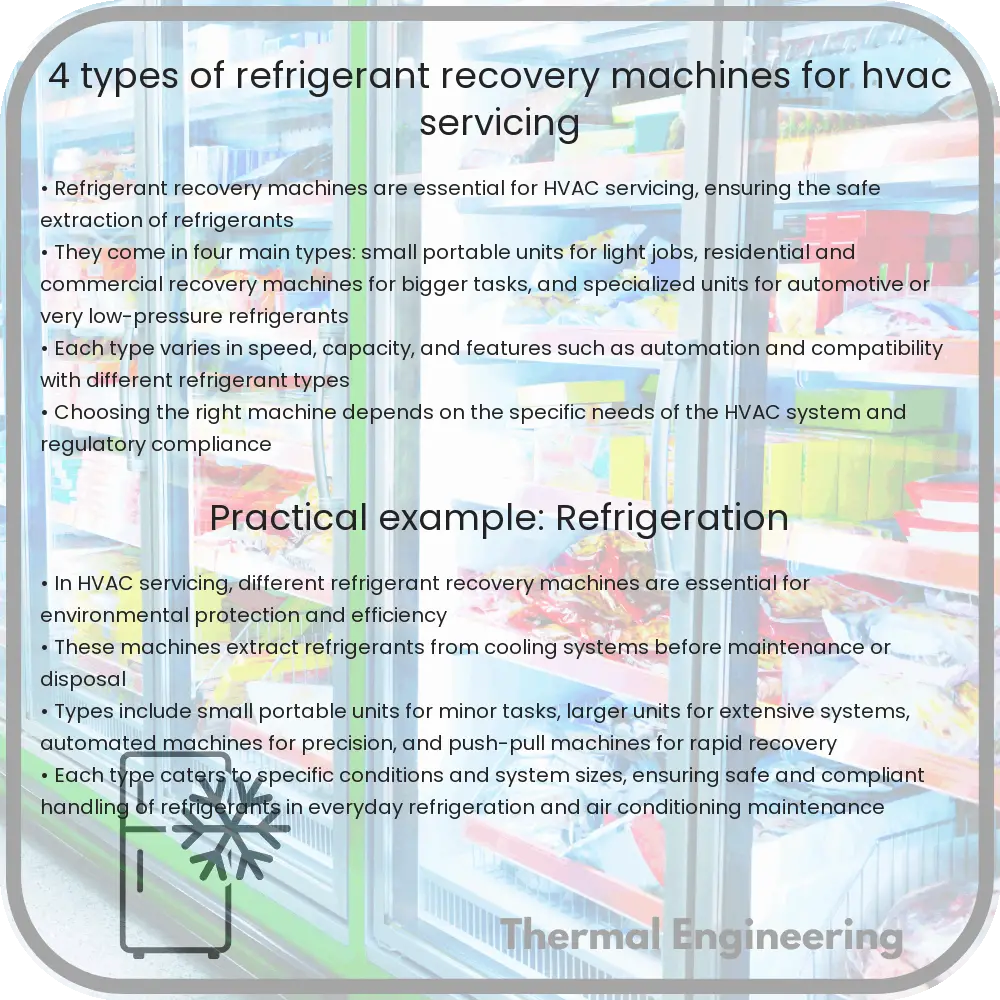
4 Types of Refrigerant Recovery Machines for HVAC Servicing

Understanding Refrigerant Recovery Machines for HVAC Servicing

Refrigerant recovery machines play a crucial role in the servicing of heating, ventilation, and air conditioning (HVAC) systems, ensuring that refrigerants are safely extracted to prevent environmental pollution and facilitate system repair or maintenance. With various technologies available, selecting an appropriate refrigerant recovery machine is essential for service efficiency and compliance with environmental laws. Here, we explore four common types of refrigerant recovery machines used in HVAC servicing.

1. Small Portable Recovery Machines

Small portable recovery machines are designed specifically for light-duty jobs and residential applications. These compact units are ideal for scenarios where mobility and space are key considerations, such as in household HVAC systems or small commercial spaces. Despite their smaller size, these machines are typically equipped with features like:

  • High-efficiency cross flow design, ensuring rapid recovery rates.
  • Oil-less compressors, which reduce maintenance needs and avoid contamination of the refrigerant.
  • User-friendly operation interfaces that make them accessible even for novices in the field.

2. Commercial Grade Recovery Machines

Commercial grade recovery machines are robust and suited for more demanding applications, including large residential systems or commercial buildings. These machines are built to handle various types of refrigerants and provide faster recovery rates to accommodate larger systems. Key features often include:

  • Two-cylinder or even twin-cylinder compressors for improved performance and durability.
  • Integrated manifold gauges to monitor pressure levels without additional equipment.
  • Automatic shut-off capabilities when a particular vacuum level is achieved, safeguarding both the machine and the HVAC system.

3. Push-Pull Recovery Machines

Push-pull recovery is suitable for very large systems where traditional recovery methods can be too time-consuming. This method involves setting up a closed loop in which the refrigerant is “pushed” by pressure from the recovery machine and “pulled” by the vacuum inside a recovery cylinder. This approach is generally used for initial recovery of liquid refrigerant and is followed by other methods to recover remaining vapors. Advantages include:

  • Significantly faster recovery of large amounts of refrigerant.
  • Higher efficiency when dealing with large-charged systems.
  • Reduction in recovery job time by as much as 80% compared to conventional methods.

4. Hybrid Recovery Machines

Hybrid recovery machines combine various features and technologies to offer flexible solutions that can adapt to both small and large scale jobs. These versatile machines incorporate the capability to switch between liquid and vapor recovery and often include advanced features such as:

  • Self-clearing functions to avoid cross-contamination of different refrigerants.
  • Automatic recovery, vacuum, and recharge capabilities.
  • Programmable features to handle multiple refrigerants with hybrid systems.

These machines cater to a wide array of HVAC maintenance scenarios, making them a popular choice among professionals who require a broad range of functionalities.

In conclusion, the decision on which type of refrigerant recovery machine to use depends largely on the specific needs of the HVAC system involved and the conditions under which the recovery will be performed. Understanding the various types and their capabilities allows HVAC technicians to efficiently and safely manage refrigerants, contributing to environmental protection and system longevity.

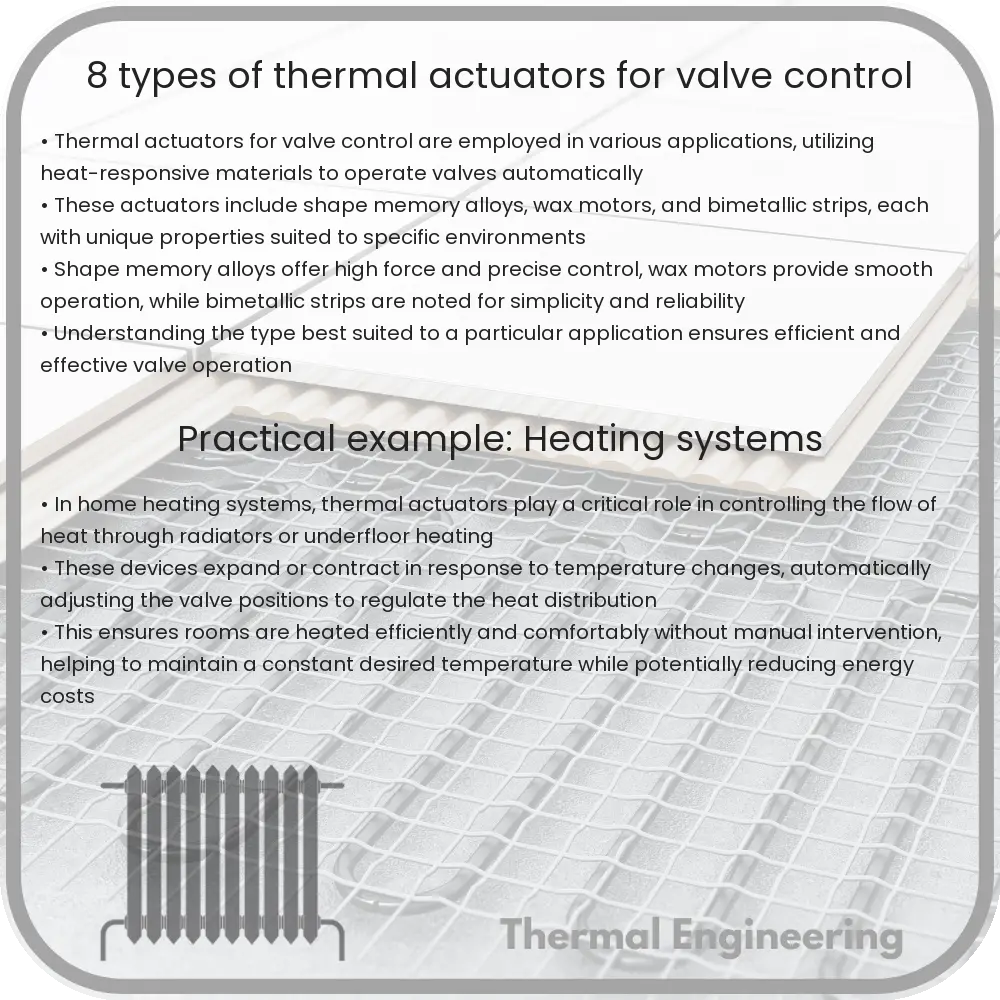
8 Types of Thermal Actuators for Valve Control

Explore the functionality and types of thermal actuators used for precise valve control in response to temperature changes.

8 Types of Thermal Actuators for Valve Control

Understanding Thermal Actuators for Valve Control

Thermal actuators are devices used in various applications for controlling the flow of fluids through valves based on changes in temperature. These actuators utilize thermal energy to bring about motion and are commonly employed in systems where precise temperature control is crucial. There are several types of thermal actuators designed to suit different operational needs and environments. Here, we explore eight common types of thermal actuators used for valve control.

1. Shape Memory Alloys (SMA) Actuators

Shape Memory Alloys, particularly Nickel-Titanium alloys, are known for their ability to return to a predetermined shape when heated. SMA actuators use this property to actuate valve mechanisms. When the SMA is heated past its transformation temperature, it changes shape, causing the actuator to move and adjust the valve position accordingly.

2. Bimetallic Actuators

Bimetallic actuators consist of two metals with different coefficients of thermal expansion bonded together. As temperature changes, the differential expansion of these metals causes the bimetallic strip to bend. This bending movement is utilized to control the valve. They are simple, reliable, and commonly used in thermostatic controls.

3. Wax Motors

Wax motor actuators contain a sealed capsule filled with wax. When the wax is heated, it expands significantly, driving a piston outward, which in turn moves the valve. As the temperature decreases, the wax contracts, and a spring returns the piston to its original position. This type is widely used in plumbing and HVAC systems.

4. Gas-Actuated or Gas-Charged Actuators

These actuators use a gas-filled bellows or diaphragm that expands or contracts with temperature changes. The gas expansion applies pressure to a piston or a similar mechanism to move the valve. These actuators provide a smooth, gradual response and are effective over a range of temperatures.

5. Filled System Actuators

Filled system actuators work similarly to gas-charged actuators but use a liquid instead of a gas. The liquid expands with heat in a controlled manner, moving a diaphragm or a piston to adjust the valve. These actuators are particularly effective for precise control over a narrow temperature range.

6. Electric Thermal Actuators

Electric thermal actuators incorporate heating elements to initiate movement through thermal expansion. These actuators offer precise control and are often integrated with electronic control systems for automated responses to temperature changes. They are commonly found in modern industrial applications.

7. Magnetic Shape Memory (MSM) Actuators

Magnetic Shape Memory actuators use materials that change shape or deform in response to a magnetic field and temperature changes. These actuators provide rapid and precise control and are relatively new compared to other thermal actuators.

8. Thermally Responsive Polymers

Actuators using thermally responsive polymers operate on the principle that certain polymers expand or contract significantly with temperature changes. These materials can act directly as the actuating force, eliminating the need for mechanical parts. They offer advantages in terms of weight, cost, and simplicity.

Conclusion

Thermal actuators play a vital role in systems requiring reliable and precise temperature-dependent control. The type of thermal actuator chosen for a particular application typically depends on factors such as response time, control accuracy, environmental conditions, and budget. With advancements in materials science and engineering, the effectiveness and applications of thermal actuators are expected to grow, further enhancing their significance in industrial, automotive, and environmental technologies.

3 Types of Molten Salt Reactors for Clean Energy

Learn about Molten Salt Reactors (MSRs), innovative nuclear technologies enhancing safety, efficiency, and waste reduction for sustainable energy.

3 Types of Molten Salt Reactors for Clean Energy

Understanding Molten Salt Reactors: A Pathway to Sustainable Energy

Molten Salt Reactors (MSRs) represent a compelling evolution in nuclear reactor technologies, offering significant advantages in safety, efficiency, and waste management compared to traditional solid-fuel reactors. These advanced reactors use a liquid fuel—typically a molten fluoride or chloride salt mixture—that acts as both the fuel (carrying fissile material like uranium or thorium) and the coolant. This innovative approach not only simplifies the reactor design but also enhances its operational capabilities. Here, we explore three principal types of MSRs that are paving the way for cleaner, more reliable energy sources.

1. The Fluoride High-Temperature Reactor (FHR)

The Fluoride High-Temperature Reactor (FHR) combines the technology of conventional high-temperature gas-cooled reactors with the benefits of molten salt as a coolant. The salt does not react chemically with air or water, a feature that greatly reduces the risk of a hazardous release in the event of a leak. FHRs operate at very high temperatures—up to 750°C—but maintain low pressures within the reactor system, which correspondingly reduces the risk of an explosive pressurized failure.

  • Enhanced safety features due to non-pressurized operation.
  • High-temperature output beneficial for both electricity generation and industrial heat applications.
  • Ability to integrate with other renewable energy forms to create hybrid systems.

2. The Liquid Fluoride Thorium Reactor (LFTR)

One of the most talked-about variations of the MSR, the Liquid Fluoride Thorium Reactor (LFTR), utilizes thorium as its primary fuel, transmuted into uranium-233 during its operation. LFTRs are compelling due to thorium’s abundance compared to uranium, reduced nuclear waste production, and increased fuel efficiency. Operating at atmospheric pressure and high temperatures, LFTRs can achieve a near closed fuel cycle which minimizes waste and maximizes use of the fuel.

  • Utilization of abundant thorium reduces reliance on uranium.
  • Produces less long-lived radioactive waste compared to conventional reactors.
  • High temperatures enable the production of hydrogen, further expanding potential applications.

3. The Chloride Fast Reactor (CFR)

Chloride Fast Reactors (CFRs) are a type of MSR that use fast neutrons and chloride molten salts (like NaCl) as a coolant and fuel solvent. This approach allows CFRs to efficiently burn actinides and achieve a high power density. They operate at higher temperatures and can be used to manage and reduce nuclear waste through the transmutation of long-lived isotopes into shorter-lived ones.

  • High power density enables compact reactor designs.
  • Ability to contribute to waste reduction through transmutation.
  • Operates at high temperatures suitable for advanced energy conversion technologies.

Conclusion

Molten Salt Reactors hold immense potential not only in advancing the safety and efficiency of nuclear power but also in supporting the transition to a sustainable and clean energy future. By utilizing innovative designs like the FHR, LFTR, and CFR, these reactors address key issues such as fuel scarcity, waste management, and environmental impact. As research continues and technology matures, MSRs could play a pivotal role in shaping our global energy landscape.

5 Types of Brazed Plate Heat Exchangers for Compact Heat Transfer

Learn about brazed plate heat exchangers (BPHEs), their types, advantages, and applications across various industries.

5 Types of Brazed Plate Heat Exchangers for Compact Heat Transfer

Introduction to Brazed Plate Heat Exchangers

Brazed plate heat exchangers (BPHEs) are specialized devices designed to transfer heat between two fluids that are used across various industries such as refrigeration, HVAC, and industrial processes. These exchangers are known for their high thermal efficiency and compact size. The core components include closely packed, corrugated metal plates which are brazed together, typically with copper or nickel, facilitating efficient heat transfer.

Types of Brazed Plate Heat Exchangers

There are several types of brazed plate heat exchangers, each tailored for specific applications and performance requirements. Here are five common types:

  • Single Circuit BPHEs – Ideal for straightforward applications involving the cooling or heating of a single fluid. These are commonly used in residential HVAC systems and small-scale industrial processes.
  • Dual Circuit BPHEs – Designed to handle two independent circuits within a single unit, allowing for simultaneous heating and cooling processes. This type is often utilized in applications such as heat recovery systems and combined heating/cooling units.
  • Multi-plate BPHEs – Suitable for larger systems requiring the handling of multiple fluids or increased capacity. Multi-plate designs can manage higher flow rates and are preferred in large-scale industrial applications and district heating systems.
  • Evaporator and Condenser BPHEs – Specifically designed for phase-change applications. The evaporator BPHEs are used in refrigeration cycles to absorb heat by evaporating a refrigerant, whereas condenser BPHEs release heat by condensing the refrigerant.
  • High-Pressure BPHEs – Engineered to withstand higher operating pressures, these are used in environments where conventional BPHEs might not suffice, such as in high-pressure industrial applications or in certain heat recovery installations.

Advantages of Brazed Plate Heat Exchangers

The compact and efficient design of BPHEs offers several benefits over traditional heat exchanger types like shell and tube exchangers. Here are key advantages:

  • High Thermal Efficiency: The close contact of the plates allows for superior heat transfer capabilities.
  • Compactness: The design of BPHEs offers significant space savings, which is particularly beneficial in tight spaces.
  • Durability: The brazing process used in manufacturing BPHEs creates a strong and durable bond that withstands high temperatures and pressures.
  • Low Maintenance: The design minimizes the buildup of sediments and scaling, reducing the frequency and cost of maintenance.
  • Flexibility: Customizable configurations allow BPHEs to meet the specific needs of different systems and applications.

Applications of Brazed Plate Heat Exchangers

Brazed plate heat exchangers are versatile and find applications across a broad range of industries. Some common applications include:

  • Heating, Ventilation, and Air Conditioning (HVAC): Used in chillers, heat pumps, and thermal storage systems.
  • Refrigeration: Employed in cascade systems, freezers, and cooling showcases.
  • Industrial: Utilized in process heating and cooling, oil coolers, and waste heat recovery systems.
  • Power Generation: Instrumental in combined heat and power systems, solar thermal applications, and geothermal installations.
  • Food and Beverage Industry: Used in pasteurization processes and general process cooling and heating.

Conclusion

Brazed plate heat exchangers represent a critical technology for efficient thermal management in numerous applications. Understanding the different types of BPHEs and their specific uses helps in selecting the right heat exchanger for a particular need, ensuring optimal performance and efficacy in industrial, commercial, or residential settings.

Thermal efficiency of thermal mass in buildings

Learn how thermal mass enhances building sustainability by stabilizing temperature fluctuations and reducing energy use.

Thermal efficiency of thermal mass in buildings

Understanding Thermal Efficiency of Thermal Mass in Buildings

Thermal mass in building design refers to materials used within a building that have the capacity to absorb, store, and release significant amounts of heat. Materials commonly used for this purpose include concrete, brick, stone, and water. The utilization of thermal mass is a crucial element in sustainable building design because it can significantly reduce energy usage and improve indoor comfort by stabilizing temperature fluctuations.

How Thermal Mass Works

Thermal mass works on the principle of heat storage. During warmer periods, such as the day, thermal mass materials absorb and store heat, which helps to keep indoor environments cooler. Conversely, at night or during cooler periods, the stored heat is gradually released, helping to warm the interior. This natural regulation of temperature reduces the reliance on artificial heating and cooling systems, thereby enhancing energy efficiency.

Factors Affecting Thermal Efficiency

  • Density and Specific Heat: The effectiveness of thermal mass is largely dependent on the material’s density and specific heat capacity. The higher these values, the more heat the material can absorb and store.
  • Thermal Conductivity: This property affects the rate at which heat is absorbed and released. Materials with high thermal conductivity can quickly adjust to temperature changes, whereas those with low conductivity retain heat longer, offering a delayed release.
  • Placement and Exposure: The location of thermal mass materials within a building affects their efficiency. Ideally, thermal mass should be located where it can be exposed to daytime sunlight to absorb heat and in positions that facilitate the nighttime release of this heat to living spaces.
  • Insulation: While thermal mass regulates the heat exchange, proper insulation is necessary to avoid unwanted heat gain or loss. The combination of thermal mass and insulation determines the overall thermal efficiency of the building.

Calculating Thermal Efficiency

The thermal efficiency (\(\eta\)) of thermal mass can be approximated by the formula:

\[\eta = \frac{Q_{stored}}{Q_{input}} \times 100\]

Where:

  • \(Q_{stored}\) is the amount of heat energy stored in the thermal mass.
  • \(Q_{input}\) is the amount of heat energy absorbed by the thermal mass.

Maximizing \(Q_{stored}\) relative to \(Q_{input}\) is key to improving the effectiveness of thermal mass in climate control within buildings. This is achieved by optimizing the factors mentioned previously such as material properties, placement, and incorporation of adequate insulation.

Benefits of Using Thermal Mass

  • Reduction in Energy Consumption: By moderating indoor temperature fluctuations, thermal mass reduces the need for heating and cooling, leading to lower utility costs.
  • Enhanced Comfort: Stabilized temperature variations result in a more comfortable living or working environment.
  • Environmental Impact: Using thermal mass in buildings contributes to reduced reliance on non-renewable energy sources and decreased greenhouse gas emissions.

In conclusion, the thermal efficiency of thermal mass plays a pivotal role in the energy performance and comfort levels of modern buildings. By understanding and optimizing the interaction between thermal mass and its environment, engineers and architects can design more sustainable and efficient spaces.

11 Types of Ice Machines for Commercial and Industrial Use

Learn about the 11 different types of ice machines for commercial and industrial use, each suited for specific applications.

11 Types of Ice Machines for Commercial and Industrial Use

11 Types of Ice Machines for Commercial and Industrial Use

Ice machines are essential in various commercial and industrial settings, providing necessary ice for beverages, food preservation, and other industrial applications. Understanding the different types of ice machines can help businesses select the right one for their specific needs. Here are the 11 common types:

Cube Ice Machines

Cube ice machines are popular in restaurants, bars, and hotels. They produce clear, solid ice cubes that are ideal for cooling drinks without diluting them quickly. These machines are available in various sizes and capacities, making them versatile for different business volumes.

Flake Ice Machines

Flake ice machines produce small, soft flakes of ice, excellent for food display and preservation. These machines are commonly used in supermarkets, seafood markets, and healthcare facilities. Flake ice is also often used in research and laboratory settings due to its quick cooling properties.

Nugget Ice Machines

Nugget ice, also known as pellet or pearl ice, is soft and chewable, making it a favorite for beverage applications, especially in quick-service restaurants. It provides quick cooling with a minimal impact on the flavor of drinks.

Crescent Ice Machines

Crescent ice machines produce semi-circular ice that is unique in shape, allowing liquid to flow over it more smoothly. This type of ice machine is often found in hospitality settings due to its aesthetic appeal and functionality in beverage cooling.

Gourmet Ice Machines

Gourmet ice machines produce large, clear ice, typically used in upscale beverages and spirits. This ice type melts slowly, making it ideal for fine dining establishments and premium liquor serving settings.

Ice Dispensers

Ice dispensers are designed for easy access and sanitary ice distribution, commonly used in healthcare facilities, offices, or hotels. These machines often combine ice production and dispensing in one unit.

Undercounter Ice Machines

Undercounter ice machines fit underneath bars or counters, saving space in small commercial kitchens or bar areas. Despite their compact size, they can be surprisingly efficient in ice production.

Countertop Ice Makers

Countertop ice makers are handy in offices and residential settings due to their portable nature and smaller output. They are typically easy to use and do not require a permanent water line.

Industrial Ice Machines

These machines are designed for high-capacity ice production, necessary in manufacturing, processing industries, or large-scale food service operations. Industrial ice machines ensure a continuous supply of ice with minimum downtime.

Marine Ice Makers

Designed specifically for marine environments, these ice makers are built to withstand corrosive saltwater conditions. They are essential on fishing boats and yachts, providing a constant ice supply for preserving catch or enhancing onboard hospitality.

Specialty Ice Machines

Some ice machines cater to specific industries, such as the pharmaceutical sector, where ice is needed for transporting temperature-sensitive medications. Specialty ice machines are engineered to meet particular hygiene and safety standards.

Choosing the right type of ice machine for a business depends on many factors including the volume of ice needed, space availability, and the specific application of the ice. Each type of machine offers distinct advantages, and selecting appropriately ensures efficiency, cost-effectiveness, and satisfaction in commercial or industrial operations.

6 Types of Heat Interface Units (HIU) for District Heating

Learn about Heat Interface Units (HIUs) and their vital role in optimizing district heating systems across various building types.

6 Types of Heat Interface Units (HIU) for District Heating

Understanding Heat Interface Units (HIU) in District Heating Systems

Heat Interface Units (HIUs) play a crucial role in district heating systems by serving as an intermediary point that connects individual residential or commercial units to a central heat source. These units are responsible for delivering heating and hot water within a building while maintaining efficiency and reducing energy consumption. There are several types of HIUs used in various scenarios depending on the specific needs and architecture of the heating system. Below, we explore six common types of Heat Interface Units.

1. Direct Heating HIU

Direct heating HIUs, as the name suggests, directly supply heat to the heating system without any intermediate exchange. This type usually consists of a heat exchanger that directly transfers heat from the primary network to the space heating system. Direct HIUs are commonly used when there’s a single source of heat and are more straightforward because they do not require additional components like a secondary heat exchange.

2. Indirect Heating HIU

Indirect heating HIUs are designed to separate the primary heating supply from the building’s heating system via a heat exchanger. The primary circuit and the building circuit are thus hydraulically independent, which can help prevent contamination between the two circuits. Indirect HIUs are beneficial in larger systems where multiple buildings are connected to a single heat source.

3. Twin Plate HIU

Twin plate HIUs feature two heat exchangers; one for domestic hot water and another for space heating. This setup helps in maintaining the efficiency of both systems as they operate independently of each other. Twin plate HIUs are advantageous in situations where different temperature requirements are needed for heating and hot water supply.

4. Single Plate HIU

A single plate HIU uses one heat exchanger to provide both heating and hot water. These units are typically more compact and have a lower cost. However, they might not be as efficient as twin plate HIUs in managing the distinct demands for space heating and hot water temperature, especially when both are in high demand simultaneously.

5. Storage Based HIU

Storage based HIUs incorporate a storage tank that holds a reserve of heated water. This design can provide a steady supply of hot water and is ideal in buildings where there is a peak demand at specific times, such as residential apartments in the morning or evening. The storage can help in maintaining service during high demand periods without overloading the heat source.

6. Instantaneous HIU

Instantaneous HIUs do not have a storage tank and instead heat water on demand using high-efficiency heat exchangers. These are suitable for places with less storage space or lower hot water usage. They ensure that water is only heated when needed, potentially saving energy compared to storage-based systems.

Each type of HIU comes with its own set of advantages and is suited for specific system requirements and building types. Moreover, advancements in HIU technology continue to improve efficiency, control, and integration capabilities with smart heating networks, promising more sustainable energy consumption in district heating systems.

Conclusion

Heat Interface Units are essential for the efficient operation of district heating systems, providing flexibility, efficiency, and control over the heating and hot water supply in connected buildings. Whether you opt for a direct, indirect, twin plate, single plate, storage based, or instantaneous HIU, each design caters to different performance criteria and installation environments. Understanding the characteristics of these types can assist in selecting the most appropriate HIU for your heating system configuration and needs.

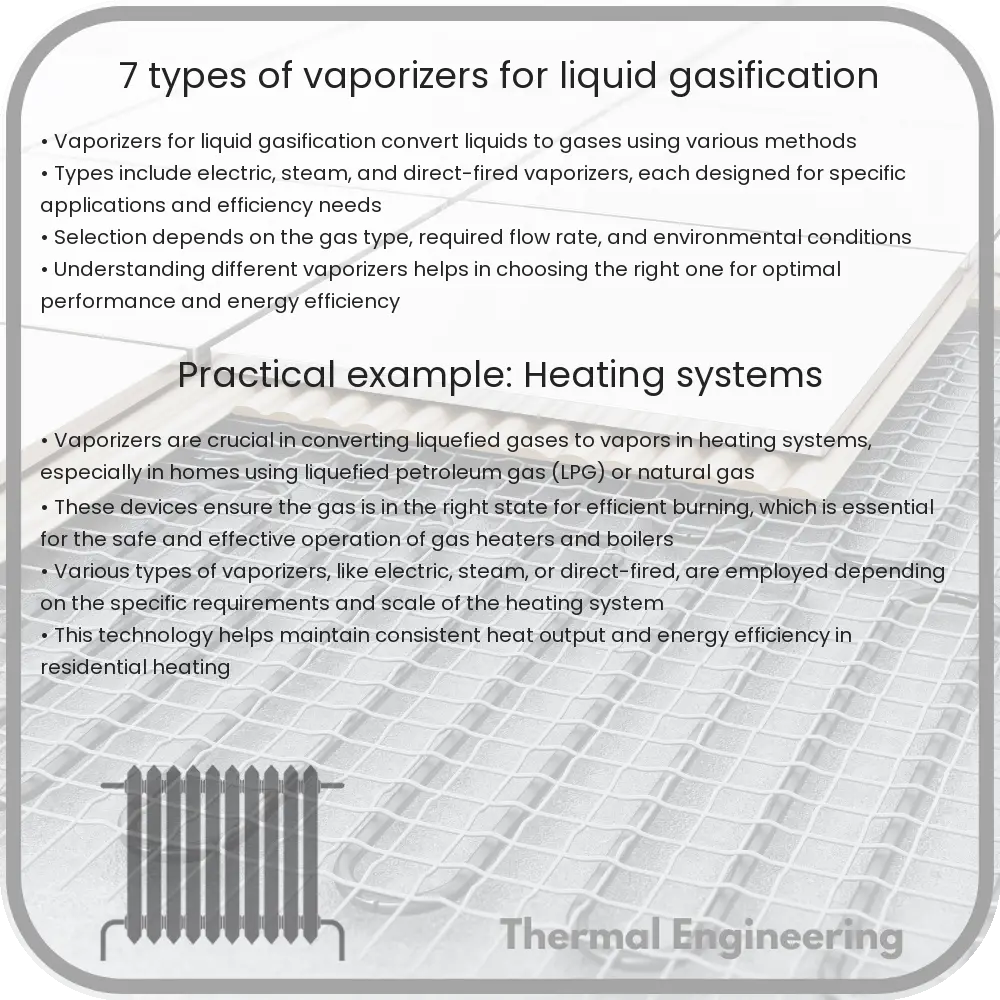
7 Types of Vaporizers for Liquid Gasification

Learn about vaporizers used in liquid gasification, their types, applications, and how they convert liquid gases like LNG into gas.

7 Types of Vaporizers for Liquid Gasification

Introduction to Vaporizers in Liquid Gasification

Vaporizers are essential components in various industrial applications, playing a crucial role in converting liquid gases such as liquid nitrogen, oxygen, argon, and liquefied natural gas (LNG) into their gaseous forms. These devices are used in numerous fields including medical, industrial gas, and food industries. Understanding the different types of vaporizers can help in selecting the right one for specific applications.

Types of Vaporizers

There are several types of vaporizers, each designed to meet specific operational requirements and environmental conditions. Here are seven common types:

  1. Open Rack Vaporizers (ORVs): ORVs are commonly used in LNG regasification terminals. They utilize seawater as a heat source to vaporize the LNG. The warm seawater is sprayed over panels that contain the LNG, heating it and converting it into gas.
  2. Submerged Combustion Vaporizers (SCVs): SCVs are highly efficient and can handle large capacities. They work by burning a fuel source to heat water in a tank, and then the hot water heats the tubes filled with liquid gas, causing it to vaporize.
  3. Ambient Air Vaporizers (AAVs): These vaporizers use the ambient air to heat the cryogenic liquid. They are quite environmentally friendly as they do not require an external energy source, relying solely on atmospheric temperature and conditions to facilitate the vaporization process.
  4. Electric Vaporizers: Electric vaporizers use electric heat to warm the liquid gas. They provide a precise control over the temperature and are typically used when ambient conditions are too cold for AAVs to function effectively.
  5. Steam Vaporizers: Steam vaporizers use steam from an external source to heat and vaporize the liquid gas. They are suitable for situations requiring a fast response and high capacity output.
  6. Direct Fired Vaporizers: These are similar to SCVs but the liquid gas is heated directly by a flame rather than a water bath. This allows for higher thermal efficiency and quicker response time but requires careful handling due to the direct exposure to the flame.
  7. Plate Vaporizers: Plate vaporizers use a series of plates to conduct heat to the liquid gas. These are typically compact and efficient, making them suitable for applications where space is limited and efficiency is crucial.

Conclusion

Selecting the right type of vaporizer for liquid gasification depends on various factors including the specific type of liquid gas, the required gasification rate, environmental conditions, and available energy sources. Each type of vaporizer has its unique advantages and limitations, making them suitable for particular applications. Understanding these can help in optimizing performance and efficiency in industrial gas applications.

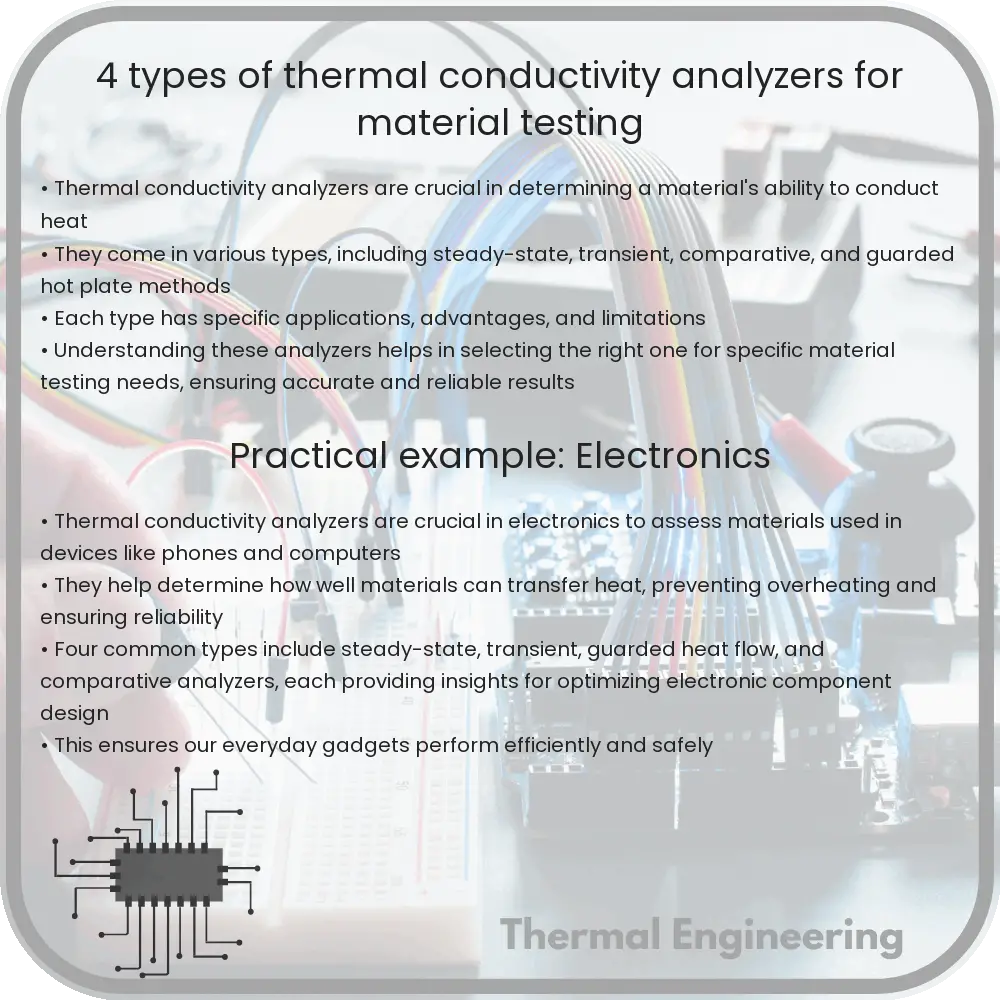
4 Types of Thermal Conductivity Analyzers for Material Testing

Learn about thermal conductivity analyzers, essential tools for assessing how materials conduct heat, and explore their types and applications.

4 Types of Thermal Conductivity Analyzers for Material Testing

Understanding Thermal Conductivity Analyzers

Thermal conductivity analyzers are vital instruments used in material testing to measure a material’s ability to conduct heat. This property is crucial in many applications, ranging from electronics to construction materials. Understanding the types and applications of thermal conductivity analyzers can help in selecting the right method for specific materials and conditions.

Types of Thermal Conductivity Analyzers

There are several methods to measure thermal conductivity, each with its own advantages and considerations. Here are four common types of thermal conductivity analyzers used in material testing:

1. Steady-State Techniques

Steady-state techniques measure the thermal conductivity once a material has reached a thermal equilibrium. This method involves applying a constant heat source to one side of a sample and measuring the temperature difference across the sample.

  • Guarded Hot Plate (GHP): Ideal for solids and high precision measurements, a guarded hot plate setup involves sandwiching the test sample between two heated plates and measuring the heat flow. It is recognized for its high accuracy in determining thermal conductivity.
  • Heat Flow Meter (HFM): Commonly used for insulating materials, HFM measures the heat flow across a known thickness of a sample when subjected to a temperature gradient. This method is faster than GHP but offers moderate precision.

2. Transient Techniques

Transient techniques do not require thermal equilibrium and typically yield results more quickly than steady-state methods. These techniques are based on how the material responds to a change in heat over time.

  • Transient Hot-Wire (THW): In this method, a thin wire is embedded within the material, and heat is generated by passing an electric current through the wire. The rate of temperature rise is then monitored to calculate thermal conductivity. THW is suitable for both liquids and solids.
  • Laser Flash Analysis (LFA): LFA uses a short laser pulse to heat the surface of a thin sample. The opposite face’s temperature response is monitored using an infrared detector to assess the thermal diffusivity, which can be used to calculate the thermal conductivity. This method is ideal for thin materials and high thermal diffusivity materials.

Choosing the Right Analyzer

Selecting the appropriate thermal conductivity analyzer depends on various factors including the material type, temperature range, accuracy required, and sample size. For instance, steady-state methods, while slower, provide high accuracy and are preferred for standard tests on solid materials. Transient methods are better suited for rapid analysis and can handle a wider range of materials.

Conclusion

Each type of thermal conductivity analyzer has specific advantages that make it suitable for particular applications. By understanding the fundamental principles and applications of these tools, engineers and material scientists can choose the most effective method to assess material properties, ensuring optimal performance and compliance with industry standards.