Facebook Instagram Youtube Twitter

Can thermal desalination provide sustainable water sources

Thermal desalination: a method to produce fresh water by heating saltwater, involving steps like heating, vaporization, and condensation.

Can thermal desalination provide sustainable water sources

Exploring Thermal Desalination as a Sustainable Water Source

As the demand for fresh water increases due to population growth and environmental changes, the need for sustainable and reliable water sources becomes ever more critical. One technology that has the potential to meet this demand is thermal desalination. This process involves heating saltwater and then condensing the vapor to create fresh water. But how sustainable and efficient is thermal desalination? Let’s delve into the details.

How Does Thermal Desalination Work?

Thermal desalination, also known as distillation, is one of the oldest methods used to desalinate water. The process generally involves three key steps:

  1. Heating: Saltwater is heated, typically using solar energy or fossil fuels, to generate steam.
  2. Vaporization: The steam rises, leaving most of the salts and minerals behind.
  3. Condensation: The steam is then cooled in a separate chamber where it condenses back into liquid water, this time without the salts.

The most common thermal desalination technologies include Multi-Stage Flash (MSF), Multiple Effect Distillation (MED), and Vapor Compression (VC). Each of these technologies aims to improve on the basic principle of boiling and condensation to optimize efficiency.

Environmental Impact and Sustainability

The sustainability of thermal desalination is a subject of ongoing debate, primarily centered around energy use and environmental impact:

  • Energy Consumption: Thermal desalination processes are energy-intensive. They require a significant amount of heat and electricity to operate efficiently. Traditional energy sources, such as coal or natural gas, can lead to high greenhouse gas emissions. However, integrating renewable energy sources like solar or wind power can substantially reduce these environmental impacts.
  • Brine Disposal: Desalination produces brine, a highly concentrated salt solution. The disposal of brine needs to be managed carefully to avoid harming marine ecosystems. Techniques such as brine dilution, deep-well injection, or even beneficial uses of brine are being researched and implemented to mitigate these effects.
  • Material and Chemical Use: The construction and maintenance of desalination plants involve various chemicals and materials which can also impact the environment. Corrosion-resistant materials are needed to handle salty water and steam, while chemicals are often used for cleaning and maintaining equipment.

Is Thermal Desalination a Viable Long-term Solution?

When considering the viability of thermal desalination as a sustainable water source, several factors must be evaluated:

  • Technological Advances: Innovations in thermal desalination processes have led to more efficient designs that consume less energy and produce more fresh water.
  • Cost: Although initially expensive, ongoing advances in technology have gradually reduced the costs associated with thermal desalination plants.
  • Geographical considerations: For regions that are arid, have limited freshwater resources, and access to abundant thermal energy (like geothermal or solar), thermal desalination provides a crucial supply of fresh water.

In conclusion, thermal desalination can provide a sustainable source of fresh water if integrated with renewable energy sources and managed correctly concerning environmental impacts. Continued research and technological development are key to optimizing this process and making it a more economical and environmentally friendly option for the future.

How does heat affect the lifecycle of biodegradable plastics

Explore how heat affects the degradation and performance of biodegradable plastics, influencing their environmental sustainability.

How does heat affect the lifecycle of biodegradable plastics

Understanding the Impact of Heat on the Lifecycle of Biodegradable Plastics

Biodegradable plastics are designed to decompose naturally in the environment, primarily through the action of microorganisms. They are seen as a sustainable alternative to conventional plastics, a major contributor to global pollution. However, their degradation process and lifecycle are significantly influenced by various environmental factors, among which heat plays a crucial role. This article delves into how heat affects the lifecycle of biodegradable plastics, covering their decomposition rate, structural integrity, and practical implications.

How Heat Influences Decomposition

Temperature is a critical factor that affects the rate at which biodegradable plastics decompose. Biodegradation involves chemical reactions that are typically accelerated by increased temperatures. In scientific terms, the rate of most chemical reactions increases with temperature as described by the Arrhenius equation: k = A * e-(Ea/RT), where:

  • k is the rate constant of the reaction,
  • A is the frequency factor, representing the number of times the reactants approach the activation barrier per unit time,
  • Ea is the activation energy of the reaction,
  • R is the universal gas constant, and
  • T is the temperature (in Kelvin).

According to this relationship, an increase in ambient temperature could potentially increase the decomposition rate of biodegradable plastics. However, this process is also dependent on the presence of adequate moisture, oxygen, and microbial activity, all of which can be influenced by temperature as well.

Structural Integrity and Performance

The integrity of biodegradable plastics can be compromised by prolonged exposure to high temperatures. Heat can cause physical changes like melting, warping, or becoming brittle, which can alter the performance characteristics of the material. For instance, biodegradable plant-based plastics, which often have a lower melting point compared to petroleum-based plastics, are particularly susceptible to these changes.

Moreover, the molecular structure of biodegradable plastics may be weakened or altered by high temperatures, affecting their mechanical properties such as tensile strength, elasticity, and durability. This degradation in properties can limit the functionality and applicability of biodegradable plastics in environments where temperatures fluctuate significantly.

Practical Implications and Environmental Impact

The effect of heat on the lifecycle of biodegradable plastics has significant practical implications. For example, products made from these materials may not perform well in hot climates unless specifically formulated to withstand high temperatures. This could limit their use in certain applications or require the addition of heat stabilizers, which could impact the overall biodegradability and environmental benefit of the material.

Additionally, the variable rates of degradation in different climates due to temperature differences can affect the predictability and consistency of biodegradation, complicating waste management strategies and the ability to accurately predict the environmental impact of these products.

In conclusion, while biodegradable plastics offer a potential solution to reduce the persistence of plastic waste in the environment, understanding and managing the effects of heat on their lifecycle is crucial. This understanding enables better design, formulation, and usage guidelines that can maximize performance while minimizing environmental footprints.

What is the role of heat in the extraction of essential oils

Learn how heat plays a crucial role in the extraction and quality of essential oils through various methods like steam and water distillation.

What is the role of heat in the extraction of essential oils

The Role of Heat in the Extraction of Essential Oils

Essential oils are highly concentrated substances extracted from various parts of plants such as flowers, leaves, bark, and roots. These oils are widely used in aromatherapy, cosmetics, and various medicinal applications. One of the key methods to extract these potent oils is through the application of heat. This process not only affects the efficiency of the extraction but also the quality of the oil obtained.

Methods of Heat Extraction

There are several heat-based extraction techniques used to isolate essential oils, each with its specific applications and advantages. The most common heat-based methods include steam distillation, water distillation, and solvent extraction.

  • Steam Distillation: This is perhaps the most frequently used method for extracting essential oils. In this process, steam is passed through plant material, vaporizing the volatile compounds which then condense back into liquid form upon cooling. The mixture of water and oil is collected and the oil is separated from the water. Heat is crucial here as it helps vaporize the essential oils without decomposing them.
  • Water Distillation: Similar to steam distillation, in water distillation, the plant materials are actually immersed in water. The mixture is then heated, and the resulting steam contains the essential oils. This method is typically used for materials that might clump or adhere to each other when exposed only to steam.
  • Solvent Extraction: Although not solely based on heat, solvent extraction involves the use of a solvent that dissolves the aromatic compounds. After the solvent is evaporated, often employing a gentle heat, a substance called a concrete is obtained, which contains essential oils along with other soluble plant waxes. Heat is again important in the subsequent processing to separate the oil from the concrete.

Role of Temperature in Oil Quality

Temperature plays a crucial role in not just the efficiency of the extraction process, but also in determining the quality of the essential oil obtained. If the temperature is too high, it can lead to the thermal degradation of the essential oils, altering their chemical composition and therapeutic properties. Each type of essential oil has an optimal extraction temperature that maximizes yield while preserving its properties and aromatic qualities.

Temperature Control in Industrial Applications

In industrial settings, maintaining precise temperature control is vital for the consistency and quality of essential oils. Advanced equipment with temperature sensors and automated controls is often used to ensure that the heat levels remain within the desired range. This precision helps in obtaining high-quality essential oil at commercial scales, making effective temperature management a cornerstone of industrial essential oil extraction.

Conclusion

Heat is fundamental in the extraction of essential oils, influencing both the extraction efficiency and the quality of the oils. The careful application and control of temperature in techniques like steam distillation, water distillation, and solvent extraction are essential to obtaining high-quality essential oils. Understanding these dynamics allows manufacturers to optimize their production processes and ensures that the beneficial properties of essential oils are retained in the final products.

High-temperature thermal batteries

Explore the fundamentals and applications of high-temperature thermal batteries, designed for use in extreme environments.

High-temperature thermal batteries

Understanding High-Temperature Thermal Batteries

High-temperature thermal batteries are a specialized type of battery designed to operate effectively at elevated temperatures. These batteries are primarily used in applications where traditional battery technologies fail due to environmental conditions, such as in aerospace, military, and deep-well drilling industries.

Components and Operation

The key components of high-temperature thermal batteries include an electrolyte, anode, and cathode, similar to conventional batteries. However, these components are uniquely suited to withstand and operate under high temperatures. The electrolyte is typically made from a molten salt, which remains solid at room temperature and becomes ionically conductive when heated above its melting point.

The most common anode material used in these batteries is lithium, known for its high electrochemical potential. The cathode is usually composed of a metal oxide, such as iron sulfide (FeS) or cobalt disulfide (CoS2). When the battery is activated—often by a heat source—the electrolyte melts, allowing ions to flow between the cathode and anode, generating an electrical current.

Advantages of High-Temperature Thermal Batteries

  • Thermal Stability: These batteries are capable of operating in extremely high temperatures where conventional batteries would degrade or fail.
  • Energy Density: They posses a high energy density, making them suitable for applications where space and weight are critical factors.
  • Long Shelf Life: Since the electrolyte in a thermal battery remains solid under normal conditions, these batteries can be stored for long periods without significant degradation.
  • Rapid Activation: High-temperature thermal batteries can be activated very quickly, providing power nearly instantaneously when exposed to the trigger temperature.

Applications

Due to their unique characteristics, high-temperature thermal batteries are employed in various demanding applications:

  • Aerospace and Avionics: Used in missile guidance systems where high temperatures are generated during flight.
  • Military Technology: Employed in applications like emergency radio communication systems, which may need to operate in harsh environments.
  • Oil and Gas Industry: Utilized in downhole drilling tools that experience high temperatures deep within the Earth’s crust.

Challenges and Future Outlook

While high-temperature thermal batteries offer significant advantages, their widespread adoption is hindered by costs and the challenging manufacturing processes associated with high-temperature materials. Advances in materials science may reduce these barriers, enhancing their feasibility for broader applications.

As technology progresses, the demand for reliable power sources in extreme conditions is expected to grow, potentially increasing the role of high-temperature thermal batteries in future energy systems.

Ultimately, understanding the principles and advancements in high-temperature thermal battery technology emphasizes their importance in modern engineering solutions and their potential to expand into new markets and applications.

How does thermal comfort vary with climate in architecture

Explore how thermal comfort in architecture varies by climate and the building designs optimizing comfort and energy efficiency.

How does thermal comfort vary with climate in architecture

Understanding Thermal Comfort in Architecture Across Different Climates

Thermal comfort in architecture refers to the condition of mind that expresses satisfaction with the surrounding environment. It is primarily influenced by factors such as air temperature, humidity, and air movement and varies significantly with different climatic conditions. Architects and building designers take these variables into account to create buildings that remain comfortable across various climate zones, from the frigid Arctic to the tropics.

Factors Influencing Thermal Comfort

Several factors contribute to thermal comfort, which can include:

  • Air Temperature: The measure of how hot or cold the air is around occupants.
  • Radiant Temperature: The heat emitted by surfaces in an enclosure.
  • Air Velocity: The speed of air moving around an occupant.
  • Humidity: The amount of water vapor present in the air.
  • Metabolic Rate: The rate at which a person generates heat from bodily processes.
  • Clothing Insulation: The insulating effect provided by a person’s clothing.

For architectural design, understanding the interplay of these factors is crucial, as it helps to optimize human comfort while minimizing energy use.

Thermal Comfort in Different Climates

The approach to achieving thermal comfort varies by climate:

  1. Cold Climates: In colder regions, the focus is on insulation and air tightness to retain heat generated inside buildings. Features might include triple-glazed windows and thermal breaks to prevent cold bridging. Additionally, taking advantage of passive solar gain by positioning windows to capture sunlight is a common strategy.
  2. Temperate Climates: These regions require a balance of heating in the winter and cooling in the summer. Architecture might feature moderate insulation levels, energy-efficient windows, and systems that can easily switch between heating and cooling.
  3. Hot and Humid Climates: Here, the main architectural actions aim at reducing heat gain and removing moisture from the air. Techniques include the use of reflective materials, strategic shading, cross ventilation, and dehumidification systems.
  4. Hot and Dry Climates: Designs in these areas often incorporate high thermal mass to moderate daily temperature variations, ventilation that cools at night, and shading to block intense sunlight during the day.

In each case, the architectural design seeks to stabilize the internal environment to achieve a state of thermal comfort that matches the local climate without excessive reliance on mechanical heating and cooling systems.

Adapting to Climate Change

As climate change continues to alter weather patterns and increase extremes, adaptive architecture plays a crucial role in maintaining thermal comfort. This may involve designing buildings that can cope with a wider range of temperatures, incorporating adjustable or dynamic elements like smart windows, improved insulation, or greener, adaptive materials that respond to the environmental conditions. Furthermore, the energy requirements for achieving thermal comfort are increasingly being met by sustainable sources to reduce the carbon footprint of buildings.

Conclusion

Understanding and applying the principles of thermal comfort in architecture allows for designing buildings that are both comfortable to live or work in and energy-efficient. With climate variability and change, the challenge grows yet also drives innovation in building design and technology. By focusing on the synergy between thermal comfort and climate-adaptive architecture, we create environments that enhance occupant well-being while promoting environmental sustainability.

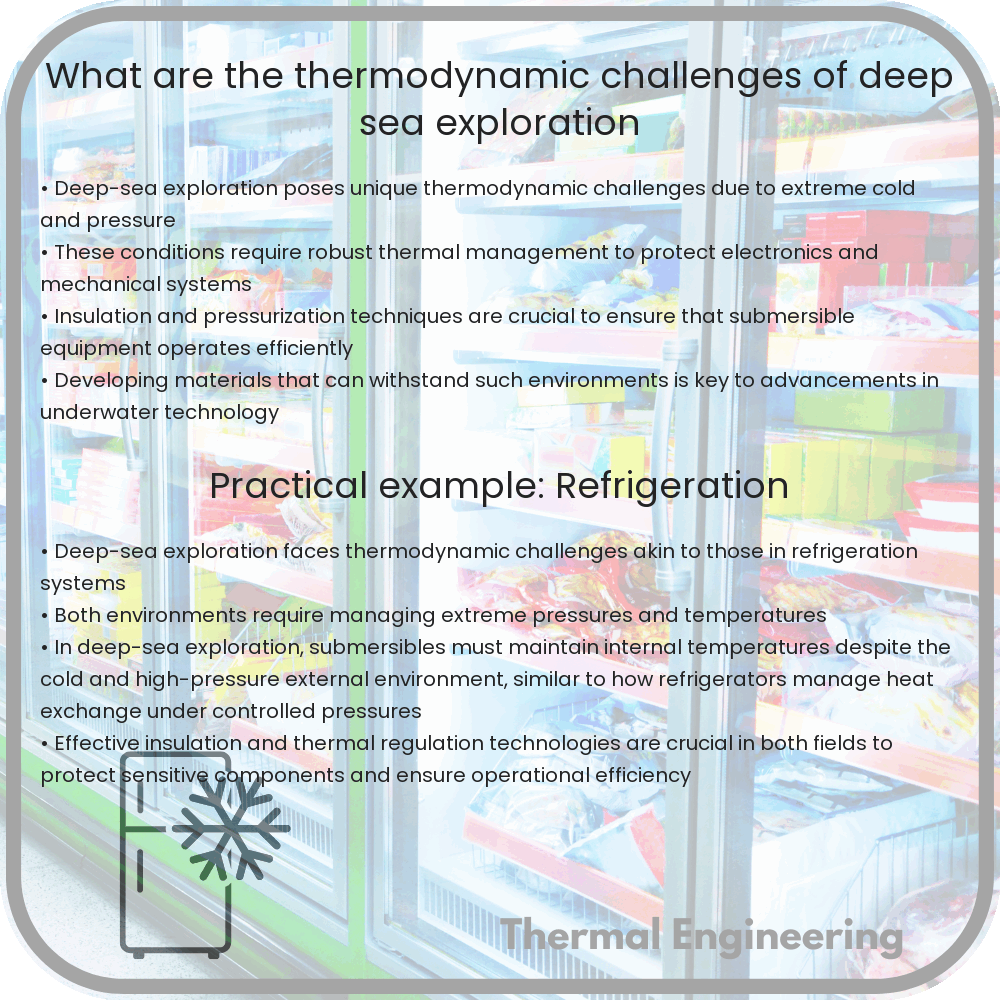
What are the thermodynamic challenges of deep-sea exploration

Learn about the thermodynamic challenges faced in deep-sea exploration, including managing extreme temperatures and pressures.

What are the thermodynamic challenges of deep-sea exploration

Thermodynamic Challenges of Deep-Sea Exploration

Deep-sea exploration is the process of investigating the physical, chemical, and biological conditions at the bottom of oceans, zones often below 1,000 meters in depth where sunlight does not penetrate. This uncharted territory presents numerous challenges, many of which are thermodynamic in nature. These challenges include the management of extreme temperatures, pressure conditions, and the operation of underwater vehicles and equipment in such harsh environments.

Extreme Temperature Conditions

The temperature in deep-sea environments can vary greatly, usually dropping to near freezing. This extreme cold poses substantial complications for both manned and unmanned underwater vehicles (UUVs), such as submersibles and robots. Material properties change noticeably at low temperatures; thermal expansion coefficients, Young’s modulus (a measure of stiffness), and even the mechanical strength of materials can vary, affecting the structural integrity of submersible components.

Additionally, the electronic systems used in these vehicles must be able to operate within these cold temperatures. Special considerations must be taken to ensure batteries and sensors function correctly, as battery capacity typically decreases in cold environments, and sensors may become less accurate.

Pressure Challenges

As depth increases, so does the pressure exerted by the overlying column of water. For every 10 meters in depth, the water pressure increases by approximately 1 atmosphere. In the deepest parts of the ocean, this pressure can exceed 1,000 atmospheres. Designing equipment that can withstand such immense pressures without succumbing to mechanical failure such as implosion or crushing is a significant engineering challenge.

Submersibles often use materials like titanium and special composite materials designed to withstand these pressures while maintaining functionality. Additionally, the sealing mechanisms for ensuring the integrity and watertightness of submersibles must be carefully designed to prevent the high-pressure water from breaching the interior.

Thermal Management

Effective thermal management is crucial in deep-sea exploration. Equipment not only needs to be protected from external cold temperatures but must also manage the heat generated internally by electronics and mechanical systems. The challenge is compounded by the fact that water, especially cold deep-sea water, is an excellent conductor of heat.

Engineers use various methods to manage these thermal issues, such as active heating systems to maintain temperatures within operational limits and thermal insulation to minimize heat loss. Additionally, the design of electronic systems often includes components that can operate at lower power levels to reduce heat output.

Material Selection

The choice of materials for constructing submersibles and other deep-sea exploration tools is critical. Materials must not only withstand the extreme conditions of temperature and pressure but also resist corrosion by seawater and endure prolonged exposure to potentially harsh substances found in deep-sea environments.

Corrosion-resistant materials such as titanium alloys and special stainless steels are commonly used. Engineers also explore the use of non-metallic alternatives like carbon fiber and other polymeric materials to offer comparable strength-to-weight ratios and increased resistance to environmental degradation.

Conclusion

The thermodynamic challenges of deep-sea exploration are vast and vary widely. Dealing with extreme cold, immense pressure, and harsh conditions requires innovative engineering solutions, meticulous design, and careful selection of materials. Advances in these areas not only push forward the boundaries of where humans can explore but also contribute to our broader understanding of deep-sea environments and their global significance. These efforts pave the way for ongoing discoveries in oceanography, marine biology, and climatology, marking deep-sea exploration as not only an engineering endeavor but a crucial scientific pursuit.

How does heat treatment affect the flavor of coffee beans

Exploring the critical role of heat treatment, or roasting, in shaping the flavor profile of coffee beans through chemical transformations and roasting techniques.

How does heat treatment affect the flavor of coffee beans

Impact of Heat Treatment on Coffee Bean Flavor

Heat treatment, commonly referred to as roasting, plays a pivotal role in the development of coffee bean flavor. This process not only transforms the physical appearance and chemical structure of coffee beans but also influences their taste, aroma, and overall flavor profile. Let’s explore how heat treatment affects coffee beans and why it is an essential step in coffee production.

Understanding the Roasting Process

Roasting coffee beans involves exposing them to high temperatures, typically between 180°C to 240°C (356°F to 464°F), for a period ranging from a few minutes to about 30 minutes. Depending on the desired flavor profile, the process varies in time and temperature. Roasting is generally categorized into three levels:

  • Light Roast: Beans are roasted to an internal temperature of about 196°C (385°F). This level of roasting brings out a milder flavor and preserves the bean’s original characteristics.
  • Medium Roast: Beans reach an internal temperature of approximately 210°C (410°F). This balances acidity and complexity of flavor while introducing a slightly sweeter taste due to caramelization.
  • Dark Roast: Beans are roasted until they reach about 230°C (446°F), creating a robust flavor profile with diminished acidity and an increase in bitter notes due to more extensive caramelization and the onset of carbonization.

Chemical Transformations During Heating

As coffee beans are heated, several significant chemical reactions occur, fundamentally altering their composition:

  • Moisture Loss: Water content in the beans evaporates, causing them to lose weight and expand.
  • Maillard Reaction: This reaction between amino acids and reducing sugars forms melanoidins, which contribute to the dark color and rich flavor of roasted coffee.
  • Sugar Caramelization: At higher temperatures, sugars within the beans caramelize, fostering a sweet and complex flavor palate.
  • Development of Aromatic Compounds: Volatile aromatic compounds are developed through thermal degradation of natural substances within the beans, significantly impacting the aroma and flavor of the coffee.

These reactions are crucial for flavor development and are profoundly influenced by the specific conditions under which roasting occurs.

Factors Affecting Roasting and Coffee Flavor

Several factors during the heat treatment process affect the final outcome of coffee bean flavor:

  • Temperature and Time: These are the most critical parameters. Higher temperatures and longer roasting times tend to produce beans with more bitterness and less acidity.
  • Roasting Environment: The atmosphere in which beans are roasted (air or drum, for example) affects heat transfer and, consequently, the evenness of flavor development.
  • Type of Coffee Bean: Different varieties and origins of beans respond differently to heat treatment, which means that identical roasting conditions can produce different flavors from different beans.
  • Cooling Process: How beans are cooled and the duration of the cooling process also influence the stabilization of flavor compounds developed during roasting.

Mastering the complex art of roasting not only requires understanding the scientific principles behind these transformations but also hands-on experience. Each alteration in the roasting process can lead to a distinct flavor outcome, making the craft both challenging and rewarding.

Conclusion

The effect of heat treatment on coffee beans is profound, influencing everything from texture to taste. Through careful manipulation of roasting conditions, roasters can enhance desirable flavors and minimize less pleasant tastes, crafting the ideal coffee experience for enthusiasts and casual drinkers alike. Understanding these principles offers insight into just one of the many intricate processes in the world of food engineering.

What is the role of thermodynamics in artificial photosynthesis

Explore the crucial role of thermodynamics in enhancing the efficiency and development of artificial photosynthesis technologies for sustainable energy.

What is the role of thermodynamics in artificial photosynthesis

Understanding the Role of Thermodynamics in Artificial Photosynthesis

Photosynthesis, the process through which plants convert sunlight into chemical energy, serves as an inspiration for one of the most promising areas of renewable energy research: artificial photosynthesis. This innovative technology aims to mimic the natural process of photosynthesis to produce clean, sustainable energy. The principle of thermodynamics plays a crucial role in the development and efficiency of artificial photosynthesis systems.

Basics of Artificial Photosynthesis

Artificial photosynthesis typically involves using a device that absorbs sunlight and, through a series of chemical reactions, splits water molecules into oxygen and hydrogen. The hydrogen is then either used directly as fuel or further combined with carbon dioxide to produce hydrocarbon fuels. The overall process not only holds the potential to provide a renewable source of energy but also assists in reducing atmospheric carbon dioxide levels.

The Role of Thermodynamics

Thermodynamics, which is the study of energy transformation, is vital in understanding and improving the efficiency of artificial photosynthesis. The key thermodynamic principles that guide artificial photosynthesis are the first and second laws of thermodynamics.

  • First Law of Thermodynamics: This law, also known as the law of energy conservation, states that energy cannot be created or destroyed, only transformed from one form to another. In the context of artificial photosynthesis, this law governs the conservation of energy as solar energy is converted into chemical energy.
  • Second Law of Thermodynamics: This law relates to the increase in entropy, or disorder, in any natural process. For artificial photosynthesis, the second law challenges engineers to minimize energy losses due to disorder to maximize the efficiency of converting solar energy into usable chemical forms.

Thermodynamic Efficiency

The efficiency of an artificial photosynthesis system is fundamentally limited by thermodynamic principles. The maximum possible efficiency of converting solar energy into chemical energy is determined by the entropy produced during the conversion process. Engineers strive to design systems that approach this theoretical limit by minimizing energy losses and maximizing the capture and utilization of solar energy.

One key aspect is the energy required to split water molecules (enthalpy change, ΔH) and the increase in entropy (ΔS) associated with the process. The thermodynamic efficiency, often expressed by the Gibbs free energy equation:

\[ \Delta G = \Delta H – T\Delta S \]

where \( \Delta G \) is the change in Gibbs free energy, \( T \) is the temperature, demonstrates how both the enthalpy and entropy changes affect the feasibility and efficiency of the reaction.

Challenges and Innovations

A primary challenge in artificial photosynthesis is designing materials and catalysts that effectively capture sunlight and accelerate the chemical reactions with minimal energy loss. Understanding and applying thermodynamic principles allow researchers to evaluate the potential efficiency of different materials and configurations, guiding the development of more effective artificial photosynthesis systems.

Moreover, ongoing research focuses on overcoming the thermodynamic barriers to improve the quantum efficiency (the efficiency with which photons are converted into electrons) and the overall energy conversion efficiency. Innovations in nanoengineering, photonic structures, and catalytic materials show promise in enhancing these efficiencies, thereby making artificial photosynthesis a more viable technology for sustainable energy production.

Conclusion

The interplay between thermodynamics and artificial photosynthesis is a critical area of study within renewable energy research. By understanding and applying thermodynamic principles, engineers and scientists are better equipped to develop efficient and sustainable systems that could one day mimic the natural efficiency of photosynthesis. This field not only contributes to fundamental scientific knowledge but also holds a practical promise in addressing some of the most pressing environmental challenges of our time.

Can thermal imaging detect structural defects in bridges

Explore the effectiveness of thermal imaging in identifying structural defects in bridges, ensuring safety through advanced technology.

Can thermal imaging detect structural defects in bridges

Understanding the Role of Thermal Imaging in Detecting Structural Defects in Bridges

Thermal imaging, a technology that falls under the category of infrared imaging science, captures and uses information from the infrared radiation emitted from objects to analyze their thermal properties. This technique has evolved as a significant tool in various engineering disciplines, including the inspection of bridges. This article explores the effectiveness of thermal imaging in detecting structural defects in bridges and how it contributes to maintaining their safety and integrity.

How Does Thermal Imaging Work?

Thermal imaging cameras detect heat emitted from an object and convert it into an image that represents the temperature distribution over the surface of the object. Different materials emit and reflect infrared radiation differently based on their physical properties and conditions. For example, a crack in a bridge surface may emit more heat compared to intact areas because of friction or trapped moisture that changes its thermal conductivity.

Applications in Bridge Inspection

Identifying structural issues in bridges at an early stage is crucial to ensure their safety and to minimize the risk of collapse. Here are several ways thermal imaging helps in the identification of such defects:

  • Delamination Detection: Delamination in concrete structures often results from changes in temperature that cause the material to expand and contract. Over time, this can create layers within the concrete that separate from each other. Thermal imaging can detect these layers since delaminated areas will have different thermal characteristics than the solid concrete.
  • Detection of Cracks and Void Identification: Cracks and voids affect the thermal integrity of a structure. Through thermal imaging, these defects can be identified based on the heat signatures they emit, which differ from the surrounding material.
  • Corrosion Monitoring: Corrosion of the steel reinforcement inside concrete structures can lead to significant damage. Thermal cameras can detect areas of increased moisture and temperature variations that may indicate corrosion is occurring.

Advantages of Using Thermal Imaging for Bridge Inspection

Thermal imaging offers several benefits over traditional visual inspection methods, including:

  • Non-Contact and Non-Invasive: Thermal imaging requires no physical contact with the structure, allowing inspectors to cover large areas in a short amount of time without altering the structure in any way.
  • Comprehensive and Rapid Screening: It provides a quick overview of the condition of a bridge, aiding in the decision-making process for maintenance and repair.
  • Accessible Data Interpretation: The images produced are easily interpreted, which reduces the time required for analysis and reporting.

Limitations of Thermal Imaging

While thermal imaging is a powerful tool for inspection, it does have limitations:

  • Dependent on Environmental Conditions: The accuracy of thermal imaging can be affected by weather conditions such as wind, humidity, and temperature variations.
  • Surface Limitations: Thermal imaging is generally limited to detecting surface-level defects and may not provide information about issues deeper within the structure unless they affect the surface temperature.
  • Need for Expert Analysis: To interpret thermal images effectively, expert knowledge is required, especially to distinguish between normal thermal variations and those indicating defects.

Conclusion

Thermal imaging serves as a significant technological advancement in the field of bridge inspection. It enhances the ability to detect and analyze potential defects by providing a precise thermal map of the bridge. However, it should be seen as a complementary tool to other inspection methods rather than a standalone solution. By integrating thermal imaging with traditional inspection techniques, engineers can perform more precise and comprehensive assessments, ensuring the longevity and safety of our bridges.

How does thermal energy contribute to ocean currents

Explore how thermal energy influences ocean currents, impacting climate, marine life, and global ecosystems through processes like thermal expansion and thermohaline circulation.

How does thermal energy contribute to ocean currents

Understanding the Role of Thermal Energy in Ocean Currents

The movement of ocean water across our planet is driven by a variety of factors, among which thermal energy plays a significant role. Thermal energy, which is related to temperature, influences the density and salinity of seawater, thereby affecting how water masses move within the ocean’s vast basins.

Thermal Expansion and Density

One of the key concepts to understand is the thermal expansion of water. As water heats up, it expands; when it cools, it contracts. This change in volume affects the water’s density (mass per unit volume). Warmer water tends to be less dense than cooler water, assuming salinity remains constant. This principle underlies much of the movement in ocean currents.

  • Equatorial Heating: Since solar radiation is most intense around the equator, water at these latitudes generally heats up more than the water at the poles.
  • Polar Cooling: Conversely, water in the polar regions loses heat more rapidly and is generally colder and denser.

Convection and Thermohaline Circulation

The different heating rates between equatorial and polar waters lead to a process known as convection, which is a key driver of the thermohaline circulation, also known as the global ocean conveyor belt. Convection occurs because warm, less dense surface water moves towards the poles, while cold, denser water moves equatorward deeper in the ocean.

This thermohaline circulation is critical for transporting heat across the globe and contributes to climate regulation. Moreover, this process can influence marine life by moving nutrients through various ocean layers.

Factors Influencing Thermal Effects

  • Solar Insolation: The amount of solar energy received by ocean surfaces can vary due to factors like latitude and cloud cover, impacting surface water temperature.
  • Albedo Effect: Icy regions reflect more sunlight, which can reduce heating and enhance cooling, thus affecting nearby water temperatures.
  • Atmospheric Conditions: Wind patterns and atmospheric temperatures also play roles in distributing thermal energy across the ocean’s surface.

Global Impact of Thermal Energy on Ocean Currents

Thermal energy’s influence on ocean currents is profound, directly affecting regional climates, weather systems, and marine biodiversity. For instance, the well-known El Niño and La Niña phenomena, which impact global climate patterns, are closely tied to variations in ocean temperatures and currents.

In conclusion, thermal energy is a crucial driver of ocean currents, playing an essential role in heat distribution, ecosystem health, and global climate dynamics. By understanding how thermal energy contributes to oceanic conditions, scientists can better predict changes in climate and their impacts on environments and human societies.