Facebook Instagram Youtube Twitter

What is the impact of thermal pollution on coral reefs

Explore how thermal pollution, caused by industrial activities and deforestation, affects coral reefs by elevating water temperatures, leading to coral bleaching and ecosystem disruption.

What is the impact of thermal pollution on coral reefs

Understanding the Impact of Thermal Pollution on Coral Reefs

Thermal pollution, a phenomenon that primarily affects water bodies, occurs when an excess of man-made heat is released into the environment, affecting the natural thermal state and quality of aforementioned water bodies. This type of pollution is particularly critical for ecosystems such as coral reefs, which thrive under specific environmental conditions.

Sources of Thermal Pollution

One of the principal sources of thermal pollution includes industrial processes. Facilities like power plants, refineries, and manufacturing factories often use water as a coolant, discharging warm water back into natural water bodies. This significant change in temperature disrupts the ecosystems existing within these waters. Another contributing factor can be deforestation near coastal areas; without trees to provide shade, sunlit areas increase in temperature, exacerbating the warming of coastal waters.

Effects of Thermal Pollution on Coral Reefs

Coral reefs are among the most sensitive and vital ecosystems on our planet. These structures, formed by the accumulation of coral polyps bound by calcium carbonate, depend closely on stable temperature conditions. Typically, coral reefs flourish in waters that range between 26-27°C. However, even slight deviations—especially prolonged exposure to higher temperatures—can lead to devastating consequences:

  • Coral Bleaching: This phenomenon occurs when corals stress due to increased water temperatures and expel the symbiotic algae (zooxanthellae) living in their tissues. Since these algae provide the coral with much of its food and its vibrant color, without them, the corals turn white and are more susceptible to disease and death.
  • Altered Species Distribution: As temperatures rise, species that prefer warmer waters may invade these areas, disrupting the existing ecological balance and leading to a reduction in biodiversity.
  • Reproduction Impact: Thermal stress can affect coral reproduction by causing changes in their reproductive cycles, reducing reproductive output and survival rates of coral offspring.

Long-Term Consequences and Mitigation Strategies

If thermal pollution is not managed, the long-term impacts on coral reefs can be irreversible. Entire ecosystems may collapse, leading to the loss of biodiversity and the benefits they provide, such as fishing stocks, protection from storm surges, and tourism attractions. To combat these effects, several strategies can be implemented:

  • Improved Cooling Processes: Upgrading industrial cooling systems to minimize heat discharge into natural waters can significantly reduce the impact of thermal pollution.
  • Regulatory Measures: Implementing and enforcing stricter regulations on thermal emissions can help preserve existing ecosystems and prevent future damage.
  • Reforestation and Coastal Management: Restoring coastal vegetation and managing land use can naturally help regulate coastal temperatures and protect nearby ecosystems, including coral reefs.

In conclusion, the impact of thermal pollution on coral reefs is profound and multifaceted, threatening their survival and the ecological balance of marine environments. Awareness and active mitigation measures are essential to preserve these vital ecosystems for future generations.

Can thermal imaging detect water leaks in irrigation

Learn how thermal imaging technology detects water leaks in irrigation systems, enhancing agricultural efficiency and sustainability.

Can thermal imaging detect water leaks in irrigation

Thermal Imaging: A Powerful Tool for Detecting Water Leaks in Irrigation Systems

Thermal imaging technology has become a significant tool in many industrial and environmental applications, including agriculture. One of its less discussed yet highly effective uses is in the detection of water leaks within irrigation systems. Understanding how thermal imaging can be implemented to diagnose and manage irrigation efficiency can save substantial resources and improve crop productivity.

Understanding Thermal Imaging

Thermal imaging cameras, also known as infrared cameras, detect heat emitted by objects in the environment and create pictures, or thermograms, based on that information. Unlike visible light cameras, thermal cameras can capture the temperature differences of surfaces they scan. This attribute makes them particularly useful for applications requiring the detection of objects or anomalies that are otherwise invisible to the naked eye.

How Thermal Imaging Detects Water Leaks

Water, having a specific heat capacity, tends to change temperature more slowly than surrounding materials like soil or plant matter. During irrigation, water leakage from pipes or conduits changes the thermal profile of the soil or surface area above. Thermal imaging cameras can detect these differences in temperature, which appear as ‘cold spots’ during warmer periods or ‘hot spots’ during cooler periods—depending on the thermal properties of the water relative to the ambient environment.

  • Sensitivity: Modern thermal cameras are highly sensitive and can detect minor differences in temperature, making them capable of identifying even small leaks that might be overlooked during manual inspections.
  • Range and Resolution: The effectiveness of thermal imaging depends on the camera’s range and resolution. Higher resolution cameras with greater sensor sensitivity will be more efficient in detecting and pinpointing precise locations of leaks.
  • Time of Day: The time of day can affect detection. Night or early morning, when the temperature variations are most pronounced, is considered the best time for conducting thermal inspections.
  • Environmental Conditions: Weather and soil moisture conditions can also affect thermal imaging. For example, rain can temporarily equalize temperatures in an area, disguising thermal anomalies caused by leaks.

Case Studies and Real-World Application

Several case studies have shown the effectiveness of thermal imaging in agricultural settings. For instance, a research study conducted by a university agriculture department successfully used thermal imaging to locate leaks in an experimental irrigation setup. The thermal images helped researchers visualize the leak spots as distinctly cooler than the surrounding area, leading to quicker repairs and reduced water wastage.

Limitations and Considerations

  • Depth of Leaks: Thermal imaging is generally effective for detecting leaks close to the surface. Deeper leaks might not show substantial thermal differences at the surface, hence may remain undetected.
  • Training and Interpretation: Accurate interpretation of thermal images requires training and experience. Misinterpretation of thermal patterns can lead to incorrect diagnoses of the problem.
  • Initial Cost: The initial investment in high-quality thermal imaging equipment can be significant, although this is often offset by the savings in water and maintenance costs over time.

Conclusion

Thermal imaging is a compelling technology for detecting water leaks in irrigation systems, aiding significantly in water conservation and system maintenance. By integrating thermal imaging into regular maintenance routines, farmers and agricultural engineers can detect and rectify leaks early, ensuring optimal irrigation practices and enhancing sustainability in farming operations.

How does thermal annealing modify semiconductor properties

Learn how thermal annealing modifies semiconductor properties to enhance electronic device performance.

How does thermal annealing modify semiconductor properties

Understanding Thermal Annealing and Its Impact on Semiconductor Properties

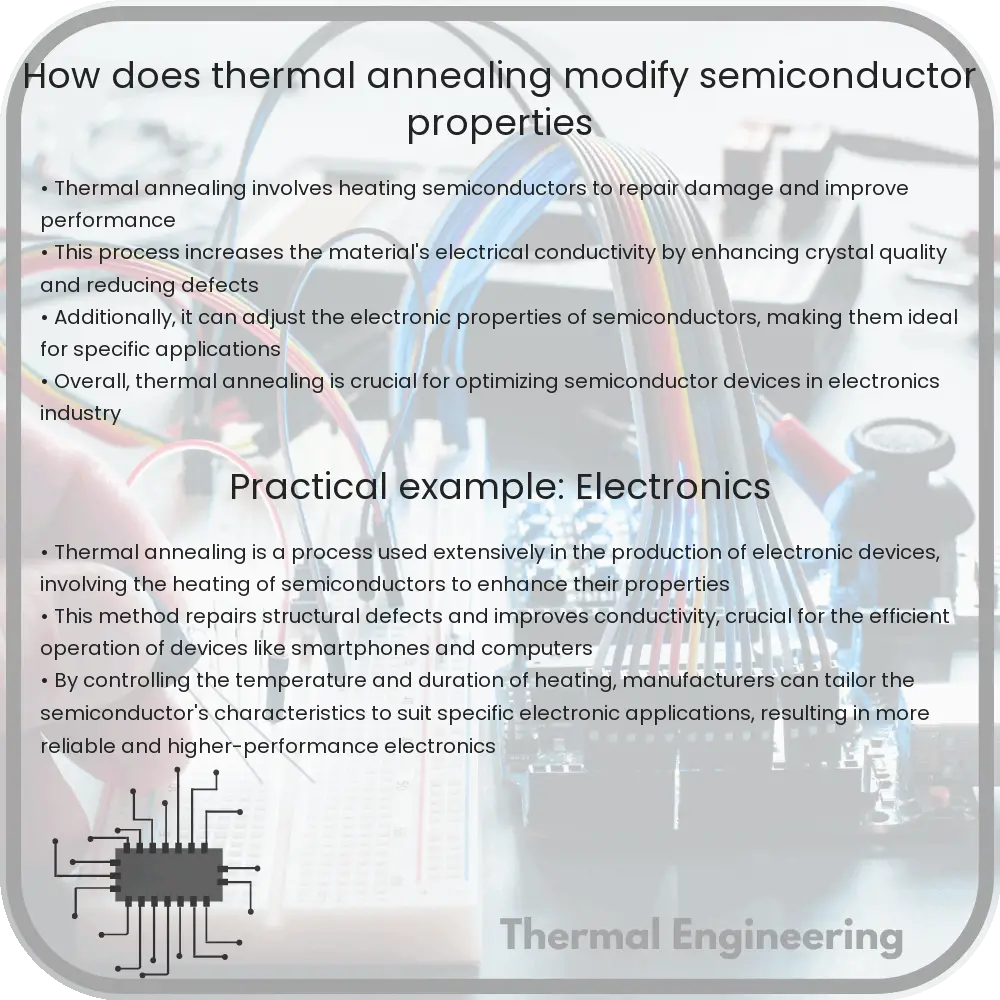
Thermal annealing is a critical process in the field of semiconductor manufacturing. This process involves heating a semiconductor material to a high temperature and then allowing it to cool down slowly. The primary goal of thermal annealing is to alter the physical, chemical, and electrical properties of the semiconductor to improve its performance in electronic devices. Here we explore how thermal annealing modifies semiconductor properties and why it’s essential in semiconductor fabrication.

Key Objectives of Thermal Annealing

  • Reduction of Defects: The heating process helps reduce defects such as dislocations, vacancies, and interstitials in the semiconductor crystal that occur during the crystal growth or ion implantation processes.
  • Dopant Activation: Post ion implantation, dopants (impurity atoms) are introduced into the semiconductor surface to modulate its electrical properties. Annealing activates these dopants, allowing them to occupy substitutional positions within the host lattice, which is crucial for altering the semiconductor’s conductivity.
  • Stress Relief: During various semiconductor processing steps, internal stresses can develop within the crystal. Annealing facilitates stress relief by allowing atoms in the stressed crystal lattice regions to move toward a more energetically favorable state.
  • Improvement of Electrical Properties: By healing defects and activating dopants effectively, the material exhibits enhanced charge carrier mobility and better carrier lifetime, both of which are vital for the efficiency of electronic devices.

Process and Techniques

Thermal annealing processes can vary widely but generally involve some basic steps. The semiconductor wafer is placed inside an annealing furnace or a rapid thermal annealing (RTA) system. The temperature range for annealing can be anywhere from 200°C to over 1000°C, depending on the material and desired outcomes. The duration of the annealing process can last from a few seconds to several hours.

The choice of atmosphere within the annealing furnace is also crucial. Common environments include inert atmospheres (like argon), forming gas (a mixture of hydrogen and nitrogen), or vacuum conditions. Each atmosphere aids in controlling the properties of the surface and the bulk of the semiconductor material during annealing.

Effects on Semiconductor Properties

The effects of thermal annealing on semiconductor properties can be summarized in the following ways:

  1. Electrical Conductivity: By activating dopants and reducing defects, annealing generally increases the electrical conductivity. For instance, silicon doped with phosphorus might not conduct well until it has been annealed, which allows the phosphorus atoms to become properly integrated into the silicon lattice, contributing free electrons.
  2. Mechanical Properties: Annealing can alter mechanical properties by reducing internal stresses, thus making the semiconductor more mechanically stable.
  3. Optical Properties: Certain annealing processes can also impact the optical properties of semiconductors by affecting the electronic band structure, which in turn influences how the semiconductor absorbs and emits light.

Conclusion

Thermal annealing remains a cornerstone technique in semiconductor manufacturing, vital for enhancing the performance and reliability of semiconductor devices. Through careful control of temperature, duration, and environment, manufacturers can tailor the properties of semiconductors to meet specific application requirements, paving the way for advancements in electronic and photonic device technology.

What are the thermal considerations in designing electronic circuits

Learn about thermal considerations crucial in electronic circuit design to enhance performance and longevity.

What are the thermal considerations in designing electronic circuits

Understanding Thermal Considerations in Electronic Circuit Design

When designing electronic circuits, managing heat is a critical factor that significantly affects performance and longevity. Components in electronic devices, from resistors to microprocessors, generate heat during operation. If this heat is not adequately managed, it can lead to reduced efficiency, performance degradation, or even failure of electronic components. Here, we will explore the thermal considerations that engineers must account for in electronic circuit design.

Sources of Heat in Electronic Circuits

Heat generation in electronic circuits primarily comes from two sources:

  • Joule Heating: This is heat produced by the resistance to the flow of electric current within the components. It can be calculated using the formula \( P = I^2 \times R \), where \( P \) is the power (in Watts), \( I \) is the current (in Amps), and \( R \) is the resistance (in Ohms).
  • Switching Losses: Common in semiconductors, particularly in devices like transistors and diodes. These losses occur during the transition between on and off states in digital circuits, where incomplete switching can result in power dissipation.

Thermal Management Techniques

To prevent thermal issues, a variety of thermal management techniques are employed in the design and construction of electronic circuits:

  • Heat Sinks: These are physical structures (often made of aluminum or copper) attached to components to increase surface area and enhance heat dissipation into the surrounding environment.
  • Thermal Pads and Compounds: These materials are used to improve thermal contact between a component and its heat sink by filling air gaps with a material that has better thermal conductivity than air.
  • Cooling Fans: Active cooling methods like fans are used to increase air flow over components and heat sinks, facilitating better heat dissipation.
  • Thermal Vias: In circuit board (PCB) design, thermal vias are used to transfer heat from one side of the board to the other. These are holes in the PCB filled or plated with a thermally conductive material.
  • Choice of Materials: Selecting materials with appropriate thermal conductivity for PCBs and components can also greatly affect thermal performance. For example, ceramics and certain polymers can be used for their favorable thermal properties.

Design Considerations

Effective thermal management in circuit design not only involves selecting the right components and cooling mechanisms but also involves several design considerations:

  • Layout Design: Strategic placement of components to facilitate natural convection currents and minimize heat concentration. High-power components should be spaced apart and placed in such a way as to maximize exposure to cooling flows.
  • Environmental Factors: Consideration of ambient temperature and cooling medium (air, liquid) availability in the operational environment of the circuit is crucial.
  • Thermal Simulation: Use of computer-aided design (CAD) software to simulate thermal behavior before the physical circuit is built can help predict heat issues and allow for pre-emptive adjustments to the design.

By integrating these thermal management strategies and design techniques, engineers can ensure that electronic circuits operate efficiently and reliably over their intended lifespan, avoiding overheating and minimizing heat-related failures.

Understanding and implementing thermal considerations in electronic circuit design is a critical aspect of both component choice and system-level planning, aiming to achieve optimum performance and reliability in the face of thermal challenges.

Can thermal ablation treat cancer effectively

Learn about thermal ablation, a minimally invasive technique using heat to target and destroy cancer cells effectively.

Can thermal ablation treat cancer effectively

Understanding Thermal Ablation for Cancer Treatment

Thermal ablation is a treatment method that uses heat to destroy cancer cells. This technique has gained traction in the medical community as a minimally invasive alternative to traditional surgery, especially for small or hard-to-reach tumors. By focusing heat on a specific area, thermal ablation can effectively treat cancerous lesions while minimizing damage to surrounding healthy tissue.

Types of Thermal Ablation

There are several types of thermal ablation, each using different sources of heat:

  • Radiofrequency Ablation (RFA): This method uses radio waves to generate an electric current that heats and destroys cancer cells.
  • Microwave Ablation (MWA): Microwaves are employed to produce heat that eradicates the cancer cells.
  • Laser Ablation: Concentrated light is used to burn away the affected tissues.
  • High-Intensity Focused Ultrasound (HIFU): Ultrasound waves are focused on a small area to generate localized heat to kill the tumor cells.

How Thermal Ablation Works

The process involves inserting a thin, needle-like probe into the tumor under the guidance of imaging techniques such as ultrasound, CT (computed tomography), or MRI (magnetic resonance imaging). Once in place, the probe emits energy that heats the tumor to temperatures typically between 50°C to 100°C, leading to cellular damage and ultimately cell death. This targeted approach helps preserve the majority of the surrounding healthy tissues.

Advantages of Thermal Ablation

  • Minimally Invasive: Compared to conventional surgery, thermal ablation requires smaller incisions, which leads to fewer complications and a quicker recovery.
  • Targeted Treatment: Ablation focuses on the tumor, thereby sparing healthy tissues and reducing the side effects often seen with broader treatments like chemotherapy and radiation.
  • Outpatient Procedure: Many ablation procedures can be performed on an outpatient basis, allowing patients to return home the same day.
  • Repeatable: If new cancerous growths appear, the procedure can be repeated without undue risk to the patient.

Effectiveness of Thermal Ablation

The effectiveness of thermal ablation varies based on several factors including the size, location, and type of the tumor, as well as the specific ablation technique used. It is most effective for tumors smaller than 3 cm in size. Studies show that for small liver cancers, RFA can achieve survival rates similar to those of surgery. However, larger tumors might require combination therapy, pairing ablation with other treatments like chemotherapy to maximize efficacy.

Conclusion

Thermal ablation is a promising treatment option for certain types of cancer, offering a less invasive alternative with high precision and fewer side effects. While it may not be suitable for all patients and cancer types, its ability to target tumors effectively makes it a valuable tool in oncological care. Advances in imaging and ablation technology continue to improve the outcomes and applicability of this technique, providing hope for more widespread use in the future.

How does heat impact the performance of batteries

Explore the critical effects of temperature on battery efficiency, safety, and lifespan across various devices.

How does heat impact the performance of batteries

Understanding the Impact of Heat on Battery Performance

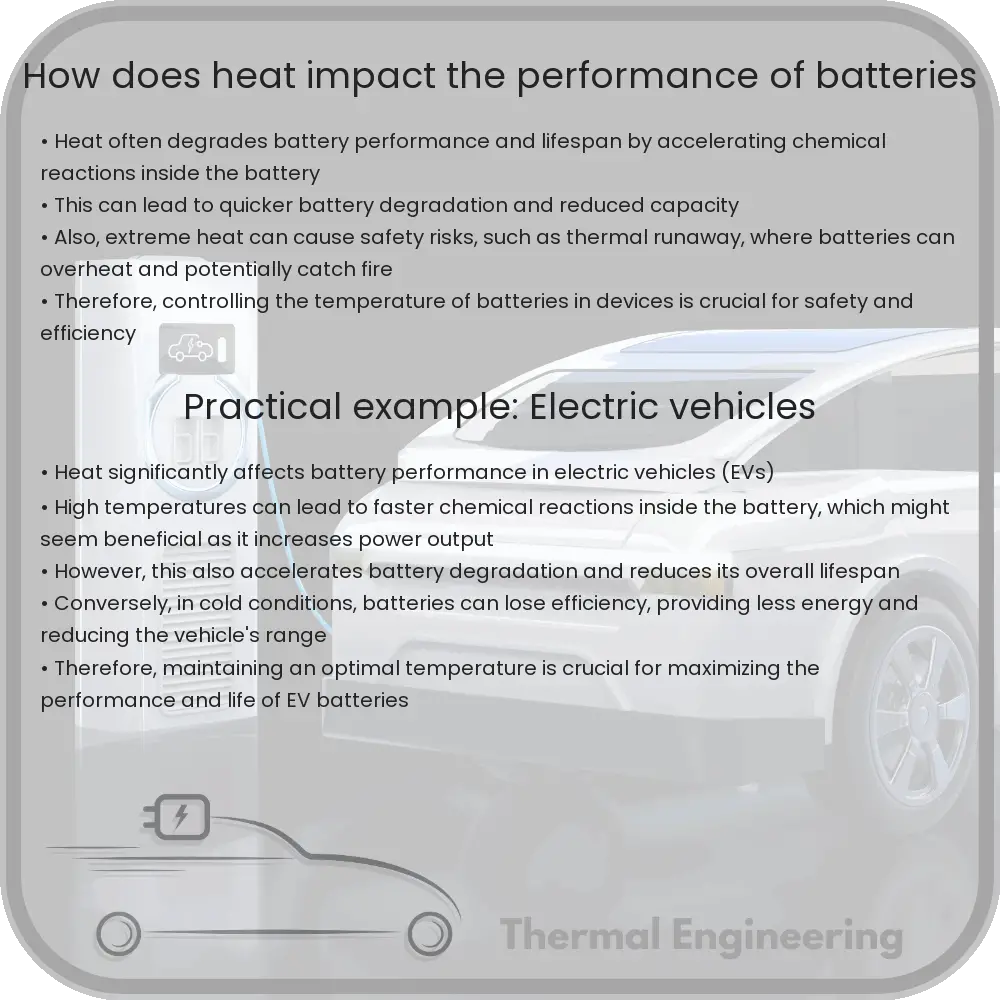
Temperature is a critical factor affecting the performance, safety, and lifespan of batteries. This influence is particularly significant in devices ranging from smartphones to electric vehicles. Understanding how heat impacts battery performance can aid in optimizing battery usage and prolonging its operational life.

How Temperature Affects Batteries

Temperature impacts batteries in multiple ways, primarily through its effect on the chemical reactions that occur within. Here’s a closer look:

  • Increased Reaction Rates: At higher temperatures, chemical reaction rates within a battery typically increase. While this might initially enhance performance (e.g., better conductivity and higher power output), it can also lead to faster degradation of the battery components.
  • Reduced Energy Efficiency: Excessive temperatures cause increased internal resistance and, consequently, higher energy losses in the form of heat. This not only stresses the battery but also reduces its overall efficiency.
  • Material Expansion: Thermal expansion of battery materials at high temperatures can lead to structural damage or even failure. For instance, the separator between electrodes can degrade, potentially causing short circuits.

Optimal Temperature Range

Most batteries, including lithium-ion (Li-ion) types prevalent in many electronic devices, have an optimal operating temperature range, typically between 20°C to 25°C (68°F to 77°F). Operating a battery outside of this range can significantly impair its effectiveness and durability.

  • Above Optimal Range: Temperatures exceeding this range can lead to increased self-discharge rates, a phenomenon where a battery loses charge more rapidly without being used. Prolonged exposure to high temperatures can also catalyze irreversible reactions, shortening the battery’s lifetime.
  • Below Optimal Range: At low temperatures, the internal resistance of the battery increases, which reduces the efficiency of energy delivery. Batteries might exhibit sluggish performance and reduced capacity under such conditions.

Thermal Management in Battery Engineering

To mitigate the adverse effects of temperature extremes, effective thermal management systems are crucial in battery design, especially for applications requiring high power and energy density, such as electric vehicles.

  • Cooling Systems: Active cooling systems are employed to keep batteries within their optimal temperature range. These systems can range from air-cooled mechanisms to more complex liquid cooling solutions.
  • Phase Change Materials (PCMs): PCMs absorb, store, and release heat as they change from solid to liquid and vice versa. This can help regulate the temperature within battery packs, allowing them to operate more efficiently.
  • Isolation and Ventilation: Properly designed battery compartments ensure good isolation and ventilation, preventing excess heat from external sources and facilitating the dissipation of internal heat.

In conclusion, understanding and managing the thermal effects on batteries is essential for enhancing their performance and longevity. Thermal management technologies continue to evolve, playing a pivotal role in the development of more reliable and efficient battery systems. With advancements in battery technologies and thermal management, future batteries are likely to withstand a wider range of environmental conditions, providing more robust and resilient power sources for all types of devices.

What is the thermodynamics of cooking with induction heat

Learn how induction cooking utilizes electromagnetic induction and thermodynamics for efficient and controlled cooking, with a focus on heat energy conversion and advantages over traditional methods.

What is the thermodynamics of cooking with induction heat

Understanding the Thermodynamics of Cooking with Induction Heat

The process of cooking with induction heating is a fascinating application of thermodynamics, the branch of physics concerned with heat and temperature and their relation to energy and work. Unlike traditional cooking methods that use direct thermal conduction (gas flames or electric hot plates), induction cooking uses electromagnetic induction to heat the cooking vessel itself, providing a more efficient and controlled way to cook.

Principles of Induction Heating

Induction heating involves the conversion of electrical energy into heat energy through electromagnetic induction. A coil of copper wire is placed beneath the cooking pan, and when an alternating electric current is passed through it, a rapidly alternating magnetic field is created. This magnetic field penetrates the cookware, which must be ferromagnetic (commonly cast iron or some stainless steels) to be compatible with induction cooking.

Once the magnetic field enters the ferromagnetic material of the cookware, it induces eddy currents. These currents are loops of electrical current induced within the pan due to the Lorentz force. According to Joule’s first law, the eddy currents convert the electrical energy into heat. This is given by the equation:

\[ Q = I^2 * R * t \]

  • Q: Heat energy generated (Joules)
  • I: Current (Amperes)
  • R: Resistance (Ohms)
  • t: Time (Seconds)

Here, the resistance R of the cookware plays a direct role in heat production, and the higher the resistance, the more heat is produced. This is fundamentally why materials like cast iron, which has higher electrical resistance, are efficient for induction cooking.

Advantages of Induction Cooking

Induction cooking offers several thermodynamic advantages over conventional cooking methods:

  • Efficiency: Since the heat is generated directly in the pan, there is less loss of energy to the surrounding environment. This makes induction cooking more energy efficient.
  • Control: The temperature can be controlled more accurately and instantaneously because changes in the electric current adjust the heating rate directly and rapidly.
  • Speed: Induction cooking heats cookware faster than traditional methods, reducing the overall cooking time.
  • Safety: The cooking surface stays comparatively cooler since the heat is generated within the cookware itself, reducing the risk of burns.

Heat Transfer Dynamics in Cooking

Once heat is produced in the pan, it is transferred to the food through conduction. Here, the thermal energy moves from the hotter pan to the cooler food. The effectiveness of this heat transfer depends on the thermal conductivity of the cookware material and the food, as well as the temperature difference between them. This conduction can be expressed as:

\[ Q = -k * A * \frac{\Delta T}{\Delta x} \]

  • k: Thermal conductivity of the material (W/m*K)
  • A: Area through which heat is transferred (square meters)
  • \(\Delta T\): Temperature difference across the material (Kelvin)
  • \(\Delta x\): Thickness of the material (meters)

Through the lens of thermodynamics, induction cooking not only showcases the conversion of one form of energy to another but also underscores the principles of heat transfer, offering a clean, efficient, and safe cooking technology.

What are the thermodynamics of creating synthetic diamonds

Understanding the thermodynamics behind synthetic diamond creation using HPHT and CVD methods.

What are the thermodynamics of creating synthetic diamonds

The Thermodynamics of Creating Synthetic Diamonds

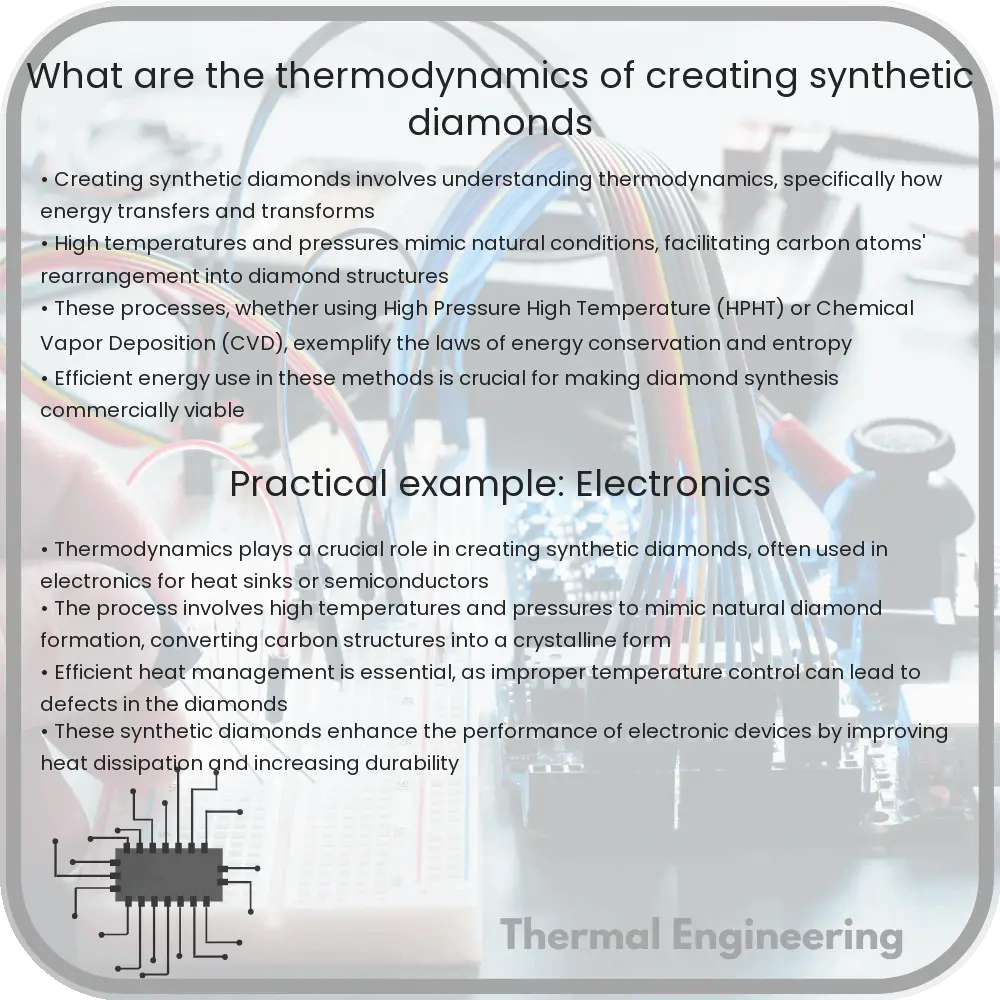
Synthetic diamonds are man-made gemstones that replicate the properties of natural diamonds. Their production is a testament to the application of advanced thermodynamic principles in materials engineering. The process of creating synthetic diamonds involves extreme conditions of temperature and pressure, simulating the natural conditions under which diamonds form in the Earth’s mantle. Two main methods are commonly used for this purpose: High Pressure High Temperature (HPHT) and Chemical Vapor Deposition (CVD). In this article, we will delve into the thermodynamic concepts behind these methods.

High Pressure High Temperature (HPHT)

The HPHT technique was the first successful method for producing synthetic diamonds commercially, and relies heavily on thermodynamic principles. The basic premise involves replicating the high-pressure, high-temperature conditions that occur naturally within the Earth’s mantle, where carbon atoms are forced into a diamond crystalline structure.

  • Temperature and Pressure: Typical conditions for HPHT involve temperatures between 1300°C and 1600°C and pressures of about 5 to 6 GPa (gigapascals).
  • Thermodynamic Stability: At these conditions, carbon’s Gibbs free energy indicates a phase transformation where graphite (the more stable form of carbon at normal conditions) converts into diamond. The process can be represented by the equation $\Delta G = \Delta H – T\Delta S$, where $\Delta G$ must be negative for the reaction to be spontaneous.

In practice, a carbon source (usually graphite), along with a metal catalyst such as iron or cobalt, is subjected to these conditions. The metal catalyst helps in dissolving the graphite and precipitating carbon atoms into the diamond structure.

Chemical Vapor Deposition (CVD)

Chemical Vapor Deposition is a more recent method for diamond synthesis, growing popular because of its ability to produce diamonds at relatively lower pressures. This method involves decomposing a hydrocarbon gas, like methane, in a vacuum chamber and depositing the carbon atoms onto a substrate to form diamond.

  • Temperature and Pressure: The temperatures in a typical CVD reactor range from about 700°C to 1000°C, with pressures well below 1 atm in a vacuum environment.
  • Growth Process: The process involves the breaking of molecular bonds in the gas phase by microwave plasma or hot filaments, which facilitates the release of carbon atoms that then deposit on a substrate in diamond crystalline form. The conditions maintain the deposition phase within a narrow window where diamond remains thermodynamically favorable compared to graphite.

Key to this process is maintaining a balance in the supersaturation levels of carbon species in the gas phase; too low, and the rate of diamond growth is trivial, too high, and graphite or other non-diamond carbon forms can compete.

Energy Considerations and Efficiency

The creation of synthetic diamonds is not only a marvel of replicating nature but also a challenge in energy efficiency. Both HPHT and CVD processes consume a substantial amount of energy:

  • HPHT requires maintaining high pressures and temperatures, demanding robust equipment and significant energy to sustain such conditions.
  • CVD, while less energy-intensive in terms of pressure, relies heavily on energy inputs for creating and maintaining plasmas or heating filaments. Furthermore, the purity and quality control of the gas atmosphere are critical, impacting resource input.

Continued advancements in thermodynamic efficiencies and process optimizations are central to reducing the energy footprint of synthetic diamond production. Research is underway to explore new catalysts, better energy management techniques, and novel chemical processes that could pave the way for more sustainable production methods.

Conclusion

The synthesis of diamonds via engineering practices like HPHT and CVD exemplifies the intersection of thermodynamics with cutting-edge technology. These methods not only allow the creation of diamonds for industrial, technological, and aesthetic purposes but also provide fascinating insights into thermodynamic processes at extreme conditions. Continued research and development in this area promise to further unravel the complexities of material synthesis under extreme conditions.

Thermal energy harvesting

Learn about thermal energy harvesting, a method that converts waste heat into electricity, improving energy efficiency and sustainability.

Thermal energy harvesting

Understanding Thermal Energy Harvesting

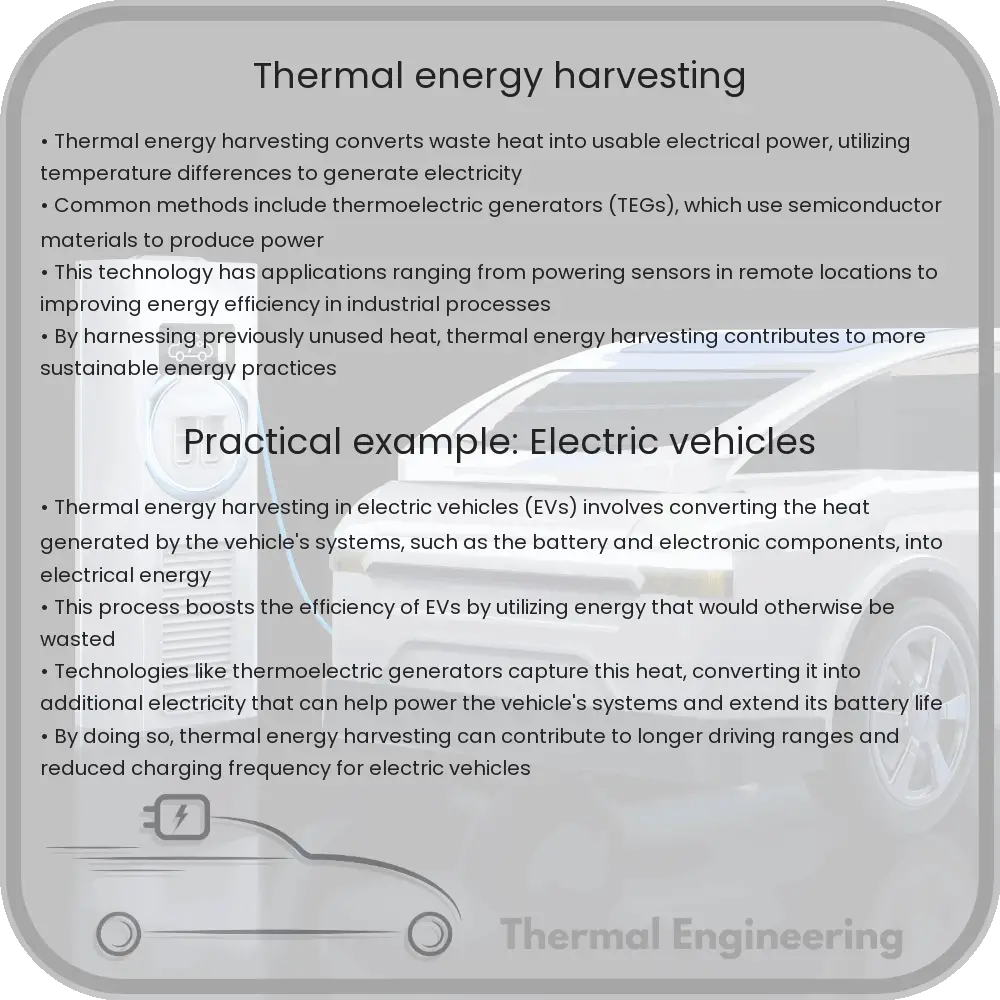
Thermal energy harvesting is an innovative method of capturing and converting waste heat into usable electricity, playing a crucial role in improving energy efficiency and sustainability. This approach can help mitigate environmental impact by making use of the vast amounts of heat that are usually discarded by industrial processes, electronic devices, and other sources.

How Thermal Energy Harvesting Works

The fundamental principle behind thermal energy harvesting lies in the concept of thermoelectricity, particularly the Seebeck effect. Discovered in 1821 by Thomas Johann Seebeck, the Seebeck effect involves generating electric voltage across different materials when there is a temperature difference between them. The basic equation for the voltage generated can be expressed as:

V = S * ΔT,

  • V is the voltage generated,
  • S is the Seebeck coefficient (material-dependent),
  • ΔT is the temperature difference across the materials.

The Seebeck coefficient, a measure of the magnitude of an induced thermoelectric voltage in response to a temperature difference across that material, is critical in determining the efficiency of a thermoelectric generator (TEG).

Applications of Thermal Energy Harvesting

  • Industrial Waste Heat Recovery: Industries such as manufacturing and power generation often produce large quantities of waste heat. TEGs can be utilized to capture some of this heat and convert it into electrical power, potentially leading to significant energy savings and operational efficiencies.
  • Automotive: In vehicles, significant amounts of heat are expelled through the exhaust and cooling systems. TEGs can recover part of this heat and convert it into electricity that can power vehicle electronics or contribute to the vehicle’s propulsion system.
  • Consumer Electronics: Small-scale thermal energy harvesting systems can be integrated into consumer electronics to extend battery life. For example, a TEG can harness body heat to power wearable devices.

Challenges in Thermal Energy Harvesting

Despite its potential, thermal energy harvesting faces several challenges that must be addressed to increase its widespread adoption:

  1. Material Efficiency: The efficiency of current thermoelectric materials is relatively low. Research is ongoing to discover or engineer materials with higher Seebeck coefficients and better heat-to-electricity conversion rates.
  2. Cost-effectiveness: High-quality thermoelectric materials and the technology for assembling TEGs are often expensive. Finding cost-effective solutions is crucial for both large-scale and consumer-level applications.
  3. Durability and Stability: TEGs must operate consistently under varying temperatures and over long periods. Ensuring the longevity and reliability of these systems remains a significant engineering challenge.

Future Prospects

The future of thermal energy harvesting looks promising with ongoing advancements in materials science and thermoelectric technology. Innovations such as nanostructured materials and quantum effects hold the potential to revolutionize the efficiency of these systems. Additionally, integrating thermal energy harvesting with other renewable energy technologies could lead to more sustainable and resilient energy systems.

As research progresses and as more practical and cost-effective solutions are developed, the adoption of thermal energy harvesting technologies is expected to grow, playing a pivotal role in the global push towards energy efficiency and sustainability.

Thermal bridges reduction techniques

Explore what thermal bridges are, their types, reduction techniques, and benefits to improve building energy efficiency and comfort.

Thermal bridges reduction techniques

Understanding Thermal Bridges and Their Reduction Techniques

Thermal bridges are areas in a building’s structure that allow for an increased transfer of heat compared to surrounding materials, leading to inefficiencies in thermal insulation. This not only results in higher energy costs but also increases the risk of condensation and mold growth, which can significantly affect the durability and comfort of living spaces. Reducing thermal bridges is crucial for enhancing energy efficiency and achieving more sustainable building designs.

Types of Thermal Bridges

Thermal bridges can typically be classified into three main types:

  • Repeating thermal bridges: These occur when materials with high thermal conductivity are used at regular intervals, like metal studs in a wall.
  • Non-repeating thermal bridges: These are localized instances where the thermal envelope is penetrated, such as at balconies or floor junctions.
  • Geometric thermal bridges: These arise from the shape and design of the building itself, like at corners or edges where more surface area is exposed.

Techniques for Reducing Thermal Bridges

Efficiently managing thermal bridges involves several strategies that improve a building’s thermal envelope by minimizing unnecessary heat loss. Below are some effective techniques:

  1. Using Thermal Breaks: This method involves inserting materials with low thermal conductivity between elements with higher conductivity. For example, placing insulative material between the balcony and interior floor slab.
  2. Improved Insulation Materials: Incorporating insulation materials of higher quality and R-values can significantly reduce thermal bridging, especially in the building’s outer layers.
  3. Optimal Design and Construction Techniques: Careful architectural design and planning can minimize geometric and structural thermal bridges. Rounded corners, compact shapes, and continuous insulation layers are typical solutions.
  4. Thermal Imaging: Using thermal imaging cameras helps identify existing thermal bridges, thereby guiding corrective measures on current structures and informing designs to prevent future thermal bridges.
  5. Advanced Software Modeling: Utilizing sophisticated modeling tools can simulate heat flow in a building’s design phase, allowing for adjustments before construction begins to minimize thermal bridging.

Benefits of Reducing Thermal Bridges

Addressing thermal bridges brings multiple benefits:

  • Energy Efficiency: Improved insulation leads to reduced heat loss, meaning lower energy bills and a reduced environmental impact.
  • Increased Comfort: Homogeneous indoor temperatures and reduced drafts contribute to a more comfortable living environment.
  • Better Building Health: Minimizing moist and mold-prone areas protects the structure from potential damage and improves indoor air quality.

By understanding and implementing the above techniques, building designers and engineers can drastically reduce thermal bridging, leading to more energy-efficient, comfortable, and durable structures. As technology and materials improve, the potential for innovative solutions to thermal bridging continues to expand, helping pave the way toward more sustainable building practices.