Facebook Instagram Youtube Twitter

What impacts thermal resistance in electronics

Learn about thermal resistance in electronics, its impact on device performance, and strategies to optimize it for better efficiency and reliability.

What impacts thermal resistance in electronics

Understanding Thermal Resistance in Electronics

Thermal resistance is a critical factor in the design and performance of electronic devices. It quantifies the temperature difference between the junction and ambient temperatures of a device relative to the power dissipated within it. Understanding what impacts thermal resistance is essential for enhancing reliability and efficiency in electronic systems.

Factors Affecting Thermal Resistance

Several key factors influence the thermal resistance in electronic components:

  • Material Properties: The type of material used in components and their assembly plays a crucial role. Materials with higher thermal conductivity, such as copper or aluminum, help in reducing thermal resistance compared to those with lower thermal conductivity like plastic.
  • Component Geometry: The size and shape of the component affect how heat is dissipated. Larger surface areas facilitate better heat dissipation, thereby lowering thermal resistance.
  • Assembly Quality: Imperfections such as gaps or misalignments in the assembly process can increase thermal resistance. Proper assembly minimizes these discrepancies, enhancing thermal conduction.
  • Environmental Conditions: Ambient temperature and cooling mechanisms (like fans or heat sinks) directly impact thermal resistance. Effective cooling systems can significantly reduce thermal resistance by improving heat dissipation.

Calculating Thermal Resistance

The thermal resistance, often denoted as \( R_{\text{th}} \), is commonly expressed in degrees Celsius per watt (°C/W). The basic formula to calculate thermal resistance is:

\[ R_{\text{th}} = \frac{T_{\text{junction}} – T_{\text{ambient}}}{P} \]

where:

  • \( T_{\text{junction}} \) is the junction temperature of the component,
  • \( T_{\text{ambient}} \) is the ambient temperature, and
  • \( P \) is the power dissipation in watts.

Strategies to Minimize Thermal Resistance

To enhance the performance and longevity of electronic devices, reducing thermal resistance is crucial. Here are some effective strategies:

  • Using Heat Sinks: Attaching heat sinks to components helps in dispersing heat more efficiently, thus reducing the thermal resistance.
  • Improving Material Quality: Opting for materials with higher thermal conductivity for both the component and its casing can significantly reduce thermal resistance.
  • Enhancing Design Configurations: Designing components with larger surface areas or improved geometries can facilitate better heat dissipation.
  • Optimizing Cooling Mechanisms: Implementing active cooling systems, such as fans, or enhancing passive cooling features, like ventilation, can decrease thermal resistance.

By understanding and addressing the factors that affect thermal resistance, engineers can design more reliable and efficient electronic devices. This not only improves performance but also extends the lifespan of the devices.

How does microscale heat transfer differ

Microscale heat transfer examines the unique heat movement behaviors in microscale systems, crucial for designing effective thermal management in small-scale devices.

How does microscale heat transfer differ

Understanding Microscale Heat Transfer

Heat transfer is a fundamental concept in both engineering and physics, describing the movement of heat from one place to another through various means such as conduction, convection, and radiation. While these principles are observed universally, the way they play out can vastly differ when observed at the microscale. Microscale heat transfer becomes significant especially in microelectronics, micromechanical systems, and other applications where the dimensions of the system or components are relatively small.

Key Differences in Microscale Heat Transfer

At microscale, the typical length scales are on the order of micrometers or smaller. This scale affects heat transfer in several unique ways, primarily due to the increased surface area to volume ratio, the prevalence of boundary layer effects, and changes in the modes of heat transfer.

  • Surface Area to Volume Ratio: On the microscale, the surface area to volume ratio is significantly higher than in macroscale systems. This increases the influence of surface-related phenomena, such as surface tension and adsorption, which can significantly alter heat transfer characteristics.
  • Boundary Layer Effects: The boundary layer is the layer of fluid in the immediate vicinity of a bounding surface where the effects of viscosity are significant. As the dimensions of a system decrease, the thickness of the boundary layer relative to these dimensions can become more significant, impacting convection processes.
  • Conduction Dominance: In microscale systems, conduction becomes a more dominant mode of heat transfer compared to convection. This is due to the reduced distances over which heat needs to travel, which can limit the development of convective flows.
  • Radiation Effect: Although radiation is typically more significant at larger scales, in certain microscale applications involving very high temperatures, radiation can still play a vital role.

Mathematical Modelling of Microscale Heat Transfer

Understanding and predicting heat transfer at the microscale requires adjustments to the traditional heat transfer equations to account for the specific conditions at smaller scales. The Fourier’s law of heat conduction, normally expressed as:

q = -k * A * \(\frac{dT}{dx}\)

where:

  1. q is the heat transfer rate,
  2. k is the thermal conductivity,
  3. A is the area,
  4. \(\frac{dT}{dx}\) is the temperature gradient along the direction of heat flow,

remains valid, but the values and impact of each parameter might need specialized consideration due to microscale effects.

Practical Applications and Implications

In practical applications like in the design of microchips, microelectromechanical systems (MEMS), and other miniature devices, managing microscale heat transfer is crucial. Efficient heat dissipation is vital for maintaining the functionality and longevity of miniaturized electronic devices. Engineers must, therefore, employ innovative cooling techniques such as microchannel heat sinks, synthetic jet cooling, or phase change materials to handle the increased surface-to-volume ratio and other microscale effects.

Moreover, the study of microscale heat transfer is not only critical for enhancing the performance of small devices but also for extending our understanding of thermophysical phenomena at minute scales, potentially leading to breakthroughs in thermal management technologies in various sectors including renewable energy, biomedical devices, and aerospace systems.

Conclusion

Microscale heat transfer presents unique challenges and opportunities in thermal management and device design, fundamentally differentiating from macroscale heat transfer due to factors like surface area to volume ratio, boundary layer effects, and the dominance of conduction. Understanding these differences helps engineers design more effective thermal management systems for microscale devices, paving the way for more efficient and sustainable technological solutions.

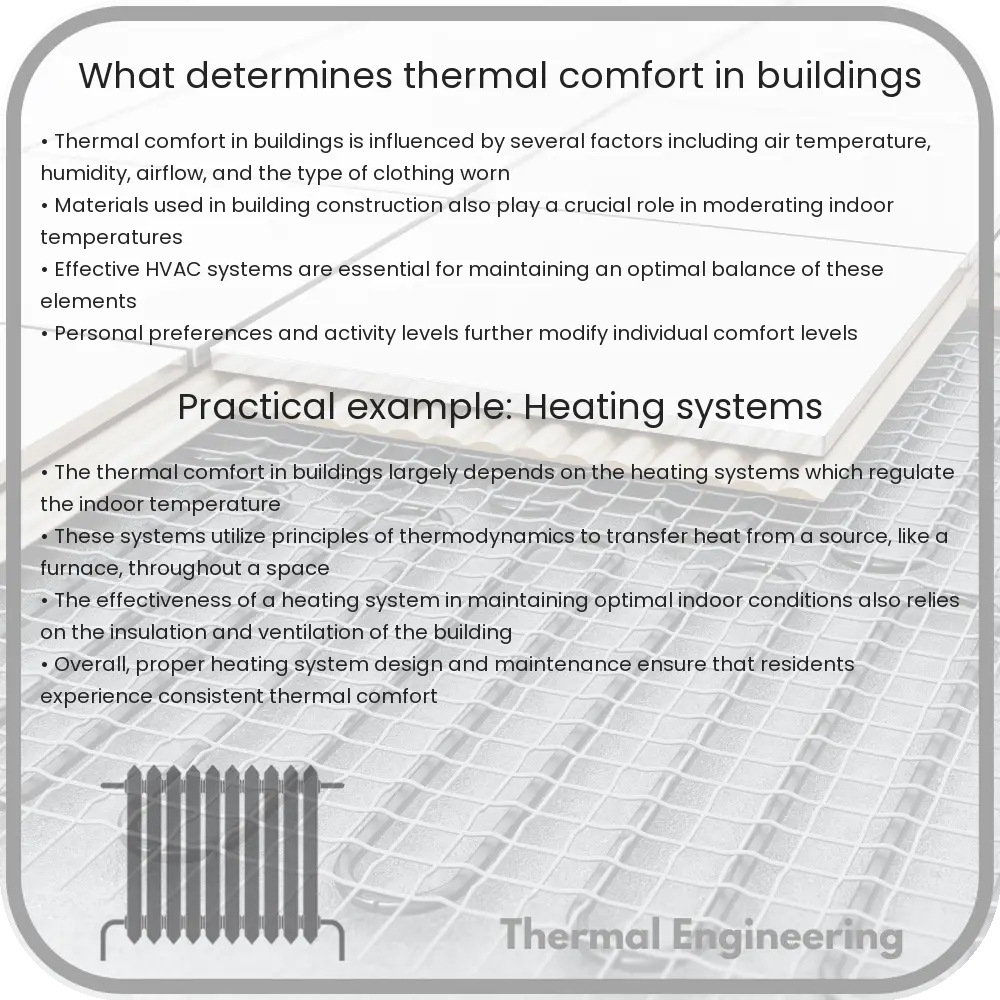
What determines thermal comfort in buildings

Learn about thermal comfort in buildings, a crucial element of environmental engineering involving temperature, humidity, and air flow to enhance occupant satisfaction and energy efficiency.

What determines thermal comfort in buildings

Understanding Thermal Comfort in Buildings

Thermal comfort within buildings is a critical aspect of environmental engineering, affecting not only occupant satisfaction but also energy consumption and efficiency. It refers to the condition of mind that expresses satisfaction with the surrounding environment (ASHRAE Standard 55). A variety of factors determine thermal comfort, including air temperature, humidity, air velocity, radiant temperatures, clothing insulation, and metabolic heat.

Key Factors Influencing Thermal Comfort

  • Air Temperature: This is perhaps the most obvious factor affecting thermal comfort. Generally, a moderate air temperature that neither feels too hot nor too cold is essential for comfort, typically ranging from 20°C to 24°C in most settings.
  • Radiant Temperature: The average temperature of all the objects surrounding the body can influence comfort levels, as the body gains or loses heat through radiation.
  • Air Velocity: The movement of air can enhance the feeling of comfort by increasing heat loss from the body when it is too hot, and its absence can make a warm, stagnant environment feel uncomfortable.
  • Humidity: High humidity can inhibit the evaporation of sweat and make an environment feel uncomfortably warm, whereas low humidity can cause skin dryness and discomfort.
  • Mechanical Systems: The design and operation of building heating, ventilation, and air conditioning (HVAC) systems play a significant role in regulating and maintaining optimal thermal conditions.

Physiological and Psychological Aspects

Thermal comfort is not only a matter of physical parameters of the environment but also involves individual physiological and psychological responses:

  • Metabolic Rate: The level of activity a person is engaged in significantly affects thermal sensation. Higher metabolic rates (e.g., when exercising) generate more body heat, thereby increasing warmth.
  • Clothing Insulation: The type and amount of clothing a person wears also alter thermal comfort by affecting the insulation level of the body.

The Role of Engineering

Engineers employ various strategies to manage thermal comfort in buildings effectively:

  1. Insulation and Building Materials: Using materials with good insulation properties and designing building envelopes effectively can significantly minimize unwanted heat exchange.
  2. Smart HVAC Systems: Advanced HVAC systems can adjust the indoor climate based on real-time data and pre-set preferences to optimize thermal comfort.
  3. Control Systems: Modern buildings often include automated systems that control temperature, humidity, and air flow based on inputs about environmental conditions and occupancy.

Conclusion

Thermal comfort in buildings is a multifaceted domain that blends science, engineering, and human physiology. By understanding and manipulating environmental conditions, engineers can create indoor environments that not only help conserve energy but also enhance the comfort and well-being of occupants.

How do phase change vests regulate temperature

Learn how phase change vests use phase change materials to regulate body temperature efficiently in various environments.

How do phase change vests regulate temperature

Understanding How Phase Change Vests Regulate Temperature

Phase change vests are an innovative tool designed to help regulate body temperature in varying environmental conditions, widely used by athletes, military personnel, and outdoor workers. These vests incorporate materials that leverage the science of phase changes—transitioning between solid and liquid states—to absorb, store, and release heat. Let’s explore how this technology works and why it’s effective in temperature regulation.

The Science Behind Phase Change Materials (PCMs)

At the heart of phase change vests are phase change materials (PCMs). PCMs are substances that absorb and release thermal energy during the process of melting and freezing, and this property is harnessed to maintain a stable temperature environment. Common PCMs include paraffin wax and certain salt hydrates, which have melting points near the comfortable range for human body temperature (typically around 28°C to 32°C).

How Phase Change Vests Work

The operating principle of a phase change vest involves the following key steps:

  • Heat Absorption: When body temperature rises, the heat from the body causes the PCM in the vest to melt. This endothermic reaction absorbs heat, providing a cooling effect to the body.
  • Heat Storage: As the PCM melts, it changes from solid to liquid, effectively storing the heat within the material. This process helps stabilize body temperature by preventing excessive heat rise.
  • Heat Release: When the surrounding temperature or the body temperature drops, the PCM begins to solidify again, an exothermic process. This releases the stored heat back to the body, offering warmth and maintaining a constant temperature.

This cyclical process of absorbing, storing, and releasing heat enables phase change vests to regulate the wearer’s body temperature in challenging climates or during intense physical activities.

Advantages of Using Phase Change Vests

Phase change vests offer several benefits over conventional methods of temperature regulation:

  • Effective Temperature Control: By directly managing the heat exchange with the environment, these vests maintain a more consistent body temperature.
  • Reusability: PCMs can undergo thousands of melt-freeze cycles with little to no degradation in performance.
  • Comfort and Mobility: Unlike bulky insulation layers or active cooling devices, phase change vests are lightweight and do not restrict movement.
  • Energy Efficiency: These vests operate passively, without the need for an external energy source, making them eco-friendly and easy to use in remote locations.

Applications of Phase Change Vests

Due to their versatile nature, phase change vests are applied in diverse fields such as:

  • Sports: Athletes use these vests to avoid overheating during competition or training, especially in hot climates.
  • Medical: They help manage body temperature in patients suffering from medical conditions that affect body heat regulation.
  • Military: Soldiers wear them to combat extreme temperature conditions in various environments.
  • Workplace Safety: Industrial workers use these vests to maintain a comfortable temperature, reducing the risk of heat stroke and increasing overall productivity.

In conclusion, phase change vests are a prime example of how materials science can intersect with engineering to create solutions that enhance comfort and performance in extreme conditions. Through the simple yet effective mechanism of phase change materials, these vests address the need for personal climate control, showcasing the ingenuity of modern engineering.

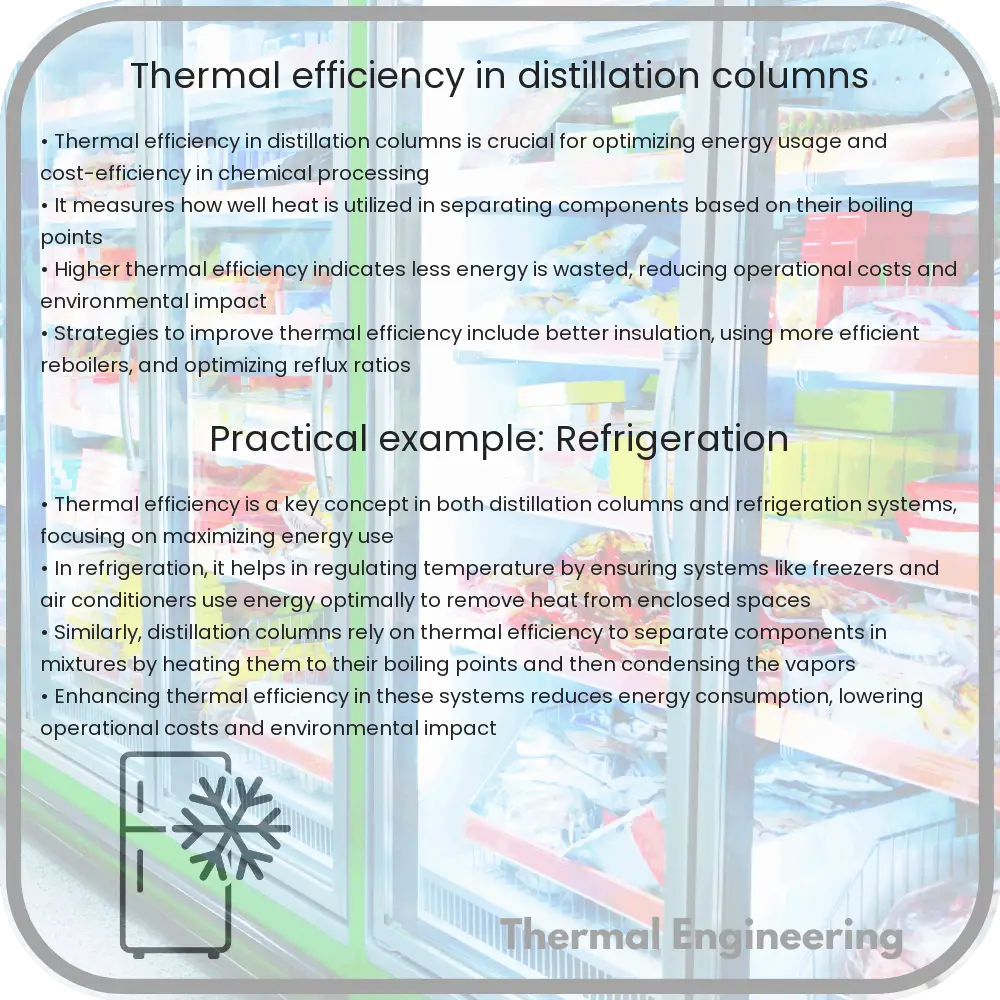
Thermal efficiency in distillation columns

Explore the role and optimization of thermal efficiency in distillation columns, essential for cost-effective and sustainable industrial separations.

Thermal efficiency in distillation columns

Understanding Thermal Efficiency in Distillation Columns

Distillation is a critical process in various industries, such as petrochemicals, food and beverage, and pharmaceuticals. A distillation column is a key piece of equipment used to separate mixtures based on differences in the volatilities of components. The thermal efficiency of a distillation column is a measure of how effectively it uses heat to achieve these separations.

Basics of Distillation

The primary goal of distillation is to separate a liquid mixture into its component parts, or fractions, based on differences in boiling points. This is accomplished by heating the mixture to a high temperature, causing the more volatile component to vaporize. The vapor then rises through the column, cooling and condensing back into a liquid at various stages in the column, where trays or packing collect the condensed vapors based on their condensation points.

Defining Thermal Efficiency

Thermal efficiency in the context of distillation columns is defined as the ratio of the energy input that is effectively used in the separation process to the total energy input. This efficiency is crucial for operational cost reduction and environmental sustainability. Thermal efficiency can be expressed mathematically as:

  • η = (Useful Energy Output/Total Energy Input) * 100%

Where η is the thermal efficiency.

Factors Affecting Thermal Efficiency

Several factors can influence the thermal efficiency of a distillation column:

  • Feed Composition: The proportions of different components in the input mixture affect how easily they can be separated.
  • Column Design: The type of trays or packing used, column height, and diameter all affect efficiency.
  • Operating Conditions: Temperature and pressure settings must be optimized to maximize condensation of the desired components at the correct stages.
  • Reflux Ratio: This is the ratio of the amount of liquid sent back down the column to the amount removed as product and is crucial in determining separation efficiency and energy consumption.

Improving Energy Efficiency

To enhance the thermal efficiency of distillation processes, several strategies can be employed:

  • Energy Integration: Techniques such as heat integration, where heat released by condensing vapors is reused elsewhere in the system, can significantly reduce external energy needs.
  • Advanced Controls: Implementing precise control systems to maintain optimal temperatures and pressures throughout the column can minimize energy wastage.
  • Use of Advanced Materials: Employing modern materials that provide better heat transfer rates and reduced thermal resistance can lead to more efficient vapor condensation and energy use.
  • Innovative Column Designs: Exploring alternative column configurations and internals that enhance contact between vapor and liquid phases could also improve efficiency.

Conclusion

Thermal efficiency is a vital factor in the operation of distillation columns, influencing both cost and environmental footprint. By understanding and optimizing various parameters including feed composition, column design, and operating conditions, significant improvements in efficiency can be achieved. Ongoing innovations in design and technology remain crucial to making distillation processes more energy-efficient.

In summary, mastering thermal efficiency requires a deep understanding of both the theoretical and practical aspects of distillation column operation. By focusing on smart engineering solutions and innovative technologies, industries can achieve more sustainable and cost-effective distillation processes.

Can thermal gradients power micro-devices

Investigating the use of thermal gradients to power micro-devices, focusing on the thermoelectric effect and its applications in sustainable energy solutions.

Can thermal gradients power micro-devices

Can Thermal Gradients Power Micro-Devices?

In the realm of modern engineering, the exploration of unconventional sources of energy to power devices is a priority, particularly as the demand for sustainable and portable power sources increases. One intriguing concept in this context is the use of thermal gradients to power micro-devices. This article will explore the fundamentals of this technology, its practical implementations, and the potential it holds for the future.

Understanding Thermal Gradients

A thermal gradient is a physical quantity that represents the rate of temperature change in a space as a function of distance. Essentially, it is a difference in temperature across a specified area. This gradient can occur naturally, such as the ambient temperature differences between shaded and sunlit areas, or it can be engineered, such as the temperature differential between the surface of an electronic device and its environment.

Thermoelectric Effect: The Basic Mechanism

The primary scientific principle behind using thermal gradients to generate electricity is the thermoelectric effect. This phenomenon is based on the Seebeck effect, which occurs when a temperature difference between two different conductors or semiconductors leads to a voltage difference. This effect can be described by the equation:

E = -S * (Thot – Tcold)

where:

  • E is the electromotive force (EMF) generated,
  • S represents the Seebeck coefficient, which is a material-specific constant, and
  • Thot and Tcold are the temperatures of the hot and cold junctions respectively.

Implementation in Micro-Devices

Micro-devices, such as sensors and microprocessors, often necessitate a compact and sustainable power source. Integrating thermoelectric generators (TEGs) directly onto these devices or within their packaging is a promising solution. TEGs harness the thermal gradient between the device and its ambient environment, or between two different regions of the device itself, converting the thermal energy into electrical power.

Implementations include:

  • Powering wearable devices using body heat against ambient air,
  • Energy harvesting from electronics that heat up during operation, such as processors in a smartphone,
  • Driving micro-sensors in remote or inaccessible places where battery replacement is challenging.

Advantages and Limitations

Thermal gradient power sources offer significant benefits, including:

  • Eco-friendliness: They convert waste heat into useful energy, thus potentially reducing overall energy consumption and emissions.
  • Flexibility and scalability: Can be designed for various scales and applications, from tiny sensors to larger electronics.
  • Maintenance-free: With no moving parts, these systems require minimal maintenance.

However, the challenges include:

  • Low power efficiency: Current thermoelectric materials and devices exhibit relatively low conversion efficiency, often making them unsuitable for high-power applications.
  • Material costs: High-performance thermoelectric materials can be expensive and difficult to manufacture.
  • Temperature dependency: Performance heavily depends on maintaining optimal temperature gradients, which might not be feasible in all environments.

Future Prospects

Advancements in nanotechnology and materials science may lead to more efficient and cheaper thermoelectric materials. For instance, research into nanostructured materials, which can enhance the Seebeck coefficient and reduce thermal conductivity, promises significant improvements in TEG performance.

In conclusion, while the current implementation of thermal gradients for powering micro-devices faces hurdles, ongoing research and technological innovation could soon unlock their potential, presenting a viable solution for powering the next generation of micro-devices and potentially revolutionizing the area of sustainable energy.

Why is thermal diffusivity crucial in composites

Learn how thermal diffusivity impacts composite materials by influencing heat conduction and storage capacities, crucial for engineering applications.

Why is thermal diffusivity crucial in composites

Understanding the Importance of Thermal Diffusivity in Composites

Thermal diffusivity is a critical parameter in the study of materials, especially composites, which are used in a wide variety of engineering applications. It measures how quickly a material can conduct thermal energy relative to its capacity to store thermal energy. This property significantly affects the efficiency and functionality of composite materials in environments where temperature changes are common.

What is Thermal Diffusivity?

Thermal diffusivity (α) is defined scientifically as the ratio of thermal conductivity (k) to the product of density (ρ) and specific heat capacity (cp), represented by the equation:

\[ \alpha = \frac{k}{\rho \cdot c_p} \]

Where:

  • k is the thermal conductivity that measures the ability of a material to conduct heat.
  • ρ is the density of the material.
  • cp is the specific heat capacity, which indicates the amount of heat required to raise the temperature of a unit mass of a substance by one degree Celsius.

In simple terms, higher thermal diffusivity means the material can spread heat more rapidly through its mass. This characteristic is crucial in design considerations where temperature regulation and thermal shocks are a concern.

Role of Thermal Diffusivity in Composites

Composites are materials made from two or more constituent materials with significantly different physical or chemical properties. When combined, they produce a material with characteristics different from the individual components. The heterogeneity in composites presents unique challenges and opportunities in thermal management.

Applications and Challenges

Composites are commonly used in industries like automotive, aerospace, and electronics, where materials are required to withstand or rapidly adapt to fluctuating temperatures while maintaining structural integrity. The role of thermal diffusivity in these applications includes:

  • Thermal Stress Management: In applications involving rapid temperature changes, high thermal diffusivity helps in reducing the build-up of thermal stresses by quickly distributing heat throughout the material.
  • Thermal Barrier Performance: Composite materials can be engineered to have a lower thermal diffusivity in specific areas, serving as thermal barriers that protect sensitive components from heat.
  • Efficiency in Heat Exchangers: High thermal diffusivity is beneficial for components like heat exchangers, which require quick dissipation of heat to function efficiently.

Challenges in Enhancing Thermal Diffusivity

Improving the thermal diffusivity in composites involves selecting the right matrix and reinforcement materials, optimizing the volume fraction and orientation of fibers, and ensuring proper bonding at the interface. Each of these factors can profoundly affect the overall thermal behavior of the composite. Furthermore, maintaining a balance between thermal and mechanical properties is essential, as changes in one can adversely affect the other.

In conclusion, thermal diffusivity plays a pivotal role in the performance and reliability of composite materials, especially in applications subject to thermal cycling or where thermal management is crucial. Advanced composites designed with optimal thermal diffusivity can lead to more efficient, durable, and reliable engineering solutions, fitting the specialized needs of modern technology applications.

How does thermal treatment of waste manage pollution

Learn about thermal treatment of waste and its effectiveness in pollution management and reducing landfill dependence.

How does thermal treatment of waste manage pollution

Understanding Thermal Treatment of Waste and Its Role in Managing Pollution

Thermal treatment of waste is a process that uses high temperatures to convert waste materials into reusable forms of energy and other useful byproducts, thereby reducing the overall volume of waste. This method plays a crucial role in waste management systems, particularly in managing pollution and reducing the reliance on landfill sites. In this article, we explore how thermal treatment functions and its benefits in managing environmental pollution.

Types of Thermal Treatment Processes

  • Incineration: The most common form of thermal waste treatment, incineration involves burning organic substances contained in waste materials at high temperatures. This process reduces the waste volume and mass significantly and converts it into ash, flue gas, and heat.
  • Pyrolysis: This process entails the thermal decomposition of organic material at elevated temperatures in the absence of oxygen. It produces three main types of byproducts: a solid residue known as char, liquid oils, and gases.
  • Gasification: Gasification is a process that converts organic or fossil fuel-based carbonaceous materials into carbon monoxide, hydrogen, and carbon dioxide. This is achieved by reacting the material at high temperatures with a controlled amount of oxygen and/or steam.

How Thermal Treatment Mitigates Pollution

Thermal treatment contributes to pollution management in several key ways:

  1. Reduction in Waste Volume: By converting large volumes of waste into smaller volumes of ash, thermal treatment significantly minimizes the space needed for landfill disposal. This reduction in landfill usage not only preserves land but also decreases ground and water pollution caused by landfill leachate.
  2. Energy Recovery: Incineration and other thermal processes often generate energy in the form of heat, steam, or electricity that can be utilized in power generation or heating, thus reducing the reliance on fossil fuels and minimizing associated air pollution.
  3. Resource Recovery: Through processes like pyrolysis and gasification, valuable byproducts such as synthetic gases and oils can be extracted and reused, promoting recycling and reducing the pollution that would have been involved in producing these products from raw materials.
  4. Emission Control: Modern thermal treatment facilities are equipped with advanced pollution control technologies that capture most of the hazardous emissions before they are released into the atmosphere. These include particulates, heavy metals, and dioxins, significantly mitigating air pollution.

Challenges and Environmental Concerns

Despite its benefits, thermal treatment is not without its challenges. The process requires significant energy input and can be expensive to build and maintain. Moreover, if not properly managed, it can produce harmful emissions that contribute to air pollution. Facilities need to adhere strictly to regulatory standards and embrace continuous improvement of pollution control technologies to mitigate these risks.

Conclusion

Thermal treatment of waste is an effective method for reducing waste volume, recovering energy, and managing pollution. When integrated properly within waste management systems and combined with rigorous emission control measures, it provides a sustainable solution to waste-related pollution problems. As technology advances, it has the potential to play an even greater role in a sustainable waste management strategy that prioritizes waste reduction, energy recovery, and minimal environmental impact.

How does thermal vision aid in night operations

Explore how thermal vision technology utilizes infrared radiation to enhance visibility in night operations across various fields.

How does thermal vision aid in night operations

Understanding Thermal Vision in Night Operations

Thermal vision technology, often referred to as infrared thermography, plays a crucial role in various night operations across military, emergency services, and even wildlife monitoring. By converting infrared radiation (heat) emitted by objects into visible images, thermal cameras allow operators to see the environment with clarity in complete darkness. This article explores the foundation of how thermal vision works and its applications in enhancing nighttime capabilities.

How Thermal Vision Works

Every object emits a certain amount of infrared radiation based on its temperature. The basic principle behind thermal vision is to detect this infrared radiation and convert it into an image that can be understood by the human eye.

  • Infrared Sensors: Thermal cameras are equipped with sensors that detect infrared radiation. These sensors consist of an array of pixels, each of which responds to the infrared radiation differently depending on the temperature of the area being viewed.
  • Image Processing: Once the infrared data is collected, it is processed to produce a visible image. Each pixel in the infrared data corresponds to a pixel in the visible image. The temperature information is usually represented in shades of gray or color, where warmer objects appear brighter or differently colored, depending on the color scale used.
  • Display: The processed image is then displayed on a screen, allowing the user to see in darkness as if it were day, based solely on the heat signatures of objects in the scene.

Applications in Night Operations

Thermal vision technology extends human visual capabilities into the night, providing critical advantages in situations where visibility is compromised. Here are some key applications:

  1. Military Operations: In military applications, thermal vision is indispensable for reconnaissance, surveillance, and targeting. It allows soldiers to detect hidden or camouflaged enemies and to operate effectively in smoke, fog, or complete darkness.
  2. Search and Rescue: During nighttime search and rescue missions, thermal imaging can be used to locate people by their body heat. This is particularly useful in scenarios where victims are obscured by foliage or debris.
  3. Law Enforcement: Police agencies use thermal imaging to track suspects or lost individuals in the dark. It also helps in conducting surveillance without the subject’s knowledge, as thermal cameras can operate at a significant distance from the target.
  4. Wildlife Monitoring: Conservationists and researchers use thermal cameras to observe nocturnal wildlife activities without disturbing them, providing valuable data on the habits and migrations of various species.
  5. Firefighting: Firefighters use thermal imaging cameras to see through smoke and to quickly identify hotspots in fires, significantly enhancing their ability to navigate burning buildings and find persons in need of rescue.

Advantages and Limitations of Thermal Vision

While thermal vision offers significant advantages in night operations, there are also some limitations to consider:

  • Advantages: Thermal imaging works in complete absence of light and can penetrate obscurants like smoke and fog. It also provides a way to measure temperature differences accurately, which can be crucial in various operational scenarios.
  • Limitations: Thermal cameras typically do not provide high-resolution images compared to visible light cameras. They also can be less effective on very hot days, or when objects have a very close temperature to their surroundings.

In conclusion, thermal vision technology transforms the challenge of night operations by making the invisible world of heat visible. Its ability to reveal and distinguish details based purely on temperature differences makes it a vital tool in many fields, bringing a distinct tactical advantage under the cover of darkness.

How do diathermic walls affect heat transfer

Explore the crucial role of diathermic walls in facilitating heat transfer through conduction, convection, and radiation in various engineering systems.

How do diathermic walls affect heat transfer

Understanding Diathermic Walls and Their Role in Heat Transfer

Heat transfer plays a critical role in various engineering applications, from HVAC systems in buildings to engines and heat exchangers. One concept that is important in the study of heat transfer is that of diathermic walls. Diathermic walls are capable of transferring energy in the form of heat between bodies at different temperatures without any requirement for direct contact between the bodies.

Basics of Diathermic Walls

Diathermic walls, also known as diathermanous walls, are essentially boundaries or barriers that allow the transfer of heat between two environments or substances but do not permit material transfer. This contrasts with adiabatic walls, which do not permit either heat or material transfer. The permeability of diathermic walls to heat makes them an essential component in the study of thermodynamics, particularly in systems where temperature regulation and heat exchange are crucial.

Mechanism of Heat Transfer

Heat transfer through diathermic walls can occur in three primary ways: conduction, convection, and radiation:

  • Conduction: Molecular or electron motion within materials causes heat to flow from a region of higher temperature to one of lower temperature.
  • Convection: Heat is carried away by moving fluids, such as air or water, which are in contact with the surface of the diathermic wall.
  • Radiation: Energy is transferred in the form of electromagnetic waves, allowing heat to pass through even the vacuum of space.

Applications of Diathermic Walls

In engineering, diathermic materials are used in various applications to control and facilitate heat transfer. Some of the primary applications include:

  • Building Envelopes: Walls and windows designed with diathermic properties help regulate indoor temperatures by allowing certain amounts of infrared radiation to pass through, contributing to energy efficiency.
  • Heat Exchangers: In industrial processes, diathermic walls in heat exchangers allow heat from a hot fluid to pass to a cooler fluid without mixing the two, thereby efficiently managing heat transfer.
  • Thermal Insulation: Certain diathermic materials can be used to minimize heat loss in controlled environments, such as refrigerated spaces or thermal processing plants.

Conclusion

Diathermic walls are crucial for the efficient transfer and management of heat in various scientific and engineering purposes. By allowing controlled heat transfer through conduction, convection, and radiation, diathermic walls enable the design of more effective and energy-efficient systems. Understanding how these walls work and applying this knowledge can significantly influence and improve the performance and sustainability of thermal systems.