Facebook Instagram Youtube Twitter

How does thermal spraying apply coatings

Learn about thermal spraying, an industrial process used to apply protective coatings to surfaces, enhancing resistance to wear, corrosion, and heat.
How does thermal spraying apply coatings

Understanding Thermal Spraying: A Method for Applying Coatings

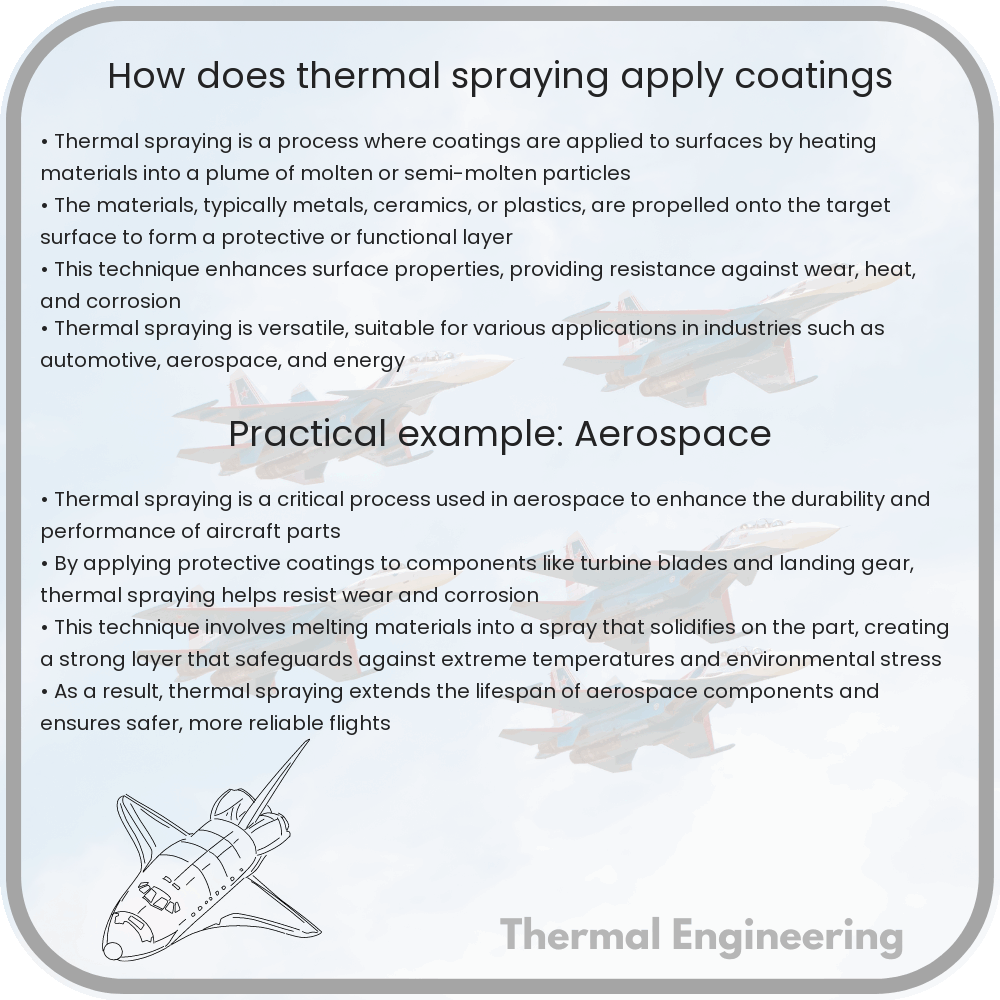
Thermal spraying is an industrial coating process used to enhance a surface’s properties or dimensions, providing benefits like increased resistance to wear, corrosion, and heat. This process involves the deposition of finely divided metallic or non-metallic materials onto a substrate, creating a robust layer that adheres to the underlying material.

The Basics of Thermal Spraying

In thermal spraying, material in the form of powder, wire, or rod is heated to a molten or semi-molten state and then propelled towards the substrate using a gas stream. The particles, upon striking the surface, flatten and form a layer. This process can be conducted in various environments, including air, controlled atmospheres, or vacuum.

Types of Thermal Spraying Techniques

  • Flame Spraying: In this method, the feedstock is melted by an oxy-fuel gas flame. The molten material is then atomized by compressed air and projected onto the surface.
  • Arc Spraying: This technique uses an electric arc to melt metallic wires. Compressed air is used to atomize and propel the molten material toward the substrate.
  • Plasma Spraying: In plasma spraying, a plasma jet, generated by an electric arc, is used to melt the material, which is then accelerated towards the substrate to form the coating.
  • HVOF (High-Velocity Oxygen Fuel): Combining a liquid fuel and oxygen, this method creates a high-velocity flame. The material, usually in powder form, is injected into this flame, melts, and is propelled at high speeds onto the substrate.

Applications and Materials

Thermal spraying can apply a wide variety of materials, such as metals, alloys, ceramics, and plastics. It is widely used in various industries including aerospace, automotive, healthcare, and manufacturing. Common applications include coating jet engine components for heat resistance, applying wear-resistant coatings on mechanical parts, or providing corrosion resistance to offshore structures.

Advantages of Thermal Spraying

  • Versatility: Capable of applying a multitude of coatings to a diverse array of substrates.
  • Efficiency: Coatings can be applied relatively quickly compared to other processes like electroplating or physical vapor deposition.
  • Economic: Generally, it’s more cost-effective for large-scale production and for coatings which require frequent reapplication.
  • Quality: Produces thick coatings that are strong, porous-free, and have good adhesion to the substrate.

Conclusion

Thermal spraying is a critical technology in surface engineering, allowing for the enhancement of material properties to meet specific needs. Its versatility and efficiency make it a preferred choice in many industrial applications, fostering innovations across various sectors by extending the life and improving the performance of critical components.

How does thermal storage heating work in homes

Learn about thermal storage heating, a cost-effective system that stores heat during low-cost periods and releases it when needed for home temperature management.

How does thermal storage heating work in homes

Understanding Thermal Storage Heating

Thermal storage heating is a method used in homes to manage and optimize temperature by storing heat when it is available at a lower cost and releasing it when needed. This system is particularly effective in regions where electricity rates vary based on time of day or when alternative heating solutions are sought. Here, we will explore how this heating technology works, the types it involves, and its benefits.

Principles of Thermal Storage Heating

The basic principle behind thermal storage heating revolves around the use of heat-absorbing materials that retain large quantities of thermal energy. These storage systems are charged during off-peak hours when electricity rates are lower and energy is more abundant, and then discharge the stored heat during peak times when heating requirements increase.

Types of Thermal Storage Systems

  • Sensible Heat Storage Systems: These systems use materials like water or ceramic bricks to store heat. Energy is stored by raising the temperature of these materials directly during off-peak times. Later, as the environment cools down, the stored energy is gradually released to heat the room.
  • Latent Heat Storage Systems: These involve phase change materials (PCMs) that absorb and release heat by transitioning between states, such as solid to liquid and vice versa. This change of state occurs at a constant temperature, thus providing a consistent heat output.
  • Thermochemical Storage: This type involves chemical reactions that either absorb or release heat. While not as common in domestic settings, thermochemical storage can offer higher energy densities compared to sensible and latent storage.

How Thermal Storage Heaters Operate

Let’s consider a typical sensible heat storage system used in homes. It includes a core of ceramic bricks or other suitable heavy materials that can store heat. During the night, when electricity costs are lower, electric heaters within the system heat up these bricks. The heater turns off once the bricks are sufficiently heated, having stored the energy absorbed during the night.

Throughout the day, the stored heat is slowly released into the indoor environment to maintain a comfortable temperature. The rate of heat release can often be adjusted via thermostatic controls, making it user-friendly and efficient.

Advantages of Thermal Storage Heating

  • Cost Efficiency: By capitalizing on lower electricity rates during off-peak hours, these systems can significantly reduce heating costs.
  • Energy Efficiency: Thermal storage heating can enhance energy efficiency by smoothing out the demand curve for electricity, helping to stabilize the grid.
  • Flexibility: These systems provide consistent and controllable heating, improving comfort inside the home.
  • Reduced Environmental Impact: Using thermal storage heating can lead to reduced greenhouse gas emissions by shifting energy use to times when renewable energy production might be higher.

Thermal storage heating represents a smart solution for managing home heating needs effectively, leveraging time-based energy rates and offering a more environmentally friendly approach to temperature control. As advancements in materials and technology continue, the efficiency and applications of thermal storage systems are likely to expand, making them an increasingly attractive option for homeowners.

Future Prospects

Future improvements in materials science could lead to more efficient phase change materials and better integration with renewable energy sources, further enhancing the viability of thermal storage heating systems. Additionally, with the growing trend towards smart homes, integrating these systems with IoT technology could lead to smarter, more responsive heating solutions that could dynamically react to changes in energy pricing and availability.

How does thermal transfer printing label products

An in-depth guide to thermal transfer printing, a durable labeling method ideal for various industries, highlighting its process, components, advantages, and applications.

How does thermal transfer printing label products

Understanding Thermal Transfer Printing in Labeling

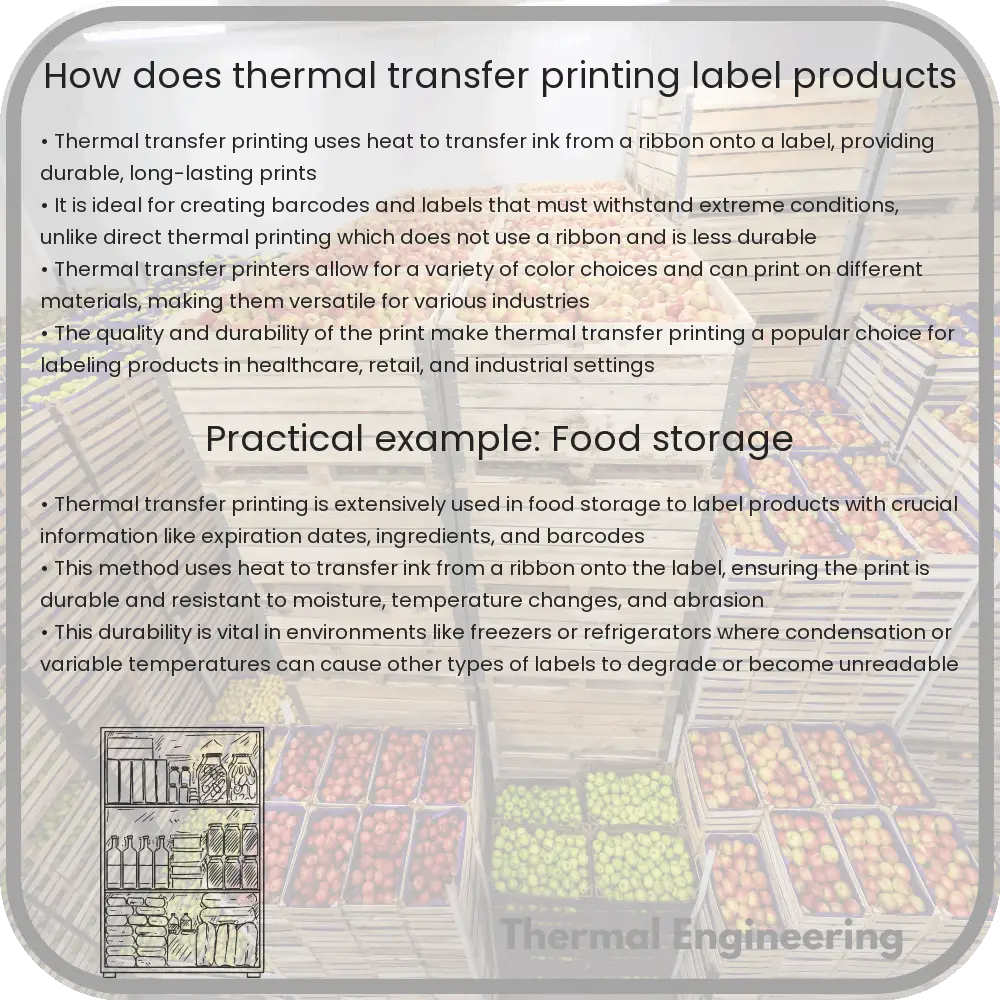
Thermal transfer printing is a popular method used extensively for labeling products in various industries such as manufacturing, healthcare, and retail. This process involves the transfer of ink onto a substrate (typically labels) using heat and pressure, which results in durable and high-quality printouts that are crucial for effective product identification and tracking.

How Does Thermal Transfer Printing Work?

The core component of thermal transfer printing technology is the thermal transfer printer, which utilizes a heated print head and a ribbon coated with ink. The key steps in the thermal transfer printing process are as follows:

  1. Insertion of Ribbon and Label: A ribbon coated with a thin layer of ink is loaded into the printer along with the label material (substrate).
  2. Heating of Print Head: The print head of the printer is then heated to a specific temperature. The precise temperature required can vary depending on the type of ribbon and label material used.
  3. Application of Heat and Pressure: The heated print head is pressed against the ribbon, which is positioned above the label material. The heat causes the ink to melt.
  4. Transfer of Ink: As the ribbon comes in contact with the substrate through the applied pressure, the melted ink from the ribbon transfers to the surface of the label.
  5. Final Output: After the ink cools and solidifies, the print head lifts, the ribbon advances, and the finished label is rolled out or cut for application. This results in a crisp, clear, and highly durable printed label.

Components of Thermal Transfer Printing

  • Thermal Print Head: A critical component that directly heats specific areas of the ink ribbon to create the desired image on the label.
  • Ribbon: Made from a polyester film coated with a layer of wax, resin, or a combination of both, which melts under heat to form the print on the substrate.
  • Label Material (Substrate): Can include materials such as paper, polyester, and polypropylene, chosen based on the durability and resistance needed.

Advantages of Thermal Transfer Printing

Thermal transfer printing offers several advantages that make it an ideal choice for many labeling requirements:

  • Durability: Labels created via thermal transfer are resistant to elements such as water, heat, and UV light, making them suitable for both indoor and outdoor use.
  • High-Quality Images: This method produces high-resolution images that are clear and legible, essential for scanning and reading barcodes and text.
  • Flexibility: The process is versatile, allowing for printing on a variety of materials and the use of different ribbon formulations for specific needs.
  • Longevity: The prints are long-lasting and do not smudge or fade over time, ensuring the longevity of the information printed on labels.

Applications of Thermal Transfer Printing

Thermal transfer printing is used extensively across different sectors:

  • Retail: For price tagging and product labeling, where durability and clarity are needed.
  • Healthcare: In hospitals, it’s used for patient IDs, specimen labels, and pharmacy labels, where the accuracy and permanence of printed information can be critical.
  • Manufacturing: For asset tagging, inventory labeling, and product identification, aiding in the efficient management and tracking of goods.
  • Electronics: Used for labeling components where small, precise labels are necessary.

In conclusion, thermal transfer printing is an indispensable tool in modern labeling, offering precision, durability, and versatility. Whether it’s for industrial, retail, or personal use, the thermal transfer printing process ensures that labels perform their function effectively, maintaining readability and integrity under various conditions.

How does thermal regeneration purify air

Learn about thermal regeneration, a key technique used to purify air in industrial settings through the heating of adsorbents like activated carbon.

How does thermal regeneration purify air

Understanding Thermal Regeneration: A Method for Air Purification

Thermal regeneration is a process commonly used in the field of environmental engineering to purify air, especially in industrial settings. This mechanism leverages the principles of thermal decomposition to remove contaminants such as organic compounds from the air. The process is not only effective but also efficient in regenerating adsorbents like activated carbon, which play a critical role in air purification systems. In this article, we explore how thermal regeneration works and its applications in air purification.

The Basics of Thermal Regeneration

Thermal regeneration involves heating a polluted adsorbent, such as activated carbon, to a high temperature. This high temperature is sufficient to break down the pollutants adsorbed on the material’s surface. The primary goal of this process is to detach all contaminants from the adsorbent material, thereby regenerating it for reuse and ensuring the extraction of pollutants from the air.

Step-by-Step Process

  1. Adsorption: Initially, the polluted air is passed through an adsorbent (commonly activated carbon), which captures and holds the organic contaminants.
  2. Transportation: Once the adsorbent is saturated with pollutants, it’s then transported to a regeneration unit.
  3. Heating: Within the regeneration unit, the adsorbent is heated to temperatures typically ranging from 500°C to 900°C. This process is critical as it results in the breakdown of the adsorbed contaminants.
  4. Desorption: At high temperatures, the bonds holding the pollutants to the adsorbent surface break. This release process is known as desorption, allowing the contaminants to be removed from the adsorbent.
  5. Cooling and Reuse: After desorption, the adsorbent is cooled and can potentially be reused in the air purification system.

Chemical Reactions Involved

The primary chemical reaction that occurs during thermal regeneration is the breakdown of organic contaminants due to high temperatures. For example, if the contaminant is a volatile organic compound (VOC), it undergoes thermal decomposition. The general reaction can be represented as:

Organic Contaminant (VOC) → CO2 + H2O + Ash + Other gases

This breakdown typically results in simpler, often less harmful, molecules such as carbon dioxide and water, although some compounds may also release harmful gases depending on their chemical structure.

Applications of Thermal Regeneration

  • Industrial Air Purification: Many industries use thermal regeneration to maintain the effectiveness of their air purification systems, especially those dealing with organic solvents and chemicals.
  • Waste Management Facilities: It is employed to treat the air contaminated by various forms of waste, particularly in facilities managing organic waste.
  • Restoration of Natural Environments: Used in projects aimed at cleaning air in areas affected by industrial pollution.

Advantages of Thermal Regeneration

  • Cost-effectiveness: By regenerating and reusing adsorbents like activated carbon, companies can significantly reduce operational costs.
  • Efficiency: The process effectively removes a wide range of pollutants, ensuring cleaner air outputs from industrial processes.
  • Environmental Impact: Reduces the need for frequent disposal and production of fresh adsorbents, leading to less environmental waste.

In conclusion, thermal regeneration is a pivotal process in industrial and environmental engineering for purifying air. By understanding and improving this method, engineers can better tackle air pollution challenges, making environments safer and preserving air quality for future generations.

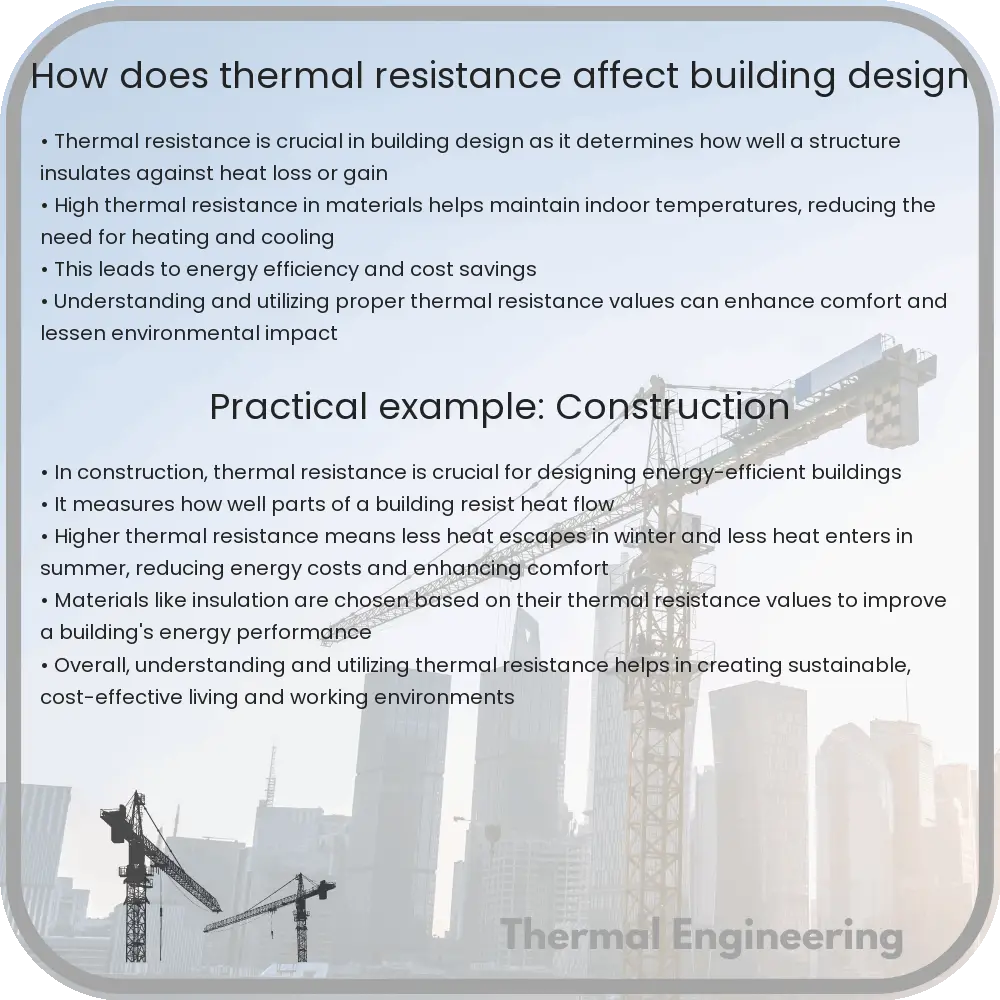
How does thermal resistance affect building design

Explore how thermal resistance, measured by R-values, is essential in building design for insulation, energy efficiency, and sustainability.

How does thermal resistance affect building design

Understanding the Role of Thermal Resistance in Building Design

Thermal resistance is a critical concept in the design and construction of buildings. It refers to a material’s ability to resist heat flow. The higher the thermal resistance, often measured in terms of R-value, the better the material insulates against heat transfer. This fundamental principle affects several aspects of building design, including energy efficiency, thermal comfort, and sustainability.

Importance of Thermal Resistance in Building Insulation

One of the primary functions of incorporating materials with high thermal resistance in building design is to enhance insulation. Effective insulation helps maintain a stable indoor temperature regardless of external thermal conditions. This not only ensures comfort for occupants but also reduces the dependence on heating and cooling systems, leading to significant energy savings and reduced environmental impact.

  • Energy Efficiency: Buildings with high thermal resistance minimize the loss of heat during cold months and reduce heat gain during warm months. This efficiency can substantially lower the energy required for heating and cooling systems, leading to reduced energy bills and conservation of resources.
  • Comfort: Effective thermal insulation provided by materials with high R-values helps in maintaining a consistent indoor environment, free from the external temperature fluctuations and cold drafts, thereby increasing the comfort level for occupants.
  • Sustainability: By optimizing the use of heating and cooling resources, buildings with better thermal resistance contribute less to greenhouse gas emissions, supporting broader environmental sustainability goals.

Calculating Thermal Resistance

The thermal resistance (R-value) of a material is calculated by dividing the thickness of the material (in meters) by its thermal conductivity (k-value in W/m*K). The formula can be expressed as:

R = thickness / k-value

Where:

  • R is the thermal resistance,
  • thickness is the thickness of the material layer, and
  • k-value is the thermal conductivity of the material.

This calculation helps in selecting appropriate materials and thicknesses for building components like walls, roofs, and floors to achieve desired thermal resistance levels.

Factors Influencing Thermal Resistance in Buildings

Several factors can influence the effectiveness of thermal resistance in buildings:

  • Material Choice: Different building materials have varying R-values. For example, materials like fiberglass, wool, and foam boards typically have higher R-values and are better insulators than materials like concrete or brick.
  • Installation: Improper installation of insulation materials can significantly reduce their effectiveness. Gaps, compression, or moisture accumulation can all lower the actual performance compared to the theoretical R-value of the insulation material.
  • Environmental Conditions: Humidity, temperature and exposure to sunlight can affect the performance of insulating materials. For instance, high humidity levels can reduce the insulating ability of certain materials.

Conclusion

Thermal resistance plays a pivotal role in building design, impacting everything from energy use to occupant comfort and environmental sustainability. Understanding and properly implementing this principle is key to designing buildings that are not only efficient but also cost-effective and comfortable. Whether you are a builder, designer, or homeowner, paying close attention to the R-values of building materials can ensure that your structures stand up to the thermal challenges posed by their environments.

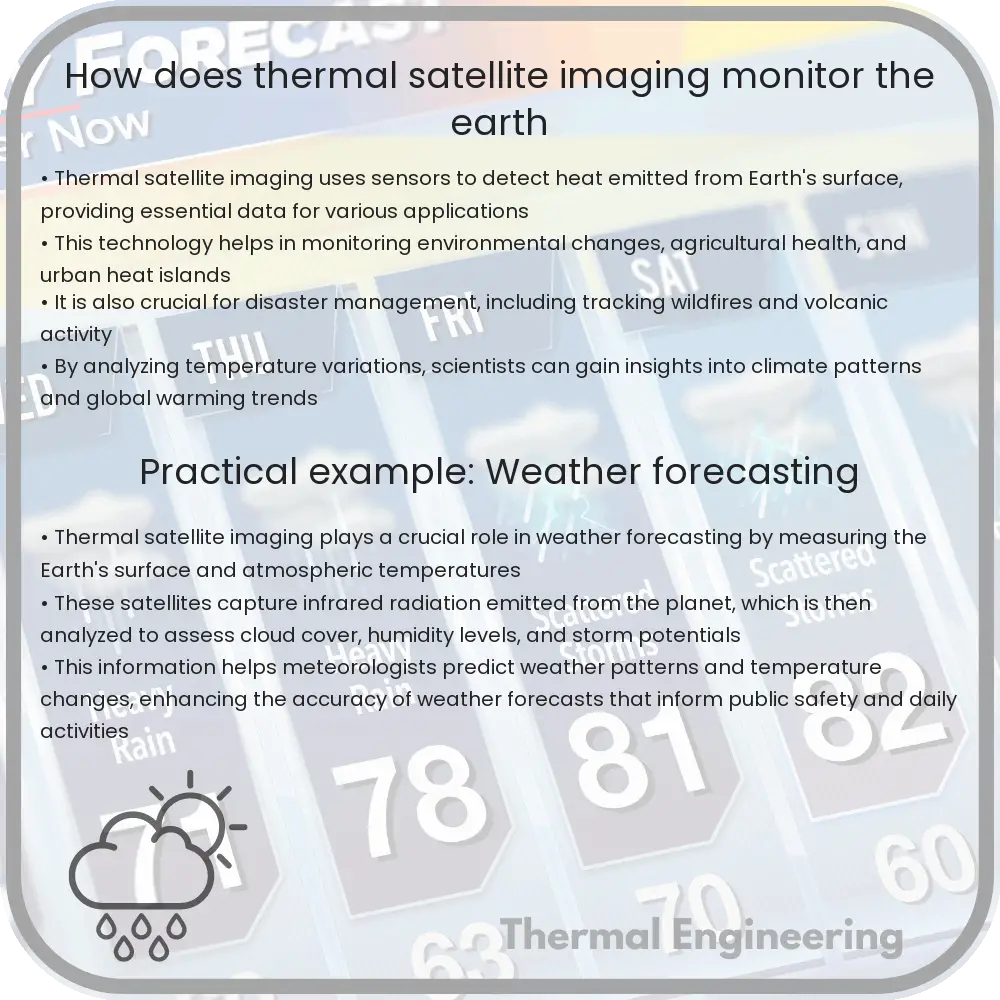
How does thermal satellite imaging monitor the earth

Thermal satellite imaging uses infrared sensors to capture Earth data for weather forecasting, environmental protection, and disaster management.

How does thermal satellite imaging monitor the earth

Understanding Thermal Satellite Imaging and Its Role in Earth Monitoring

Thermal satellite imaging is a powerful technology used to observe the Earth from space. By detecting infrared radiation, which is essentially heat emitted by objects, thermal satellite imaging provides essential data on various environmental and artificial activities. This technology plays a crucial role in weather forecasting, environmental protection, and even in disaster management.

How Does Thermal Satellite Imaging Work?

Thermal imaging satellites utilize specialized sensors to detect infrared radiation. Every object, according to its temperature, emits thermal radiation. These sensors, located on satellites orbiting the Earth, capture this radiation and convert it into digital images. The principle is based on the Planck’s Law, which relates the radiation emitted by an object to its temperature:

E(λ,T) = (2hc2)/(λ5)[1 / (e(hc)/(λkT) – 1)]

Where:

  • E(λ,T) – the emissive power per unit area from a surface at wavelength λ and absolute temperature T,
  • h – Planck’s constant,
  • c – speed of light,
  • λ – wavelength of the emitted radiation,
  • k – Boltzmann constant,
  • T – absolute temperature in Kelvin.

The satellite’s sensors, primarily capturing data in the infrared spectrum, allow detailed imaging at different wavelengths. This data is then processed to generate thermal images that can be analyzed for various applications.

Applications of Thermal Satellite Imaging

Thermal satellite imaging is utilized in several fields, including:

  • Environmental Monitoring: It’s used to monitor forest fires, evaluate water temperatures in oceans and lakes, and study vegetation health through thermal anomalies.
  • Agriculture: Farmers use thermal images to assess crop conditions, irrigation needs, and detect pest and disease outbreaks.
  • Weather Forecasting: Meteorologists use these images to analyze cloud temperatures, wind patterns, and to predict storm and cyclone trajectories.
  • Disaster Management: It helps in the quick detection of hotspots in natural disasters like fires or volcanic activity, facilitating faster responses.
  • Urban Planning: Monitoring urban heat islands – areas that are significantly warmer than their rural surroundings due to human activities.

Challenges and Limitations

Despite its extensive applications, thermal satellite imaging faces certain limitations, such as:

  • Cloud Cover: Clouds can obstruct the infrared radiation from reaching the satellite sensors, thus limiting visibility.
  • Resolution: The spatial resolution of thermal imaging might not be as high as other imaging technologies, affecting detailed studies over small areas.
  • Temporal Resolution: Some satellites might have longer revisit times, impacting the ability to capture real-time changes.

However, advancements in satellite technology and imaging techniques continue to improve the effectiveness of thermal satellite imaging.

Conclusion

Thermal satellite imaging is an integral tool for monitoring the Earth’s surface and atmosphere. By providing valuable data in real-time, this technology aids in proactive decision-making and strategic planning across various sectors. As satellite technology evolves, the scope of thermal imaging will broaden, offering deeper insights and more accurate forecasts, crucial for sustainable development and disaster resilience.

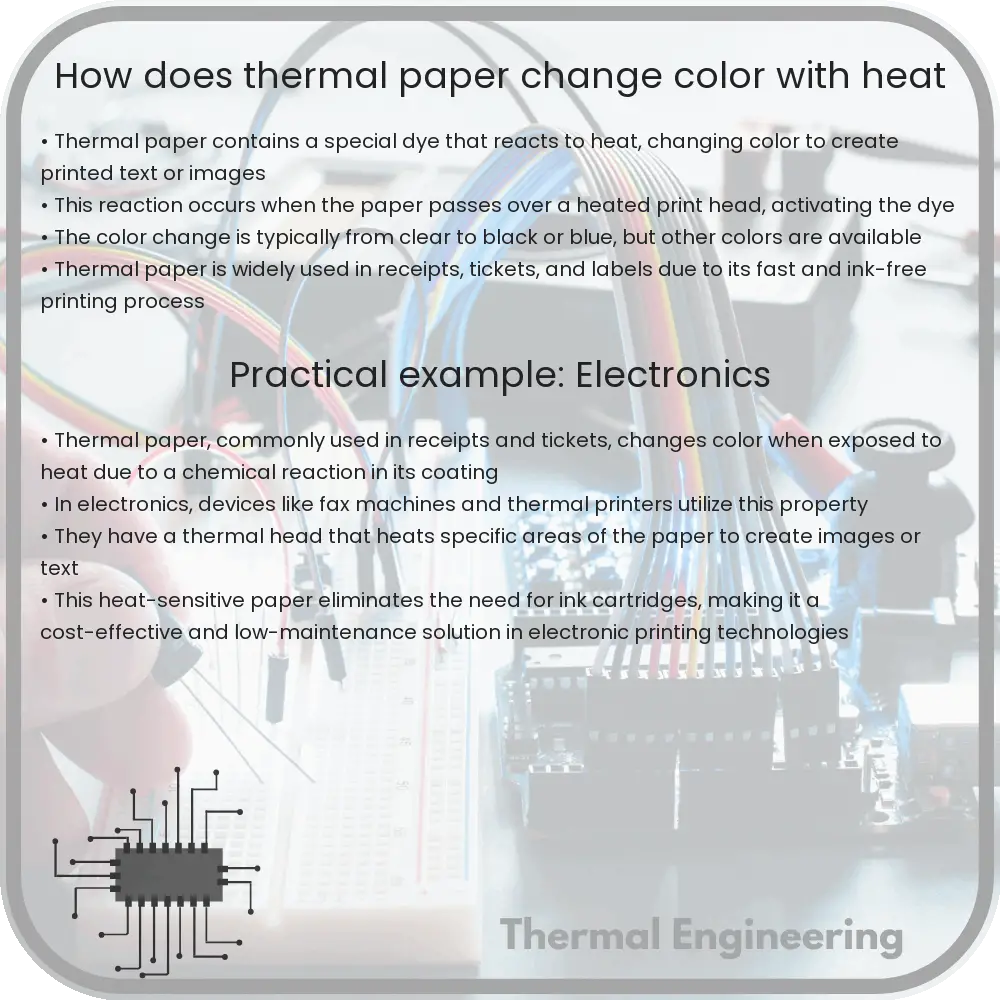
How does thermal paper change color with heat

Learn how thermal paper, used in everyday printing like receipts and tickets, changes color upon exposure to heat due to its unique chemical composition.

How does thermal paper change color with heat

Understanding How Thermal Paper Changes Color With Heat

Thermal paper, commonly used in receipts, labels, and ticket printing, has a specialized coating that changes color when exposed to heat. This remarkable property allows for inkless printing, which is widely utilized in thermal printers for quick and efficient output. The underlying science behind this phenomenon involves chemistry and heat transfer principles, which are fascinating to explore.

Composition of Thermal Paper

Thermal paper comprises several layers, each serving a distinct purpose:

  • Base Paper: This is the primary substrate of thermal paper, providing the necessary mechanical support.
  • Undercoating: This layer improves print quality and ensures the durability of the printed information.
  • Active Coating: The top layer of the paper contains a mixture of dyes and chemicals (leuco dyes and developers), which react to heat to produce visible marks or text.

How Heat Leads to Color Change

The active coating on thermal paper is where the magic happens. This coating includes a combination of leuco dyes and developers. Leuco dyes are colorless or lightly colored in their stable state. When heated above their melting point, these dyes react with the developers, leading to a chemical reaction that brings about a vivid color change.

  • Leuco Dyes: These are typically colorless compounds that develop color when they undergo a chemical change.
  • Developers: Chemicals like Bisphenol A (BPA), previously common but now often replaced due to health concerns, or phenol-free alternatives like vitamin C, act as developers which facilitate the development of color in the heated areas.

Upon applying heat, the developers melt and interact with the acid in the dye. This acid-base reaction shifts the dye’s molecular structure, turning it from a colorless to a colored form. The amount of heat applied and the duration of its application can influence the intensity and permanence of the resulting color.

Applications and Implications

The ability of thermal paper to change color with heat has several practical applications:

  • Point of Sale Systems: Fast printing of receipts in supermarkets, gas stations, and eateries.
  • Lottery and Gaming: Quick and secure printing of tickets.
  • Medical: Used in medical devices for quick printouts of results, such as ECG and ultrasound machines.

Despite its widespread use, the environmental and health implications of thermal paper, especially those coated with BPA or other phenols, have prompted research into safer alternatives. This has led to an increasing shift towards phenol-free thermal papers that use safer, less problematic substances.

In Conclusion

The science behind thermal paper is a clear demonstration of how chemistry and engineering come together to create practical solutions for everyday needs. With ongoing research and development, thermal paper continues to evolve, ensuring its utility while addressing health and environmental concerns.

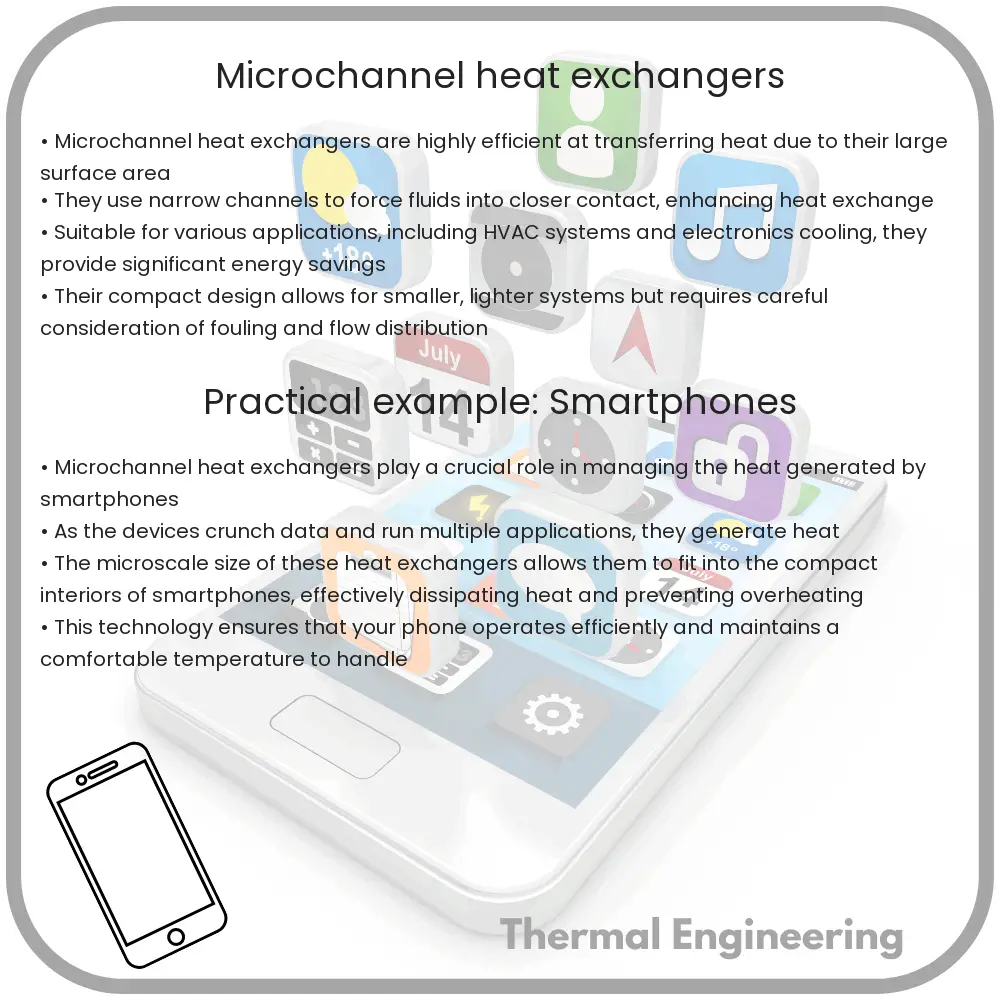
Microchannel heat exchangers

Learn about microchannel heat exchangers, their design, advantages, and applications in enhancing heat transfer efficiency in various industries.

Microchannel heat exchangers

Understanding Microchannel Heat Exchangers

Microchannel heat exchangers are at the forefront of heat exchange technology, offering efficiency and size advantages that make them suitable for a range of applications, from air conditioning systems to automotive radiators. Understanding how these systems work and why they are beneficial can reveal much about their growing presence in various industries.

What are Microchannel Heat Exchangers?

Microchannel heat exchangers consist of many small channels that fluids flow through, with the heat transfer occurring across the thin walls of these channels. Typically, these channels have hydraulic diameters in the range of less than 1 mm. Microchannel heat exchangers are usually made from materials with high thermal conductivity, such as aluminum or copper, allowing them to facilitate efficient heat exchange.

Key Advantages

  • High Surface Area to Volume Ratio: The small channels in microchannel heat exchangers provide a large surface area in a compact volume, enhancing the heat transfer effectiveness.
  • Reduced Air-Side Resistance: They lower air-side resistance compared to conventional fin-and-tube designs, which helps in improving the overall efficiency of systems.
  • Less Refrigerant Usage: These exchangers operate effectively with less refrigerant than traditional exchangers, which is particularly important given the environmental impact of some refrigerants.

Design and Operation

Microchannel heat exchangers are designed using principles of thermodynamics and fluid mechanics to maximize heat transfer. They employ channels through which the working fluids flow; one carrying the hot fluid and the other carrying the cold fluid. The design typically entails a multi-pass arrangement, allowing for the optimal flow and temperature crossover which results in a better heat transfer coefficient.

Applications

  • Automotive Industry: Used extensively in the radiators, oil coolers, and air conditioning systems of vehicles, reducing weight and improving fuel efficiency.
  • HVAC Systems: Their compact size and efficiency advantages make them ideal for use in heating, ventilation, and air conditioning systems in residential and commercial buildings.
  • Power Plants: Employed in cooling processes for equipment and processes within power generation facilities, contributing to better thermal management.

Efficiency Calculation

The efficiency of a heat exchanger is typically measured by its effectiveness, which can be calculated with the formula:

\[ \text{Effectiveness} = \frac{Q}{Q_{\text{max}}} \]

where \( Q \) is the actual heat transfer rate and \( Q_{\text{max}} \) is the maximum possible heat transfer rate, calculated by:

\[ Q_{\text{max}} = \text{min}(C_{\text{hot}}, C_{\text{cold}}) \times (T_{\text{hot,in}} – T_{\text{cold,in}}) \]

Here, \( C_{\text{hot}} \) and \( C_{\text{cold}} \) are the heat capacities of the hot and cold fluids respectively, and \( T_{\text{hot,in}} \) and \( T_{\text{cold,in}} \) are the inlet temperatures of the hot and cold fluids.

Challenges and Future Prospects

Despite their advantages, microchannel heat exchangers face challenges such as potential for clogging and higher initial costs. Advances in manufacturing technology and materials science continue to address these issues, aiming to make these systems more robust and cost-effective. As industries continue to demand higher energy efficiency and smaller equipment sizes, the role of microchannel heat exchangers is expected to expand, heralding a new era in heat exchange technology.

Understanding the basic operations and advancements of microchannel heat exchangers provides insights into their critical role in modern thermal management solutions. With ongoing research and development, these systems promise to become even more indispensable in future engineering applications.

How does thermal radiation cooling work in space

Learn how thermal radiation cooling effectively manages heat in spacecraft and satellites operating in the vacuum of space, utilizing principles of heat transfer and innovative engineering solutions.

How does thermal radiation cooling work in space

Understanding Thermal Radiation Cooling in Space

Thermal radiation cooling is a critical process used in the thermoregulation of spacecraft and satellites. Unlike on Earth, where heat can be transferred by convection or conduction in the atmosphere, space presents unique challenges due to its vacuum environment. This article explores how thermal radiation cooling functions as an effective solution for managing heat in the harsh conditions of space.

Basics of Heat Transfer

Firstly, it’s important to understand the three modes of heat transfer: conduction, convection, and radiation. Conduction is the transfer of heat through a solid material by direct contact. Convection is the transfer of heat by the movement of fluids (liquids or gases). However, in space, with the absence of air or any other fluid, conduction and convection are not viable methods for heat dispersion. This leaves radiation as the primary mode of heat transfer.

Thermal radiation is the emission of electromagnetic waves, which can carry energy from a hotter object to a cooler one without the need for a medium (like air). This makes it ideally suited for space applications.

How Thermal Radiation Cooling Works

Every object at a temperature above absolute zero emits thermal radiation. In the context of spacecraft, internal mechanisms and equipment generate heat which must be managed to avoid overheating and to maintain optimal performance. Here’s how thermal radiation cooling is employed:

  • Surface Emissivity: Spacecraft are equipped with external surfaces that have high emissivity. Emissivity is a measure of a material’s ability to emit absorbed energy. Materials with high emissivity can more effectively radiate heat away.
  • Thermal Radiators: These are specifically designed components that increase the surface area from which heat can be radiated into space. They are usually positioned in a manner that maximizes exposure to the coldness of space, away from the sun and other heat sources.
  • Surface Color and Coating: The color and type of coating applied to the exterior of a spacecraft can significantly affect its ability to radiate heat. Lighter colors and specialized coatings are typically used to maximize emissivity.

Mathematical Description

The rate at which a body radiates heat can be described by the Stefan-Boltzmann Law, which is given by the equation:

\[ P = \sigma * A * T^4 \]

where:

  • P is the power radiated per unit area,
  • \(\sigma\) is the Stefan-Boltzmann constant (\(5.67 \times 10^{-8} \text{ Wm}^{-2}\text{K}^{-4}\)),
  • A is the surface area,
  • T is the absolute temperature in Kelvin.

This equation highlights that the power radiated per unit area from a hot body increases dramatically with temperature, indicating that even small changes in the temperature of spacecraft equipment can significantly impact its thermal radiation.

Challenges and Solutions

Despite its effectiveness, thermal radiation cooling in space has challenges. The significant difference in temperature between the sunlit and shadowed parts of a spacecraft can cause temperature instability. Advanced thermal control systems, such as louvers, heat pipes, and thermal insulators, are used to manage these variations and ensure stable operations.

In summary, thermal radiation cooling is a vital function in space technology, enabling spacecraft to manage internal heat efficiently in the vacuum of space. By emitting heat as infrared radiation, spacecraft maintain their internal systems at operational temperatures, thus safeguarding sensitive instrumentation and ensuring the success of the mission.

Conclusion

As space exploration progresses, the role of engineering in understanding and enhancing thermal radiation cooling will continue to grow. This form of cooling not only exemplifies a practical application of thermodynamics in a challenging environment but also symbolizes human ingenuity in overcoming the obstacles of space exploration.

How does thermal modeling predict temperature distribution

Learn about thermal modeling, a key engineering tool used for predicting temperature distribution in various systems and designs.

How does thermal modeling predict temperature distribution

Understanding Thermal Modeling and Temperature Distribution

Thermal modeling is a crucial engineering tool used to predict how temperatures will distribute themselves within a particular object or system under various conditions. This process is key to designing machines, buildings, and electronic devices, ensuring that they operate safely and efficiently even under thermal stress. In this article, we explore the fundamentals of thermal modeling and how it is used to predict temperature distribution.

What is Thermal Modeling?

Thermal modeling refers to the use of mathematical and computational methods to simulate the heat transfer within and between objects. Heat can be transferred in three primary ways: conduction, convection, and radiation. Thermal models take these modes into account to predict how heat will move through systems, helping engineers design more effective cooling strategies, insulation, or heating systems.

Key Principles of Heat Transfer

  • Conduction: This is the transfer of heat through a material without the material itself moving. It occurs via the collision of particles within a substance. The rate of conduction can be described by Fourier’s Law:

q = -k * A * (dT/dx)

  • where q is the heat transfer rate, k is the thermal conductivity of the material, A is the area through which heat is being transferred, and dT/dx is the temperature gradient.
  • Convection: Heat transfer through a fluid (gas or liquid) that involves the fluid motion. The fluid motion can be generated by external sources (e.g., fans, pumps) or by natural means (e.g., buoyancy effects due to temperature differences).
  • Radiation: Heat transfer through electromagnetic waves. All objects emit radiation, and the amount of radiation increases with temperature.

How Thermal Modeling Predicts Temperature Distribution

To predict temperature distribution using thermal modeling, engineers often rely on computational tools like Computational Fluid Dynamics (CFD) and Finite Element Analysis (FEA). These tools help solve the heat transfer equations numerically for complex systems where analytical solutions might be unfeasible.

  • Setting up the Model: Engineers begin by defining the geometry of the system or component and the boundary conditions, which include the initial and surrounding temperatures, material properties, and sources of heat.
  • Discretization: The model is divided into a finite number of small elements or control volumes (meshing), which simplifies the complex equations to more manageable algebraic forms.
  • Solving the Equations: The heat transfer equations are solved iteratively over each element, accounting for the interactions with neighboring elements.
  • Analysis and Optimization: The resulting temperature distribution helps identify hotspots, underperforming cooling areas, or potential failures, leading to design modifications for optimized performance.

Applications of Thermal Modeling

Thermal modeling is widely used in various fields such as:

  • Electronics Cooling: In the design of PCBs (Printed Circuit Boards) and other electronic assemblies to prevent components from overheating.
  • Automotive: In designing engine components, exhaust systems, and brake systems to manage heat effectively.
  • Building Design: To enhance HVAC (Heating, Ventilation, and Air Conditioning) systems efficiency and analyze heat losses and gains through building envelopes.
  • Aerospace: For managing the extreme temperatures that aircraft and spacecraft are subjected to.

Through thermal modeling, engineers can ensure the reliability and safety of systems by accurately predicting temperature distributions. This contributes significantly to advancements in design and operational efficiency across numerous industries.