Facebook Instagram Youtube Twitter

Thermographic Equipment | Uses, Types, Electrical Safety

Thermographic equipment, also known as thermal imagers or infrared cameras, visualizes temperature differences across surfaces for various applications.

Thermographic Equipment | Uses, Types, Electrical Safety

Introduction to Thermographic Equipment

Thermographic equipment, often referred to as thermal imagers or infrared cameras, is a type of technology that converts infrared radiation (heat) emitted by objects into a visual image. This equipment visualizes temperature differences across surfaces, providing valuable data in various applications ranging from industrial maintenance to electrical safety inspections.

Types of Thermographic Equipment

  • Handheld Infrared Cameras: Portable devices that are ideal for on-site inspections in engineering, building diagnostics, and preventive maintenance.
  • Fixed Thermal Cameras: Permanently installed systems used for continuous monitoring in critical environments such as chemical plants or power stations.
  • Drone-Mounted Thermal Cameras: Used for inspecting large or hard-to-reach areas, such as solar farms or large industrial complexes.

Uses of Thermographic Equipment

  • Electrical Inspections: Identifying overheating components or poor connections in electrical panels and systems before they lead to failure.
  • Mechanical Systems Monitoring: Detecting abnormal heating in bearings, motors, and other mechanical equipment which indicates potential failures.
  • Building and Insulation Analysis: Finding heat leaks in buildings to improve energy efficiency or to detect moisture-related issues hidden in the building envelope.
  • Medical and Veterinary Applications: Providing a non-invasive assessment of skin temperature and blood flow dynamics.
  • Research and Development: Aiding in the experimental analysis of heat transfers in new products and technologies.

Electrical Safety and Thermography

Thermographic equipment plays a crucial role in electrical safety by allowing the early detection of faults in electrical systems without direct contact. Overheating components, such as circuit breakers, wiring connections, and transformers, can be visualized easily. This preemptive detection helps in reducing the risk of electrical fires and enhances the safety of maintenance personnel by minimizing direct interaction with potentially hazardous elements.

Benefits of Using Thermographic Equipment

  • Safety Enhancement: Detecting potential problems before they lead to failures or hazardous conditions.
  • Cost Reduction: Preventing costly damages and downtime by facilitating routine maintenance and early fault detection.
  • Improved Efficiency: Assisting in energy management by identifying unnecessary energy losses.
  • Documenting and Analyzing: Providing visual proofs in reports that are straightforward for analysis and record-keeping.

Conclusion

Thermographic equipment serves as an essential tool in modern engineering and maintenance. By enabling detailed thermal visibility, this technology aids in enhancing safety, efficiency, and cost-effectiveness across diverse industries. Its non-invasive nature and ability to capture real-time data make it invaluable for preventive maintenance and safety inspections. As technology continues to evolve, the capabilities and applications of thermographic equipment are expected to expand, continuing to benefit various sectors significantly.
Fire Tube Boiler | Design, Operation, Steam Output

Learn about fire tube boilers, their design, operation, and efficiency for steam generation in various applications.

Fire Tube Boiler | Design, Operation, Steam Output

Introduction to Fire Tube Boilers

A fire tube boiler is a type of boiler in which hot gases pass from a fire through one or more tubes running through a sealed container of water. The heat from the gases is transferred through the walls of the tubes by thermal conduction, heating the water and ultimately creating steam. This boiler design is one of the three main types used for generating steam in various applications, including building heating, power generation, and sanitation.

Design of Fire Tube Boilers

The fundamental design of a fire tube boiler includes a cylindrical shell with fire tubes running through it, enclosing the water space. The boiler has several key components:

  • Shell: This is the external cylindrical part of the boiler that holds the water and the steam, made robust to withstand the boiler’s working pressure.
  • Fire tubes: These are the tubes through which the hot flue gases travel. The heat from the combustion gases is transferred to the water through these tubes.
  • Firebox: The area where the fuel is combusted, generating hot gas.
  • Chimney/Stack: A channel through which the combusted exhaust gases are expelled into the atmosphere.
  • Safety Valve: This is crucial for preventing pressure exceeding the design limits of the boiler.
  • Water Feed: Used to supply water continuously and automatically to the boiler.

Fire tube boilers may further be classified into various types, such as the simple vertical boiler, Cochran boiler, Lancashire boiler, and Locomotive boiler, each varying in layout and efficiency.

Operation of Fire Tube Boilers

The operation of a fire tube boiler follows a standard sequence wherein fuel is burned in the firebox, producing hot gases that pass through the fire tubes. The following steps outline the operation:

  1. Fuel and air are introduced into the firebox and are ignited. This combustion process generates hot gases.
  2. These hot gases flow through the fire tubes. The fire tubes are submerged in water, allowing heat to transfer from the gases to the water.
  3. As the water heats up, it generates steam. The heat energy is thereby converted into thermal energy within the water.
  4. The steam accumulates at the top of the boiler and is extracted for use. The pressure within the boiler is maintained carefully to ensure safe operation.
  5. Exhaust gases are finally released into the environment through the chimney or stack.

The control and safety systems maintain the operation within the specified parameters, ensuring efficiency and safety. Common mechanisms include water level indicators, pressure gauges, and safety valves.

Steam Output and Efficiency

The steam output of fire tube boilers is influenced by the design, operation, and maintenance of the boiler. Although typically not as high-pressure capable as water tube boilers, fire tube boilers can still produce high temperatures and reasonable steam outputs. The steam generation process involves several factors:

  • Boiler Size and Design: Larger boilers have larger surface areas for heat transfer but are also subject to greater heat losses.
  • Fuel Type and Combustion Efficiency: Different fuels and combustion efficiencies can affect how effectively heat is transferred in the boiler.
  • Water Quality: Impurities in water can lead to scaling on tube walls which reduces heat transfer efficiency.

Overall, the efficiency of fire tube boilers generally ranges from about 70% to 90%, depending on various factors such as boiler design, operating conditions, and maintenance practices.

Conclusion

Fire tube boilers are a proven technology for producing steam efficiently and safely. With their simplicity in design and operation, they continue to be widespread in various industrial and residential applications. Understanding the basics of fire tube boiler operation helps in optimizing the performance and preventive maintenance, leading to longer service life and economic operation.

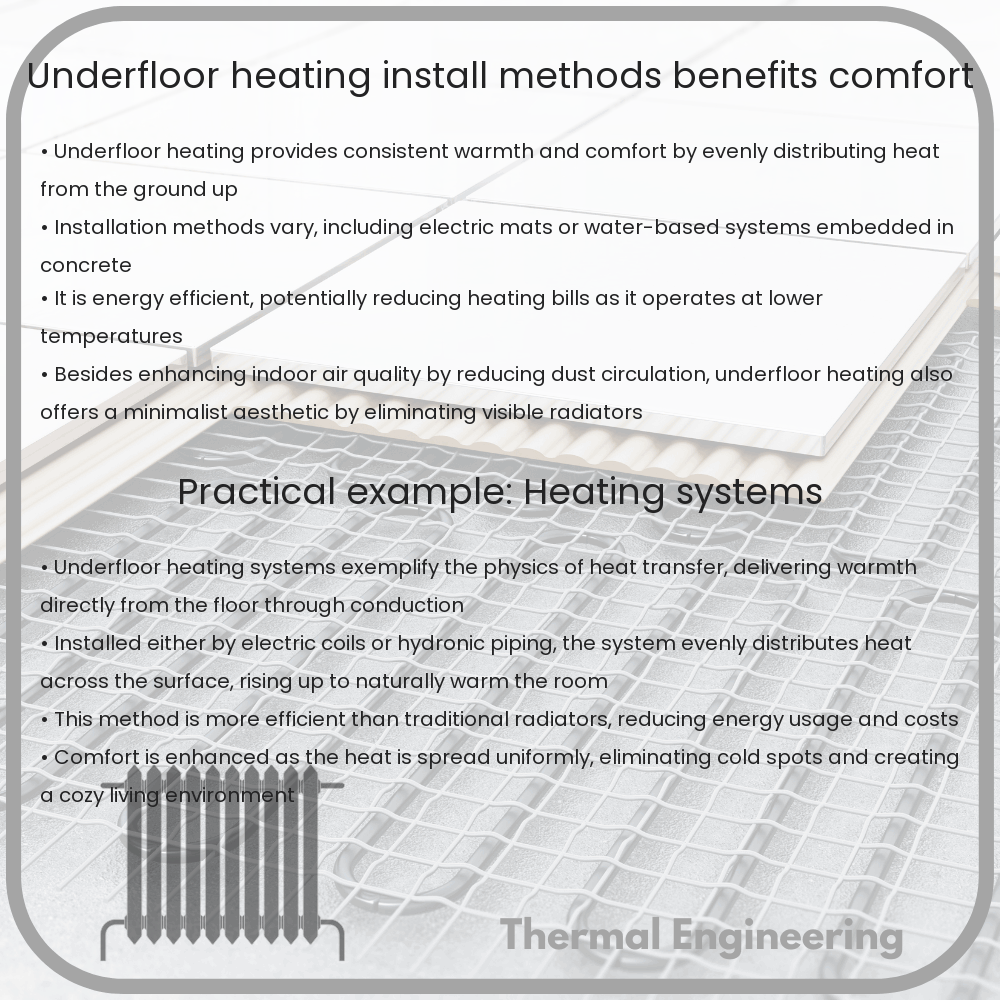
Underfloor Heating | Install Methods, Benefits, Comfort

Learn about underfloor heating, an efficient space warming method using radiant heat for even distribution and energy savings.

Underfloor Heating | Install Methods, Benefits, Comfort

Introduction to Underfloor Heating

Underfloor heating is a method of heating a space through the installation of heating elements beneath the floor surface. Unlike traditional radiators which heat rooms through convection, often leading to uneven heat distribution, underfloor heating provides radiant heat that warms a room evenly and efficiently. This system not only enhances comfort but also operates quietly and can be more energy-efficient.

Installation Methods of Underfloor Heating

There are primarily two types of underfloor heating systems: hydronic (or water-based) and electric. Each type has its installation methodologies and appropriate use cases.

  • Hydronic Underfloor Heating: This system uses a network of pipes laid under the floor through which heated water is circulated. The installation involves embedding these pipes in a concrete screed or in pre-made panels that sit above the floor structure but below the finished floor surface. Hydronic systems are often recommended for new construction or where major renovations are occurring, as the installation is more invasive and typically integrated with the home’s central heating system.
  • Electric Underfloor Heating: Electric systems, on the other hand, use electric cables or heating mats that are installed directly beneath the floor surface. These are easier to install compared to hydronic systems and can be ideal for retrofitting in existing rooms without significant disruption. Electric underfloor heating is often used in bathrooms, kitchens, and small renovation projects.

Benefits of Underfloor Heating

Underfloor heating systems offer several advantages over conventional heating systems such as radiators. Some of these benefits include:

  1. Even Heat Distribution: The heat from underfloor heating rises evenly from the floor, ensuring a well-distributed heat that eliminates cold spots in the room.
  2. Energy Efficiency: Since the heat emitted from the floor is radiant, it heats the occupants and objects directly without having to first heat the air. This efficiency can lead to reduced energy usage and lower heating bills.
  3. Aesthetic and Space Saving: With all the heating components hidden away under the floor, underfloor heating eliminates the need for radiators on the walls, freeing up space and maintaining the aesthetic appeal of the room.
  4. Improved Air Quality: Unlike radiators which can circulate dust and other allergens through the air, underfloor heating reduces air movement and provides a cleaner air environment.
  5. Comfort: Radiant heat is often considered more comfortable compared to convection heat. The warmth is felt directly and maintains a comfortable indoor climate as floors remain warm underfoot.

Comfort and Underfloor Heating

The comfort provided by underfloor heating can be attributed to several factors. Firstly, the radiant nature of the heat means that it warms people and objects directly without overheating the surrounding air. Moreover, as heat rises evenly from the floor, there are no drafts or cold spots, which typically occurs with traditional heating systems. This steady and gentle heating method contributes to a feeling of natural warmth, enhancing the comfort levels of a home or building.

Conclusion

Underfloor heating systems represent a modern and efficient method for heating spaces. Whether through hydronic or electric installations, these systems offer substantial benefits in terms of energy efficiency, space saving, and comfort. Appropriate for both new constructions and renovations, underfloor heating is an excellent choice for those seeking a reliable and comfortable heating solution.

Condensate Pump | HVAC Efficiency Types

Learn about condensate pumps in HVAC systems, their types, importance, and maintenance for system efficiency and longevity.

Condensate Pump | HVAC Efficiency Types

Understanding Condensate Pumps in HVAC Systems

Condensate pumps are vital components in heating, ventilation, and air conditioning (HVAC) systems, especially in environments where the efficient removal of condensate water is crucial to system performance and longevity. Condensate, usually in the form of water, is produced when moist air is cooled below its dew point, and it must be effectively managed to ensure the proper functioning of HVAC units.

What is a Condensate Pump?

A condensate pump is a specific type of pump used to pump the water (condensate) produced during the condensation process in heating and air conditioning systems out of the system. These pumps are essential in situations where gravity cannot adequately drain the water, such as in basement installations or in high-rise buildings.

Types of Condensate Pumps

Condensate pumps come in various designs and sizes, tailored to various system requirements and applications:

  • Automatic Condensate Pumps: These pumps include a collection tank and start automatically when the water level in the tank reaches a certain point. They are widely used in HVAC systems in commercial and residential buildings.
  • Manual Condensate Pumps: These require manual operation to remove the condensate and are less common in modern systems due to the convenience and efficiency of automatic pumps.

How Condensate Pumps Enhance HVAC Efficiency

Condensate pumps play a pivotal role in maintaining the efficiency of HVAC systems. Here’s how:

  • Preventing Water Damage: By effectively removing condensate from the HVAC system, these pumps prevent water buildup which can lead to mold growth, system corrosion, and other water-related damages.
  • Improving Indoor Air Quality: By controlling humidity and preventing mold growth, condensate pumps contribute to healthier indoor air quality.
  • Enhancing System Performance: By ensuring that condensate is promptly removed, these pumps help maintain the efficiency of the air conditioning units, thereby reducing the energy consumption and operational strain on the system.

Maintenance of Condensate Pumps

Regular maintenance is critical for the optimal performance of condensate pumps, involving several key tasks:

  • Inspecting and Cleaning: The pump and its reservoir should be inspected and cleaned regularly to remove any debris or biological growth that could impede performance.
  • Checking the Pump Operation: Regular checks to ensure the pump activates and deactivates correctly can prevent overflow and potential water damage.
  • Pipe and Hose Examination: All connecting pipes and hoses should be checked for blockages or leaks to ensure smooth operation.

In conclusion, condensate pumps are crucial for efficient and reliable HVAC operation. Understanding their role and maintaining them properly ensures they contribute effectively to the overall system performance, energy efficiency, and comfort in indoor environments.

Pyrometer | Principles, Types, High-Temp Monitoring

Learn about pyrometers: specialized devices for measuring high temperatures in industrial environments.

Pyrometer | Principles, Types, High-Temp Monitoring

Understanding Pyrometers: Principles, Types, and High-Temperature Monitoring

Pyrometers are specialized devices used for measuring high temperatures, typically in environments where conventional thermometers are ineffective. This type of measurement is essential in several industrial processes including metalwork, glass making, and ceramic production. Understanding how pyrometers work, the different types available, and their applications in high-temperature settings is crucial for optimizing and ensuring the safety of these processes.

Principles of Pyrometers

Pyrometers operate based on the principle that all objects emit radiation at temperatures above absolute zero (-273.15°C). The amount and type of radiation emitted from an object increase with temperature. Pyrometers calculate temperature by measuring the radiation from hot objects. This non-contact measuring approach makes pyrometers ideal for applications where the target object is moving, inaccessible, or contained within hazardous environments.

Types of Pyrometers

  • Optical Pyrometer: Optical pyrometers measure temperature by comparing the brightness of the target object with that of a filament inside the device that can be adjusted in temperature. This type requires a clear line of sight to the target and is typically accurate for temperatures above 700°C.
  • Infrared (IR) Pyrometer: Also known as radiation pyrometers, IR pyrometers detect the infrared radiation emitted by an object to calculate its temperature. They are applicable across a wide range of temperatures and can be used for targets that are not visible. The emitted radiation is collected through a lens and focused onto a detector which converts this energy into an electrical signal calibrated to temperature readings.

High-Temperature Monitoring with Pyrometers

High-temperature monitoring is critical in industries that require maintained and precise temperatures. The effectiveness of pyrometers in these settings lies in their ability to measure without contact, thereby allowing for continuous temperature monitoring of objects at very high temperatures, up to 3000°C. This is especially useful in controlling the thermal efficiency in metal casting industries, improving product quality in glass manufacturing, and ensuring the structural integrity of ceramic products.

Applications of Pyrometers in Industry

  1. Metallurgy: Pyrometers play a crucial role in monitoring the temperature of molten metals, ensuring that metals are melted and forged at optimal temperatures to achieve desired material properties.
  2. Glass Production: In the glass industry, pyrometers are used to control the temperatures in kilns and ensure that glass is processed without defects.
  3. Power Generation: In power plants, pyrometers help monitor the temperature of turbines and boilers, preventing overheating and optimizing the generation process.

In conclusion, pyrometers are indispensable tools in any industry where high temperatures are a norm. Their ability to remotely measure temperatures not only ensures safety but also enhances productivity and quality across various manufacturing processes. By selecting the right type of pyrometer and understanding its principles and applications, industries can greatly improve their monitoring and control of high-temperature operations.

Thermal Barrier Coating | Benefits, Engine Efficiency

Learn about Thermal Barrier Coatings (TBCs), advanced materials used to insulate components in high-temperature environments and enhance engine efficiency.

Thermal Barrier Coating | Benefits, Engine Efficiency

Introduction to Thermal Barrier Coatings

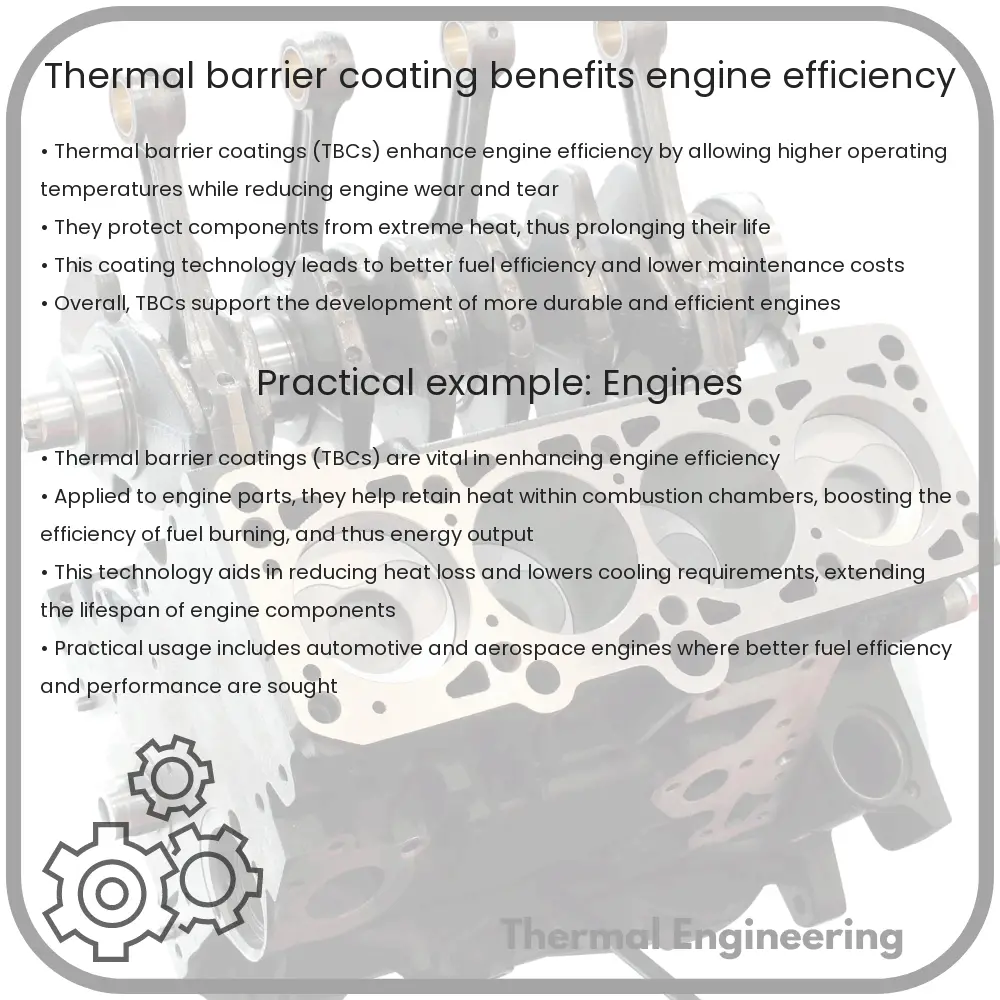
Thermal Barrier Coatings (TBCs) are advanced materials usually applied to the metallic surfaces of components exposed to high temperatures, such as gas turbine or aero-engine parts. The primary function of these coatings is to provide insulation from high temperatures while maintaining component integrity.

Composition and Application of TBCs

TBCs typically comprise a ceramic material such as yttria-stabilized zirconia (YSZ). This material is favored for its low thermal conductivity and stability at high temperatures. The application of TBCs involves a layered structure, generally including a bond coat layer which helps in adhering the ceramic layer to the substrate and also offers protection against oxidation and corrosion.

Benefits of Thermal Barrier Coatings

  • Increased Efficiency: By reducing the temperatures of underlying metal components, TBCs allow engines to operate at higher temperatures, thereby improving the efficiency of the system through enhanced thermodynamic cycles.
  • Extended Component Life: TBCs protect components from heat-induced degradation and corrosion, which extends the lifespan of these high-cost parts.
  • Reduced Cooling Requirements: With the implementation of TBCs, the need for additional cooling of engine components is reduced, which further boosts the engine’s performance and efficiency.

Impact on Engine Efficiency

One of the most significant benefits of using thermal barrier coatings is the enhancement of engine efficiency. In thermodynamic terms, the efficiency of an engine, η, is defined by the formula:

η = 1 – (Tout / Tin)

In this equation, Tin represents the temperature at which heat is added (operational temperature of the engine), and Tout is the exhaust temperature. By applying TBCs, the Tin can be increased without corresponding increases in Tout, thus improving the overall efficiency of the engine.

Advancements and Future Prospects

Research in the field of TBCs continues to focus on finding new materials and processes that offer greater thermal insulation, durability, and reliability under extreme conditions. Innovations such as the development of multilayered TBCs and the exploration of new ceramic materials are paving the way for more resilient and efficient thermal barrier systems. As these technologies evolve, the potential applications extend beyond aerospace into automotive, industrial, and power generation sectors.

Conclusion

Thermal Barrier Coatings represent a critical development in the field of materials engineering, providing significant benefits in terms of operational efficiency and durability in high-temperature environments. As research progresses, the scope and efficacy of these coatings are expected to improve, further enhancing their usability in various engineering domains.

Electric Heat Tracing | Pipe Maintenance Applications

Learn about electric heat tracing, a system used to maintain or raise the temperature of pipes and vessels in various industries.

Electric Heat Tracing | Pipe Maintenance Applications

Electric Heat Tracing: Ensuring Efficiency in Pipe Maintenance

Electric heat tracing is a system used to maintain or raise the temperature of pipes and vessels. This technology is critical in a variety of industrial applications where temperature maintenance is crucial, particularly in preventing the freezing of fluids in pipes, maintaining fluid viscosity, or providing comfort heating in buildings. Let’s explore how electric heat tracing works and its applications in pipe maintenance.

How Does Electric Heat Tracing Work?

Electric heat tracing, also known as electric trace heating, involves using electrical heating elements – either cables or tapes – that are run alongside pipes or vessels. These elements are controlled by thermostatic devices to ensure heat is provided only when needed and in the required amounts. The basic components of an electric heat tracing system include:

  • Heating cables (self-regulating or constant wattage)
  • Connection kits and end seals
  • Thermal insulation
  • Control systems (like thermostats or advanced control panels)

The choice between self-regulating and constant wattage cables depends on the application requirements. Self-regulating cables adjust their power output in response to temperature changes along the pipe, whereas constant wattage cables deliver a fixed amount of heat per unit length irrespective of pipe temperature.

Applications in Pipe Maintenance

Electric heat tracing systems are used extensively for pipe maintenance in various industries, including oil and gas, chemical manufacturing, food and beverage, and water treatment facilities. Key applications include:

  1. Freeze Protection: In colder climates, water or other fluids in pipes can freeze, causing damage or rupture. Electric heat tracing maintains a consistent temperature to prevent freezing.
  2. Temperature Maintenance: Certain industrial processes require fluids to be kept at a specific temperature to ensure viscosity is maintained, facilitating easy flow and processing.
  3. Condensation Prevention: In systems handling steam or high humidity fluids, electric heat tracing helps in preventing condensation which can lead to pipe corrosion or quality deterioration in process fluids.

Benefits of Electric Heat Tracing

Compared to traditional methods like steam tracing, electric heat tracing offers several advantages:

  • Energy Efficiency: Electric heat tracing provides heat where and when it is needed, reducing energy consumption compared to continuous steam heating.
  • Lower Maintenance: Electric systems have fewer moving parts and do not require the extensive maintenance regime that steam systems do.
  • Easy Installation and Control: Modern electric heat tracing systems are easier to install and integrate with automated control systems to provide precise temperature management.
  • Safety: Electric heat tracing reduces risks associated with handling high-pressure steam and minimizes leakage concerns.

Conclusion

As industries strive to improve the reliability and efficiency of their processes, the role of technologies like electric heat tracing becomes ever more critical. With its ability to maintain necessary temperatures efficiently and safely, electric heat tracing is a modern solution that supports vital industries and helps prevent the costly downtime that can result from unmanaged thermal variations.

Understanding and implementing an effective electric heat tracing system could essentially ensure smoother operations in facilities that depend heavily on proper pipe maintenance, thereby enhancing overall operational efficiency.

Thermal Relay | Overheat Protection Function

Learn how thermal relays protect electrical devices from overheating by monitoring and controlling temperature to ensure safety and reliability.

Thermal Relay | Overheat Protection Function

Understanding Thermal Relays and Overheat Protection

Thermal relays are a fundamental component in the field of electrical engineering, designed to protect motors and other electrical devices from overheating. This crucial safety device operates based on the thermal effects of electric current. The purpose of a thermal relay is to guard against potential damage caused by high temperatures which can lead to equipment failure and hazards like fires.

How Thermal Relays Work

At its core, the operation of a thermal relay involves detecting excessive heat generated by excessive current flow and responding by breaking the circuit. This process helps to prevent further damage or overheating. The primary component of the thermal relay is a bimetallic strip that expands and contracts based on the temperature changes it undergoes.

  • Bimetallic Strip: This component consists of two metals with different expansion coefficients welded together. As the current increases, heat is generated, and the differing expansion rates of these metals cause the strip to bend.
  • Trigger Mechanism: The bending of the bimetallic strip eventually leads to the activation of a trigger mechanism. This mechanism is critical as it causes the circuit to open, stopping the current flow, thereby allowing the device to cool down.
  • Reset Function: Most thermal relays include a manual or automatic reset function that allows the device to resume operation once normal temperature conditions are restored.

Applications of Thermal Relays

Thermal relays are widely used in various applications to prevent overheating. Common use cases include:

  1. Protection of electric motors to avoid the overheating associated with excessive load, stalled rotor conditions, or phase failures.
  2. Guarding power transformers which can suffer from thermal overload due to persistent high currents.
  3. Control panels and other sensitive electrical installations where maintaining temperature within safe limits is crucial.

Benefits of Using Thermal Relays

Integrating thermal relays into electrical systems offers several advantages:

  • Safety: They provide a critical line of defense against overheating, greatly reducing the risk of electrical fires and equipment damage.
  • Cost-effective: By protecting components from damage, thermal relays extend the lifespan of an electrical system and reduce repair and replacement costs.
  • Preventive Maintenance: Regularly monitoring and responding to overheating can help in identifying potential issues before they result in system failure.

Choosing the Right Thermal Relay

When selecting a thermal relay, it is essential to consider various factors to ensure effective protection:

  • Current Rating: Choose a thermal relay that matches the full-load current of the device it is protecting.
  • Reset Type: Determine whether a manual or automatic reset fits the application’s operational requirements better.
  • Temperature Sensitivity: Make sure the sensitivity aligns with the specific thermal properties and safety thresholds of the application.

In conclusion, thermal relays play a vital role in maintaining the safety and operational integrity of electrical systems. By effectively monitoring and controlling temperature, these devices help prevent overheating, thereby ensuring the longevity and reliability of various electrical components.

Advanced materials for heat exchangers

Explore the impact of advanced materials on the efficiency and durability of heat exchangers in various industries.

Advanced materials for heat exchangers

Understanding Advanced Materials for Heat Exchangers

Heat exchangers are crucial components used in a wide range of industrial and environmental processes. They allow for the transfer of heat between two or more fluids, facilitating essential operations in power generation, chemical processing, HVAC systems, automotive industries, and many others. The efficiency, performance, and longevity of heat exchangers significantly depend on the materials from which they are made. In this article, we look at advanced materials that are transforming the effectiveness and durability of heat exchangers.

Key Requirements for Heat Exchanger Materials

The materials used in heat exchangers must possess specific properties to handle a variety of operational stresses. Key requirements include:

  • High thermal conductivity: Materials should efficiently transfer heat between the working fluids.
  • Corrosion resistance: Materials must withstand harsh conditions and aggressive chemicals to avoid degradation.
  • Strength at high temperatures: High structural integrity must be maintained even under extreme temperatures.
  • Cost-effectiveness: Ideally, materials should also be economically viable for widespread application.

Advancements in Materials for Heat Exchangers

Several advanced materials have been developed and utilized for enhancing the capabilities of heat exchangers:

  1. Composite Materials: The combination of materials like carbon or glass with resin can provide excellent corrosion resistance and lower weight advantages, though often at a higher cost and sometimes lower thermal conductivity compared to metals.
  2. Ceramics: Known for their incredible heat resistance and robustness in high temperature environments, ceramics are excellent for applications involving high temperatures and corrosive materials. However, their brittleness and manufacturing difficulties can limit their application.
  3. Titanium Alloys: Titanium alloys are prized for their strength, lightweight properties, and exceptional corrosion resistance, making them ideal for marine environments and other harsh conditions.
  4. Superalloys: Composed of nickel, chromium, and iron, superalloys possess high strength and excellent resistance to thermal creep deformation, suitable for high-temperature, high-stress situations in turbines and aerospace applications.

Challenges and Future Outlook

Despite their impressive properties, advanced materials can pose challenges, including high cost, fabrication difficulties, and sometimes-complicated repair procedures. Ensuring the availability and affordable manufacturing of these materials is critical for their wider adoption. As research continues, the ongoing development of new composites and alloys promises further improvements in heat exchanger performance. Innovations in nanotechnology and surface treatments are also enhancing the thermal efficiency and performance of existing materials, paving the way for the next generation of heat exchangers.

In conclusion, the development of advanced materials for heat exchangers plays a vital role in meeting the evolving demands of industry and technology. By understanding and leveraging these materials, engineers can design more efficient, durable, and cost-effective heat exchanging solutions.

Thermal Actuator | Automation Operation Apps

Learn about thermal actuators, their functions in automation, operating principles, types, applications, and future potential.

Thermal Actuator | Automation Operation Apps

Understanding Thermal Actuators in Automation Applications

Thermal actuators are devices that utilize thermal energy to produce mechanical motion. In automation, these actuators play a crucial role by converting temperature changes into controlled motion. This article explores the fundamental principles of thermal actuators, their types, and commonly seen applications in automated systems.

Operating Principle of Thermal Actuators

The operating principle of thermal actuators relies on the thermal expansion properties of materials. When materials are heated or cooled, they expand or contract. This dimensional change can be harnessed to perform work. A simple example can be seen in a bi-metallic strip in a thermostat, which bends when heated to break or make an electrical contact.

Types of Thermal Actuators

  • Shape Memory Alloys (SMAs): SMAs are metals that remember their original shape. When deformed at lower temperatures, they revert to their pre-deformed shape upon heating.
  • Wax Actuators: These actuators use a specially formulated wax that expands significantly when heated, typically used in thermostat valves in radiators.
  • Bi-metallic Strips: Comprised of two metals with different thermal expansion rates bonded together. Upon heating, differences in expansion cause the strip to bend, triggering movement.

How Thermal Actuators are Used in Automation

In automation, thermal actuators are commonly applied for precision control in environments sensitive to temperature variations. Their main advantages include simplicity, reliability, and the ability to operate without an external power supply, relying solely on environmental temperature changes.

  1. Temperature Control: In HVAC systems, thermal actuators manage the flow of heat through pipes by opening or closing valves based on the detected temperature.
  2. Fire Safety: In fire suppression systems, thermal actuators can automatically open vents or activate sprinklers at certain temperature thresholds.
  3. Fluid Handling: In the petrochemical industry, thermal actuators control the flow of various fluids through the pipelines, optimizing the process based on thermal conditions.

Advantages and Limitations

Thermal actuators are favored for their dependability and low maintenance requirements. They are inherently energy-efficient as they harvest energy from temperature changes in the environment. However, their response speed and force are generally limited and may not be suitable for all types of industrial applications.

Future Outlook

As automation technology continues to evolve, thermal actuators are expected to find new roles in more sophisticated applications. The ongoing research on materials with superior thermal properties and smarter integration techniques promises to expand the capabilities and efficiency of these remarkable devices.

By understanding and harnessing the benefits of thermal actuators, engineers can continue to innovate and improve automation solutions, enhancing both performance and sustainability in industries worldwide.