Facebook Instagram Youtube Twitter

Solar Thermal Air Conditioner | Renewable Types & Working

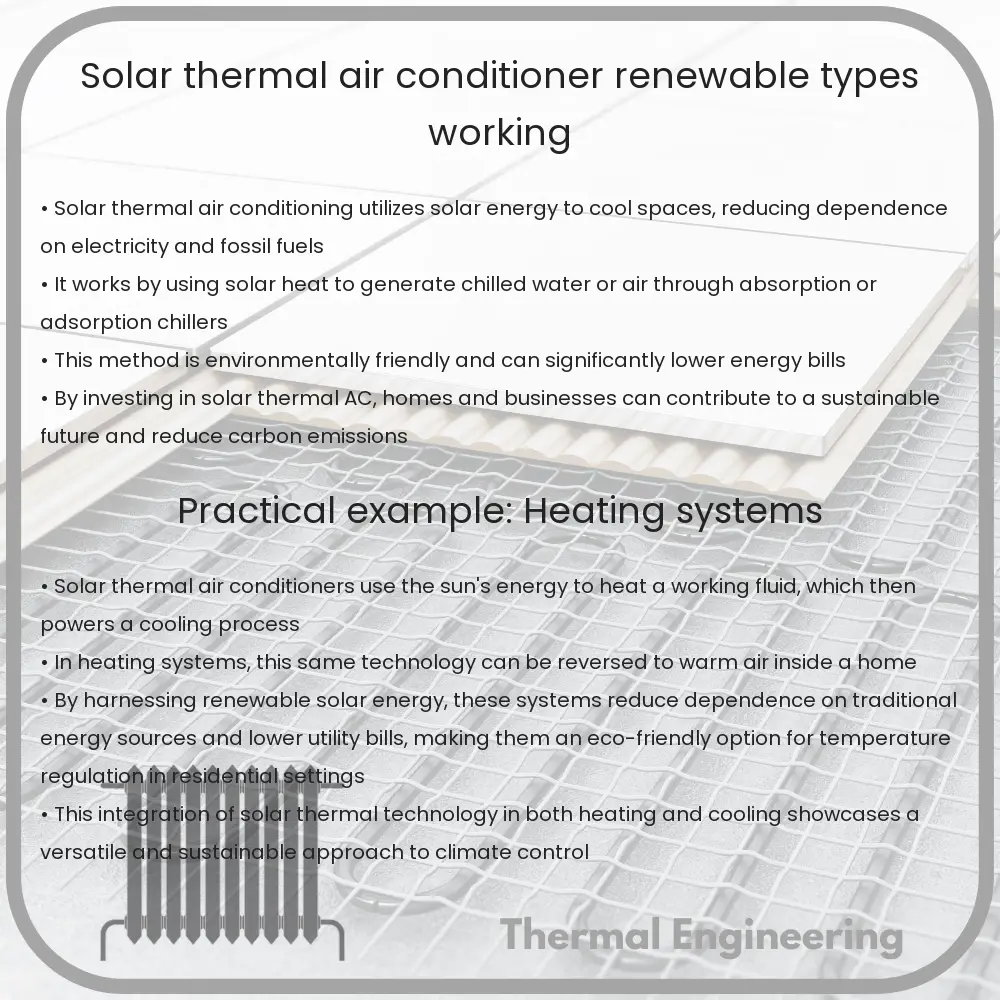
Learn how solar thermal air conditioning offers a sustainable cooling solution by utilizing solar energy to reduce electricity use and decrease reliance on fossil fuels.
Solar Thermal Air Conditioner | Renewable Types & Working

Introduction to Solar Thermal Air Conditioning

Solar thermal air conditioning harnesses the power of the sun to provide a more sustainable alternative to traditional air conditioning systems. Using solar energy, which is abundant and renewable, this technology offers a means to reduce the reliance on fossil fuels and decrease utility bills. In this article, we will explore the various types of solar thermal air conditioners and how they operate.

Types of Solar Thermal Air Conditioning Systems

  • Absorption Chillers: These systems use a thermal-driven chemical process to cool the environment, typically involving a refrigerant paired with an absorbent material.
  • Desiccant Cooling Systems: These systems use moisture-absorbing materials to reduce humidity and indirectly cool the air through evaporation.
  • Solar-Mechanical Systems: This type employs photovoltaic panels to generate electricity, which then powers a conventional air conditioner or a heat-driven process.

How Solar Thermal Air Conditioners Work

Solar thermal air conditioning systems primarily rely on solar thermal collectors that capture and convert solar energy into heat. This heat is then used in one of several processes to produce cooling effects. Below, we will detail the operational principles of two main types: absorption chillers and desiccant systems.

Absorption Chiller Systems

Absorption chillers utilize heat energy to drive a cooling cycle that involves a refrigerant and an absorbent. The most common pair used is water as the refrigerant and lithium bromide as the absorbent. The process follows several steps:

  1. The solar collectors gather solar radiation, converting it into heat and transferring it to a heat exchanger.
  2. This heat is used to boil the refrigerant (water), separating it from the absorbent (lithium bromide).
  3. The vaporized refrigerant then moves to the condenser, where it is cooled and condensed into a liquid, releasing its heat to the outside.
  4. The cooled refrigerant flows over the evaporator, where it absorbs heat from the indoor air, thus cooling it.
  5. This process repeats as the refrigerant returns to combine with the absorbent, ready to be boiled again.

Desiccant Cooling Systems

Desiccant cooling systems use a moisture-absorbing material to remove humidity from the air, which is crucial for hot and humid climates. Here’s how such a system typically operates:

  1. Solar heat is applied to regenerate the desiccant, driving off the absorbed water vapor and reactivating the desiccant’s drying potential.
  2. Dry, regenerated desiccant is then exposed to the incoming air stream, where it absorbs moisture from the air, thereby cooling it through evaporation.
  3. This process not only cools but also dehumidifies the air, making it more comfortable while using significantly less electricity than conventional cooling methods.

Benefits of Solar Thermal Air Conditioning

Solar thermal air conditioning systems offer several advantages, including:

  • Reduced Electricity Use: By using solar energy, these systems significantly decrease the demand for electricity.
  • Environmentally Friendly: They contribute to reduced carbon emissions and lower dependency on fossil fuels.
  • Economic Savings: Reduced energy bills and potential governmental incentives for using renewable energy systems.

Conclusion

Solar thermal air conditioning is a promising technology that utilizes renewable solar energy to provide cooling solutions. Whether through absorption chillers or desiccant systems, these technologies offer an effective way to harness the abundant solar resource, contributing to environmental sustainability and economic benefits. As solar technology advances, solar thermal air conditioning could become a staple in energy-efficient building design.

High Temperature Heat Pump | Industrial Recovery Tech

Learn about high temperature heat pumps (HTHPs), innovative systems designed to enhance industrial energy efficiency by recovering and upgrading waste heat.

High Temperature Heat Pump | Industrial Recovery Tech

High Temperature Heat Pumps and Industrial Recovery Technology

High temperature heat pumps (HTHPs) are an emerging technology in the field of industrial energy efficiency. These systems are designed to recover waste heat and upgrade it to a higher temperature, making it useful for industrial processes and significantly reducing the energy consumption and greenhouse gas emissions associated with conventional heating methods.

Understanding High Temperature Heat Pumps

A heat pump is a device that transfers heat from one place to another using a small amount of energy. Traditional heat pumps are commonly used for heating and cooling in residential and commercial settings, but they typically operate at lower temperatures. High temperature heat pumps, however, are capable of achieving output temperatures of up to 150°C or higher, which opens up new applications in the industrial sector where high-grade heat is often required.

How High Temperature Heat Pumps Work

The basic operating principle of a high temperature heat pump is similar to that of standard heat pumps, involving the compression and expansion of a refrigerant. The cycle includes the following steps:

  • Evaporation: The refrigerant absorbs heat at a low temperature and low pressure, turning from a liquid into a vapor.
  • Compression: The vapor is then compressed by a compressor, which increases its temperature and pressure.
  • Condensation: At high pressure and temperature, the vapor releases the absorbed heat as it condenses back into a liquid.
  • Expansion: Finally, the refrigerant is expanded to lower the pressure, cooling it down, and preparing it for the next cycle.

This cycle can be adjusted with different refrigerants and compressor technologies to achieve the desired high temperatures required in industrial processes.

Application in Industrial Waste Heat Recovery

One of the primary applications of high temperature heat pumps is in the recovery of waste heat in industrial settings. Waste heat sources commonly include flue gases from combustion processes, hot air streams, and exhausts from furnaces and boilers. By recovering this waste heat, HTHPs can:

  • Reduce the energy consumption by using it for heating needs within the process or in other plant operations.
  • Lower the operational costs associated with the energy inputs for heating.
  • Decrease greenhouse gas emissions and environmental impact.

Challenges and Developments

Despite their benefits, the adoption of high temperature heat pumps faces several challenges:

  • High Initial Investment: The upfront cost for HTHPs can be significant, particularly when retrofitting existing industrial plants.
  • Technical Challenges: Developing systems that can reliably operate at high temperatures with efficiency requires advanced materials and technologies.
  • Limited Awareness: Many industries are not yet aware of the potential cost savings and environmental benefits of high temperature heat pumps.

However, ongoing research and development are focusing on improving the efficiency, cost-effectiveness, and reliability of HTHPs. Advances in compressor technology, heat exchanger designs, and the development of new refrigerants are particularly promising.

Conclusion

High temperature heat pumps represent a cutting-edge solution for improving energy efficiency in industrial applications. By effectively utilizing waste heat and reducing reliance on fossil fuels, these systems play a crucial role in advancing sustainable industrial practices. As technology and awareness continue to grow, high temperature heat pumps are set to become a key component in the future of industrial energy management.

Forced Air Heater | Temporary Warmth Solutions

Learn how forced air heaters provide efficient, versatile temporary heating solutions for various settings and applications.

Forced Air Heater | Temporary Warmth Solutions

Forced Air Heaters: Understanding Temporary Warmth Solutions

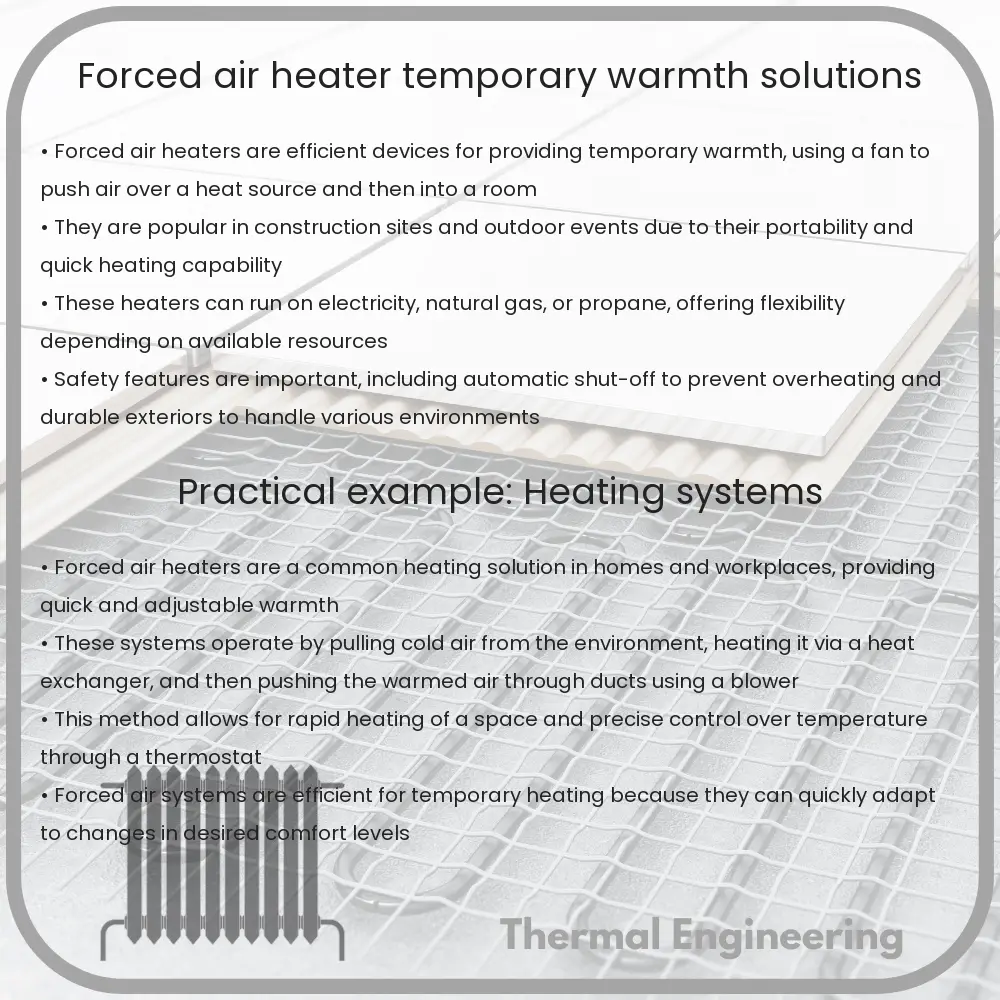
Forced air heaters are a popular choice for providing temporary heating solutions in a variety of settings, from construction sites and garages to outdoor events and large tents. These devices use a fan to blow air across a heat exchanger, thereby heating the air before distributing it throughout the space. This article explores how forced air heaters work, their types, benefits, and key considerations for optimal use.

How Forced Air Heaters Work

The basic mechanism of a forced air heater is simple yet effective. The unit typically consists of a heat source, a fan or blower, and a heat exchanger. The process includes the following steps:

  1. The heat source generates warmth, commonly through the combustion of fuels like propane, natural gas, or diesel, or by electrical resistance.
  2. This generated heat is then transferred to a heat exchanger, a component that allows heat to pass into the surrounding air without mixing the combustion products (if any) with the air being heated.
  3. The fan or blower pushes cold air through the heat exchanger, warming the air which is then expelled into the space to increase the temperature.

This effective transfer of heat from the source to the air is an efficient way to warm large spaces quickly.

Types of Forced Air Heaters

  • Electric Forced Air Heaters: These heaters use an electrical element to generate heat which is then blown by a fan into the room. They are suitable for small to medium-sized spaces and are commonly used indoors due to their lack of emissions.
  • Gas-Fueled Forced Air Heaters: Often used in outdoor or well-ventilated areas, these heaters burn fuel such as propane or natural gas. They are more powerful than electric models and can heat larger spaces quickly.
  • Diesel-Fueled Forced Air Heaters: Similar to gas-fueled models, these are suitable for outdoor or ventilated environments and can generate a significant amount of heat. They are often used on construction sites or in industrial settings.

Benefits of Using Forced Air Heaters

Forced air heaters offer several advantages that make them an excellent choice for temporary heating, especially in large or open spaces:

  • Efficiency: These heaters convert most of the energy used into heat, making them a highly efficient heating solution.
  • Speed: The forced air mechanism allows for rapid heating of a space, which is ideal in situations where quick temperature increases are necessary.
  • Portability: Many forced air heaters are designed to be portable, making it easy to move the heater to different locations as heating needs change.
  • Versatility: With various fuel options and sizes, forced air heaters can be used in a wide range of applications, from small residential to large commercial spaces.

Considerations When Using Forced Air Heaters

While forced air heaters are generally safe and effective, there are several factors to consider to ensure optimal operation:

  • Ventilation: For combustion-based heaters, proper ventilation is crucial to prevent the buildup of harmful gases like carbon monoxide.
  • Placement: Ensuring the heater is placed on a stable, heat-resistant surface and kept at a safe distance from flammable materials is key.
  • Maintenance: Regular checks and maintenance are needed to keep the heater running safely and efficiently, especially for models using combustion-based heating.

In conclusion, forced air heaters are an effective and versatile solution for temporary heating needs. Understanding their operation, benefits, and safety considerations can help users maximize their effectiveness while maintaining a safe environment.

Heat Reflective Glass | Energy-Efficient Coating

Learn about heat reflective glass and its role in enhancing energy efficiency and comfort in modern buildings through advanced coatings.

Heat Reflective Glass | Energy-Efficient Coating

Understanding Heat Reflective Glass and Energy-Efficient Coatings

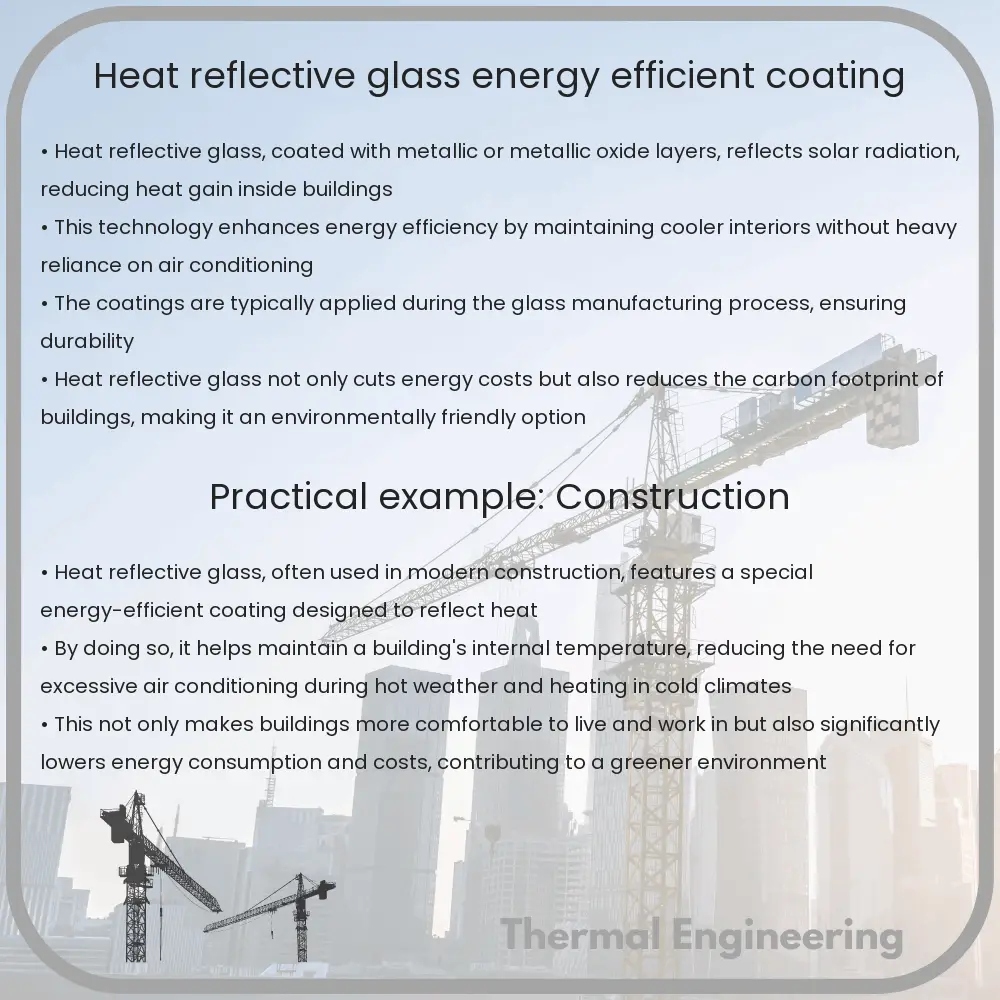
Heat reflective glass, also known as low-emissivity or low-E glass, is a type of energy-efficient glass designed to minimize the amount of infrared and ultraviolet light that passes through your windows, without compromising the amount of visible light transmitted. This innovative glass technology is critical for reducing energy costs and enhancing comfort in buildings, making it an essential component in modern window and facade engineering.

How Heat Reflective Glass Works

Heat reflective glass features a microscopically thin coating that is applied to one side of the glass. This coating reflects heat and reduces the transmission of UV and infrared light, while still allowing the full amount of visible light to pass through. The technology behind the coating involves metallic oxides that are deposited on the glass surface. The thickness and composition of this reflective layer are precisely controlled to target specific wavelengths of light.

Types of Energy-Efficient Coatings

  1. Passive Low-E Coatings: Developed to retain heat and reduce the loss of warmth during colder weather. They are typically applied to the inner panes of glass in double-paned windows.
  2. Solar Control Low-E Coatings: Used primarily to control solar heat gain and reduce the need for air conditioning during warm periods. These coatings are applied mostly on the external pane of glass in double-pane windows.

Benefits of Heat Reflective Glass

  • Energy Efficiency: Heat reflective glass significantly reduces energy consumption by maintaining consistent internal temperatures. This translates to lower heating and cooling costs.
  • Comfort: Reduction in drafts and cold spots near windows, which leads to a more comfortable living and working environment.
  • Protection from UV Light: Low-E coatings can block up to 99% of UV radiation, which helps prevent fading and damage to fabrics, artwork, and furniture.
  • Reduced Condensation: The internal surface temperature of the glass remains closer to room temperature, which reduces the potential for condensation on the windows.

Comparative Performance of Standard vs Heat Reflective Glass

A standard glass window typically has an emissivity rating of about 0.84, which means it emits 84% of the energy possible for an object at its temperature. In contrast, a low-E glass window can have an emissivity as low as 0.04, reflecting back 96% of inferred and radiative heat. This level of reflection results in a substantial difference in thermal insulation capacity.

Applications of Heat Reflective Glass

Heat reflective glass is extensively used in both residential and commercial buildings. It is particularly beneficial in structures that have large expanses of windows like skyscrapers, office buildings, and modern homes. Beyond buildings, this glass is also used in certain vehicle windows and in environmentally sensitive architectural projects that aim for maximized energy efficiency and minimal environmental impact.

Conclusion

Incorporating heat reflective glass into architectural designs mitigates energy consumption, reduces costs, and enhances indoor comfort. As the demand for sustainable building materials continues to grow, the role of innovative solutions like heat reflective glass and energy-efficient coatings becomes more crucial in the field of engineering and construction.

Air Source Heat Pump | Residential Environmental Principle

Learn how air source heat pumps provide efficient, sustainable heating and cooling for homes, reducing carbon footprints and energy costs.

Air Source Heat Pump | Residential Environmental Principle

Understanding Air Source Heat Pumps in Residential Heating and Cooling

Air source heat pumps (ASHPs) are becoming an increasingly popular solution for heating and cooling homes in a variety of climates. They not only provide efficient heating and cooling but also contribute positively to reducing greenhouse gas emissions, aligning with environmental sustainability goals. This article provides an overview of how air source heat pumps work, their environmental impact, and the principles behind their operation.

How Does an Air Source Heat Pump Work?

An air source heat pump is a system that transfers heat between the inside of a building and the outside air. It operates on a similar principle as a refrigerator, but instead of expelling the heat generated inside to the surrounding environment, it uses the heat to warm the building. The core components of an ASHP include a compressor, a condenser, an expansion valve, and an evaporator.

The process involves the following steps:

  1. Evaporation: A refrigerant absorbs heat from the outdoor air, even at low temperatures, and evaporates from a liquid to a gas.
  2. Compression: The compressor then increases the pressure of this gas, raising its temperature further.
  3. Condensation: The hot high-pressure gas passes through the condenser where it transfers its heat to the heating and hot water circuits of the house and then cools down, turning back into a liquid.
  4. Expansion: The liquid passes through an expansion valve, decreases in pressure, cools further, and returns to the evaporator to repeat the cycle.

Environmental Benefits of Air Source Heat Pumps

ASHPs are recognized for their role in reducing greenhouse gas emissions. Compared to conventional fossil-fuel-based heating systems, heat pumps use significantly less energy to deliver the same amount of warmth. Their energy efficiency is typically measured by the coefficient of performance (COP), which is the ratio of heat output to electrical energy input. The higher the COP, the more efficient the heat pump. Most systems achieve a COP between 2 and 4, which means they use 50% to 75% less electricity than traditional heating systems to provide the same amount of heat.

Furthermore, as they transfer heat rather than generate it by burning fuel, they can significantly lower home carbon footprints. Government policies increasingly support heat pump installation through incentives to accelerate their adoption and address climate change.

Choosing the Right Air Source Heat Pump

When selecting an ASHP, consider the following factors:

  • Climate Suitability: Heat pumps are generally more effective in mild climates but advances in technology have made them viable in colder regions too.
  • System Type: ASHPs come in various models, including ducted, ductless (split), and multi-split systems. The choice depends on the existing heating system and the specific needs of the property.
  • Size and Output: Proper sizing is crucial for efficiency. An undersized unit will run continuously, increasing wear and costs. Oversized units cycle too rapidly without properly dehumidifying the air.
  • Energy Efficiency Ratings: Look for high Seasonal Energy Efficiency Ratio (SEER) for cooling and Heating Seasonal Performance Factor (HSPF) for heating to ensure operational efficiency.

With proper installation and maintenance, an air source heat pump can provide effective and environmentally friendly heating and cooling for years to come, making it an excellent choice for sustainable home energy solutions.

Thermal regulation in wearable technology

Explore the challenges and strategies of thermal regulation in wearable technology, focusing on user safety and device efficiency.

Thermal regulation in wearable technology

Understanding Thermal Regulation in Wearable Technology

Wearable technology has become increasingly popular, offering a wide range of functionalities from fitness tracking to advanced health monitoring. A critical aspect of designing wearable devices, such as smartwatches, fitness bands, and wearable medical devices, is thermal regulation. This involves managing the heat generated by the device to ensure user comfort and safety as well as device performance.

Challenges in Thermal Regulation of Wearables

The compact size and the necessity of continuous contact with the user’s skin make thermal management in wearable devices a significant challenge. These devices typically integrate various electronic components like processors, batteries, and sensors in a small form factor, which can generate considerable amounts of heat during operation.

Excessive heat can lead to discomfort, potential skin burns, or thermal injuries, especially in devices that require high power or that are used intensively. Moreover, elevated temperatures can affect the performance and longevity of electronic components, impacting the overall functionality of the device.

Strategies for Thermal Management

  • Material Selection: Manufacturers often use materials with high thermal conductivity for the device casing, such as aluminum, to help dissipate heat away from the skin. Polymer composites can also be used because of their flexibility and comfort, though typically they have lower thermal conductivity.
  • Heat Spreading Techniques: Techniques such as the use of thin, high thermal conductivity layers or sheets (heat spreaders) inside the device help in distributing the heat over a larger surface area, reducing the temperature rise at any single point.
  • Optimized Circuit Design: Efficient circuit layouts can minimize power consumption and reduce the heat generated. Additionally, separating high-power components and employing power management strategies can prevent localized hot spots.
  • Active Cooling Mechanisms: In some advanced applications, wearable devices might include active cooling technologies like micro fans or thermoelectric coolers, though these can add to the size and power consumption of the device.
  • Software Solutions: Smart algorithms can monitor device temperature and adjust operational parameters such as processing power and sensor sampling rates to control heat generation.

Future Trends in Thermal Management for Wearables

The ongoing research in wearable technology not only focuses on enhancing features but also on improving the comfort and safety related to thermal effects. Innovations in material science, such as the development of new composites with higher thermal conductivities and flexibility, hold promise for future wearables. There is also an increasing interest in integrating bio-based materials which might provide better biocompatibility and thermal performance.

Advancements in microfabrication technology could lead to more effective heat dissipation strategies that are integrated directly into the device components at a microscopic level, enabling more efficient and compact designs. Furthermore, AI and machine learning applications in wearables could lead to smarter thermal management systems that adapt to both environmental conditions and user activity levels in real-time.

As wearable technology continues to evolve, incorporating efficient thermal regulation mechanisms will be crucial for enhancing user experience and expanding the capabilities of these devices. Ensuring thermal comfort and safety, while maintaining device performance, will remain a key focus area in the design and development of next-generation wearable technology.

Heat Seal Machine | Packaging Mechanism Types

Learn about heat seal machines used in packaging, their types, mechanisms, and applications across various industries.

Heat Seal Machine | Packaging Mechanism Types

Understanding Heat Seal Machines in Packaging

A heat seal machine is an essential tool in the packaging industry, utilized for sealing containers to protect and preserve items. This article explores the different types and mechanisms of heat sealing machines, helping to understand how they function to enhance product safety and shelf life.

What is Heat Sealing?

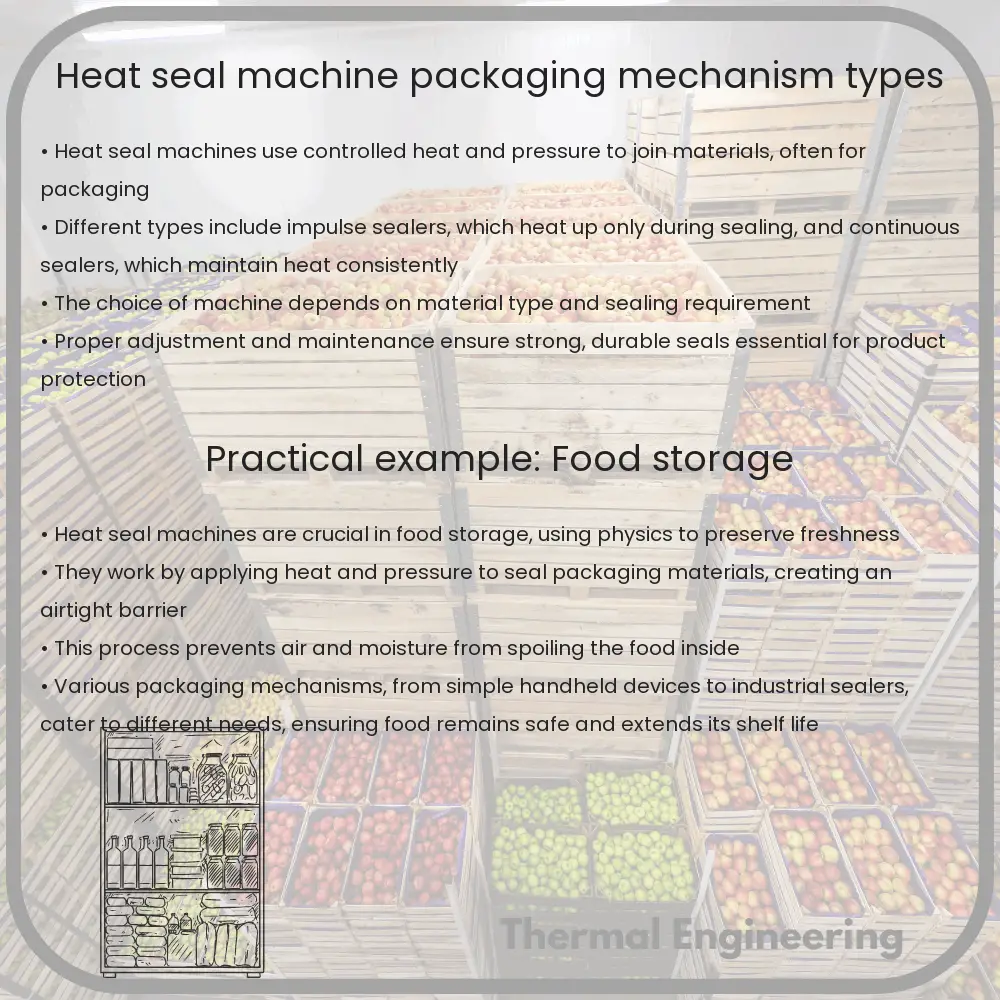
Heat sealing is a process where heat is applied to a specially designed area of packaging material, often with a thermoplastic layer, causing it to melt and fuse with a compatible surface, thereby creating a bond. This seal prevents the ingress of moisture, dust, and other contaminants, securing the product inside against spoilage and tampering.

Types of Heat Seal Machines

  • Manual Heat Sealers: These are hand-operated and require the operator to apply pressure to create a seal. They are smaller and suitable for low-volume packaging tasks.
  • Semi-Automatic Sealers: These machines automate some parts of the sealing process but still require manual intervention for tasks like placing and positioning the product.
  • Fully Automatic Sealers: Fully automatic machines handle everything from feeding the packaging material around the product to sealing and finishing the package without human intervention, ideal for high-volume operations.

Common Packaging Mechanisms in Heat Seal Machines

  1. Impulse Sealing: Utilizes a short burst of electrical energy to a heating element that raises the temperature rapidly to melt the thermoplastic layers to create a seal. The heat is immediately cut off once the cycle completes, making it energy efficient.
  2. Hot Bar Sealing: Employs heated bars or sealing jaws that apply heat and pressure to the material for a set period. This method is suitable for thicker materials.
  3. Continuous Sealing: Involves belts that convey the packaging through continuously heated sections, making it ideal for high-speed sealing of large volumes of products.
  4. Vacuum Sealing: This technique involves removing air before sealing the package. It is commonly used in food packaging to extend the shelf life of perishables and cooked foods.
  5. Ultrasonic Sealing: Uses ultrasonic vibrations to create heat through friction between the packaging layers. This method is fast and energy-efficient, perfect for packaging sensitive electronics.

Applications of Heat Seal Machines

Heat seal machines are versatile and can be used across various industries including food and beverage, pharmaceuticals, electronics, and consumer goods. Their applications range from sealing snack food bags, blister packs for medicines, waterproof outdoor gear, to ensuring sterility in sensitive medical equipment.

Conclusion

Heat seal machines are critical in maintaining the integrity and quality of products across numerous industries. Understanding the different types of machines and their specific applications helps businesses choose the right machine that best fits their packaging needs. As technology advances, heat sealing techniques continue to evolve, enhancing efficiency and effectiveness in packaging systems worldwide.

Thermoelectric Cooler | Portable Peltier Uses

Learn about Thermoelectric Coolers (TECs), solid-state devices using the Peltier effect for precise temperature control without moving parts.

Thermoelectric Cooler | Portable Peltier Uses

Understanding Thermoelectric Coolers

Thermoelectric coolers (TECs), often referred to by their more technical name, Peltier coolers, are a type of solid-state refrigeration that operates on the Peltier effect. Developed in the 1830s by Jean Charles Athanase Peltier, the Peltier effect describes the phenomenon where heating or cooling occurs at an electrified junction of two different conductors. A key benefit of TECs is their ability to precisely control temperature without the need for moving parts or fluids, differing fundamentally from conventional refrigeration methods that rely on vapor compression or absorption cycles.

How Thermoelectric Coolers Work

At its core, a TEC uses several pairs of p-type and n-type semiconductor materials that form a thermocouple. These are connected electrically in series and thermally in parallel. When a DC voltage is applied, current flows through the thermocouple circuit, causing a heat transfer from one side of the module to the other. This creates a cold side and a hot side; heat absorbed from the environment by the cold side is transferred to the hot side, which needs to be adequately dissipated, often with the use of heat sinks.

Equation of Peltier Effect

The basic principle of the Peltier effect can be expressed as:

  • Q = Peltier*I

where:

  • Q is the heat absorbed or emitted in watts,
  • Peltier is the Peltier coefficient in watts/ampere,
  • I is the current flowing through the junction in amperes.

Applications of Thermoelectric Coolers

Thermoelectric coolers are used in a variety of applications where small-scale cooling or precise temperature control is required. Some of the common uses include:

  • Portable Coolers: TECs are popular in portable coolers used for camping trips or picnics, where conventional refrigeration is impractical.
  • Electronics Cooling: In the field of electronics, TECs provide localized cooling for hot spots on microprocessors or other high-performance components that generate substantial heat.
  • Medical and Laboratory Equipment: TECs are valuable in maintaining specific temperatures in medical storage units (like those for medicines or biological samples) and in laboratory instruments where precise temperature control is essential.
  • Automotive Applications: They are also used in automotive applications to cool electronic components or as part of climate control systems to provide comfort to the occupants.

Advantages and Limitations

The unique properties of thermoelectric coolers come with both advantages and limitations:

  • Advantages:
    • No moving parts, promoting reliability and reducing maintenance needs.
    • Compact and lightweight, allowing integration into small-scale applications.
    • Capability of rapid cooling or heating, as needed.
    • Precise temperature control.
  • Limitations:
    • Less energy-efficient compared to traditional refrigeration methods, limiting their use in energy-intensive applications.
    • The need for substantial heat dissipation on the hot side can sometimes require additional components, like fans or heat sinks, complicating the design.

The ongoing advances in materials science, particularly in enhancing the efficiency of thermoelectric materials, continue to expand the practical applications of thermoelectric coolers.

Peltier Cooler | Small-Scale Thermoelectric Varieties

Learn about Peltier coolers, small devices using the thermoelectric effect for efficient heat transfer in compact applications.

Peltier Cooler | Small-Scale Thermoelectric Varieties

Understanding Peltier Coolers: A Look at Small-Scale Thermoelectric Varieties

Peltier coolers, also known as thermoelectric coolers (TECs), offer a fascinating application of thermoelectric effect to achieve heat transfer. These devices are increasingly utilized in various applications where traditional cooling systems are impractical. This article explores the basics of Peltier coolers, focusing on their operation, design, and common small-scale applications.

How Peltier Coolers Work

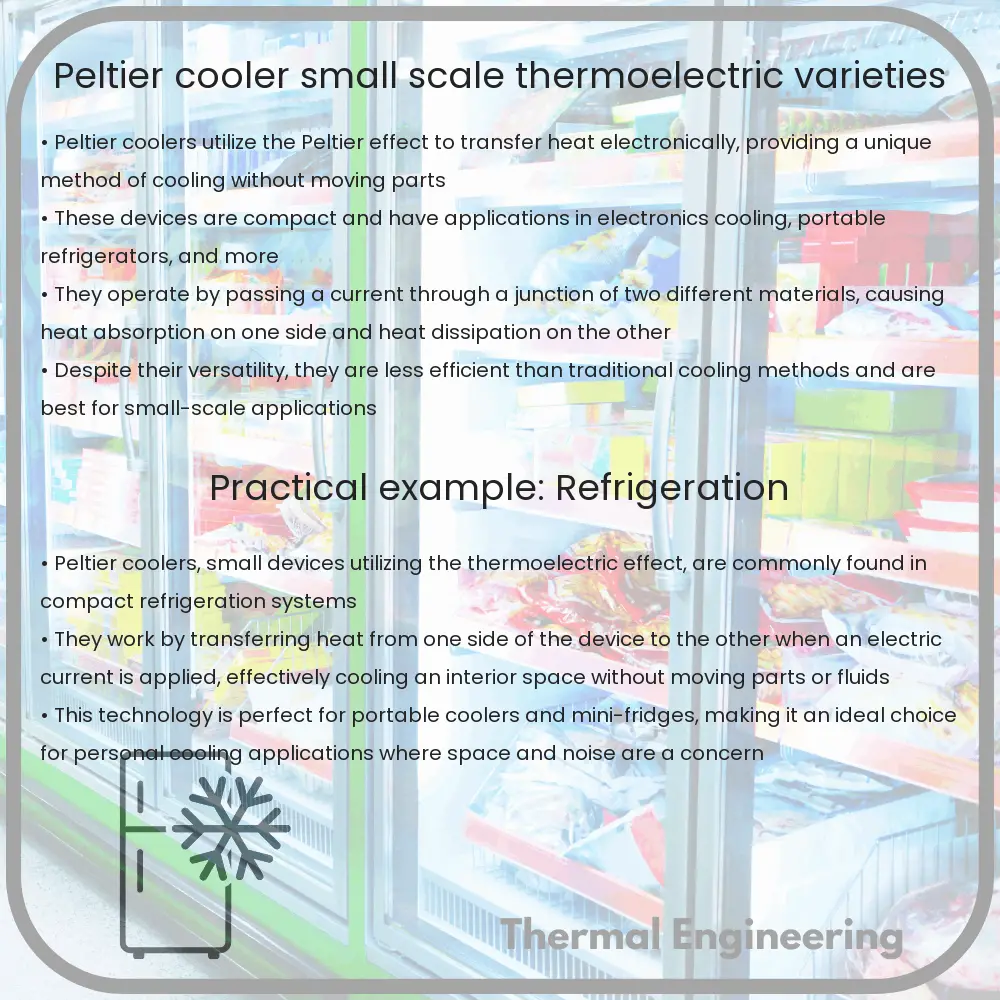
Peltier coolers work on the principle of the Peltier effect, discovered by Jean Charles Athanase Peltier in 1834. The Peltier effect causes heating or cooling at an electrified junction of two different conductors. When a current flows through the junction of two different types of materials, heat is absorbed at one junction (cooling it) and released at the opposite junction (heating it), creating a temperature difference.

The basic components of a Peltier cooler include:

  • Thermoelectric modules: These are typically made up of many pairs of p- and n-type semiconductor material that create a circuit of multiple thermocouples.
  • Ceramic plates: They sandwich the thermoelectric modules to enhance durability and provide insulation.
  • Heat sinks: Attached to both sides of the thermoelectric modules to dissipate heat effectively from the hot side and absorb heat from the cool side.

The most critical aspect of TEC operation is the direction of current flow, which determines which side of the cooler will be hot and which will be cold.

Mathematical Model of Peltier Coolers

The performance of Peltier coolers can be estimated using several equations, taking into account the properties of the materials and the operational conditions. The key parameters include:

  • Seebeck Coefficient (S): This relates to the voltage developed per unit temperature difference across the thermoelectric material.
  • Thermal Conductivity (k): Measures the ability of a material to conduct heat.
  • Electrical Resistance (R): Affects the current flow through the cooler.

The basic effectiveness of a Peltier cooler can be calculated by the equation Q = (SAB – SCD) * I * T, where SA and SC are the Seebeck coefficients of materials, I is the current, and T is the absolute temperature difference.

Applications of Small-Scale Thermoelectric Coolers

Due to their compact size and lack of moving parts, small-scale Peltier coolers are ideal for applications where space and reliability are critical. Some common applications include:

  • Consumer Electronics: Used in portable refrigerators, wine coolers, and to cool electronic components such as CPUs and lasers in compact devices.
  • Medical Devices: Used for localized temperature control in medical storage units and to maintain precise temperatures in devices such as DNA replication machines.
  • Automotive Applications: Employed in car seats for heating or cooling and in luxury vehicle cup holders to keep beverages hot or cold.

Challenges and Limitations

While Peltier coolers offer significant advantages in terms of size and mechanical simplicity, they also have limitations, including:

  • Energy Efficiency: Peltier coolers are generally less energy efficient compared to conventional cooling methods such as refrigeration cycles, particularly at larger scales.
  • Heat Dissipation: The requirement for good heat sinks and the challenge of dissipating large amounts of heat can limit their effectiveness.
  • Cost: The cost of high-performance thermoelectric materials can be a barrier for some applications.

In conclusion, small-scale Peltier coolers provide unique solutions for compact and precise cooling needs but require careful consideration of their characteristics and limitations in real-world applications. Ongoing research and development in material science may further enhance their performance and expand their use in the future.

Thermodynamic Solar Panel | Combined Heat Efficiency

Learn how thermodynamic solar panels enhance energy efficiency by utilizing both ambient air and solar energy to heat water in all weather conditions.

Thermodynamic Solar Panel | Combined Heat Efficiency

Understanding Thermodynamic Solar Panels and Combined Heat Efficiency

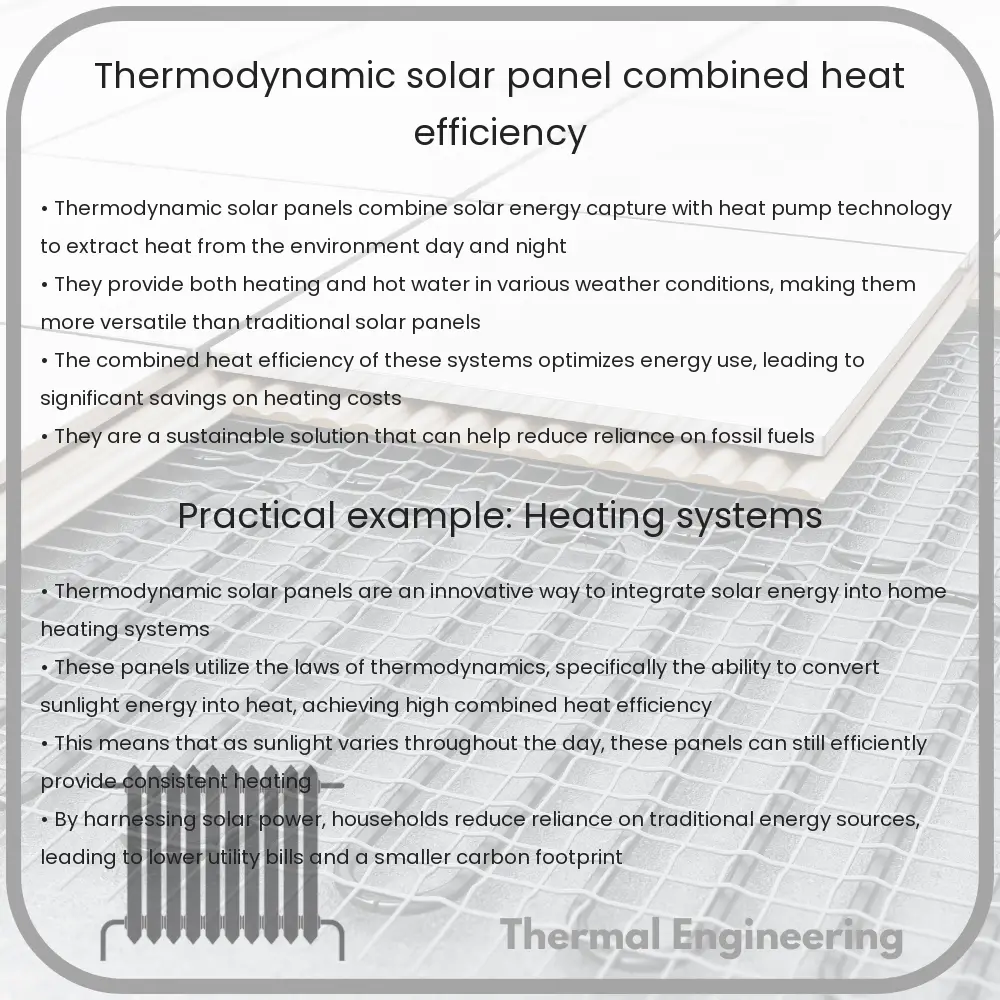
Thermodynamic solar panels represent an innovative fusion of heat pump technology with solar energy systems. Unlike traditional solar panels that either produce electricity (photovoltaic) or heat water (solar thermal), thermodynamic solar panels are designed to utilize ambient air temperature along with the sun’s energy to heat water, regardless of weather conditions. The key to their versatility lies in their combined heat efficiency, a concept crucial for maximizing energy utilization in residential and commercial applications.

How Thermodynamic Solar Panels Work

At the core of a thermodynamic solar panel system is a refrigerant fluid, which circulates through an external circuit. This circuit is exposed to ambient air and solar irradiation. Initially, the fluid absorbs heat from both the surrounding environment and the sun, which causes it to evaporate. The evaporated refrigerant then passes through a compressor, where its temperature is increased. Finally, this high-temperature gas transfers its heat to water in a storage tank via a heat exchanger, before it cools down and condenses back to a liquid, completing the cycle.

The Role of Combined Heat Efficiency

Combined heat efficiency in the context of thermodynamic solar panels refers to the system’s ability to collect and transform energy from multiple heat sources into usable heat. This efficiency is a critical metric as it dictates the operational effectiveness and sustainability of the system. By using both solar energy and ambient air, these panels can operate day and night, under various weather conditions, making them more reliable than traditional solar systems that rely solely on direct sunlight.

Advantages of Thermodynamic Solar Panels

  • All-Weather Functionality: These panels can generate heat in different weather conditions, including rain, wind, and even at night, providing a consistent and reliable source of heat.
  • Space Efficiency: Thermodynamic panels are generally compact and can be installed in a smaller area compared to the surface area required for traditional solar setups.
  • Energy Savings: By harnessing the ambient air temperature and the sun’s energy, these systems reduce dependence on conventional electric or gas heating systems, leading to significant energy savings.
  • Reduced Carbon Footprint: Using renewable energy resources helps in lowering the overall carbon footprint, contributing to environmental sustainability.

Challenges and Considerations

While thermodynamic solar panels offer numerous benefits, there are also challenges to consider. The initial installation cost can be higher than that of traditional solar panels owing to the complexity of the technology. Moreover, the efficiency of the heat pump depends on external temperatures; thus, performance might vary significantly between different climates. Maintenance and operational costs over time should also be factored into the total cost of ownership.

Conclusion

Thermodynamic solar panels with combined heat efficiency are a promising technology that bridges the gap between renewable energy use and continuous reliability. By efficiently converting ambient and solar energy into heat, these systems offer a sustainable solution for heating needs in various settings. As technology advances and becomes more cost-effective, it has the potential to become a mainstream solution for domestic and commercial energy needs.