Learn about ceramic coatings, their role as heat barriers, and their protective qualities against wear and corrosion in various industrial applications.
Understanding Ceramic Coatings: Heat Barriers and Surface Protection
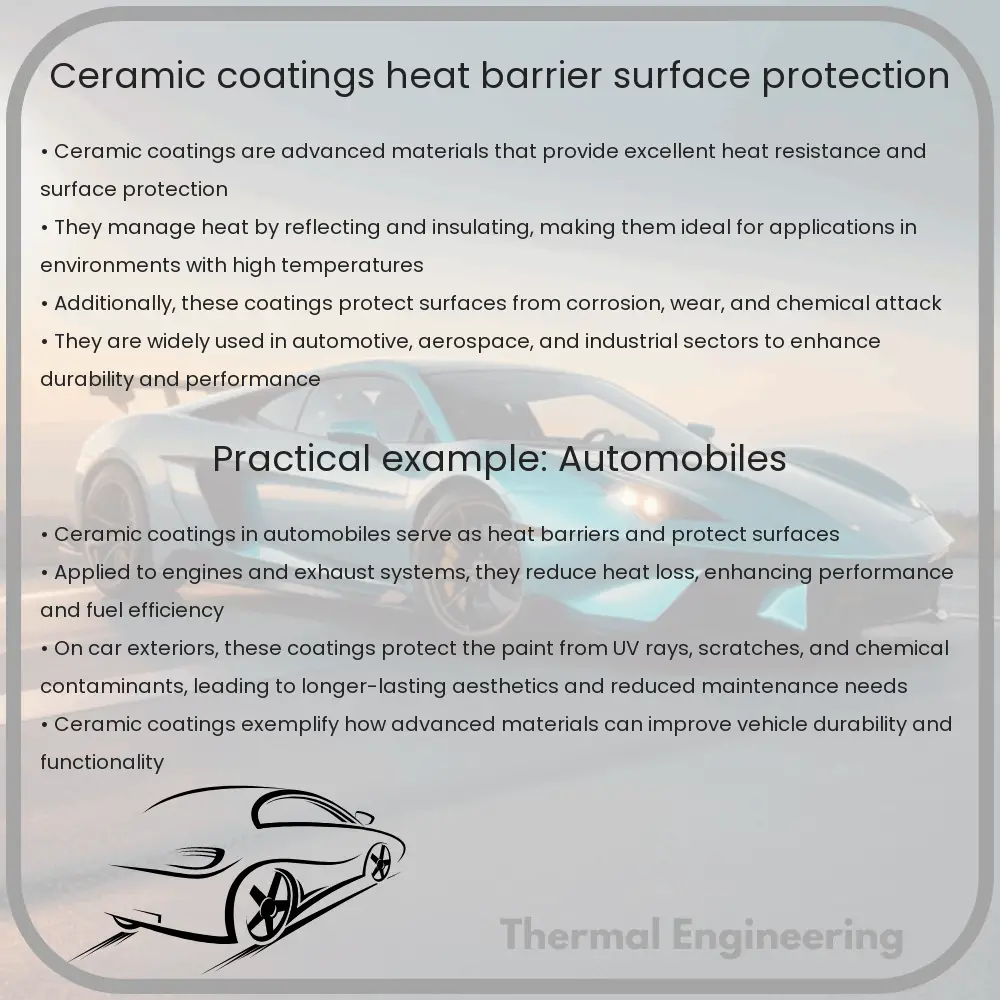
Ceramic coatings are specialized coatings composed primarily of silicate materials that are applied to surfaces to improve their resistance to heat, corrosion, and abrasion. These coatings are notable for their durability and the protection they provide in harsh environmental conditions, making them a popular choice in various industries, including automotive, aerospace, and manufacturing.
Principles of Heat Resistance
Ceramic coatings protect surfaces by significantly reducing heat transfer. This is primarily due to their low thermal conductivity. For instance, typical metals like copper have a high thermal conductivity of about 400 W/(m*K), which means they transfer heat quickly. In contrast, ceramic materials such as alumina or silica have much lower thermal conductivities, generally less than 5 W/(m*K), making them excellent heat barriers.
When applied to components, especially in engines and exhaust systems, ceramic coatings reduce the surface temperature, which can lead to an improvement in performance and longevity of the component. Lower temperatures can also lead to increased thermal efficiency as less heat is lost to the surroundings.
Surface Protection Qualities
Beyond their heat-resistant capabilities, ceramic coatings also offer superior protection against corrosion and wear. This is because these coatings provide a hard layer that acts as a barrier against environmental factors such as moisture, UV rays, and chemicals.
The coating achieves this by bonding chemically to the substrate at a molecular level, a process that typically requires curing at high temperatures. Once cured, this bond significantly reduces the risk of chipping, peeling, or fading, ensuring that the substrate remains protected for an extended period.
Applications in Various Industries
- Automotive Industry: Ceramic coatings are widely used in the automotive sector to protect car paint from fading and to shield engine parts from heat and corrosion. This not only improves the vehicle’s performance but also extends the lifespan of its components.
- Aerospace Industry: These coatings are employed in the aerospace field to protect aircraft parts from extreme temperatures and environmental stress, thus ensuring safety and efficiency during flights.
- Industrial Machinery: In manufacturing, ceramic coatings are applied to machinery that is exposed to corrosive substances or high temperatures to minimize wear and tear and prevent failure during operation.
Advantages of Ceramic Coatings
- Durability: Ceramic coatings are extremely durable against physical and chemical attacks. This durability translates into a longer life expectancy of the coated surface.
- Thermal Protection: They effectively protect components by reflecting and dissipating heat, thereby enhancing the performance and efficiency of the system.
- Environmental Resistance: Such coatings provide excellent resistance to UV rays, corrosion, and harsh chemicals, which is crucial for outdoor applications.
- Aesthetic Preservation: For surfaces like car paint, ceramic coatings help maintain the original look by protecting against scratches, dirt, and water spots.
Conclusion
Ceramic coatings represent a significant technological advancement in material science, offering a combination of heat resistance, durability, and environmental protection. Their versatile properties ensure they play a critical role across multiple industries, protecting equipment and extending service lives, ultimately leading to cost savings and enhanced safety. As technology advances, the development of new ceramic materials and application techniques will further expand their uses and effectiveness.