Explore the role, types, and properties of heat transfer fluids in solar thermal systems, crucial for system efficiency and effectiveness.
Understanding Heat Transfer Fluids in Solar Systems
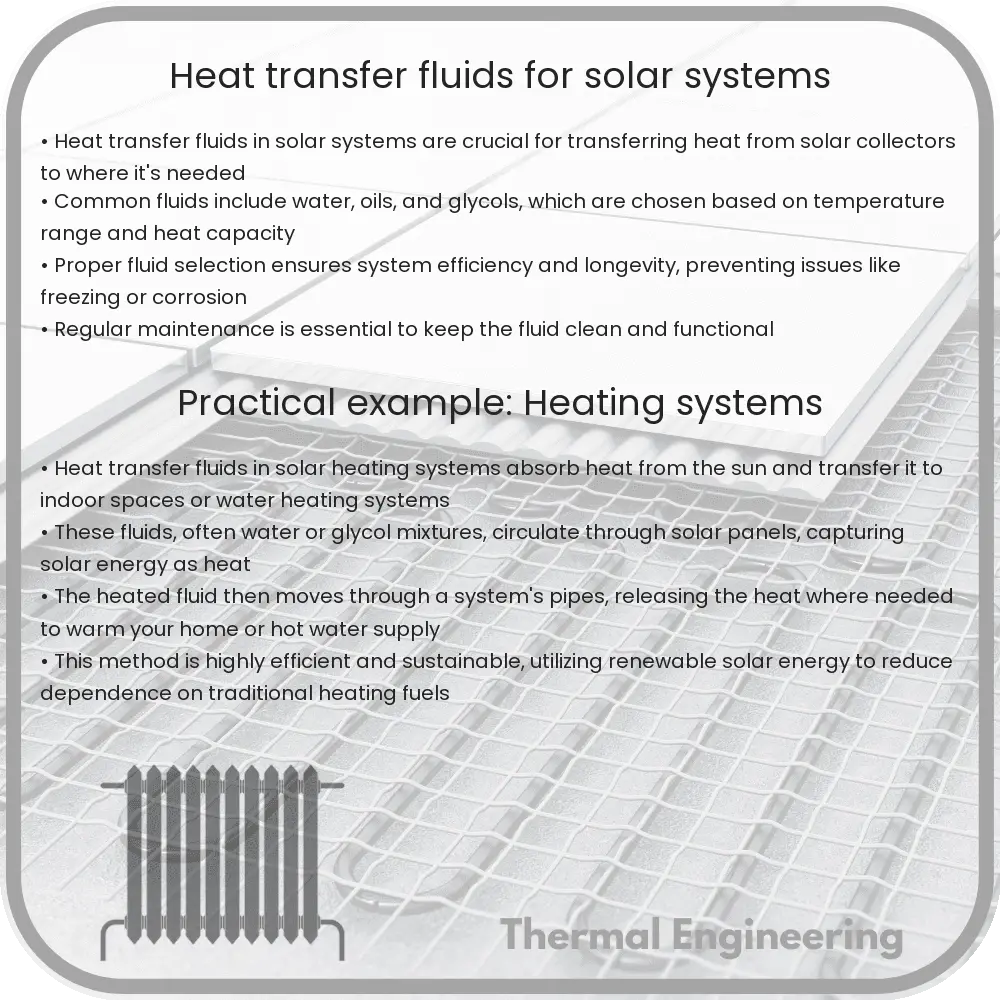
Heat transfer fluids (HTFs) play a crucial role in the efficiency and effectiveness of solar thermal systems. These fluids are used to absorb, transport, and store heat energy from the sun. This article explores the types of heat transfer fluids used in solar systems, their properties, and the factors affecting their performance.
Types of Heat Transfer Fluids
There are several types of heat transfer fluids used in solar thermal systems, each with its own unique properties and applications. The most commonly used fluids include:
- Water: Often used in domestic solar water heating systems due to its high heat capacity and availability. However, water’s freezing and boiling points require additives to prevent freezing in cold climates and to raise the boiling point in very hot conditions.
- Antifreeze Solutions: These are typically water-based solutions containing glycols (like ethylene glycol or propylene glycol) to lower the freezing point of the fluid. They are widely used in colder regions where temperatures can drop below the freezing point of water.
- Synthetic Oils: High-performance synthetic oils are used in high-temperature solar thermal applications. They can operate at higher temperatures without degrading, which is crucial for systems like concentrated solar power (CSP) plants.
- Molten Salts: Used primarily in CSP plants, molten salts can operate at very high temperatures (up to 600 degrees Celsius). They have excellent thermal storage properties, which make them ideal for storing heat during non-sunny hours.
Key Properties of Heat Transfer Fluids
The effectiveness of a heat transfer fluid in solar thermal systems is determined by several key properties:
- Thermal capacity: Indicates how much heat the fluid can absorb and transport. A higher thermal capacity means more efficient heat transfer.
- Viscosity: Affects the fluid’s flow rate through the pipes. Lower viscosity fluids require less energy to pump through the system.
- Thermal stability: A measure of how well the fluid can withstand prolonged exposure to high temperatures without degrading.
- Freezing and boiling points: Important for determining the operational environment of the solar system. Fluids must maintain a liquid state within the operating temperature ranges of the system.
- Corrosivity: Fluids should be chemically inert to avoid damaging the components of the solar thermal system.
Performance Factors
Several factors affect the performance and choice of heat transfer fluids in solar thermal systems:
- Climatic conditions: In colder climates, fluids with lower freezing points are preferred, while in hotter areas, fluids with higher boiling points are necessary.
- System design: The type of solar thermal system (e.g., low, medium, or high temperature) will dictate the type of fluid needed based on the operating temperature and thermal stability requirements.
- Economic considerations: Cost-effectiveness is also an important factor. While molten salts provide excellent thermal storage, they are more expensive than standard glycol solutions.
- Environmental impact: The ecological safety of the fluid used is crucial. Biodegradable, non-toxic fluids are increasingly favored to minimize environmental risks.
Heat transfer fluids are integral to the performance of solar thermal systems. By understanding the different types of fluids available and the properties that affect their performance, system designers can tailor solutions that maximize efficiency, cost-effectiveness, and environmental sustainability.
Whether you’re a budding engineer, a student, or simply curious about solar energy systems, grasping the basics of heat transfer fluids enhances your understanding of renewable energy technologies and their applications.