Explore the essential role and function of thermal insulators in electronic packaging to enhance device efficiency and safety.
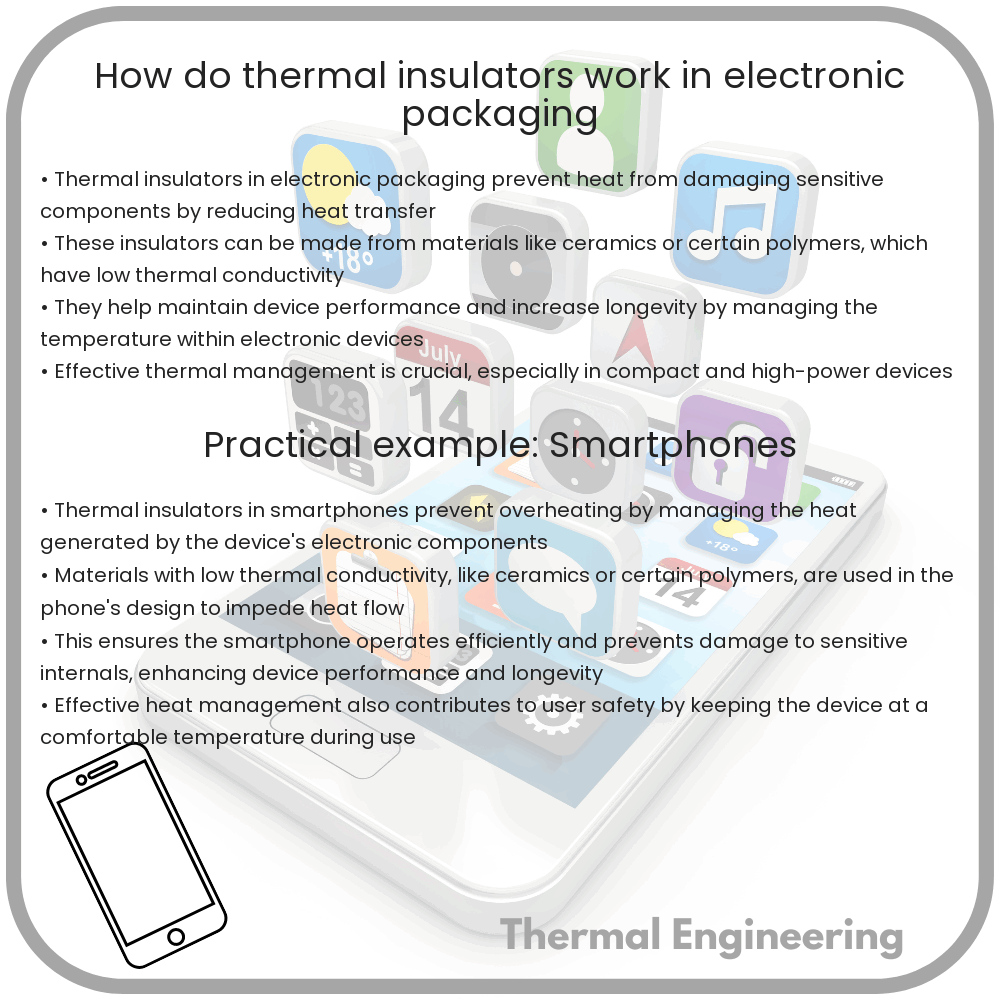
Understanding Thermal Insulators in Electronic Packaging
In the ever-evolving field of electronics, thermal management is a critical aspect of design and functionality, particularly in electronic packaging. The use of thermal insulators is essential in ensuring that devices operate efficiently and safely under varying environmental conditions. This article will explore the role of thermal insulators in electronic packaging, how they work, and why they are so important.
What are Thermal Insulators?
Thermal insulators are materials that reduce or prevent the transfer of heat. They play a crucial role in electronics by managing the heat generated by electronic components during operation. Effective insulation not only protects the components but also enhances the overall performance and longevity of electronic devices.
How Do Thermal Insulators Work?
The effectiveness of a thermal insulator is primarily determined by its thermal conductivity, often denoted as ‘k’. Thermal conductivity is a measure of a material’s ability to conduct heat. Materials with low thermal conductivity are better insulators because they transfer less heat. This property is pivotal in selecting materials for use in electronic packaging.
Thermal insulators function based on three main mechanisms of heat transfer:
- Conduction: This is the transfer of heat through a material without the material itself moving. Insulators with low thermal conductivity hinder this process.
- Convection: This involves the movement of heat through fluids (liquids or gases). Effective insulators reduce heat loss or gain by convection by trapping air in cellular structures.
- Radiation: Heat transferred through electromagnetic waves can also be minimized by using materials that reflect or absorb infrared radiation.
The typical approach in electronic packaging is to incorporate materials that address all three mechanisms, thus providing comprehensive thermal management.
Common Materials Used as Thermal Insulators
In the context of electronic packaging, several materials are commonly used due to their low thermal conductivity and other desirable properties such as electrical insulation and mechanical strength. These include:
- Polymers like Polyethylene (PE), Polyvinyl Chloride (PVC), and Polystyrene
- Ceramics such as alumina, beryllia, and boron nitride
- Composite materials which may combine polymers with ceramic fillers to enhance insulative properties while maintaining structural integrity
Applications in Electronic Packaging
Thermal insulators are incorporated in various forms such as thermal pads, tapes, and gap fillers in electronic packaging. Their primary purpose is to:
- Prevent excessive heat from damaging sensitive components
- Ensure uniform distribution of heat to avoid hot spots
- Maintain device performance even at high temperatures
- Extend the lifespan of electronic devices
The design and placement of these insulators are critical and must be optimized based on the heat-generating characteristics of the components and the overall device architecture.
The Importance of Testing and Standards
To ensure reliability and efficiency, thermal insulators in electronic packaging must be rigorously tested. Standard tests measure material properties like thermal resistance and conductivity. Industry standards also guide the selection and implementation of thermal management solutions in electronics.
Organizations such as ASTM International and the Institute of Electrical and Electronics Engineers (IEEE) provide standards that help manufacturers design and test thermal insulators for electronic packaging.
In conclusion, thermal insulators are vital for effective thermal management in electronic packaging. Their ability to limit heat transfer by conduction, convection, and radiation ensures the durability and reliability of electronic devices. As technology progresses and devices shrink while their functionality increases, the role of thermal insulators becomes even more crucial.