Learn how thermal protectors prevent electric motor overheating, ensuring safety and extending equipment lifespan.
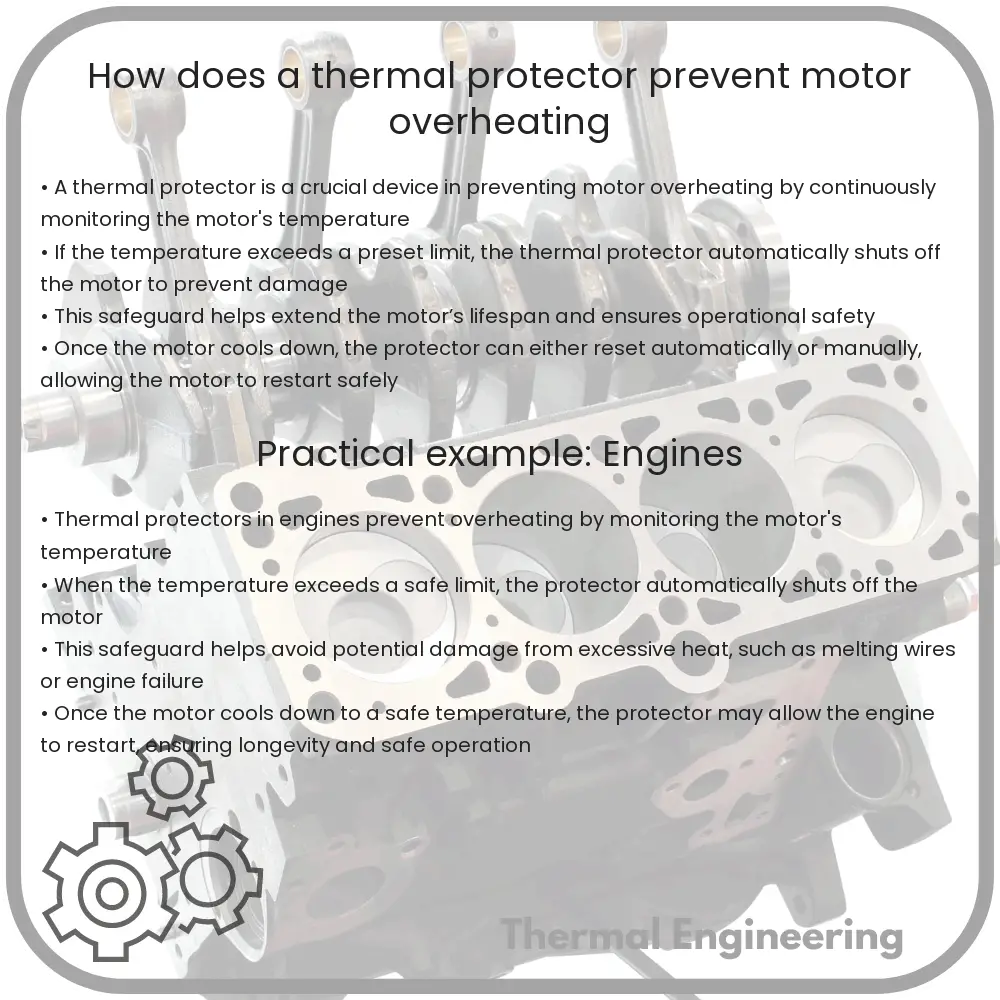
Understanding Thermal Protectors in Motor Applications
Thermal protectors are crucial components in the maintenance and safety of electric motors. They are designed to prevent motors from overheating, which can lead to equipment failure and safety hazards. This article explains how thermal protectors work, their types, and why they are essential in various motor-driven applications.
How Do Thermal Protectors Work?
Thermal protectors function by monitoring the temperature of the motor windings and interrupting the current flow when a preset temperature limit is exceeded. Overheating in motors can occur due to various reasons such as overload, voltage issues, or mechanical failures. When the temperature reaches a critical threshold, the thermal protector triggers a mechanism to either open or close the circuit, effectively stopping the motor from operating and preventing further temperature rise.
The operation of a thermal protector typically involves either a bimetallic strip or a thermistor as the sensing element:
- Bimetallic Strip: In this type of protector, two metals with different thermal expansion coefficients are bonded together. As the temperature increases, the difference in expansion between the two metals causes the strip to bend. This bending action will eventually break the electrical contact and disrupt the circuit, thus stopping the motor.
- Thermistor: Thermistors are temperature-sensitive resistors. In thermal protectors, they primarily work by changing their resistance with temperature. A Positive Temperature Coefficient (PTC) thermistor, commonly used in motor protection, increases its resistance when the temperature rises above a certain point and thus reduces the current flow to a level that prevents the motor from further heating.
Types of Thermal Protectors
Thermal protectors are categorized based on their reset features into two main types:
- Automatic Reset Thermal Protectors: These protectors automatically reset themselves once the motor cools down to a safe operating temperature. They are suitable for applications where intermittent supervision and manual reset could lead to unnecessary downtime.
- Manual Reset Thermal Protectors: These devices require a manual intervention to reset the operating conditions of the motor. They are commonly used in applications where overheating could indicate a severe problem, necessitating an inspection before restarting the motor.
Importance of Thermal Protectors
The inclusion of thermal protectors in motor design is vital for several reasons:
- Safety: They prevent the potential fire hazards that could arise from excessively high motor temperatures.
- Equipment Protection: By preventing overheating, thermal protectors help in extending the life of the motors and reducing the frequency of maintenance or replacements.
- Cost Efficiency: Minimizing downtime and repair costs due to motor failures ensures more reliable and cost-effective operations in industrial or commercial settings.
In conclusion, thermal protectors play a fundamental role in the safe and efficient operation of electric motors. Their ability to detect and respond to temperature anomalies not only safeguards the equipment but also supports uninterrupted service and operational continuity in various applications.