Explore how thermal bioclimatology impacts urban planning by enhancing sustainability, comfort, and health in city environments.
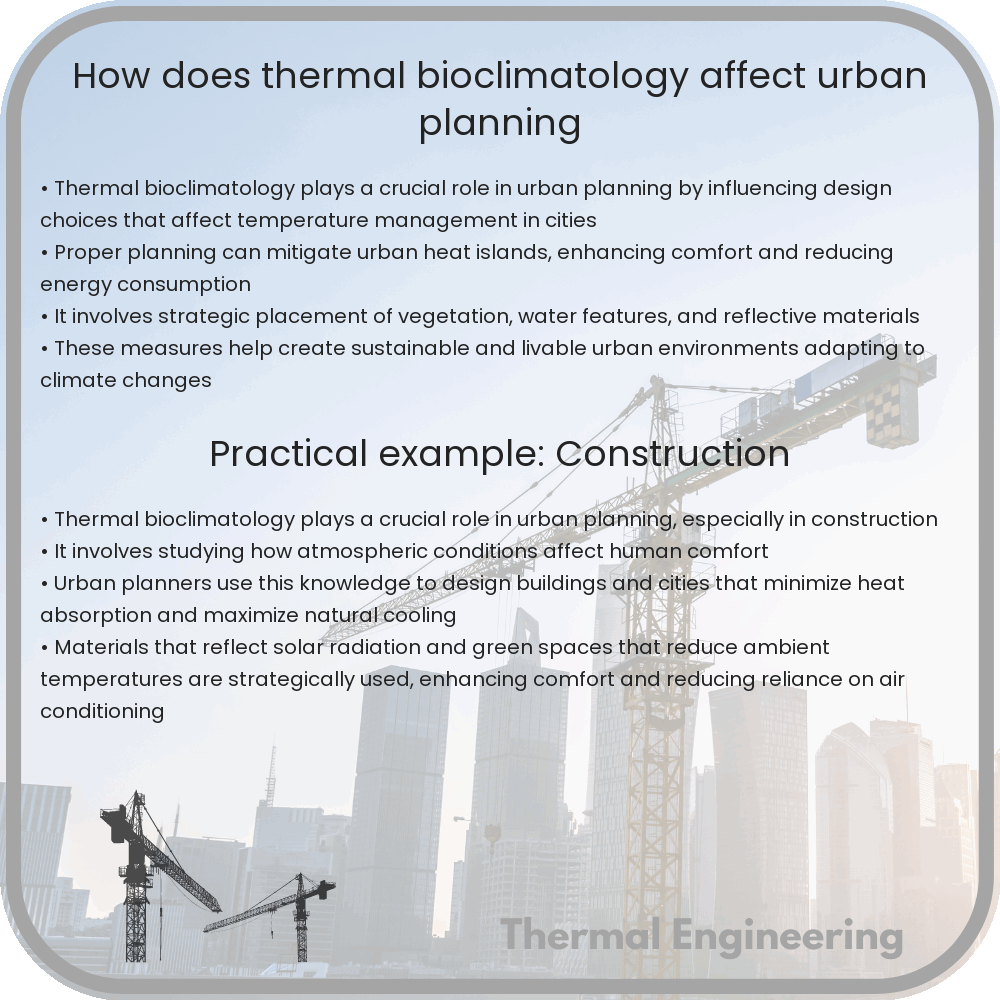
Understanding Thermal Bioclimatology in Urban Planning
Thermal bioclimatology is a critical field of study that explores the interactions between climatic conditions and living organisms, focusing particularly on how thermal environments affect human health and behavior. This understanding plays an increasingly vital role in urban planning, as cities worldwide grapple with issues such as urban heat islands, energy consumption, and climate adaptation. The goal is to create urban environments that are comfortable, sustainable, and resilient in the face of changing climate conditions.
What is Thermal Bioclimatology?
At its core, thermal bioclimatology examines how thermal conditions — primarily temperature and humidity — interact with biological organisms. In the context of urban planning, the focus shifts to understanding how these factors influence human comfort, health, and activity levels in densely populated areas. By studying thermal bioclimatology, urban planners can design cities that better accommodate natural thermal processes, enhancing the living environment for their inhabitants.
Impacts on Urban Planning
Thermal bioclimatology impacts urban planning in several key ways:
- Urban Heat Island Mitigation: Urban areas often experience higher temperatures than their rural surroundings, a phenomenon known as the Urban Heat Island (UHI) effect. This occurs due to the extensive use of heat-absorbing materials such as concrete and asphalt, and the scarcity of vegetative cover. Thermal bioclimatology provides insights into how to mitigate this effect through strategic planning such as increasing green spaces, using reflective building materials, and enhancing natural ventilation.
- Energy Consumption: The design of buildings and the layout of cities based on thermal bioclimatic data can significantly influence energy consumption patterns. Effective design can reduce the need for artificial heating and cooling, thus lowering energy use and associated emissions.
- Public Health: Excessive heat can lead to a range of health issues, including heat stress and exacerbated chronic conditions such as cardiovascular disease. Urban planners use thermal bioclimatic data to create environments that minimize heat exposure and promote public health.
- Comfort and Productivity: Thermal comfort is crucial for the well-being and productivity of urban residents. Urban designs informed by bioclimatic conditions can improve comfort levels by considering factors like air flow, shade, and building orientation.
Strategies in Urban Planning
To incorporate thermal bioclimatology effectively into urban planning, several strategies can be employed:
- Green Infrastructure: Planting trees and creating parks not only add aesthetic value but also cool urban areas through shade and evapotranspiration, helping to regulate urban microclimates.
- Building Orientation: Aligning buildings to optimize sunlight during the winter and minimize heat gain during the summer can contribute to natural thermal regulation.
- Reflective and High-Albedo Materials: Using materials that reflect rather than absorb sunlight can reduce heat absorption in buildings and pavements, lower temperatures, and reduce cooling loads.
- Smart Urban Layouts: Designing city layouts to enhance natural ventilation can help reduce reliance on mechanical cooling systems and improve air quality.
Conclusion
Thermal bioclimatology is essential to contemporary urban planning. By understanding and applying the principles of how thermal environments interact with human life, planners and architects can design cities that are not only more comfortable and energy-efficient but also healthier and more adaptable to climatic changes. As urban areas continue to grow, integrating thermal bioclimatic considerations into planning processes will be crucial for developing sustainable and resilient urban environments.