Learn about Silicon Nitride’s exceptional thermal shock resistance and its critical use in high-performance engine components.
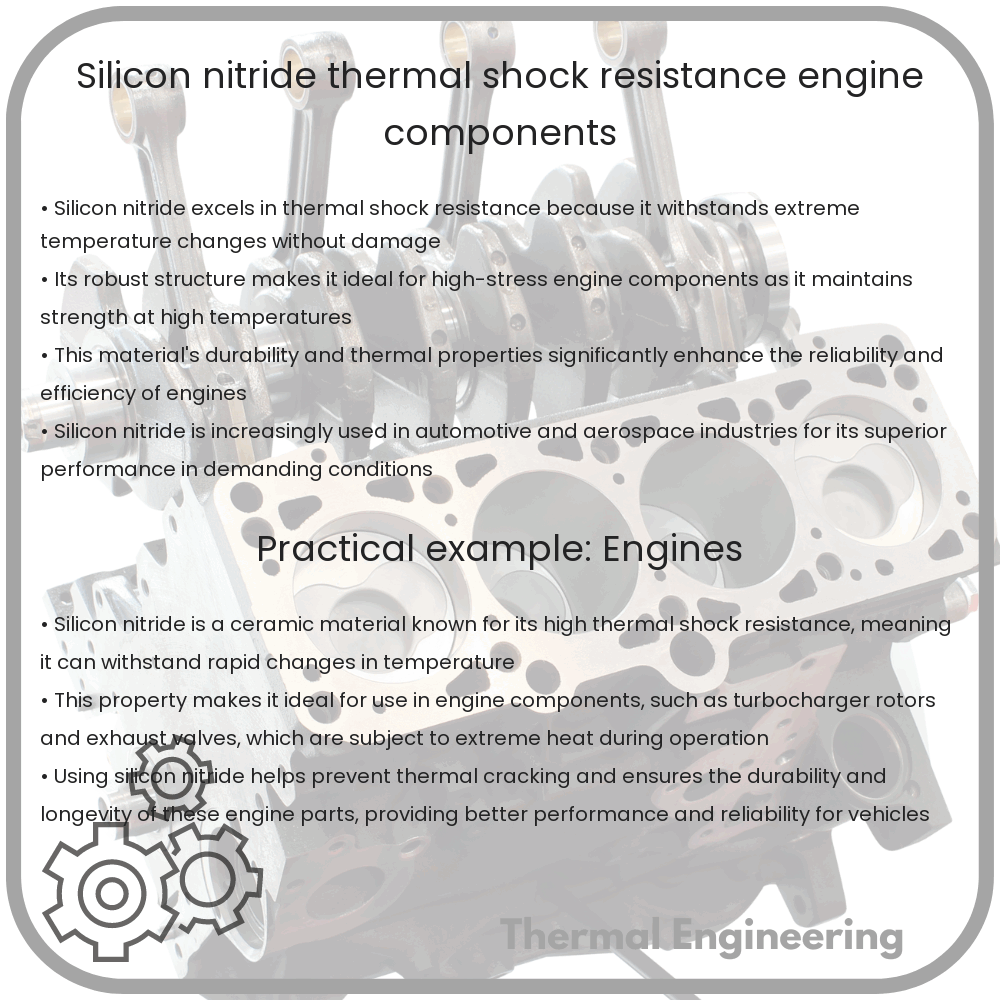
Understanding Silicon Nitride: Thermal Shock Resistance and Applications in Engine Components
Silicon nitride (Si3N4) is a ceramic material known for its high strength, toughness, and excellent thermal and chemical stability. These properties make it ideal for various demanding engineering applications, particularly in high-temperature environments.
Thermal Shock Resistance of Silicon Nitride
Thermal shock resistance is a critical property for materials used in high-temperature applications. It refers to the ability of a material to withstand sudden changes in temperature without undergoing damage. The superior thermal shock resistance of silicon nitride is one of its most defining characteristics. This property is due to the material’s high thermal conductivity, which helps in dissipating heat quickly, and its low thermal expansion coefficient, which reduces the stresses induced by temperature changes.
- Thermal Conductivity: Silicon nitride exhibits a thermal conductivity in the range of 16 to 30 W/mK, which aids in the rapid dissipation of heat.
- Thermal Expansion Coefficient: It has a comparatively low thermal expansion coefficient (approximately 3.0 x 10⁻⁶ /K), which minimizes the expansion and contraction under thermal cycles, thus reducing the generation of stress.
The combination of these properties enables silicon nitride to perform well under conditions where other materials might fail due to cracking or thermal degradation.
Applications in Engine Components
Si3N4 is extensively used in the automotive industry, specifically in the design and manufacture of engine components where high temperature, wear resistance, and durability are crucial. Some of the key applications include:
- Valve Components: Silicon nitride is used in the manufacturing of valves and valve seats due to its hardness and wear resistance, which significantly extend the lifespan of these components even under extreme conditions.
- Turbocharger Rotors: The use of Si3N4 in making turbocharger rotors substantially improves the engine’s efficiency. The material’s ability to withstand high temperatures and rotational speeds reduces the overall wear and tear, enhancing performance and reliability.
- Glow Plugs: For diesel engines, silicon nitride is employed in the manufacturing of glow plugs. The material’s excellent thermal properties ensure quick heating and high resistance to thermal shock, thereby improving the cold-start performance of engines.
- Bearing Balls: In high-performance bearings, silicon nitride balls are preferred over traditional materials due to their lightweight nature, which reduces the centrifugal force and overall bearing wear at high speeds.
The adoption of silicon nitride in engine components not only boosts performance but also contributes to the longevity and robustness of the engines, affirming its vital role in modern engineering materials.
Conclusion
Silicon nitride stands out in the field of engineering materials due to its exceptional thermal shock resistance and mechanical properties. Its application in critical engine components harnesses these qualities to achieve increased efficiency, performance, and durability. As engineering demands evolve, the role of Si3N4 is destined to expand, potentially leading to new innovations and applications in various high-stress industries.
Exploring and understanding silicon nitride offers a glimpse into the future of engineering materials, one that balances the extremes of performance with the demands of real-world application.