Learn about the importance and methods of thermal management in semiconductors to enhance device performance and longevity.
Understanding Thermal Management in Semiconductors
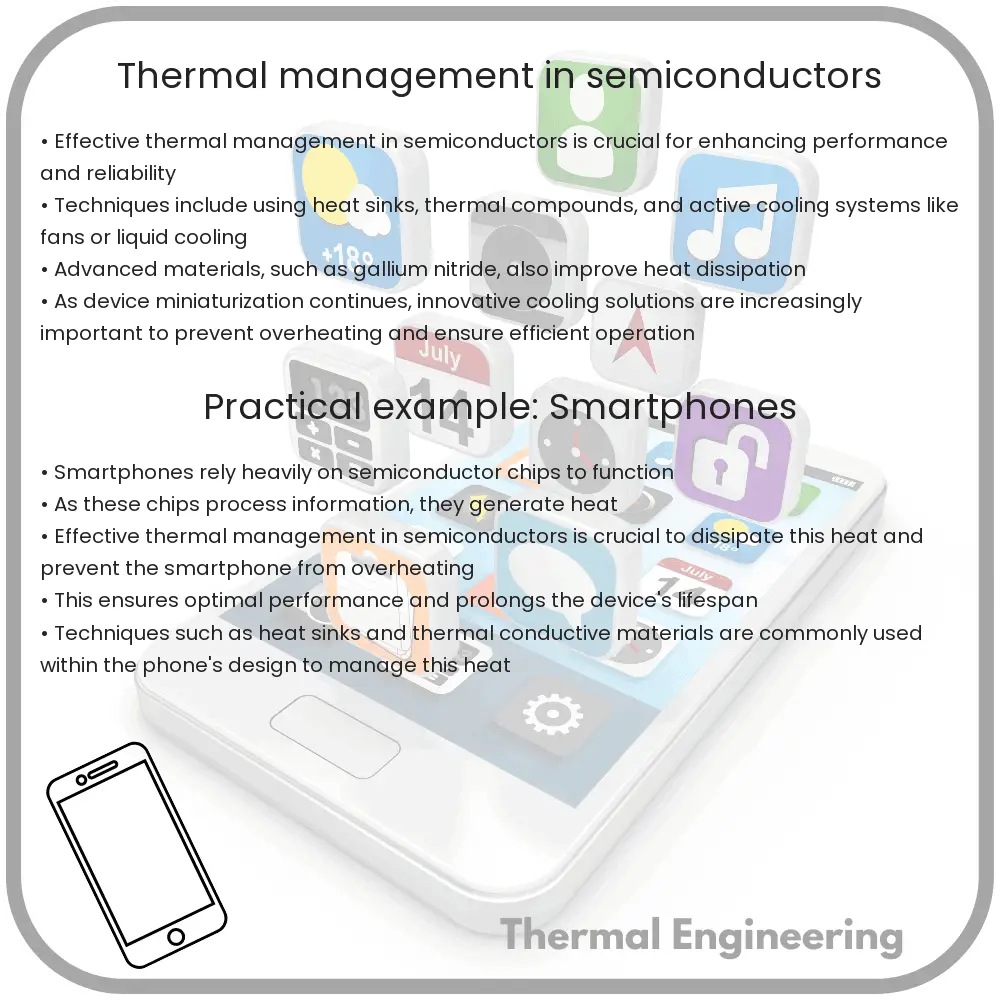
Thermal management is a critical aspect of semiconductor design and operation. As electronic devices get smaller and more powerful, the heat generated by semiconductor components increases, which can lead to overheating and potentially damage the device. Managing this heat is vital for maintaining performance, reliability, and longevity of semiconductor devices.
Why is Thermal Management Important in Semiconductors?
Semiconductors are materials that have electrical conductivity between that of conductors and insulators. They are the backbone of all modern electronics like computers, smartphones, and even electric vehicles. However, semiconductors generate heat when current flows through them, especially at higher powers or when miniaturized in dense configurations, such as in microprocessors and power electronics.
Excessive heat can affect a semiconductor device in several ways:
- Reduced Performance: High temperatures can cause electronic devices to operate more slowly and less effectively.
- Physical Damage: Prolonged exposure to high temperatures can lead to physical damage, such as warping or meltdown of semiconductor materials.
- Shortened Lifespan: Consistently high temperatures can accelerate aging of semiconductor components, thereby reducing their lifespan.
Basics of Heat Transfer in Semiconductors
Heat transfer in semiconductors occurs through three fundamental mechanisms:
- Conduction: Heat is transferred directly through materials. This is the most common heat transfer mechanism in semiconductors, flowing from hotter regions to cooler ones.
- Convection: Heat transfer occurs through a fluid (air or liquid) moving past the surface of the component, carrying heat away.
- Radiation: Heat is emitted from the surface in the form of infrared radiation and does not require any medium to transfer.
Effective thermal management systems leverage these principles to dissipate heat efficiently.
Techniques for Thermal Management
To manage heat in semiconductor devices, engineers employ several techniques:
- Heat Sinks: These are typically made of metals like aluminum or copper, which have high thermal conductivity. They are attached to the semiconductor device to draw heat away and dissipate it into the surrounding environment.
- Fans and Cooling Systems: Active cooling solutions use fans to force air circulation around the hot components, significantly enhancing heat dissipation through convection.
- Thermal Interface Materials (TIMs): These materials improve the heat conduction between the heat source (semiconductor) and the heat sink. Common TIMs include thermal pastes, pads, and adhesive tapes.
- Heat Pipes: These are vacuum-sealed tubes containing a liquid that vaporizes at high temperatures. The vapor travels along the pipe to a cooler area, where it condenses back into a liquid and returns to the heat source through capillary action.
- Spreaders: These are used to distribute heat over a larger surface area, effectively reducing the heat density and improving the efficiency of other cooling mechanisms.
Advanced techniques might also involve liquid cooling systems, where a coolant fluid directly absorbs heat from hot components before being cycled away to a radiator. This method is more effective but also more complex and expensive than traditional air cooling systems.
Conclusion
Thermal management in semiconductors is a field that blends principles of physics and engineering to solve practical heat dissipation challenges in electronic devices. As technology continues to evolve, the development of innovative thermal management solutions becomes increasingly important to maintain and enhance the performance, reliability, and lifespan of semiconductor devices.
This insight into how heat is managed in semiconductors not only highlights the importance of this aspect in engineering but also encourages further exploration into more efficient and innovative cooling technologies.