Learn about the essential role of thermal management in underwater vehicles, focusing on strategies to combat the unique challenges of the marine environment.
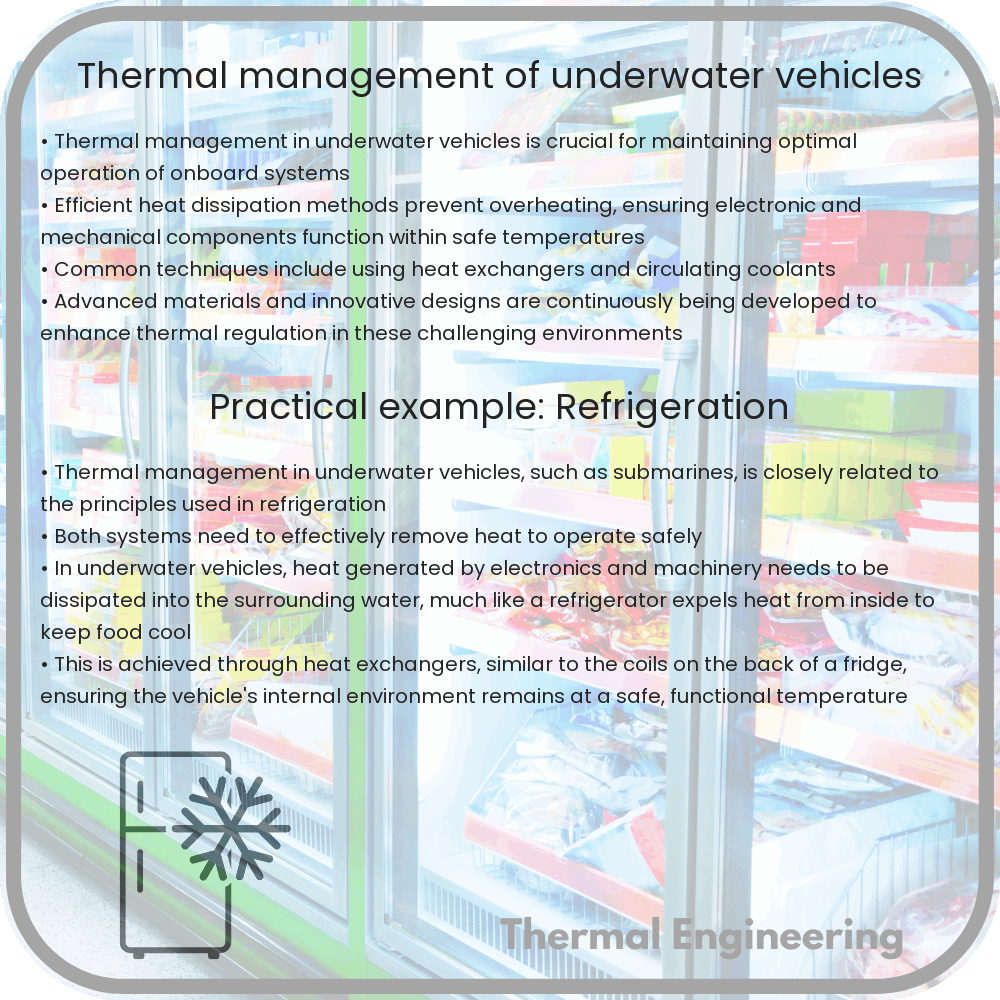
Understanding Thermal Management in Underwater Vehicles
Thermal management is a critical aspect of underwater vehicle design, impacting everything from vehicle performance to sensor operation and the longevity of onboard electronics. Ensuring appropriate thermal control in such vehicles involves combating unique challenges posed by the underwater environment.
Why is Thermal Management Important?
Underwater vehicles, such as submarines or autonomous underwater vehicles (AUVs), operate in a vast and challenging environment where temperatures can vary dramatically, from tropical surface conditions to near-freezing temperatures at depth. Moreover, the high thermal conductivity of water intensifies cooling and heating effects, making thermal management not just about maintaining operational integrity, but also about ensuring survival of sensitive electronic components and battery systems.
Key Challenges in Thermal Management
- Heat Dissipation: Water’s high thermal conductivity means that any heat generated by the vehicle’s components is rapidly absorbed by the surrounding environment. This can lead to rapid cooling if not managed properly.
- External Temperature Variation: The vast differences in temperature at various depths require adaptable thermal management systems that can function effectively under variable conditions.
- Condensation and Corrosion: Variations in internal and external temperatures can lead to condensation, which in turn may cause corrosion or electrical failures unless properly managed.
Strategies for Effective Thermal Management
Designing underwater vehicles requires innovative approaches to manage these thermal challenges effectively. Some key strategies include:
- Active Heating and Cooling Systems: These systems regulate the temperature by actively heating or cooling the vehicle’s internal environment. Using elements like heat exchangers and active refrigeration cycles can help maintain a stable temperature conducive to the vehicle’s operation and its sensitive components.
- Thermal Insulation: Insulating materials can protect the internal components of an underwater vehicle from the chilling effects of deep-water temperatures and also prevent heat loss from warmer components.
- Thermal Interface Materials (TIMs): TIMs enhance heat transfer efficiency between surfaces and are critical in areas where heat dissipation or absorption is necessary to protect onboard electronics and battery packs.
- Environmental Sealing: Proper seals and encapsulations prevent water ingress, which can lead to short-circuits and corrosion, further stabilizing the internal environment of an underwater vehicle.
Examples of Thermal Management in Practice
In practice, the thermal management systems in underwater vehicles might integrate several of these strategies to achieve efficient heat control. For instance, AUVs typically use a combination of active cooling systems and thermal insulation to manage the heat produced by batteries and propulsion units. Similarly, military submarines may utilize sophisticated climate control systems that adjust settings based on depth and water temperature to maintain an optimal internal environment.
The Future of Thermal Management in Underwater Vehicles
As technology advances, the development of more efficient thermal management systems continues to be an area of active research. Innovations such as phase change materials (PCMs) for passive thermal management and more advanced active refrigeration techniques are being explored. These future technologies promise to enhance the capability, range, and safety of underwater vehicles, making them more adaptable to the diverse and demanding conditions present in underwater environments.
Understanding and implementing effective thermal management strategies is essential for the success of underwater vehicles, ensuring they perform their designated functions while withstanding the harsh marine environment.