Explore the essential roles of vaporized water, or steam, in steam power generation, sterilization processes, and humidity control across various industries.
Vaporized Water: Multifaceted Applications in Steam Power, Sterilization, and Humidification
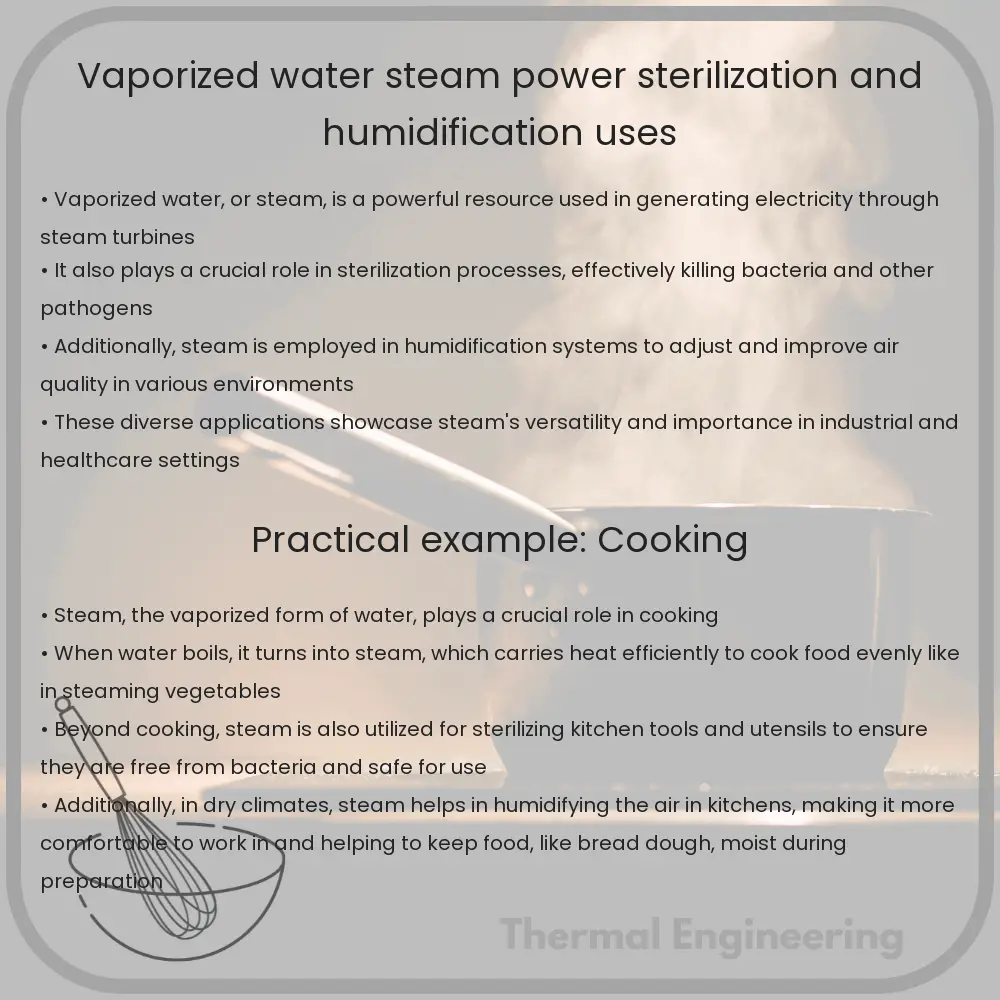
Vaporized water, commonly known as steam, plays a crucial role in various applications across multiple industries. Its uses range from power generation and medical sterilization to climate control. Understanding how steam functions in these settings reveals the broader significance of phase changes in water and thermodynamics in practical engineering solutions.
Steam Power Generation
One of the oldest and most significant uses of steam is in power generation. Steam turbines, which convert steam energy into mechanical energy, fundamentally operate on the principles of thermodynamics. The process involves boiling water to create steam, which then expands and pushes against the blades of a turbine.
- The Rankine cycle, crucial in power generation, describes the process of heat being converted to mechanical energy through the creation of steam. Hot steam generated in a boiler expands through a turbine, producing mechanical energy that drives an electric generator.
- The efficiency of steam turbines depends on the steam pressure and temperature. Higher pressures and temperatures generally yield greater efficiency, allowing more energy to be extracted from each unit of water.
Sterilization through Steam
Steam is vigorously used for sterilization, especially in healthcare settings, because of its ability to destroy microorganisms. The combination of heat and moisture makes steam an effective agent for this purpose.
- Autoclaving is the most common method of steam sterilization. Instruments and supplies are exposed to high-pressure saturated steam at 121°C (250°F) for around 15 to 30 minutes depending on the object’s size and thermal nature.
- The effectiveness of steam sterilization is attributed to its heat content and moisture, which coalesce to denature proteins in microorganisms, thereby rendering them inactive.
Humidification and Its Purposes
In industrial and residential settings, maintaining proper humidity is essential for comfort, health, and process control. Steam humidifiers inject steam into the air to maintain desired humidity levels, important for:
- Preserving the integrity of wood in musical instruments and furniture.
- Maintaining optimal conditions for manufacturing processes like in textile and paper industries.
- Health benefits in respiratory therapy, where maintaining adequate air moisture can help alleviate symptoms of respiratory conditions.
In conclusion, vaporized water, or steam, plays a diverse role across various fields by exploiting fundamental principles of physics and chemistry. From generating electricity to preventing infections and maintaining comfort and precision in environments, steam power showcases the wide-reaching impacts of this versatile tool in technology and everyday life.