Learn about vermiculite, a natural mineral prized for its lightweight, insulating, and fire-resistant properties, widely used in construction and horticulture.
Introduction to Vermiculite
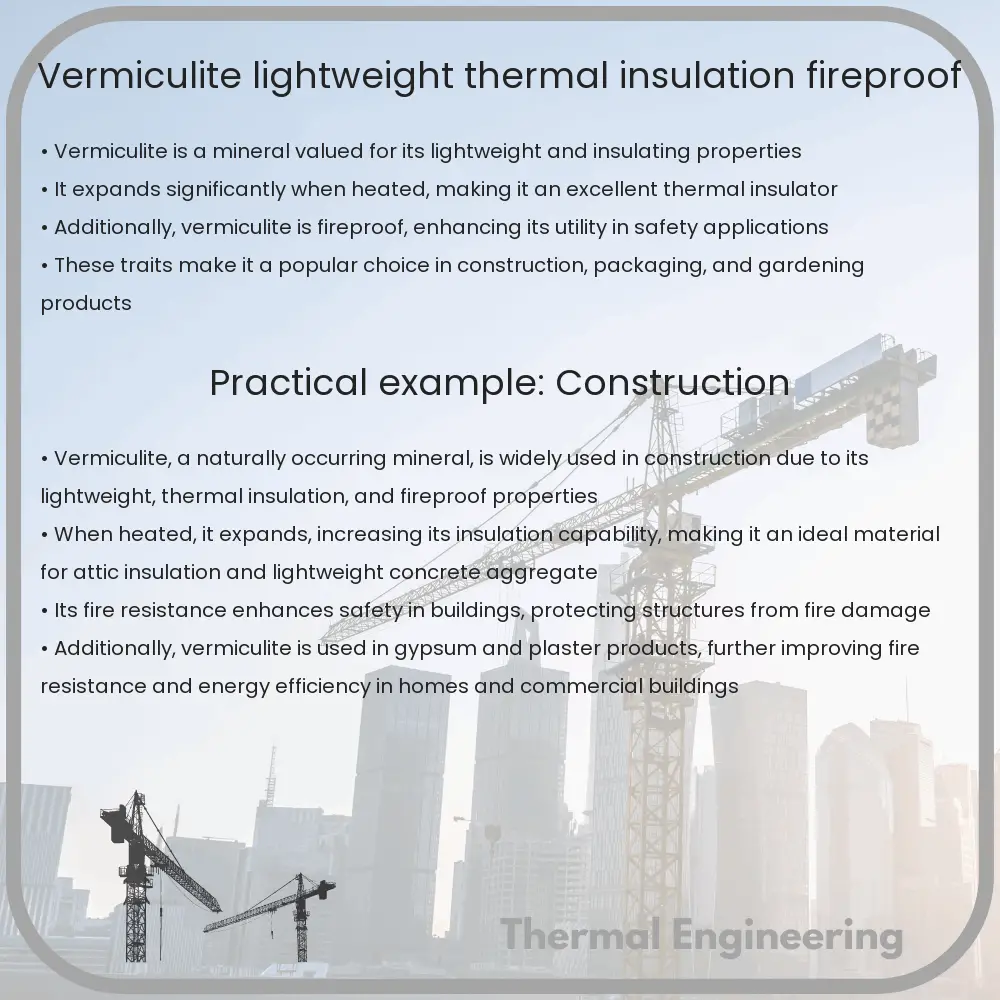
Vermiculite is a natural mineral that undergoes significant expansion when heated. This expansion results in a lightweight and voluminous material, which is primarily utilized for its excellent insulation properties. Often compared to its geological cousin, mica, vermiculite exhibits a property known as exfoliation which is key to its commercial use in various industries, ranging from construction to horticulture.
Properties of Vermiculite
- Lightweight: The exfoliation process vermiculite undergoes results in a highly lightweight material, making it easy to handle and apply in various uses.
- Thermal Insulation: Vermiculite’s laminar structure which contains trapped air not only makes it light but also an excellent insulator. It effectively blocks heat transfer, making it ideal for insulation in buildings, attics, and between construction materials.
- Fireproof: Vermiculite is naturally fire-resistant, which allows it to enhance building safety by reducing fire risks when used in fireproofing applications.
- Chemically Inert: It does not decompose or emit significant gases or odors, which makes it safe to use in a variety of environments.
Processing of Vermiculite
The key to unlocking the valuable properties of vermiculite lies in its processing. When raw vermiculite is mined, it appears as a compact mineral. It is then subjected to a heating process that typically reaches 870°C to 1100°C. During this process, the water molecules trapped within the mineral structure turn into steam, forcing the layers apart in a reaction akin to popping popcorn. This expansion, which can increase the bulk volume of the mineral by up to 20 times, creates the lightweight and fire-resistant characteristics that make vermiculite so useful.
Applications of Vermiculite
- Construction Materials: One of the most widespread uses of vermiculite is in the construction industry. Due to its insulative and fire-resistant properties, it is used in cement mixtures, plasters, and for insulating floors and roofs.
- Fireproofing: Due to its inherent fire resistance, vermiculite is often applied as a coating on structural steel beams for fire protection, boosting the fire resistance of buildings and their structural components.
- Horticulture: In the realm of gardening and agriculture, vermiculite is valued for its ability to aerate the soil and retain water, fostering plant growth by creating a more hospitable soil environment.
- Packaging Material: Its cushioning properties and inertness make it perfect for packaging sensitive and potentially hazardous materials, including chemicals and electronics.
Conclusion
Vermiculite with its versatile attributes such as being lightweight, thermally insulating, and fireproof offers significant benefits across diverse fields. The engineering applications particularly in construction and fireproofing utilize this mineral to create safer, more efficient, and sustainable solutions. This mineral remains an outstanding example of how natural resources, when processed and applied correctly, can greatly enhance modern engineering practices and progress.